
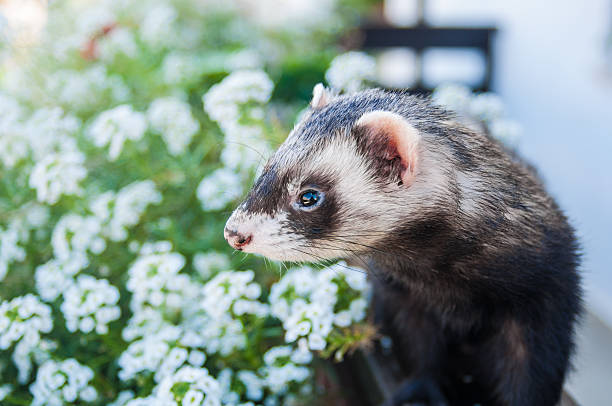
Adrenal gland tumors are one of the most frequently diagnosed endocrine disorders in domestic ferrets (Mustela putorius furo), particularly in those over three years of age. These tumors affect the adrenal glands—small, triangular-shaped organs located near the kidneys that are responsible for producing vital hormones such as cortisol, aldosterone, and sex steroids (androgens, estrogens, and progesterone). When abnormal growths (tumors) develop in these glands, they often lead to hormonal imbalances that result in a wide range of clinical signs. The condition is so prevalent in captive ferrets that it is considered one of the leading health concerns in the species.
Adrenal disease in ferrets is characterized by either hyperplasia (excessive cell growth) or neoplasia (tumor formation) in one or both adrenal glands. While both benign and malignant tumors can occur, the majority of adrenal masses in ferrets are benign adenomas. However, even benign tumors can cause significant health issues due to excessive hormone production. In some cases, tumors may become large enough to compress surrounding tissues or even metastasize, though this is relatively rare.
The high incidence of adrenal disease in ferrets, compared to other animals, has prompted extensive study into its causes, with researchers considering factors such as early spaying and neutering, genetic predisposition, light exposure, diet, and environmental influences.
II. Anatomy and Physiology of the Adrenal Glands in Ferrets
To fully understand adrenal gland tumors, it’s essential to first review the normal anatomy and function of these organs in ferrets.
The adrenal glands consist of two main parts:
- Adrenal Cortex: This outer layer produces corticosteroids such as cortisol (which regulates metabolism and stress response) and aldosterone (which helps regulate blood pressure and electrolyte balance). It also produces sex hormones (androgens and estrogens), which are typically present in very low levels in adult ferrets.
- Adrenal Medulla: The inner portion produces catecholamines such as epinephrine (adrenaline) and norepinephrine, which are involved in the “fight-or-flight” response.
In healthy ferrets, the adrenal glands work under the regulation of the hypothalamic-pituitary-adrenal (HPA) axis. The hypothalamus releases corticotropin-releasing hormone (CRH), which stimulates the pituitary gland to release adrenocorticotropic hormone (ACTH). ACTH then signals the adrenal cortex to produce cortisol and other hormones.
However, in ferrets with adrenal tumors, this regulatory mechanism is disrupted. The tumor tissue often produces sex hormones independently of ACTH regulation, leading to elevated levels of androgens and estrogens. This hormonal overproduction is primarily responsible for the clinical signs observed in affected animals.
III. Causes and Risk Factors of Adrenal Gland Tumors
While the exact cause of adrenal tumors in ferrets remains under investigation, several interrelated factors have been identified through veterinary research and clinical observation.
1. Early Spaying and Neutering
One of the most significant risk factors is the early spaying (ovariohysterectomy) or neutering (castration) of ferrets, commonly performed at 6–8 weeks of age in commercial breeding facilities. Removal of the gonads (ovaries or testes) eliminates the body’s natural source of sex hormones. In response, the pituitary gland increases the secretion of luteinizing hormone (LH) in an attempt to stimulate the non-existent gonads. This elevated LH level is believed to continuously stimulate the adrenal cortex—particularly the zona reticularis, which has similar embryonic origins to the gonads—leading to hyperplasia and, eventually, tumor formation.
2. Prolonged Exposure to Artificial Light
Ferrets are seasonal breeders, with reproductive activity influenced by photoperiod (day length). Natural seasonal changes regulate hormone production, with longer daylight hours (spring and summer) stimulating reproductive hormones. In captivity, ferrets are often exposed to artificial light for 12–16 hours a day, which may mimic a constant breeding season.
Studies suggest that this chronic light exposure disrupts the normal melatonin cycle. Melatonin, produced by the pineal gland in response to darkness, inhibits GnRH (gonadotropin-releasing hormone) release, which in turn reduces LH production. Constant light suppresses melatonin, leading to elevated LH levels—again contributing to adrenal gland stimulation and potential tumor development.
3. Genetic and Breed Predisposition
Although not definitively proven, some evidence suggests a genetic component. Ferrets bred in large commercial facilities may have reduced genetic diversity, potentially increasing susceptibility to endocrine disorders. Certain bloodlines appear to have a higher incidence of adrenal disease, indicating a possible hereditary factor.
4. Age
Adrenal tumors are rare in ferrets under two years of age but become increasingly common with age. The majority of cases occur in ferrets between 3 and 7 years old, with prevalence rising significantly in animals over four years.
5. Diet and Environmental Factors
While no direct causal link has been established, poor diet and environmental stress may exacerbate underlying hormonal imbalances. Diets high in plant-based proteins or inappropriate for carnivores might influence metabolic and endocrine health. Additionally, chronic stress can dysregulate the HPA axis, contributing to adrenal dysfunction.
IV. Signs and Symptoms of Adrenal Gland Tumors
Clinical signs of adrenal tumors in ferrets are primarily due to excessive production of sex hormones, particularly androgens and estrogens. Because these hormones affect multiple body systems, the symptoms can be diverse and sometimes difficult to recognize early on.
1. Hair Loss (Alopecia)
One of the most common and earliest signs is symmetrical hair loss, typically starting at the base of the tail and progressing forward toward the shoulders. The skin may appear thin and shiny, but it is usually not itchy. In males, this may resemble a “rat tail” appearance. In severe cases, alopecia can become near-total.
2. Itching and Skin Changes
Many affected ferrets experience pruritus (itching), especially on the neck, shoulders, and back. Scratching may lead to skin abrasions, secondary infections, or self-trauma. The skin may become flaky, hyperpigmented, or seborrheic.
3. Sexual Behavior Changes
Due to excess sex hormone production, even neutered or spayed ferrets may display mating behaviors:
- Neutered males may mount other ferrets, show aggression, or have an erectible penis (persistent penile extrusion).
- Spayed females may go into “heat,” displaying lordosis (mating posture), vulvar swelling, and behavioral changes such as restlessness or vocalization.
4. Vulvar Swelling in Females
Spayed females with adrenal tumors often develop vulvar enlargement and may produce a vulvar discharge. This is due to estrogen secretion from the tumor, mimicking estrus.
5. Muscular Atrophy and Weakness
Affected ferrets often lose muscle mass, particularly in the hind limbs. They may appear lethargic, have difficulty climbing, or show reluctance to play. This weakness is attributed to catabolic effects of excess hormones and possible neurologic compression in severe cases.
6. Urinary Issues
Male ferrets, especially neutered ones, may develop difficulty urinating. This can be due to prostatic enlargement (stimulated by androgens), which compresses the urethra. In severe cases, urinary obstruction can occur—a medical emergency.
7. Anemia
Estrogen produced by adrenal tumors can suppress bone marrow, leading to non-regenerative anemia. This is particularly dangerous in females, as it can result in severe lethargy, pale gums, and even death if untreated.
8. Abdominal Enlargement or Palpable Mass
In some cases, the adrenal tumor grows large enough to be felt during abdominal palpation. It may appear as a firm mass near the cranial abdomen. If the tumor compresses adjacent organs (like the vena cava or kidneys), complications such as ascites (fluid accumulation) or kidney dysfunction may occur.
9. Behavioral Changes
Ferrets may become more aggressive, anxious, or display changes in personality. These are likely due to hormonal fluctuations.
10. Recurrence of Secondary Sex Characteristics
Neutered males may regrow testicular tissue-like masses, although true testicular tissue is absent. This is due to stimulation of residual gonadal tissue or adrenal-derived hormone production.
V. Diagnosis of Adrenal Gland Tumors
Diagnosing adrenal disease in ferrets typically involves a combination of clinical signs, physical examination, imaging, and laboratory testing.
1. Medical History and Clinical Signs
A thorough history—including age, spay/neuter status, onset of symptoms, and light exposure—is crucial. Symmetrical alopecia, vulvar swelling, or behavioral changes strongly suggest adrenal disease.
2. Physical Examination
The veterinarian will check for:
- Alopecia patterns
- Vulvar enlargement in females
- Penile extrusion in males
- Muscle loss
- Abdominal masses
- Skin condition and signs of pruritus
3. Imaging Techniques
- Abdominal Ultrasound: This is the gold standard for diagnosing adrenal tumors. It can visualize the size, shape, and symmetry of the adrenal glands. A normal ferret adrenal gland measures less than 5 mm in height. Tumors may appear enlarged, irregular, or unilateral/bilateral.
- Radiography (X-rays): Less sensitive than ultrasound but can detect large masses or signs of obstruction (e.g., enlarged prostate).
4. Hormone Assays
Blood tests measuring hormone levels help confirm diagnosis:
- Sex Hormes Binding Globulin (SHBG): Elevated in ferrets with adrenal disease.
- 17-Hydroxyprogesterone (17-OHP): Often elevated in affected ferrets.
- Androstenedione, Estradiol, Testosterone: These may be measured, though results can be variable due to pulsatile secretion.
- LH and FSH Levels: Rarely used due to assay limitations.
Note: Hormone testing is not always necessary if clinical signs and ultrasound findings are conclusive.
5. Differential Diagnoses
Other conditions that may mimic adrenal disease include:
- Poor nutrition or protein deficiency
- Parasitic skin infections (e.g., mites)
- Allergic dermatitis
- Hypothyroidism (rare in ferrets)
- Other endocrine tumors (e.g., pancreatic tumors)
VI. Treatment Options for Adrenal Gland Tumors
Treatment depends on the severity of symptoms, age of the ferret, presence of comorbidities, and owner preferences. Options include surgical removal, medical management, and supportive care.
1. Surgical Treatment (Adrenalectomy)
Surgical removal of the affected adrenal gland(s) is the most definitive treatment. Two main types:
- Unilateral adrenalectomy: Removal of one adrenal gland, typically the affected side.
- Bilateral adrenalectomy: Rarely performed due to high risk of adrenal insufficiency (Addison’s disease).
Procedure:
- Done under general anesthesia.
- The right adrenal gland is more challenging to remove due to its proximity to the vena cava.
- The left adrenal is generally easier to access.
Success Rates:
- Approximately 90% of ferrets show complete resolution of symptoms after surgery.
- Recurrence is possible if the opposite gland develops disease later.
Risks:
- Bleeding (especially from the vena cava during right-sided surgery)
- Damage to nearby organs
- Anesthetic complications (higher in older or debilitated ferrets)
Postoperative Care:
- Pain management
- Antibiotics if indicated
- Monitoring for hypoglycemia (low blood sugar)
- Gradual return to normal activity over 1–2 weeks
2. Medical Management
For ferrets that are poor surgical candidates (due to age, comorbidities, or owner preference), drug therapy can control symptoms.
a. Deslorelin Acetate (Suprelorin® Implant)
- A sustained-release GnRH agonist implant placed under the skin.
- Works by initially stimulating, then downregulating GnRH receptors, reducing LH and FSH release.
- Suppresses adrenal stimulation and hormone production.
- Effect lasts 6–18 months.
- Considered safe, effective, and minimally invasive.
- Often first-line medical therapy.
b. Leuprolide Acetate (Lupron®)
- Another GnRH agonist, administered as a monthly intramuscular injection.
- Functions similarly to deslorelin.
- Requires frequent vet visits.
- Efficacy may wane after 12–18 months as the pituitary “escapes” downregulation.
c. Melatonin Supplementation
- Oral or transdermal melatonin (2–5 mg daily) helps regulate circadian rhythms and reduce LH secretion.
- Particularly useful in early cases or for prevention.
- Often combined with leuprolide or deslorelin.
- May improve hair regrowth and reduce itching.
3. Supportive and Symptomatic Care
- Skin and coat care: Use of gentle shampoos, moisturizers, and treatment of secondary infections.
- Pain relief: For muscular discomfort or arthritis.
- Anemia management: Blood transfusions or hormone therapy (e.g., human chorionic gonadotropin) in severe estrogen-induced anemia.
- Urinary support: For males with prostatic enlargement, ensuring hydration and possibly using alpha-blockers under vet supervision.
VII. Prognosis and Possible Complications
Prognosis
- With early diagnosis and treatment, the prognosis is generally good.
- Surgical cure rate is high, with most ferrets returning to normal activity and hair regrowth within 3–6 months.
- Medical management can effectively control symptoms for years but does not eliminate the tumor.
- Untreated adrenal disease progresses slowly but can lead to severe complications and reduced quality of life.
Complications
- Urinary obstruction in males due to prostatic enlargement—can be life-threatening.
- Severe anemia in females—may require blood transfusion.
- Tumor rupture or vena cava invasion—can cause internal bleeding.
- Metastasis—rare, but malignant adrenal carcinomas can spread to liver, lungs, or lymph nodes.
- Recurrence—even after surgery, the other adrenal gland may develop disease.
- Adrenal insufficiency—post-surgical, especially after bilateral removal (rare).
VIII. Prevention of Adrenal Gland Tumors
While adrenal tumors cannot be entirely prevented, several strategies may reduce risk or delay onset:
1. Delayed Spaying/Neutering
Consider leaving ferrets intact or using alternative sterilization methods (e.g., vasectomy in males, hysterectomy in females) until they are at least 6–12 months old. This allows natural hormone regulation to develop.
2. Controlled Light Exposure
Provide a natural photoperiod:
- 12 hours of light and 12 hours of darkness daily.
- Avoid constant artificial lighting, especially overnight.
- Use timers for room lighting.
- Melatonin supplementation may help simulate longer nights.
3. Use of Melatonin as Preventive Therapy
Some veterinarians recommend low-dose melatonin (1–2 mg nightly from September to March) in at-risk ferrets to suppress LH release.
4. Genetic Selection
Support breeders who screen for health and avoid lines with high adrenal disease incidence.
5. Routine Veterinary Check-ups
Early detection through annual wellness exams, including ultrasounds for ferrets over three years, can lead to timely intervention.
IX. Diet and Nutrition for Ferrets with Adrenal Tumors
Ferrets are obligate carnivores with high protein and fat requirements. Proper nutrition supports overall health and may aid in managing symptoms.
Key Nutritional Requirements
- High animal-based protein (30–40% of diet)
- High fat (15–20%)
- Low fiber and carbohydrates
- Taurine supplementation (essential for heart and eye health)
Recommended Diet
- High-quality ferret-specific kibble or kitten food (high-protein, grain-free).
- Avoid foods with corn, soy, or plant proteins.
- Fresh meat (e.g., chicken, turkey, lamb) can be offered as occasional treats or part of raw diet (if properly balanced).
Special Considerations for Adrenal Disease
- Adequate calories: Muscle wasting increases energy needs.
- Omega-3 fatty acids: May help reduce inflammation and support skin health (e.g., fish oil supplements).
- Hydration: Essential, especially in males with urinary issues.
- Avoid phytoestrogens: Found in soy and some plant-based products, which may interfere with hormone balance.
Feeding Tips
- Feed small meals frequently (ferrets have short digestive tracts).
- Provide fresh water at all times.
- Monitor weight and body condition regularly.
X. Zoonotic Risk
Adrenal gland tumors in ferrets are not zoonotic. This means the condition cannot be transmitted from ferrets to humans or other animals. The tumors are endogenous (arising from the ferret’s own cells) and are not caused by infectious agents like bacteria, viruses, or parasites.
However, while the tumor itself is not contagious, secondary issues—such as skin infections due to scratching—could potentially harbor bacteria (e.g., Staphylococcus spp.) that might infect humans with compromised immune systems. Good hygiene practices (handwashing, wound care) are recommended when handling any sick pet.
There is no evidence of hormonal transmission to humans through contact. The sex hormones overproduced by the ferret’s adrenal glands are species-specific and do not affect human physiology.
XI. Conclusion
Adrenal gland tumors are a prevalent and serious health issue in domestic ferrets, particularly in middle-aged to older individuals. The condition arises from a complex interplay of early gonadectomy, photoperiod disruption, and possible genetic factors, leading to hormonal imbalances that manifest in a variety of clinical signs—most notably hair loss, skin changes, sexual behaviors, and organ dysfunction.
Early diagnosis through physical exam, ultrasound, and hormone testing is critical. Treatment options include surgical removal of the affected gland or medical management with drugs like deslorelin and melatonin. With timely intervention, most ferrets can enjoy a good quality of life for several years.
Preventive strategies—such as delaying spay/neuter, managing light exposure, and providing species-appropriate nutrition—can help reduce the risk. While the disease is not curable in all cases, it is highly manageable, and ongoing veterinary care ensures the best possible outcome.
As ferret ownership grows in popularity, increasing awareness about adrenal disease is essential for early detection and compassionate care. By understanding the causes, symptoms, and treatments, ferret owners and veterinarians can work together to extend and enhance the lives of these lively and affectionate pets.
#adrenalTumorsInFerrets, #FerretHealth, #FerretAdrenalDisease, #FerretCareTips, #FerretOwnerGuide, #FerretVetAdvice, #FerretAlopecia, #FerretHairLoss, #FerretHormoneImbalance, #FerretSurgery, #DeslorelinForFerrets, #LupronForFerrets, #FerretLightCycle, #FerretNutrition, #FerretDiet, #FerretWellness, #FerretCancer, #AdrenalGlandTumor, #FerretMedicalCare, #FerretRescue, #FerretLovers, #ExoticPetHealth, #SmallPetVet, #FerretBehavior, #FerretSkinProblems, #FerretAnemia, #FerretUrinaryIssues, #PetHealthAwareness, #FerretLife, #HealthyFerret


Add comment