
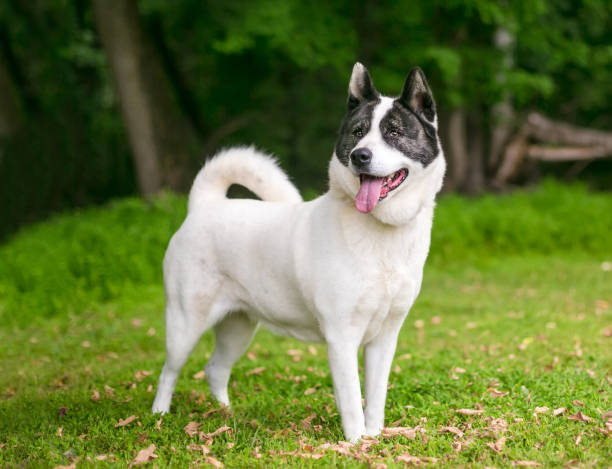
The American Akita is a dog of profound dignity, ancient lineage, and imposing presence. Often described as a “silent hunter” or a “snow bear,” this striking breed commands respect through its massive frame, dense coat, and stoic, watchful demeanor. Originating from the mountainous regions of Japan, the Akita was refined in the United States after World War II, leading to a distinct type—larger, heavier, and broader-headed than its Japanese counterpart (the Akita Inu).
This guide delves into every facet of the American Akita, providing an exhaustive resource for potential owners, enthusiasts, and current caretakers seeking to understand the unique requirements and challenges of owning this magnificent, complex breed.
1. AMERICAN AKITA DOG BREED INFO & OVERVIEW
The American Akita is classified as a large, powerful working breed, known primarily for its loyalty and protective instincts. They are not merely pets; they are lifelong companions who demand respect and strong leadership, offering unparalleled devotion in return. Their temperament is a unique blend of intelligence, independence, and strong territoriality. Unlike many common family breeds, the Akita often maintains a reserved or even aloof attitude toward strangers, reserving their expressive affection solely for their inner family circle.
Key Overview Points:
| Feature | Description |
|---|---|
| Primary Function | Guardian, Hunter (historically), Protector |
| Temperament | Courageous, Dignified, Reserved, Highly Protective |
| Energy Level | Moderate (requires daily exercise, but is often calm indoors) |
| Compatibility | Best suited for experienced dog owners and secure, single-dog homes |
| Distinguishing Feature | Massive, bear-like head; dense double coat; “Great Japanese Dog” heritage |
2. OTHER NAMES
Throughout its history, especially during the period of its development outside of Japan, the American Akita has been known by several designations, reflecting its lineage and physical characteristics:
- Akita: The common, abbreviated name.
- The Great Japanese Dog (GJD): This name was historically used by the American Kennel Club (AKC) to distinguish the heavier, mixed-lineage American type from the smaller, pure Akita Inu standard. This designation accurately reflects the post-war Japanese efforts to breed Akitas with increased size by outcrossing with breeds like the German Shepherd and Mastiffs.
- Akita Americana: A descriptor sometimes used internationally to clarify the American standard.
- New Akita: Used sometimes when the breed split became recognized globally.
3. CHARACTERISTICS (Temperament, Personality & Behavior)
The American Akita’s personality is perhaps its most defining, and often most challenging, characteristic. They are a study in contrasts: fiercely protective yet surprisingly sensitive, playful yet stubborn, and incredibly loyal while remaining aloof.
A. The Pillar of Loyalty
Akitas bond intensely with their immediate family. This bond is usually deep and unwavering, forming a profound attachment that often lasts their lifetime. They perceive their family unit as their immediate pack, and their primary goal is to ensure the safety and wellbeing of every pack member.
B. Aloofness and Reserved Nature
Do not expect an Akita to enthusiastically greet every visitor. They are instinctively wary of strangers. Their temperament dictates that they observe and assess new people quietly. They are not prone to nervous barking; rather, their guarding tendency manifests as calm, deliberate observation. If intrusion is perceived, their response is measured, fast, and decisive, driven by a fearlessness that is legendary.
C. Strong-Willed and Independent
Akitas were originally bred to hunt large game (like bears and deer) independently in rugged terrain, requiring them to make rapid, decisive decisions without human input. This independence translates into modern life as stubbornness. They understand commands but often weigh the necessity of obedience against their own agenda. They are not the breed for endless, playful repetition; once they learn a task, they consider the lesson complete.
D. Dog-Dog Aggression
This is one of the most critical aspects of Akita ownership. Due to their history as fighting dogs (prior to the movement toward preservation) and their strong pack hierarchy instincts, Akitas often exhibit same-sex aggression. They are typically intolerant of other dogs challenging their authority or space. Early, exhaustive socialization is mandatory, but even well-socialized Akitas may not thrive in dog parks or multi-dog households unless they have been raised with the other animals since puppyhood. They require careful management in public spaces.
E. Vocalization (The Akita ‘Mutter’)
Akitas are generally quiet dogs, making them poor choices for alerting owners via barking (they prefer physical intervention). However, they are known for unique vocalizations, ranging from deep grumbles and soft woofs to a distinct, high-pitched prrr sound or chatter, often reserved for expressing happiness or gentle affection toward their family.
F. Playfulness and Sensitivity
Despite their tough exterior, Akitas can be tremendously playful, often enjoying clumsy, powerful sprints and wrestling matches within the family. They are also surprisingly sensitive to the mood of their family members; harsh training methods or yelling can cause them to shut down completely or resent their owner.
4. BREED HISTORY AND ORIGIN
To understand the American Akita, one must first grasp the ancient history of its Japanese ancestors, the Akita Inu.
A. Ancient Japanese Roots (The Matagi Dog)
The story begins in the Akita prefecture of northern Japan, characterized by harsh winters and rugged mountains. The original dogs, known as Matagi dogs (hunter dogs), were medium-sized, versatile Spitz-type breeds used primarily for hunting bear, boar, and deer. For centuries, these dogs were treasured for their courage and tenacity in tracking and holding large game until the arrival of the actual hunter.
B. The Edo and Taisho Periods (Refinement and Decline)
During the Edo period (1603-1868), the Matagi dogs were crossbred with other breeds, including the Tosa and Mastiffs, to increase their size and ferocity for use in dog fighting, a popular pastime at the time. This period of interbreeding dramatically changed the dog’s appearance and temperament.
By the early 20th century (Taisho and early Showa periods), the breed faced near extinction due to food shortages, taxes on non-working dogs, and a devastating outbreak of canine distemper. Recognizing the cultural and historic importance of the breed, Japanese authorities designated the Akita as a National Monument in 1931, initiating efforts to return the breed to its original purity (the Akita Inu type).
C. World War II and the Breed Split
World War II brought the Akita to the brink again. Dog ownership became difficult, and many dogs were slaughtered for their fur to make warm military garments. The only dogs spared were German Shepherds, which were used for military service. Desperate Akita breeders began crossbreeding their dogs with Shepherds to protect them from confiscation.
This wartime crossing produced two distinct lines:
- The Ichinose/Dewa Line: Dogs that retained the outcrossed traits (larger, heavier bones, broad head, and a variety of colors, including black masks and pintos). This line was robust and striking.
- The Ichinose/Mizuno/Hirai Line: Dogs whose breeders tried rigorously to eliminate the foreign influence, focusing on the original Japanese colors (red, white, sesame, brindle) and the classic foxy head shape.
D. Birth of the American Akita (The “Great Japanese Dog”)
When American servicemen were stationed in Japan post-WWII, they were introduced to these larger, more robust, Dewa-line (mixed lineage) Akitas. These soldiers favored the powerfully built, impressive dogs from this line and began bringing them back to the United States.
Notably, the Japanese breeders recognized by the Japanese Kennel Club (JKC) focused intensely on purifying the breed back to the “Akita Inu” standard, rejecting the Dewa line’s foreign influence, especially the black mask and varied coat colors.
In the United States, however, the Dewa line dogs—with their bear-like heads, massive size, and diverse coloring—were propagated and developed independently. By the 1950s and 60s, American breeders established a standard for this larger type.
When the AKC recognized the Akita in 1972, the Japanese Akita Club (Akiho) refused to recognize the American-bred dogs because of their mixed heritage. This fundamental disagreement solidified the official split. The American standard accepted all colors, demanded the massive, broad head, and allowed for greater size and weight, thus creating the modern American Akita (Great Japanese Dog), officially separate from the Japanese Akita (Akita Inu).
5. PUREBREDS OR HYBRIDS?
The American Akita is considered a purebred dog recognized by the major international kennel clubs (AKC, UKC, FCI). However, understanding the breed’s history reveals that its current purebred status is based on a distinct line of development that originated from strategic hybridization.
- Purebred Status: Generations of selective breeding in the US and Canada since WWII have established a consistent phenotype (physical appearance) and genotype for the American Akita, confirming its purebred status today. Dogs must meet the AKC standard to be registered.
- Historical Foundation: The divergence from the Akita Inu standard was facilitated by crossbreeding in the 1940s with German Shepherds and possibly Mastiffs to increase size and ensure survival during wartime. The resulting Dewa line became the foundation of the American Akita.
Therefore, while the American Akita is today a recognized purebred, its foundation is historically more complex than the Japanese Akita Inu.
6. PHYSICAL CHARACTERISTICS
The American Akita is built for strength and endurance. It is a large, imposing, well-balanced dog with substantial bone and muscle.
A. Size and Weight
The American standard favors a dog significantly larger and heavier than its Japanese counterpart. They possess a powerful, rectangular build.
| Metric | Male | Female |
|---|---|---|
| Height (Shoulder) | 26–28 inches (66–71 cm) | 24–26 inches (61–66 cm) |
| Weight | 100–130 pounds (45–59 kg) | 70–100 pounds (32–45 kg) |
B. Head and Expression
The head is perhaps the most defining characteristic, often described as “bear-like” or “like a blunt triangle.”
- Skull: Broad and flat between the ears.
- Muzzle: Deep, broad, and substantial.
- Stop: Clearly defined, marking the transition from the skull to the muzzle.
- Ears: Small, heavily furred, triangular, and carried firmly pricked, tilting slightly forward.
- Eyes: Dark brown, relatively small, deep-set, and triangular, conveying a serious, watchful expression.
C. Coat Type
The American Akita possesses a dense, harsh double coat designed to withstand the harsh winters of its native region.
- Outer Coat: Straight, harsh, and stands slightly off the body.
- Undercoat: Thick, soft, and extremely dense, providing superb insulation. It is significantly shorter than the outer coat.
- Ruff/Breeches: The coat is slightly longer on the tail, neck (forming a ruff), and the breech area of the hind legs.
D. Color and Markings
Unlike the Japanese Akita Inu, which mandates Urajiro (cream/white markings on the cheeks, muzzle, chest, and legs) and limits colors, the American Akita standard is broadly permissive.
- Accepted Colors: Red, fawn, white, brindle, pinto, and black.
- Pinto: A unique marking pattern common in American Akitas, featuring large patches of color on a white background.
- Masks: A defining trait that distinguishes the American Akita: the black mask is accepted and common. (The black mask is disqualified in the Japanese Akita Inu standard.)
E. Is the American Akita Hypoallergenic?
No. The American Akita is definitively not considered hypoallergenic.
They possess a dense double coat that sheds heavily year-round and “blows” out spectacularly twice a year during seasonal changes. The large volume of dander (shed skin cells) and hair makes them highly problematic for allergy sufferers.
7. LIFE EXPECTANCY AND LITTER SIZE
A. Life Expectancy
The American Akita, being a large breed, has a moderate lifespan. Proper nutrition, exercise, and veterinary care can help maximize their longevity.
- Average Lifespan: 10 to 12 years.
B. Litter Size
Akita females typically have moderately sized litters.
- Average Litter Size: 3 to 8 puppies, with 5 to 7 being the most common.
8. HEALTH ISSUES
While generally robust, the American Akita is genetically predisposed to several serious health conditions, particularly autoimmune and orthopedic disorders. Responsible ownership demands regular check-ups and screening for these issues.
A. Autoimmune Disorders (Akitas are highly susceptible)
The Akita possesses a genetically sensitive immune system, making them prone to conditions where the body attacks its own healthy tissues.
- Vogt-Koyanagi-Harada (VKH) Syndrome (Uveodermatologic Syndrome): A serious, painful condition, rare in most breeds but relatively common in Akitas. The immune system attacks the melanin-producing cells (melanocytes), leading to severe inflammation of the eyes (uveitis), potential blindness, and depigmentation of the skin (vitiligo, particularly on the nose, lips, and eyelids).
- Sebaceous Adenitis (SA): An inflammatory disorder targeting the sebaceous glands in the skin. This leads to dry, scaly skin, hair loss (especially along the back and neck), secondary infections, and often requires lifelong management with specialized bathing and oils.
- Hypothyroidism: A common endocrine disorder where the thyroid gland does not produce enough hormones, leading to lethargy, weight gain, and poor coat quality.
B. Orthopedic Conditions
Due to their rapid growth rate and large size, orthopedic screening is vital.
- Hip Dysplasia (HD): A malformation of the hip joint socket, leading to arthritis, pain, and lameness.
- Elbow Dysplasia (ED): A similar improper development of the elbow joint. Reputable breeders must provide Orthopedic Foundation for Animals (OFA) clearances for both parents.
C. Gastric Dilatation-Volvulus (GDV) / Bloat
This is a life-threatening emergency common in deep-chested breeds like the Akita. The stomach fills with gas (dilatation) and sometimes twists on itself (volvulus), cutting off blood flow. Symptoms include unproductive retching, drooling, and a distended abdomen. Immediate veterinary intervention (often surgery) is critical for survival.
D. Progressive Retinal Atrophy (PRA)
A group of degenerative eye diseases that affect the retina, leading to gradual loss of vision and eventually blindness.
E. Cryptorchidism
A condition where one or both testicles fail to descend into the scrotum. While not immediately life-threatening, retained testicles have a higher risk of becoming cancerous later in life.
9. GROOMING NEEDS
The Akita’s impressive coat requires dedicated, consistent maintenance, particularly during shedding seasons.
A. Daily Needs: Minimal
Since the outer coat is harsh, it naturally resists collecting excessive dirt. Daily brushing is generally not required for cleanliness, but a quick daily check is good practice.
B. Weekly Needs: Extensive Brushing
The Akita should be thoroughly brushed 2–3 times a week using a slicker brush and a de-shedding rake (like a Furminator or blade rake). This routine is essential to penetrate the thick outer coat and remove dead undercoat, preventing matting and skin irritation.
C. Seasonal Needs: The “Coat Blow”
Twice a year (typically spring and fall), the Akita undergoes a process called “blowing coat,” where the entire soft undercoat is shed rapidly to adjust to the changing climate. This process is voluminous and lasts several weeks.
- Grooming during a Coat Blow: Daily, intensive brushing (often requiring 30–60 minutes) is necessary. Failure to remove the dead undercoat can lead to overheating and discomfort. Professional groomers may offer specialized high-velocity blow dryers to blast out the dead hair, which is highly effective.
D. Bathing
Akitas only require bathing every 6–8 weeks, or as needed. Due to their size and double coat, bathing often requires significant time to ensure the coat is thoroughly dried down to the skin to prevent mildew or hot spots.
E. Standard Maintenance
- Nails: Should be trimmed every 2–3 weeks, as long nails can cause pain and structural issues.
- Ears: Must be checked weekly for signs of infection (redness, odor, discharge) and cleaned gently.
- Teeth: Daily or several-times-weekly brushing is ideal to prevent periodontal disease.
10. SHEDDING LEVELS
Shedding Level: Very High / Extreme
The American Akita is one of the heaviest shedding breeds. While they don’t constantly drop hair in massive clumps, their daily shedding is moderate, and their bi-annual coat blow is truly spectacular, coating furniture, floors, and clothing in thick white fluff. Owners must be prepared to manage hair constantly.
11. DOG GROUP AND KENNEL CLUB RECOGNITION
A. Dog Group
The American Akita is universally recognized as part of the Working Group.
- Working Group: Dogs in this group were historically bred to perform tasks such as guarding property, pulling sleds, and rescuing people. The Akita’s traditional role as a guardian and hunter fits perfectly into this classification.
B. Recognition by Kennel Clubs
The American Akita is widely recognized across the globe, though the standard is distinct from that of the Japanese Akita Inu in many major organizations.
- American Kennel Club (AKC): Recognized (Working Group). The AKC recognizes both the Japanese and American Akita under the single breed name “Akita,” but the standard they use describes the American type (allowing all colors, including pinto and black mask).
- United Kennel Club (UKC): Recognized (Northern Breeds Group). The UKC recognizes the American Akita under the name “Akita.”
- Fédération Cynologique Internationale (FCI): The FCI, an international canine governing body, has officially recognized the two types as separate breeds since 1999:
- Breed 255: Akita Inu (Japanese standard)
- Breed 344: American Akita (Great Japanese Dog standard)
- The Kennel Club (UK): Recognized (Working Group), uses the name Akita.
12. EXERCISE REQUIREMENTS
While powerful and capable of great bursts of speed, the American Akita is not a hyperactive breed. They possess moderate energy and are often content to lounge quietly, but they need mandatory structured exercise to stay healthy and mentally balanced.
A. Daily Requirement
A minimum of 45 to 60 minutes of solid, structured activity is recommended daily. This can be split into two sessions.
- Activities: A brisk walk or jog (preferably on leash due to prey drive), supervised playtime in a securely fenced yard, or mental stimulation games.
- Endurance: They are not marathon runners but handle long, steady walks well, particularly in cooler weather. Owners must be cautious of exercising Akitas during hot, humid weather due to their heavy coats, as they are prone to overheating.
B. Importance of Fencing
Akitas have a strong prey drive and high territorial instincts. They should never be trusted off-leash in unsecured areas. Secure, high fencing (at least 6 feet) is non-negotiable, as they are intelligent enough to learn to open gates and are powerful jumpers.
13. ENERGY LEVELS
Energy Level: Moderate / Calm Indoors
The American Akita exhibits a distinct energy pattern. They are generally calm, almost stoic, when indoors, often following their owner quietly or observing the environment from a comfortable spot. This calm demeanor often makes them seem lower energy than they truly are. However, when motivated or outdoors, their power and endurance become evident. They require sufficient output to prevent boredom, which can lead to destructive behaviors (digging, chewing, pacing).
14. TRAINING TIPS
Training an American Akita requires consistency, patience, and a deep understanding of canine psychology. They do not respond well to repetitive commands or harsh punishments.
A. Early and Exhaustive Socialization (Crucial)
This is the single most important component of Akita ownership. Starting from the moment the puppy is cleared to go outside, it must be introduced to a vast variety of:
- People: Different sizes, ages, genders, and appearances (hats, uniforms, canes).
- Environments: City noises, traffic, elevators, parks.
- Sounds: Sudden, loud, and sustained noises.
- Leash Management: Early and consistent leash training is non-negotiable for managing the strong, adult Akita.
Lack of early, positive socialization is the leading cause of aggression, fearfulness, and territorial issues in adult Akitas.
B. Leadership, Not Dominance
Akitas thrive under clear, consistent, and confident leadership. They need to trust their owner’s judgment implicitly. Training should be based on mutual respect and positive reinforcement (rewards, praise, treats).
- Avoid Physical Correction: Akitas are proud and highly sensitive. Physical correction or yelling can ruin the bond, leading to resentment and a lack of cooperation.
- Consistency: Every family member must enforce the same rules every time. The Akita will quickly exploit loopholes in consistency.
C. The Challenge of Independence
Due to their independent nature, Akitas are not eager to please in the way a Labrador Retriever is. They must find the training worthwhile. Keep training sessions short, fun, and varied to maximize engagement. Use high-value treats (like chicken or cheese) as motivation.
D. Managing Prey Drive
A strong instinct to chase and capture small, fast-moving objects (squirrels, cats, small dogs) is inherent. Training must focus on impeccable “Leave It” and “Recall” commands, but owners should always assume the Akita will fail these commands if a high-drive distraction presents itself.
E. Housetraining
Akitas are naturally clean dogs and are usually easy to housetrain, often preferring to keep their bedding and living space immaculate. Crate training works well as long as the crate is introduced positively and is never used for punishment.
15. NUTRITION AND DIET
Given their size, power, and genetic predisposition to autoimmune issues, the American Akita requires a high-quality, carefully monitored diet throughout its life.
A. Puppy Diet (Crucial for Bone Development)
Akita puppies grow rapidly, which puts immense stress on their developing joints.
- Large Breed Puppy Food: It is vital to feed a high-quality food specifically formulated for large breeds. These foods are balanced with slightly restricted calcium and phosphorus levels and lower caloric density. This ensures slow, steady growth, which has been scientifically proven to mitigate the risk of developing hip and elbow dysplasia later in life.
- Avoid Free-Feeding: Controlled amounts of food at scheduled times are essential.
B. Adult Diet
- High-Quality Protein: The adult diet should consist primarily of high-quality animal protein (chicken, beef, fish, lamb). Look for foods where meat is the first ingredient.
- Fat Content: A moderate fat content is necessary to maintain their dense, healthy coat and provide sustained energy. Omega-3 and Omega-6 fatty acids (sources like fish oil or flaxseed) are highly beneficial for skin and coat health, especially given the Akita’s propensity for skin disorders (SA).
- Portion Control: Due to their relatively low indoor energy, Akitas can easily become overweight. Owners must measure meals and adjust portions based on the dog’s activity level and body condition score.
C. Water and Hydration
Access to fresh, clean water is non-negotiable, particularly after exercise or during warm weather. Monitoring water intake is also crucial, as excessive drinking can be a symptom of certain illnesses common in the breed, such as diabetes or kidney issues.
D. Managing Bloat Risk
To minimize the risk of GDV (Bloat):
- Feed two or three small meals a day instead of one large meal.
- Avoid rigorous exercise immediately before and, most critically, immediately after eating.
- Some vets recommend prophylactic surgery (gastropexy) to tack the stomach to the abdominal wall in high-risk breeds.
16. FAMILY PET?
Yes, but with significant caveats. The American Akita can be an exceptionally devoted, loving, and stable family companion, but they require a specific type of household and experienced management.
A. Children
A well-socialized Akita can be wonderful with the children it is raised with, often acting as a patient and devoted guardian. However, supervision is mandatory. Akitas often do not tolerate the normal, rough play of strange children or the typical intrusions common when friends visit. Their guarding instinct is strong, and they may perceive roughhousing or hitting as a threat to “their” children.
B. Other Pets
Akitas are generally not suited for homes with existing small pets (cats, rabbits, hamsters) due to their overwhelming prey drive.
They are often challenging to integrate into multi-dog households, especially with other dogs of the same sex or similar dominant temperament. If a second dog is introduced, it should optimally be a puppy of the opposite sex, and introductions must be slow and managed by a professional trainer.
C. Ideal Home Environment
The ideal Akita home is spacious, with a heavily secured yard, and is generally calm and consistent. They do not thrive in chaotic or overly bustling environments where boundaries are constantly shifting.
17. RIGHT FOR YOU? (The Owner Check)
The American Akita is a magnificent dog, but their complex temperament and high management needs make them unsuitable for most novice dog owners.
The American Akita is NOT right for you if:
- You are a first-time dog owner. The Akita requires confidence and expertise gained from previous experience with large, dominant, working breeds.
- You live in an apartment or do not have a securely fenced yard. They need space and security.
- You want a dog that is universally friendly to strangers and other dogs. The Akita is naturally reserved and protective.
- You cannot commit to early, exhaustive socialization and lifelong training.
- You travel frequently or cannot dedicate 45+ minutes daily to structured exercise.
- You are not prepared to manage extreme amounts of shedding hair.
- You prefer gentle training methods without establishing clear leadership.
The American Akita MAY be right for you if:
- You have extensive experience with tough, independent breeds (e.g., Malamutes, Rottweilers, Cattle Dogs).
- You value a dog that is a quiet, powerful guardian and intensely loyal to one family.
- You can provide solid, consistent, and confident leadership.
- You can commit to a lifetime of managing the dog’s interactions with strangers and other dogs.
- You live in a region with cooler weather or are prepared to manage heat during exercise.
18. CONCLUSION
The American Akita is truly one of the most remarkable canine companions available, possessing an almost spiritual dignity and a heart full of fierce loyalty. They are the epitome of the devoted guardian—an ancient soul in a powerful body.
However, owning an Akita is not a casual decision; it is a commitment to mastering the art of firm, patient, and respectful leadership. When handled correctly, the American Akita offers a partnership built on mutual respect and unwavering protection. They thrive not on being merely loved, but on being understood and respected for the powerful, independent sentinel they are. For the right owner, the Akita is a once-in-a-lifetime companion whose stoicism and devotion are without equal.
#AmericanAkita #AkitaDog #GreatJapaneseDog #AkitaLife #WorkingDog #ImperialSentinel #GiantBreed #DogGuardian #AkitaLove #DogTrainingTips #SevereShedding #AkitaFacts #DogHistory #AkitaTemperament #BearDog #PurebredDog #PowerfulDog #AkitaPuppy #DogHealthAwareness #LoyalCompanion







Add comment