
Ascaridiasis, commonly referred to as roundworm infection, is a parasitic infestation caused by nematodes of the genus Ascaridia, primarily Ascaridia columbae and occasionally Ascaridia dissimilis in waterfowl such as ducks. While more frequently reported in chickens and turkeys, ducks are also susceptible to ascarid infections, particularly under unhygienic or overcrowded rearing conditions. This parasitic disease affects the gastrointestinal tract and can lead to various clinical manifestations such as weight loss, reduced egg production, and even mortality in severe cases. Despite its prevalence in poultry systems worldwide, ascaridiasis in ducks is sometimes overlooked due to milder clinical signs compared to other more aggressive parasites like cestodes or blood flukes.
Understanding the biology, epidemiology, and pathology of Ascaridia species is vital for effective prevention, diagnosis, and management of roundworm infestations in duck populations. This comprehensive guide will explore the causes, clinical signs, duck breeds at risk, life stages affected, diagnosis, treatment, prognosis, complications, preventive strategies, dietary support, and zoonotic potential of ascaridiasis in ducks. By providing an in-depth analysis of each aspect, this article aims to equip duck farmers, veterinarians, and poultry health specialists with actionable knowledge to maintain flock health and productivity.
Causes of Ascaridiasis in Ducks
Ascaridiasis in ducks is caused by infection with parasitic roundworms belonging to the family Ascaridiidae. The primary causative agents are Ascaridia columbae and, less commonly, Ascaridia dissimilis. These nematodes inhabit the small intestine of ducks, where they mature into adult worms and reproduce, releasing eggs that are passed in the feces.
The life cycle of Ascaridia species is direct, meaning transmission occurs without the need for an intermediate host. Eggs shed in the feces of infected birds develop into infective third-stage larvae (L3) under favorable environmental conditions—moist, warm, and shaded—within 1 to 3 weeks. These infective eggs can remain viable in soil, litter, or on farm equipment for several months, depending on temperature and humidity.
Ducks become infected by ingesting these embryonated eggs through contaminated feed, drinking water, or by pecking at contaminated soil or litter. Once ingested, the eggs hatch in the bird’s small intestine, releasing larvae that burrow into the intestinal mucosa. After undergoing several molts, the larvae develop into adult worms, which can live for several months in the host. Mature female worms can lay thousands of eggs per day, perpetuating the cycle of infection.
Factors that contribute to the spread of ascaridiasis include poor sanitation, overcrowding, use of damp or contaminated bedding, and lack of rotational grazing or paddock management. Wet or muddy enclosures, common in duck rearing due to their aquatic nature, provide ideal conditions for the survival and development of Ascaridia eggs. Additionally, co-housing ducks with chickens or other gallinaceous birds increases the risk of cross-species transmission.
The disease is more prevalent in free-range, backyard, or organic duck farms where exposure to contaminated environments is high. Young ducks raised on soil or litter are especially vulnerable, as their immune systems are not fully developed. Management practices that do not include regular deworming or hygiene routines significantly raise the risk of an outbreak.
In addition to environmental contamination, the presence of mechanical vectors such as flies, rodents, or wild birds can also contribute to the spread of Ascaridia eggs. These vectors can carry the eggs from infected areas to clean feeders or water sources, facilitating indirect transmission.
Understanding the etiology of ascaridiasis is essential for developing effective control strategies. The parasite’s resilience in the environment and its ability to reproduce rapidly underscore the importance of proactive intervention and preventive measures on duck farms.
Signs and Symptoms of Ascaridiasis in Ducks
The clinical presentation of ascaridiasis in ducks can vary significantly based on the intensity of infection, the age of the bird, and overall health status. In mild to moderate infestations, ducks may exhibit few or no obvious symptoms, leading to undetected subclinical infections that affect growth and productivity. However, heavy worm burdens can result in severe clinical signs and complications.
Common signs associated with intestinal roundworm infestation include:
- Weight loss and poor weight gain: Infected ducks, especially growing juveniles, often fail to thrive. The adult worms compete with the host for nutrients, leading to malabsorption and reduced feed conversion efficiency.
- Diarrhea or unformed droppings: The presence of worms in the intestine can cause inflammation and damage to the mucosal lining, leading to loose stools. In some cases, mucus or blood may be present.
- Lethargy and decreased activity: Infected birds may appear depressed, sit huddled, and show reduced mobility. This is often accompanied by ruffled feathers and a dull appearance.
- Reduced appetite (anorexia): Ducks may eat less due to gastrointestinal discomfort or irritation caused by worm feeding and movement.
- Poor feathering and dull plumage: Due to nutritional deficiencies and chronic parasitism, ducks may develop sparse, brittle feathers and lackluster skin.
- Drop in egg production: In laying ducks, heavy infestations can lead to a noticeable decline in egg output, reduced egg size, and poor eggshell quality.
- Visible worms in feces or vomitus: In severe cases, adult roundworms—white to pinkish, thread-like, and up to 5 cm long—can be seen in droppings or sometimes regurgitated.
- Intestinal blockage or perforation: In extreme infestations, masses of adult worms can physically obstruct the intestine, leading to impaction, rupture, or peritonitis, which may result in sudden death.
- Stunted growth in ducklings: Young ducks affected by ascaridiasis often exhibit delayed development, reduced body size, and failure to reach mature weight.
- Increased susceptibility to secondary infections: Chronic parasitism weakens the immune system, making ducks more prone to bacterial, viral, or fungal diseases.
Notably, adult ducks may harbor Ascaridia worms with minimal clinical effect due to acquired immunity or tolerance developed over time. However, under stress—such as during molting, egg-laying, or adverse environmental conditions—subclinical infections can flare up, leading to acute disease.
The nonspecific nature of many symptoms makes ascaridiasis difficult to diagnose solely based on clinical signs. Therefore, a combination of history, physical examination, and laboratory diagnostics is required for accurate identification.
Duck Breeds at Risk (with Paragraph Explanation)
While all duck breeds can contract ascaridiasis, certain breeds are more susceptible due to their housing systems, genetic predispositions, or management practices. Breeds commonly raised in free-range or backyard settings—such as Pekin ducks, Rouen ducks, Khaki Campbells, Indian Runners, and Muscovy ducks—are at higher risk compared to those raised in controlled, biosecure environments.
Pekin ducks, the most widely farmed breed for meat production, are often reared in large numbers on the floor or in outdoor runs. Their fast growth rate and high feed intake make them vulnerable to nutritional stress if parasitized. Due to their tendency to forage and consume litter or soil, Pekins are more likely to ingest embryonated Ascaridia eggs, especially in poorly managed facilities.
Rouen ducks, similar to Pekins in size and behavior, are frequently kept in mixed flocks with chickens or other poultry. Cross-species transmission increases infection risk, particularly if shared pastures or water sources are contaminated. Their docile nature and tendency to stay grounded make them prone to picking up worms from infected substrates.
Khaki Campbells and Indian Runners, highly active foraging breeds valued for egg production, spend significant time grazing on grassy or muddy areas. This frequent contact with soil dramatically raises their exposure to infective parasite stages. Additionally, their high metabolic rate and egg-laying demands mean that even mild worm burdens can impact productivity significantly.
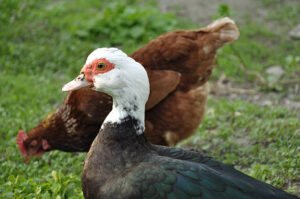
Muscovy ducks, although more resistant to some avian diseases, are susceptible to gastrointestinal parasites when raised outdoors. Their tropical origins may predispose them to certain parasites, and their slower growth rate could prolong the impact of chronic infestations.
Backyard and heritage breeds are particularly vulnerable due to inconsistent deworming schedules, lack of veterinary oversight, and poor biosecurity. Moreover, many small-scale farmers underestimate the importance of routine parasite control in ducks, assuming ducks are naturally hardy. While ducks are generally resilient birds, their exposure to contaminated environments—especially standing water, manure-laden soil, or shared equipment—makes them prime targets for roundworm infestation.
Ultimately, the risk is less about breed-specific susceptibility and more about management and environment. However, breeds with high foraging behavior, outdoor access, and intensive production schedules are disproportionately affected, necessitating tailored prevention and monitoring plans.
Life Stages Affected
Ascaridiasis can affect ducks at all life stages, but the severity and consequences vary significantly between age groups.
- Ducklings (0–8 weeks of age): This is the most vulnerable stage. Ducklings have immature immune systems and require high nutrient intake for rapid growth. Even small numbers of worms can disrupt digestion and nutrient absorption, leading to stunted development, emaciation, and, in severe cases, death. Mortality in heavily infected ducklings can reach high levels, especially in unsanitary conditions.
- Juvenile ducks (8–20 weeks): As ducks grow, they begin to develop some immunity to parasites. However, during this transitional phase—especially in birds approaching sexual maturity—stress from hormonal changes or social dynamics can exacerbate the effects of parasitism. Juveniles may exhibit poor weight gain and delayed feather development.
- Adult ducks (20+ weeks): Mature ducks often carry low to moderate worm burdens without showing overt symptoms. Their immune systems can suppress adult worm populations, and acquired resistance may reduce fecundity of female worms. However, adult ducks under stress—such as during molting, egg production, or cold weather—are prone to clinical disease resurgence. Laying hens may experience a significant drop in egg production or egg quality.
It is noteworthy that while younger ducks are more prone to clinical disease, adult ducks can serve as asymptomatic carriers, continuously shedding eggs into the environment and acting as a reservoir for infection. This makes routine monitoring and deworming in adult flocks essential to break the transmission cycle.
Diagnosis of Ascaridiasis
Accurate diagnosis of ascaridiasis in ducks involves a combination of clinical evaluation, fecal examination, and post-mortem analysis.
- Clinical observation: Veterinarians or flock managers should first assess behavioral and physical signs such as weight loss, diarrhea, lethargy, and visible worms in droppings. A history of poor sanitation or co-housing with other poultry can support suspicion.
- Fecal flotation test: This is the most common diagnostic tool. A fresh fecal sample is mixed with a flotation solution (e.g., zinc sulfate or saturated sodium chloride) to separate parasite eggs based on density. Under the microscope, Ascaridia eggs are large (approximately 70–90 µm x 40–50 µm), oval, and have a thick, pitted shell with a smooth outer layer. The presence of numerous eggs confirms active infection.
- Direct smear or sedimentation: In cases with low egg shedding, direct microscopic examination of a fecal smear or sedimentation technique may enhance detection.
- Post-mortem examination (necropsy): In deceased birds, necropsy can reveal adult roundworms in the small intestine. The worms are typically found in the duodenum and jejunum, often coiled into tangled masses. Mucosal damage, inflammation, and secondary bacterial infections may also be observed.
- Larval culture: In research or complex cases, fecal cultures can be used to hatch eggs and identify the larval stage, helping differentiate between Ascaridia and other nematodes.
It is important to note that intermittent egg shedding can lead to false-negative results in fecal exams. Therefore, sampling multiple birds and repeating tests over time increases diagnostic accuracy.
Advanced techniques such as PCR (polymerase chain reaction) are available for species-specific identification but are not routinely used in field diagnostics due to cost and accessibility.
Early and accurate diagnosis is crucial for initiating treatment and preventing parasite spread within the flock.
Treatment of Ascaridiasis
Effective treatment of ascaridiasis in ducks involves the use of anthelmintic (deworming) medications. However, choice of drug, dosage, and administration route must be carefully considered, especially since not all dewormers are approved for use in ducks, and overdosing can be toxic.
Commonly used anthelmintics include:
- Fenbendazole: A broad-spectrum benzimidazole effective against adult and some larval stages of Ascaridia. It is typically administered orally via drinking water or feed for 3–5 days. The recommended dose for ducks is approximately 100 mg/kg body weight per day. Fenbendazole is relatively safe and widely used in poultry.
- Levamisole: An imidazothiazole compound effective against nematodes. It can be given in drinking water or by injection. However, levamisole has a narrow safety margin in ducks and should be used with caution. Overdosing may cause neurotoxic effects.
- Ivermectin: A macrocyclic lactone with activity against a wide range of internal and external parasites. While effective, ivermectin is not officially approved for ducks in many countries. Off-label use requires veterinary supervision. It is usually administered subcutaneously or mixed with feed.
- Albendazole: Though effective, albendazole is not recommended for use in ducks due to potential toxicity, especially in waterfowl. It can cause bone marrow suppression and aplastic anemia.
Treatment protocols should include:
- Whole flock treatment: To prevent re-infection, all birds in the flock should be treated simultaneously, especially if signs are widespread.
- Repeat treatment after 2–3 weeks: Since most dewormers target adult worms, a second round is necessary to eliminate newly matured larvae that hatched after the first treatment.
- Withdrawal periods: Observe withdrawal times for meat and egg consumption, especially when using drugs off-label. For example, fenbendazole typically requires a 7–14 day withdrawal before eggs or meat are safe for human consumption.
- Supportive care: Provide clean water, high-quality feed, and a stress-free environment during recovery. Vitamins (especially A, D, E, and B-complex) can support gut repair and immunity.
Always consult a veterinarian before administering any medication. Self-medicating with chicken dewormers without adjusting for duck physiology can lead to treatment failure or poisoning.
Prognosis & Complications
The prognosis for ducks infected with Ascaridia varies depending on the severity of infestation and timeliness of treatment.
- Mild infections: With early detection and proper deworming, the prognosis is excellent. Ducks usually recover fully with improved weight gain and activity within weeks.
- Moderate infections: Recovery may be slower, requiring nutritional support and environmental management to prevent re-infection. Egg production in laying ducks typically returns to normal post-treatment.
- Severe infections: The prognosis is guarded. Ducks with intestinal blockage, perforation, or secondary bacterial infections may die despite treatment. Young ducklings are especially at risk.
Potential complications include:
- Intestinal obstruction: Large numbers of worms can physically block the small intestine, leading to colic-like symptoms, distension, and death.
- Perforation and peritonitis: Aggressive larval migration or worm movement can damage intestinal walls, allowing bacteria to enter the abdominal cavity.
- Malnutrition and wasting: Chronic parasitism leads to protein and vitamin deficiencies, impairing growth, immunity, and reproduction.
- Increased mortality in ducklings: Mortality rates can spike in young flocks with heavy worm burdens.
- Secondary infections: Weakened birds are more susceptible to coccidiosis, E. coli, and other opportunistic pathogens.
- Economic losses: Reduced feed efficiency, poor growth rates, lower egg yields, and increased mortality affect farm profitability.
Delay in diagnosis or inadequate treatment significantly worsens the prognosis. Therefore, proactive monitoring and prompt intervention are essential.
Prevention of Ascaridiasis
Prevention is the cornerstone of managing ascaridiasis in ducks. Since the parasite thrives in contaminated environments, control strategies should focus on hygiene, management, and routine health monitoring.
Key preventive measures include:
- Maintain clean housing: Regularly remove manure and soiled bedding. Replace litter frequently and ensure dry, well-ventilated coops. Use disinfectants that are safe for poultry.
- Rotate pastures or paddocks: Avoid continuous use of the same land for duck rearing. Rotate grazing areas every few months to break the parasite lifecycle, as Ascaridia eggs require time to embryonate in soil.
- Control moisture: Minimize muddy or wet areas around waterers and shelters. Use gravel or concrete pads to reduce soil contact.
- Quarantine new birds: Isolate any new additions for at least 2–4 weeks and conduct fecal exams before introducing them to the main flock.
- Implement routine deworming: Establish a prophylactic deworming schedule based on local prevalence, flock history, and veterinarian advice. Deworm young ducks at 4–6 weeks and repeat every 4–6 weeks until maturity. Adults should be dewormed 2–4 times per year.
- Use clean feed and water: Protect feeders and waterers from fecal contamination. Elevate feeders and use nipple drinkers where possible.
- Avoid mixed-species housing: Separate ducks from chickens and turkeys, which can harbor higher worm burdens and serve as reservoirs.
- Practice biosecurity: Limit access to the duck area, disinfect footwear and equipment, and control wild birds and rodents.
- Conduct fecal egg counts: Perform regular fecal examinations to monitor parasite load and deworming efficacy.
- Educate farm personnel: Train staff to recognize signs of parasitism and maintain hygiene protocols.
Prevention is not only more effective than treatment but also more economical. A clean, well-managed environment drastically reduces the risk of ascaridiasis and other parasitic diseases.
Diet and Nutrition in Managing and Preventing Ascaridiasis
Nutrition plays a critical role in both preventing and managing ascaridiasis in ducks. A well-balanced diet strengthens the immune system, enabling ducks to resist or tolerate parasite infections more effectively.
Key dietary considerations:
- High-quality protein: Ducklings and laying ducks require 16–20% crude protein in their diet. Protein supports tissue repair, immune function, and egg production—compromised during worm infestations.
- Energy-dense feed: Provide adequate calories to offset reduced feed intake and nutrient loss. Use grains such as corn, wheat, and barley as energy sources.
- Vitamins:
- Vitamin A: Essential for maintaining healthy mucosal lining of the gut, which acts as a barrier against parasites.
- Vitamin E and selenium: Support antioxidant defenses and immune function.
- B-complex vitamins: Aid in digestion, energy metabolism, and nerve function, which may be impaired during parasitism.
- Minerals: Ensure sufficient calcium and phosphorus for bone development and eggshell formation. Zinc and copper also contribute to immune health.
- Probiotics and prebiotics: Supplementing with beneficial bacteria (e.g., Lactobacillus, Bifidobacterium) and prebiotic fibers (e.g., inulin, FOS) promotes a healthy gut microbiome, which can inhibit pathogen colonization and improve digestion.
- Herbal supplements: Some natural compounds, such as garlic, pumpkin seeds, wormwood, and diatomaceous earth, are believed to have anthelmintic properties. While not replacements for pharmaceutical dewormers, they may offer supportive benefits.
- Hydration: Clean, fresh water is vital. Ducks consume large amounts of water, and dehydration exacerbates disease symptoms.
During and after deworming, feeding a nutrient-rich recovery diet helps restore body condition. Avoid moldy or contaminated feed, which can further depress immunity.
It’s essential to tailor the diet to the duck’s life stage and production goals—e.g., starter, grower, or layer rations—and ensure constant access to balanced nutrition.
Zoonotic Risk of Ascaridiasis in Ducks
The zoonotic potential of Ascaridia species affecting ducks is considered very low to negligible. Ascaridia columbae and Ascaridia dissimilis are host-specific nematodes that primarily infect birds and do not complete their life cycle in humans.
Unlike Ascaris lumbricoides (a roundworm of humans) or Toxocara species (from dogs and cats), Ascaridia spp. in poultry are not known to cause visceral larva migrans or other zoonotic diseases in people.
However, indirect risks exist:
- Poor hygiene practices: Handling infected ducks, cleaning contaminated coops, or consuming vegetables grown in soil fertilized with untreated poultry manure without proper handwashing or produce washing can expose individuals to various pathogens, including bacteria like Salmonella or E. coli, which may co-occur with parasitic infections.
- Cross-contamination: Although the worms themselves are not infectious to humans, the presence of Ascaridia eggs in the environment indicates poor sanitation, which may harbor other zoonotic agents.
- Occupational exposure: Farmers, veterinarians, or children in backyard settings may be at risk of accidental ingestion of parasite eggs if hygiene standards are not maintained.
Therefore, while ascaridiasis in ducks is not directly transmissible to humans, good biosecurity, personal hygiene (e.g., handwashing after handling birds or manure), proper cooking of poultry products, and safe disposal of litter are essential public health practices.
Educating poultry keepers about parasite life cycles and hygiene can minimize any residual risk and ensure safe, sustainable duck farming.
Conclusion
Ascaridiasis is a significant parasitic disease affecting duck health and productivity worldwide. Caused by host-specific roundworms of the genus Ascaridia, the infection spreads through ingestion of embryonated eggs from contaminated environments. Ducks of all breeds and ages can be affected, but young, free-ranging, or poorly managed birds are at highest risk.
Clinical signs range from subclinical weight loss to severe intestinal blockage, particularly in ducklings. Diagnosis relies on fecal examination and necropsy, while treatment involves targeted anthelmintic use under veterinary guidance. Prognosis is favorable with early intervention, but complications like malnutrition and secondary infections can arise in untreated cases.
Prevention through sanitation, rotational grazing, routine deworming, and biosecurity is far more effective than cure. A balanced diet rich in protein, vitamins, and probiotics supports immunity and recovery. While Ascaridia spp. are not zoonotic, maintaining good hygiene is crucial to prevent indirect health risks.
By integrating knowledge of causes, symptoms, management, and prevention, duck keepers can maintain healthy, productive flocks and contribute to sustainable poultry farming practices.
#AscaridiasisInDucks, #RoundwormsInDucks, #DuckHealth, #PoultryParasites, #DuckFarming, #BackyardDucks, #DuckCare, #NematodeInfection, #DewormingDucks, #DuckDiseases, #PoultryHealth, #FarmAnimalHealth, #DuckNutrition, #AscaridiaColumbae, #DuckHusbandry, #FreeRangeDucks, #DuckParasites, #HealthyDucks, #VeterinaryCare, #DuckFarmers, #PoultryManagement, #ZoonoticRisk, #ParasitePrevention, #OrganicDuckFarming, #DuckEggProduction, #AnimalHealthTips, #SustainableFarming, #DuckKeeper, #DuckVet, #PoultryScience





Add comment