
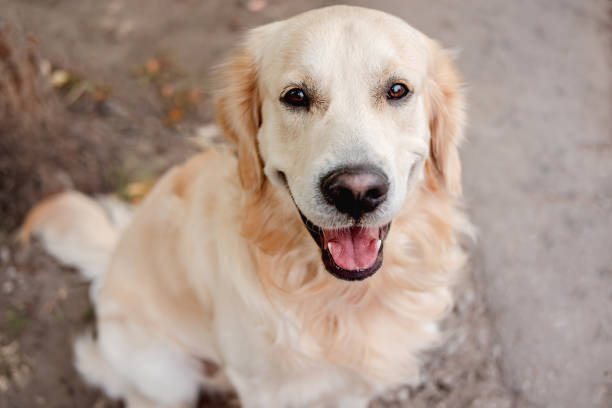
The foundation of modern, ethical dog obedience training rests firmly on Positive Reinforcement. This method uses rewards—primarily food—to mark and strengthen desired behaviors. However, the seemingly simple act of giving a dog a treat is, in reality, a complex mechanical and physiological transaction.
Choosing the perfect training treat is not a matter of convenience; it is a critical skill that directly impacts training speed, efficiency, motivation, and, crucially, the long-term health of the dog. A treat that is too large, too bland, or too caloric can sabotage training sessions, lead to weight gain, or fail entirely when faced with distraction.
This comprehensive guide delves into the essential factors that govern treat selection, ensuring that every reward maximizes learning potential while maintaining physiological balance.
I. THE PSYCHOLOGY AND MECHANICS OF POSITIVE REINFORCEMENT
Before examining the treats themselves, it is essential to understand the functional definition of a training reward. The goal is to create a seamless link between the action (the dog performing the desired behavior) and the consequence (the treat delivery). This link must be instantaneous and repeatable hundreds of times per session.
The Purpose of the Training Treat
The treat serves three primary functions in Positive Reinforcement:
- A Marker of Success: When paired with a verbal cue (“Yes!”) or a clicker, the treat confirms to the dog that the precise behavior performed in that exact moment was correct.
- A Motivator: The inherent value of the treat determines the dog’s willingness to perform the behavior, especially under stressful or distracting conditions.
- A Bridge to Repetition: A properly selected treat allows for rapid ingestion, minimizing cleanup, chewing time, and delay between repetitions, thus increasing the total number of learning trials within a short period.
A failure in any of these areas—if the treat is hard to eat, unappealing, or too filling—will slow the learning curve and diminish motivation.
II. TREAT SIZE: THE SPEED AND EFFICIENCY FACTOR
In dog training, time is the enemy of clarity. If it takes the dog three seconds to chew and swallow a reward, that is three seconds separating the successful action and the delivery of the next cue. This delay breaks the flow, allows the dog’s attention to wander, and reduces the number of repetitions possible in a 10-minute session.
The cardinal rule of training treats is this: The treat must be swallowed, not chewed.
1. The Instantaneous Swallow Criterion
The ideal training treat is small enough to be consumed with a single gulp, requiring minimal jaw work. This is mandatory for behaviors requiring high-speed repetition, such as heeling, rapid recalls, or teaching foundational maneuvers like spins and targeting.
If a dog must pause, settle, and mechanically process the food, the arousal necessary for learning dissipates. The behavior should be rewarded, the treat delivered, and the dog should be immediately ready for the next cue.
2. Concrete Size Guidelines (The Pea/Dime Rule)
The appropriate size depends entirely on the dog’s size and breed, but there are standard benchmarks:
| Dog Size Category | Recommended Treat Size | Contextual Consideration |
|---|---|---|
| Toy/Small Breeds (e.g., Chihuahua, Yorkie) | Half a pea or a quarter of a raisin. | Treats must be minuscule to prevent overfeeding and maintain rapid consumption. |
| Medium Breeds (e.g., Beagle, Border Collie) | Pea-sized or the size of a single dried lentil. | This is the most common size benchmark for soft, commercial training treats. |
| Large/Giant Breeds (e.g., German Shepherd, Mastiff) | Dime-sized or the size of a standard M&M. | While the dog is large, the goal remains the quick swallow. Do not scale the treat size directly proportional to the dog’s mouth size. |
The Exception: Jackpot Rewards: When a dog performs an exceptionally difficult or breakthrough behavior, the reward should be disproportionately high. This “Jackpot” can be slightly larger or a continuous stream of 3-4 standard, small treats delivered rapidly. This confirms the phenomenal value of the specific action, but these are exceptions, not the norm for daily training.
3. Texture Matters: Soft vs. Crunchy
Texture is intrinsically linked to consumption speed:
- Soft/Chewy Treats (Preferred): Meat-based, semi-moist, or cheese pieces. These dissolve quickly upon contact with saliva and require minimal mechanical breaking, fulfilling the “swallow, not chew” requirement.
- Crunchy/Solid Treats (Avoid for Training): Kibble, biscuits, or hard dental chews. These require the dog to crunch and swallow sharp pieces, which slows the rate of delivery and can be distracting or messy. They are useful only for low-level maintenance rewards or enrichment, not high-intensity training.
III. TREAT SMELL: THE HIGH-VALUE HIERARCHY OF MOTIVATION
If size dictates the efficiency of the training mechanic, smell dictates the dog’s motivation. Dogs are driven primarily by their olfactory senses. The potency of a treat’s smell is often directly correlated with its perceived value.
In training, treats are categorized along a motivational spectrum, often referred to as the Reinforcement Hierarchy or the Treat Value Matrix.
1. Low-Value Rewards (Maintenance)
These treats are sufficient for known behaviors in environments with zero distraction. They typically have low odor and are low-calorie.
- Examples: Standard kibble (if the dog likes it), plain dry commercial biscuits, or low-fat cereals (e.g., Cheerios).
- Best Use: Maintenance training, review of mastered commands (e.g., “Sit” in the living room), or luring games where the behavior itself is the primary novelty.
2. Medium-Value Rewards (General Obedience)
These treats provide enough scent and flavor to hold attention in mildly distracting environments (e.g., the backyard, a quiet classroom). They are the default choice for most instructional sessions.
- Examples: Commercial semi-moist training treats (often chicken or liver flavored), hard cheese cut into tiny cubes, or low-sodium deli meat.
- Best Use: Indoor group classes, basic obedience drills, introducing new behaviors, and practicing known skills in slightly varied locations.
3. High-Value Rewards (Proofing and Distraction)
High-value treats are reserved for crucial moments: introducing a dog to a novel, scary, or highly distracting environment (e.g., a busy park, vet office, or competitive obedience ring); proofing (testing reliability); or teaching a difficult or aversive behavior (e.g., husbandry training like nail trims). They must be exceptionally pungent, often high in fat and moisture.
- Examples (The “Stinky” Arsenal):
- Boiled or Baked Chicken Breast: Easily prepared, highly palatable.
- Hot Dogs or Sausage: Cut finely (high sodium/fat, so use sparingly).
- Freeze-Dried or Cooked Liver: Exceptionally potent, lightweight, and easy to carry.
- Cream Cheese/Peanut Butter (Lickable Rewards): Excellent for sustained holds (e.g., stay commands or muzzle conditioning).
4. The Wet Factor: Why Smell Wins
The strong odor of a high-value treat is often due to its high moisture or fat content. A dog experiences scent when volatile molecules attach to the olfactory receptors. High moisture content allows these molecules to aerosolize more effectively, making the treat “smellier” and immediately more appealing. This is why a piece of dry kibble fails spectacularly when pitted against a chunk of boiled liver in a busy dog park.
Crucial Strategy: Rotation and Novelty: To prevent a dog from habituating to a single reward (where the treat loses its motivational impact over time), trainers must continuously rotate through the medium and high-value categories. If a dog only ever gets dried liver, they may eventually become bored. Introducing novel rewards (e.g., cheese one day, boiled steak the next) maintains excitement and peak motivation.
IV. CALORIE CONTROL: THE HEALTH AND NUTRITION IMPLICATIONS
The average dog training session involves delivering 50 to 150 individual rewards. If each reward is poorly chosen, the cumulative caloric intake can easily exceed the dog’s daily allowance, leading quickly to weight gain, obesity, and systemic health issues.
Calorie consideration is not just about avoiding obesity; it is about maintaining nutritional balance by ensuring that treat calories do not displace the essential vitamins and minerals provided by a balanced, commercial diet.
1. The 10% Rule: A Nutritional Boundary
Veterinarians and canine nutritionists universally recommend the 10% Rule:
Treats should constitute no more than 10% of a dog’s total daily caloric intake.
If a dog requires 1,000 calories per day, only 100 of those calories should come from training treats, supplements, or additional snacks. The remaining 900 calories must come from their balanced primary diet (kibble or raw food).
2. Calculating Caloric Intake and Treat Allowance
To adhere to the 10% rule, trainers must engage in careful calorie management, particularly during intensive training periods (e.g., puppy class, pre-competition tune-ups).
Step A: Determine Daily Energy Requirement (DER)
The DER is estimated based on the dog’s weight, age, activity level, and spay/neuter status. This calculation is best done in consultation with a veterinarian, but typical averages are:
- Example: A moderately active, spayed/neutered 50-pound dog may require approximately 1,100 to 1,300 kcal/day.
Step B: Determine Treat Maximum
Using the 10% rule:
- If DER = 1,200 kcal/day, then Treat Allowance = 120 kcal/day.
Step C: Calculate Per-Treat Calorie Count
This requires diligence, as most small treats do not have calorie details for a single piece. If a bag of treats contains 300 pieces and totals 450 kcal for the whole bag, then:
- 450 kcal / 300 treats = 1.5 kcal per treat.
With a 120 kcal allowance, the dog can receive 80 individualized training treats (120 / 1.5 = 80) that day without undermining their nutritional status or weight.
3. Subtraction from the Main Meal (Compensation)
If a dog exceeds the 10% allowance through training, the owner must compensate by reducing the dog’s main meal portion for that day.
- The Problem with High-Calorie Treats: If the owner uses hot dogs (which are significantly higher in calories than commercial training treats), they may hit the 120 kcal limit after only 20-30 pieces. This severely limits the number of repetitions possible, making it inefficient for intensive training.
- The Necessity of Low-Calorie Options: Low-calorie treats (e.g., boiled, lean chicken, or specialized weight-management treats) allow for a greater volume of treats, facilitating hundreds of repetitions without excessive caloric intake.
4. Special Physiological Considerations
Calories are not the only consideration. Certain treats must be avoided based on the dog’s medical status:
- Weight Management: Use plain vegetables (carrots, steamed green beans, thinly sliced zucchini) as low-value, high-bulk rewards.
- Allergies/Sensitivities: Avoid common allergens (beef, chicken, wheat, dairy). Use novel proteins (duck, venison) or single-ingredient, limited-ingredient commercial treats.
- Renal/Cardiac Issues: Avoid high-sodium treats (hot dogs, deli meats, many cheeses). Opt for low-sodium, home-cooked, unseasoned options.
V. PRACTICAL APPLICATION: CHOOSING THE RIGHT TREAT FOR THE CONTEXT
The perfect treat is dependent on the environmental demands placed on the dog. A treat that is perfect for a home session is utterly useless at a dog show. Effective trainers adopt a contextual reward strategy.
Context 1: Foundational Learning and Low Distraction (Home/Classroom)
- Goal: High repetition, building muscle memory, maximizing efficiency.
- Strategy: Utilize the lowest palatable value treat that the dog will still work for. This saves high-value rewards for proofing later.
- Recommended Treats: Standard kibble (if high drive), single-ingredient freeze-dried liver (crumbled small), or soft, small commercial training treats.
- Calorie Focus: Extremely low calorie per piece to allow for 100+ repetitions.
Context 2: Proofing and Medium Distraction (Park/Public Settings)
- Goal: Testing reliability against moderate competition (e.g., passing people, distant dogs, new smells). The reward must outweigh the distraction.
- Strategy: Step up to medium-to-high value treats (3 or 4 on the value scale).
- Recommended Treats: Cubes of soft cheese, small slices of boiled chicken, or high-quality, pungent commercial soft training treats.
- Smell Focus: Must have palpable scent to capture attention when the dog’s focus is elsewhere.
Context 3: High-Stress Situations and Novelty (Vet/Competitions)
- Goal: Counter-conditioning fear or motivating laser focus in highly arousing or scary environments.
- Strategy: Use the dog’s absolute favorite, highest-value reward—the “Gold Standard.”
- Recommended Treats: Warm, freshly cooked meat (steak, chicken, liver), specific gourmet wet food squeezed from a tube, or high-fat/high-smell options (used sparingly).
- Delivery Technique: Often delivered in a rapid succession (jackpot style) or as a continuous, sustained reward (if using lickable treats).
Context 4: Luring and Shaping New Behaviors
- Goal: Using the treat to guide the dog into position (luring) before fading the lure; the dog must see and smell the reward clearly.
- Strategy: Luring treats must be slightly visible but still small enough to fit easily in the palm, usually medium-value.
- Recommended Treats: Soft, slightly sticky treats that stay anchored to the fingers (e.g., peanut butter on the fingertip, small hot dog pieces).
- Mechanical Note: Ensure the treat stays on the finger until the desired position is achieved; crumble is not suitable for luring.
VI. THE ART OF TREAT PREPARATION AND STORAGE
The logistical challenges of handling treats—keeping them fresh, managing mess, and ensuring safe storage—are essential components of successful training.
1. Preparation: Cutting and Consistency
High-value, human-grade treats (like chicken or cheese) require pre-preparation:
- Uniformity: Cut all treats to the same size (pea or dime). This ensures consistency in caloric intake and consumption speed.
- Handling: After cooking meats, pat the pieces dry with a paper towel. This reduces residue, minimizes grease transfer to the handler’s hand, and keeps the treat pouch cleaner.
- Mix-Ins for Smell: For low-value treats (like dried commercial biscuits), they can be placed in a Ziploc bag overnight with a high-smell counterpart (like a small slice of cheese or hot dog) to infuse them with a more potent odor without adding excessive calories.
2. Delivery Equipment: Pouches and Dispensers
The mechanism of delivery must be as fast as the dog’s consumption.
- Hands-Free Pouches: Use a dedicated training pouch that clips to the waist. This allows for instant access and minimizes fumbling. The opening must be wide enough for rapid hand insertion and closure to prevent spilling.
- Lickable Dispensers (Squeeze Tubes): For high-value, high-mess rewards (like wet food or peanut butter), squeeze tubes are invaluable. They keep the reward contained, are easy to deliver in small bursts, and are ideal for teaching duration behaviors (e.g., holding a stay).
3. Storage and Safety
Training treats, especially moist and meat-based rewards, are highly perishable.
- Daily Portioning: Only take the necessary amount of treats for the session. Store unused portions in an airtight container in the refrigerator or freezer.
- Treat Pouch Hygiene: Training pouches must be washed frequently. Unwashed pouches become reservoirs for mold, bacteria, and rancid fat residue, which is unhygienic for both dog and handler.
VII. DIY TREATS: THE ULTIMATE CONTROL OVER INGREDIENTS
For dogs with specific dietary needs, severe allergies, or weight management concerns, crafting homemade treats offers maximum control over size, ingredients, and caloric density.
1. Safety First: Ingredients to Avoid
When making homemade treats, absolute avoidance of canine toxins is paramount:
- NO Xylitol/Birch Sugar: Extremely toxic, often found in human peanut butters and sugar-free items.
- NO Grapes/Raisins, Onions/Garlic, Macadamia Nuts, or Avocado pits/skin.
- Avoid Excessive Salt, Sugar, or Baking Powder.
2. Low-Calorie DIY Staples
- Boiled Chicken Breast: Cook until firm, slice thinly, then dice into pea-sized cubes. Can be refrigerated for up to 3 days or frozen.
- Sweet Potato Bites: Bake or steam sweet potatoes until soft, then cut into small squares. Naturally sweet, but low in fat.
- Liver Fudge: High-value, highly potent reward. Grind beef or chicken liver, mix with flour and an egg, pour into a thin layer, and bake until set (around 20 minutes). Cut into tiny squares while still warm.
3. Dehydrated/Air-Dried Meats
Dehydrating lean meats (like chicken or beef heart) concentrates the flavor and aroma while removing most moisture, resulting in a shelf-stable treat that is potent but requires slight chewing. This is a good intermediate choice for medium-value rewards.
CONCLUSION: THE TRIUMPHIRATE OF A PERFECT TREAT
The selection of the perfect training treat is where behavior science meets nutritional science and practical logistics.
The effective trainer views the treat not as a snack, but as a crucial unit of reinforcement, governed by a critical and inseparable triumvirate of characteristics:
- Size (Efficiency): It must be minuscule—small enough to be instantly swallowed, enabling rapid repetition and maintaining the flow of attention.
- Smell (Motivation): It must be potent—the value must correlate with the difficulty of the task or the level of environmental distraction. The stinkier, the better for high-stakes training.
- Calories (Health): It must be calculated—all treats must be tracked and subtracted from the dog’s daily food allowance, adhering strictly to the 10% rule to prevent weight gain and nutritional imbalance.
By mastering these three elements, trainers transform a simple reward into a powerful, efficient tool, guaranteeing maximum motivation and optimal learning outcomes while safeguarding the dog’s long-term health.
#DogTrainingTips #PositiveReinforcement #TrainingTreats #CanineHealth #DogObedience #PuppyTraining #HighValueTreats #TrainingHacks #DogNutrition #TreatHierarchy #DogLife #DogTrainerAdvice #ForceFreeTraining #PerfectPaws #HomemadeDogTreats #DogBehavior #HealthyDogTreats #DogDiet #ClickerTraining #DogTraining101







Add comment