
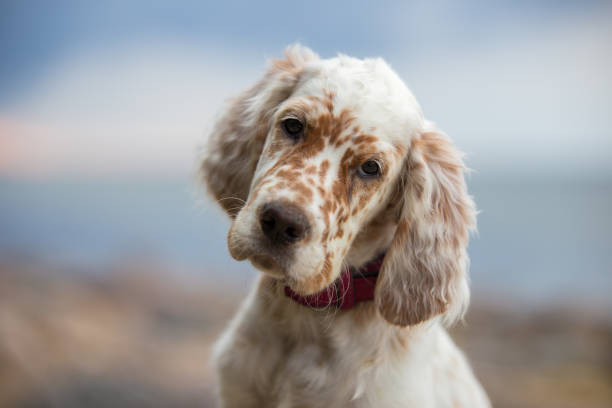
INTRODUCTION: THE REVOLUTIONARY POWER OF PRECISION
Dog training has evolved dramatically over the last century, moving away from dominance-based methods and harsh corrections toward methodologies rooted in behavioral science, efficacy, and mutual respect. At the forefront of this humane evolution is Clicker Training.
Often misunderstood as merely linking a sound to a treat, clicker training is, in reality, a sophisticated and elegant communication system. It is a linguistic bridge built on the principles of Operant Conditioning, allowing humans to communicate with unparalleled precision exactly which moment and which behavior is worthy of reward. Mastering the clicker is not just about teaching your dog tricks; it is about fundamentally changing how your dog views learning—transforming training from a forced compliance exercise into an engaging, empowering, and joyful game.
This comprehensive guide delves deep into the science, mechanics, application, and troubleshooting of clicker training, providing the detailed knowledge necessary to unlock your dog’s full cognitive and behavioral potential.
PART I: THE FOUNDATIONS OF OPERANT CONDITIONING
To truly appreciate the clicker, one must understand the bedrock upon which it stands: the science of how animals learn.
The Architect of the Click: B.F. Skinner
While the application of the clicker in modern dog training is often credited to trainers like Karen Pryor, the underlying principles were established by psychologist B.F. Skinner through his work on Operant Conditioning.
Skinner demonstrated that behavior is a function of its consequences. An animal learns to associate a behavior (the operant) with a specific outcome (the consequence).
The A-B-C of Behavior
Every learning interaction can be broken down into three crucial components:
- A (Antecedent): The cue or signal that precedes the behavior (e.g., saying “Sit,” or the sight of a squirrel).
- B (Behavior): The action performed by the dog (e.g., sitting down, barking).
- C (Consequence): What happens immediately after the behavior (e.g., receiving a treat, getting scolded, or the squirrel running away).
Clicker training focuses exclusively on manipulating the Consequence (C) through Positive Reinforcement to increase the likelihood of the desired Behavior (B) repeating in the presence of the Antecedent (A).
Positive Reinforcement vs. Punishment
A fundamental distinction must be grasped:
- Positive Reinforcement ($R+$): Adding something desirable to the environment after a behavior occurs to make that behavior more likely in the future (e.g., adding a treat after a Sit). This is the sole mechanism of effective clicker training.
- Positive Punishment ($P+$): Adding something undesirable (aversive) to the environment after a behavior occurs to decrease the behavior’s likelihood (e.g., a leash correction after pulling).
Clicker training avoids punishment because punishment suppresses behavior without teaching alternatives, damages the human-animal bond, and often leads to anxiety or learned helplessness. Reinforcement builds confidence and clarity.
PART II: THE ROLE OF THE MARKER SIGNAL
If treats are the rewards, why do we need the clicker? This is the central question that defines the clicker’s genius.
The Problem of Timing
A dog’s behavior might last only a fraction of a second—a fleeting moment when all four paws hit the ground in a perfect heel position, or when a timid dog bravely touches a new object. It takes time for the human hand to reach into a pouch, pull out a treat, and deliver it.
In that half-second delay, the dog might shift weight, scratch an ear, or look away. If the reward arrives after the dog scratches, the dog is reinforced for the scratch, not the desired behavior. This is known as Contingency Error.
The Clicker as a “Bridge Signal”
The clicker solves the timing problem by acting as a Marker Signal or a Conditioned Secondary Reinforcer.
- Marker: The click is instantaneous, allowing the trainer to accurately pinpoint the exact moment the dog performed the desired action. It tells the dog, “YES! THAT precise thing you just did earned you a reward.”
- Bridge: Because the click is instantaneous but the treat delivery is not, the click bridges the gap in time between the behavior and the primary reinforcement (the treat).
The click itself carries no emotional weight or meaning until it is intentionally paired with a powerful, primary reinforcer (food). Once paired, the click becomes a powerful predictor of reward, acting as a momentary celebration.
Characteristics of an Ideal Marker Signal
The clicker is ideal because it is:
- Fast: Quicker than verbal praise.
- Unique: Does not sound like anything else in the dog’s environment (unlike saying “Good boy,” which is often used in general conversation).
- Consistent: Always sounds the same, regardless of the trainer’s mood or tone.
PART III: PREPARATION AND ESSENTIAL GEAR
Before embarking on your clicker journey, proper setup ensures success and minimizes frustration.
1. Selecting the Right Clicker
Clickers come in various forms:
- Box Clickers: Traditional and often produce the loudest, sharpest sound.
- Button/Thumb Clickers: Ergonomic, often making a softer sound, great for noise-sensitive dogs.
- Target Sticks with Attached Clickers: Useful for teaching precision movements.
Pro Tip for Sensitive Dogs: If your dog flinches or retreats from the sound, dampen the clicker (e.g., wrap it in a towel or place it in your pocket) or use a softer verbal marker like a sharp, brisk “Yes!”
2. Choosing High-Value Reinforcers
The effectiveness of the click relies entirely on the quality of the reward that follows. The reinforcer must be something the dog truly desires in that moment.
- High-Value ($R+++$): Reserved for important new learning, high distraction environments, or difficult behaviors (e.g., small pieces of cooked chicken, cheese, hot dogs).
- Medium-Value ($R++$): Used for maintenance training in low distraction areas (e.g., commercial soft training treats, kibble mixed with broth).
- Low-Value ($R+$): Used for behaviors the dog already knows well (e.g., regular kibble).
Delivery Strategy: Keep treats small (pea-sized) to maintain engagement and prevent the dog from getting full too quickly. Deliver the treat after the click, not simultaneous with it.
3. Gear Management and Training Environment
- Treat Pouch: Essential for quick, seamless access to rewards. Fumbling for treats breaks the training rhythm.
- Leash and Collar/Harness: Use a standard flat collar or comfortable harness. Avoid punitive equipment during clicker sessions.
- Environment Setup: Start training in a quiet, low-distraction area (a living room or quiet backyard). As the dog masters the skill, introduce increasing levels of “distraction, duration, and distance” (the 3 Ds).
PART IV: STEP 1: LOADING THE CLICKER (THE FOUNDATION)
This is the most critical step. If the dog does not understand that the click predicts a reward, the clicker is useless noise.
The Process of Classical Conditioning
Loading the clicker relies on Classical Conditioning (Pavlov). You are pairing a neutral stimulus (the click) with a primary stimulus (food) until the click itself evokes a positive emotional response and expectation.
Execution Steps:
- Preparation: Stand in a quiet area with your dog loose or on a relaxed leash. Hold the clicker in one hand and 10–20 small treats in the other or in your pouch.
- The Pair: Click the clicker once, and immediately, within one second, place a treat in the dog’s mouth or on the floor near them. Do not ask for any behavior. The dog simply hears the click and gets the reward.
- Repetition: Wait a moment (5–10 seconds), ensuring the dog has swallowed and is relaxed, and then repeat: Click—Treat. Click—Treat. Click—Treat.
- Session Duration: Perform 10–20 repetitions and then end the session.
- Criteria for Success: The clicker is loaded when, upon hearing the sound, the dog’s head immediately whips toward you with a bright, expectant look. They should show an obvious anticipatory response. This typically takes 3–5 short sessions.
CRITICAL RULE: Once the clicker is loaded, you must never click without following it immediately with a high-value reinforcer. The click must remain 100% reliable.
PART V: CORE TRAINING MECHANICS: TEACHING NEW BEHAVIORS
Once the clicker is loaded, you can use three primary methods to encourage and elicit the desired behavior.
1. Luring
Luring uses a physical prompt (a treat held in the hand) to guide the dog into the desired position.
- How it Works: Hold the treat close to the dog’s nose and move it in a path that coaxes the dog into the position (e.g., moving the lure over the head toward the tail to achieve a “Sit”).
- When to Click: Click the instant the body achieves the final shape (e.g., the rear touches the ground for a Sit).
- Pros: Fast way to introduce the concept and the final physical position.
- Cons: Dogs can become dependent on the lure (the hand signal) and may only perform the behavior when they see food. The lure must be faded quickly.
2. Capturing (Catching Natural Behavior)
Capturing involves waiting for the dog to spontaneously offer a desirable behavior and clicking the moment it occurs, effectively putting a behavior that already exists under stimulus control (a verbal cue).
- How it Works: Observe your dog naturally. If they are lying down quietly (a ‘settle’), Click—then reward. If they look at you nicely during a walk, Click—then reward.
- Application: Excellent for behaviors like lying down, standing, looking toward the owner, or waiting patiently.
- Advantage: Teaches the dog that they can initiate valuable behaviors, boosting confidence and engagement.
3. Shaping (The Art of Successive Approximations)
Shaping is the most powerful and transformative clicker technique. It is used to teach complex behaviors that the dog cannot perform instantly or that simply cannot be lured (like opening a door or putting toys away).
Shaping involves breaking the final behavior down into tiny, manageable steps and clicking and rewarding each successful approximation toward the goal.
Detailed Breakdown of Shaping:
Goal Example: Teaching a “Spin” (a 360-degree turn)
| Step | Behavior Required | Click Timing | Reinforcement Schedule |
|---|---|---|---|
| Stage 1: Acknowledgment | Dog looks toward the side you want them to turn. | Click the instant the head moves toward the wall/side. | Continuous (every time). |
| Stage 2: Initiation of Movement | Dog takes one single step in the correct direction. | Click immediately after the step. | Continuous (every time). |
| Stage 3: Quarter Turn | Dog completes 90 degrees of the turn. | Reinforce only the 90-degree turn, ignoring minor steps. | Continuous or close to it. |
| Stage 4: Half Turn | Dog completes 180 degrees. | Click only at 180 degrees. | High-value reinforcement. |
| Stage 5: Near Completion | Dog reaches 270 degrees. | Click at 270 degrees. | Variable (randomly rewarding 180 or 270). |
| Stage 6: Final Behavior | Dog completes a full 360-degree rotation. | Click only for the full rotation. | Reduced frequency, higher payout. |
| Stage 7: Adding the Cue | Say “Spin” right before the dog executes the final behavior. | Click and treat the successful spin. | Variable, highly rewarding. |
Key Principle of Shaping: “Raise the Criteria” gradually. Never proceed to the next stage until the current stage is mastered. If the dog fails repeatedly, you have asked for too much too quickly—“Drop the Criteria” back down to the last successful step.
Fading the Lure and Hand Movements
Once the dog reliably performs the behavior using the lure, it’s time to transition to a verbal cue and a subtle hand signal (if desired):
- Introduce the Cue: Say the verbal cue (“Sit”) before you produce the lure.
- Delay the Lure: Say the cue, wait half a second. If the dog starts to move without the lure, Click!
- Minimize the Lure: Gradually reduce the size and prominence of the hand movement until the hand gesture is subtle or the food is no longer in the hand.
- Transferring Control: If the dog performs the action when hearing the verbal cue without the lure, the behavior is now under stimulus control.
PART VI: APPLICATION: TRAINING CORE BEHAVIORS
Applying clicker methodology to common behaviors increases speed and reliability.
1. Teaching the Reliable Sit (Using Luring, then Fading)
- Lure Phase: Hold a treat at the dog’s nose. Move the treat slowly over the dog’s head toward the tail. As the dog’s rear drops, Click the moment the rear touches the floor. Reward immediately. Repeat 5 times.
- Cue Introduction: Say “Sit” right before you start the lure motion.
- Fading: Use a smaller motion, then eventually just point an open hand upward (the hand signal). Click only when the dog sits based on the minimal cue.
2. Teaching Down (Using Shaping)
Teaching the Down through shaping builds focus better than luring.
- Initial Behavior: Ask the dog to Sit.
- Approximations:
- Click for lowering the head slightly.
- Click only for lowering the head close to the floor.
- Click only for paw movement that shifts weight forward.
- Click only when one elbow touches the ground.
- The Jackpot: Only click and deliver a massive, high-value reward when both elbows and the entire body touch the ground (the full ‘down’).
- Cue Introduction: Once the dog reliably lowers into the position, say “Down” immediately before they start the movement.
3. Targeting/Touch (The Basis for Advanced Work)
Targeting is teaching the dog to touch a specific object (often the palm of your hand) with their nose. This is essential for teaching positions, moving the dog without pressure, and managing focus.
- Elicit Touch: Present your open palm close to the dog’s face.
- Click Timing: The instant the dog’s nose brushes your hand, Click! and reward away from the target hand.
- Repetition: Repeat 10–15 times.
- Adding the Cue: Introduce the word “Touch” or “Target” as the hand is presented.
- Generalization: Practice with the hand low, high, near objects, and eventually with an actual target stick.
4. Loose-Leash Walking (LLW)
LLW is difficult because it requires continuous positive behavior in a high-distraction environment. Clicker training breaks it down into small, repeatable steps.
- Define the Position: The goal is the dog moving forward with slack in the leash and their shoulder aligned with your knee (or wherever you define the ‘heel zone’).
- Initial Capturing (in quiet area): Walk forward. The second the dog steps into the correct position, Click and drop the treat right beside your leg (reinforcing the position).
- Step Count: Initially, click for one correct step. Then raise the criterion to two steps, then three.
- Proofing and Distraction: Introduce mild distractions. If the dog pulls, stop immediately. Wait until the tension leaves the leash (even a half-step back) and Click that release of tension. Then restart the walk. Never click while the leash is tight.
PART VII: ADVANCED CONCEPTS AND TROUBLESHOOTING
As training progresses, the schedule of reinforcement must change, and behaviors must be generalized.
1. Proofing and Generalization (The 3 Ds)
A behavior is not truly learned until the dog can perform it reliably in any context. This process is called Proofing or Generalization and relies on increasing the criteria across:
- Distance: Can the dog perform the Sit when you are 10 feet away?
- Duration: Can the dog maintain the Sit for 30 seconds?
- Distraction: Can the dog perform the Sit at the busy park, near a running child, or when another dog passes by?
Method: Always re-teach the behavior at the new, difficult level. If you move from the kitchen (easy) to the park (hard), treat the park session as if the dog is learning “Sit” for the first time. Reinforce heavily for the smallest successful attempt, then gradually raise the criteria.
2. Shifting Reinforcement Schedules
If you click and treat every single instance of a behavior (Continuous Reinforcement—CRF), the dog expects a reward every time. If you stop, the behavior will quickly cease (Extinction). To build persistence and reliability, you must transition to Intermittent (Variable) Reinforcement.
- Variable Ratio (VR): The dog is rewarded after a variable number of successful responses (e.g., reward after 3 sits, then after 7, then after 2). This schedule is highly resistant to extinction and builds the strongest behavioral drive (like a slot machine).
- Variable Interval (VI): The dog is rewarded for a successful response after a variable amount of time has elapsed (great for duration behaviors like ‘Stay’).
The Transition: Once the dog performs the behavior 8 out of 10 times in a low-distraction environment, start extending the time or the number of repetitions between the click/treat.
3. The Jackpot and Differential Reinforcement
- The Jackpot: A sudden payout of 5–10 high-value treats delivered rapidly. Use the Jackpot only when the dog offers a truly exceptional performance, an unprecedented approximation, or if they successfully perform a behavior in a highly distracting, difficult environment. The Jackpot permanently engraves the behavior into the dog’s memory as extremely valuable.
- Differential Reinforcement: The practice of rewarding the better version of a behavior. If the dog performs a lazy sit, use a medium reward. If they perform a fast, beautifully centered sit, give them a high-value treat and a click.
4. Dealing with Extinction Bursts and Behavioral Errors
When you transition from continuous to variable reinforcement, the dog may temporarily try harder or try different behaviors to get the reward back. This is called an Extinction Burst.
- Example: You stop immediately clicking every Sit. The dog sits, doesn’t get a click, so they might try sitting harder, whining, or offering a Down instead.
- Response: Ignore the unwanted behaviors (like whining or trying a different trick). Wait for the dog to offer the correct behavior again, then Click and reward the persistence. This teaches the dog to try harder or offer better approximations, not to quit or throw a tantrum.
PART VIII: COMMON CLICKER TRAINING MISTAKES
Even experienced trainers make small errors that diminish the effectiveness of the clicker.
1. Clicking and Treating Simultaneously
This is the most common mistake. If the reward arrives at the same time as the click, the click loses its function as a bridge. The sequence must be: Behavior > Click > Treat.
2. Leaning Forward (The Unintentional Lure)
Many owners subtly move their body or lean forward right before giving a cue. The dog learns to respond to the body language, not the verbal cue. Train in front of a mirror to ensure your body language remains neutral until you provide the intentional cue.
3. Holding the Clicker Incorrectly
You need to hold the clicker and the treats in a coordinated manner. Many people put the clicker in the hand delivering the treat, requiring them to switch hands or drop the clicker. Keep the clicker in the non-dominant hand and the treats in the dominant hand and pouch, ready to dispense.
4. Over-Clicking or Muting the Click
- Over-Clicking: Clicking multiple times for a single behavior dilutes the impact and confuses the dog about which moment was the right one. Use one short, sharp click.
- Muting the Click: If you use the clicker as a verbal cue or for attention-seeking, it loses its meaning as a precise marker.
5. Using the Click as an Emotional Release
The click is a technical marker, not applause. Do not use it if you are angry or highly stressed. If you feel relief or frustration, you may be clicking too late or reinforcing the wrong moment. Keep your emotional state neutral and focused on the behavior.
PART IX: CONCLUSION: A CONFIDENT PARTNERSHIP
Clicker training is more than a methodology; it is a philosophy of clear, positive communication. It shifts the burden of learning onto the trainer, demanding precision, patience, and observation, but in return, it empowers the dog.
When a dog understands that they can actively participate in the learning process—that they can “make the click happen”—they become thinking partners rather than passive recipients of commands. This results in a dog who is more confident, eager to engage, reliable in complex situations, and truly bonded to their human companion.
Embrace the clicker, commit to precision, and prepare to be amazed at the depth of your dog’s cognitive abilities.
#ClickerTraining #PositiveReinforcement #DogTrainingTips #DogObedience #ShapingBehavior #ClickerMadeEasy #TrainYourDog #DogLearning #HappyPup #ForceFreeTraining #RewardBasedTraining #OperantConditioning #DogLife #PupSchool #TrainingGoals





Add comment