
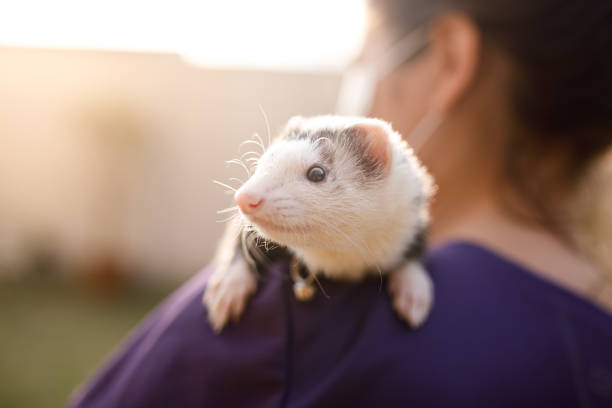
I. Defining Seniority and Sensory Reliance in the Ferret
A ferret is generally considered to be:
- Mature/Middle-Aged: 3 to 4 years
- Senior: 4 to 6 years
- Geriatric: 7+ years
Ferrets, unlike diurnal predators, are naturally crepuscular (active at dawn and dusk) and rely heavily on their sense of smell and hearing rather than sharp visual acuity. Their eyes are small, and their natural vision is somewhat nearsighted. However, when hearing and vision begin to decline concurrently in old age, the reliance on scent becomes paramount, and the ferret’s ability to navigate, hunt for food (even simulated hunting), and even respond to danger is compromised.
The aging process is characterized by cumulative oxidative stress, decreased cellular repair mechanisms, and chronic low-level inflammation, all of which contribute directly to the degradation of neural and structural components in the sensory organs.
II. Vision Changes in the Senior Ferret (Ocular Senescence)
Ocular changes are highly common in aging ferrets. While many changes are benign parts of senescence, others signal underlying systemic disease or painful conditions requiring immediate veterinary intervention.
A. Anatomy and Baseline Ocular Function
The ferret eye is structurally similar to that of other carnivores, but key differences include a small, vertically elliptical pupil and a prominent tapetum lucidum (the reflective layer responsible for excellent night vision, though less developed than in cats).
B. Common Age-Related Ocular Changes (Non-Pathological)
1. Nuclear Sclerosis (Lenticular Sclerosis)
This is arguably the most common age-related ocular finding across most senior mammals, including ferrets.
- Mechanism: As the ferret ages, new lens fibers are continually produced and compacted onto the older fibers deep within the lens nucleus. This compaction leads to the lens becoming denser and less flexible.
- Appearance: The center of the lens develops a grayish-blue haze or opalescence.
- Impact: Nuclear sclerosis causes a mild reduction in visual clarity and depth perception, but it rarely results in significant blindness. Crucially, light still passes through the lens with relative ease.
- Differentiation: It is often mistaken for cataracts by owners. A veterinarian can easily differentiate the two using an ophthalmoscope via a technique called retro-illumination (or tapetal reflection). If the veterinarian can visualize the back of the eye clearly through the haze, it is sclerosis.
2. Iris Atrophy
The iris muscle (responsible for constricting and dilating the pupil) may become thin or ragged in older ferrets.
- Impact: Decreased responsiveness of the pupil to light changes, making the ferret more sensitive to bright light.
C. Pathological Ocular Conditions Associated with Seniority
These conditions require medical management and may compromise vision severely.
1. Cataracts (Pathological Lens Opacities)
Unlike nuclear sclerosis, true cataracts involve denaturation and clumping of the lens proteins, leading to a truly opaque, white or milky appearance that completely blocks light transmission.
- Etiology:
- Primary Senile Cataracts: Developed purely due to age-related oxidative damage.
- Secondary Cataracts: Often linked to underlying systemic diseases, most notably Insulinoma (pancreatic beta-cell tumors). Chronic hyperglycemia (though less common in ferrets than in dogs/cats) or metabolic derangement associated with endocrine disorders can hasten cataract formation.
- Impact: Depending on the maturity (incipient, immature, mature, hypermature), cataracts can lead to partial or complete blindness. Hyper-mature cataracts can leak protein and cause severe inflammation (phacoclastic uveitis), which is painful and requires aggressive treatment.
- Management: While phacoemulsification (surgical cataract removal) is technically possible, it is often not recommended for older ferrets unless the uveitis is unmanageable or the quality of life is severely impaired, given the risks associated with general anesthesia in senior patients.
2. Glaucoma (Increased Intraocular Pressure, IOP)
Glaucoma is characterized by the failure of the eye to drain fluid (aqueous humor) efficiently, leading to a dangerous buildup of pressure.
- Etiology: Primary glaucoma (inherited) is rare in ferrets, but secondary glaucoma is more common, often resulting from pre-existing severe inflammation (uveitis) or lens luxation.
- Symptoms: This is a veterinary emergency. Symptoms include a dilated, non-responsive pupil, corneal edema (a bluish haze over the clear cornea), eye bulging (buphthalmia), redness, and severe pain (often manifested by lethargy, appetite loss, or rubbing the face).
- Diagnosis: Measured using a tonometer. Normal ferret IOP is low (around 10–20 mmHg). Readings consistently over 25 mmHg are concerning.
- Management: Immediate use of eye drops (e.g., carbonic anhydrase inhibitors, prostaglandins) to reduce pressure. If pressure cannot be controlled, the eye may need surgical removal (enucleation) to alleviate chronic pain, as blindness is inevitable in uncontrolled glaucoma.
3. Retinal Degeneration and Atrophy
The retina, the light-sensitive layer at the back of the eye, relies on complex neural and vascular structures.
- Mechanism: Age and systemic disease (e.g., hypertension, severe anemia) can damage the retinal photoreceptor cells (rods and cones) and the supporting retinal pigment epithelium.
- Diagnosis: Diagnosed by ophthalmoscopy, where the retina appears thin, pale, and vascularity is reduced. Electroretinography (ERG) can confirm functional loss, though this specialized test is rarely performed on ferrets outside of advanced referral centers.
- Impact: Often results in progressive, irreversible blindness.
D. Behavioral Indicators of Visual Impairment
Owners must be vigilant for subtle changes that indicate declining sight:
- Hesitancy in Navigation: Bumping into furniture, walls, or the side of the cage, especially when the environment is clean or rearranged.
- Difficulty with Elevations: Misjudging steps, falling off ramps or low surfaces, or refusing to use them.
- Startle Reflex: Increased tendency to startle when approached from the side or above, as they cannot see movement until it is close.
- Altered Play: Reluctance to chase fast-moving toys, favoring toys that make noise or utilize scent.
- Pupil Changes: Persistent pupillary dilatation (even in bright light) or lack of symmetry between pupils (anisocoria).
III. Hearing Changes in the Senior Ferret (Presbycusis)
Age-related hearing loss, known as presbycusis, is a progressive, bilateral, and irreversible decline in the ability to perceive sounds. It is exceedingly common in geriatric ferrets, often manifesting around 6–8 years of age.
A. Core Mechanism of Presbycusis
The complexity of hearing loss lies within the inner ear, specifically the cochlea. Sound waves are converted into hydraulic movement, stimulating delicate hair cells (sensory receptors) within the organ of Corti.
- Degeneration of Hair Cells: The primary cause of presbycusis is the cumulative loss and damage to the outer and inner hair cells, particularly those responsible for detecting high-frequency sounds. Once these cells are damaged, they cannot regenerate.
- Neural Pathway Changes: Additionally, aging affects the auditory nerve pathways and the central processing areas in the brain, reducing the efficiency of sound signal transmission and interpretation.
B. Differentiating Presbycusis from Other Causes of Deafness
It is essential to distinguish age-related decline from reversible causes of hearing loss or systemic pathologies that may involve the ear.
| Cause of Deafness/Hearing Loss | Characteristics in Senior Ferrets |
|---|---|
| Presbycusis (Age-Related) | Progressive, bilateral, irreversible. Usually affects high frequencies first. No pain or discharge. |
| Chronic Otitis Media/Interna | Often related to recurrent ear mites or bacteria. Can cause head tilt, circling, loss of balance (vestibular signs), pain, and discharge. |
| Adrenal Gland Disease Metastasis | High incidence in ferrets. Tumors or metastases can sometimes compress the auditory nerve (Cranial Nerve VIII) or infiltrate the temporal bone, causing sudden or unilateral deafness. |
| Ceruminous Gland Tumors | Common in older ferrets. Masses in the ear canal can physically block sound transmission (conductive hearing loss). |
C. Behavioral Indicators of Hearing Impairment
Hearing loss can be gradual, making it difficult to detect until it is significant.
- Deep Sleep (The Senior Ferret “Dead Sleep”): Ferrets are notorious deep sleepers, but those with hearing loss may appear completely oblivious to loud noises, door slamming, or vacuum cleaners that would normally rouse them.
- Lack of Response to Verbal Cues: Ignoring their name, the crinkle of a treat bag, or familiar commands.
- Increased Startle Reflex: If they are deaf but still have vision, they may be easily frightened when touched from behind, as they receive no auditory warning.
- Vocalization Changes: Some deaf ferrets may vocalize louder or more insistently, as they cannot self-regulate their volume.
- Difficulty Locating Sound: If unilateral hearing loss is present, they may turn their head excessively, trying to locate the source of a noise.
D. Diagnosis of Deafness (BAER Testing)
While a physical exam can rule out blockages or infections, definitive diagnosis of sensorineural (nerve-related) deafness requires the Brainstem Auditory Evoked Response (BAER) test.
The BAER test measures the electrical activity in the cochlea and auditory pathways in response to an auditory click. It is non-invasive but usually requires sedation in ferrets. It provides an objective measure of whether sound signals are reaching the brain. For older ferrets, BAER testing can confirm presbycusis and help rule out central nervous system causes of deafness.
IV. Management, Environmental Modification, and Safety Protocols
Sensory decline is not a death sentence; it is a management challenge. The cornerstone of care for sensory-impaired ferrets is consistency, safety, and leveraging their other, stronger senses (smell and touch).
A. Environmental Modifications for Vision Loss
The goal is to create a predictable, hazard-free environment that minimizes the need for visual processing.
1. Home and Cage Consistency
- No Rearrangement: The core principle is spatial consistency. Never move the cage, food bowls, water source, litter box, or sleep areas. A blind ferret creates a meticulous mental map based on scent trails and memory.
- Ramps and Stairs: Install solid, low-incline ramps instead of vertical ladders. Pad the landing areas with soft blankets or towels in case of missteps. Block access to dangerous high ledges (e.g., backs of sofas, high beds).
- Ground Level Living: Consider transitioning a multi-tiered cage to a safer, single-level enclosure, or converting the lower levels into the primary living and feeding space.
2. Hazard Abatement
- Sharp Edges: Pad or remove furniture with sharp edges in the ferret-proofed areas.
- Water Safety: Use bottle feeders or heavy, shallow, ceramic bowls that cannot be tipped. Avoid deep water containers where they might accidentally fall.
- Auditory Cues: Incorporate subtle sounds. Place a bell on shoes or a keychain so the ferret knows the location of the human caregiver.
3. Enrichment and Play
Blind ferrets thrive on non-visual stimulation:
- Scent-Based Play: Hide favorite treats (salmon oil, duck soup, kibble) in safe, easily accessible foraging toys. Use essential oil-free catnip or ferret-specific scent toys.
- Tactile Toys: Provide toys with different textures (crunchy plastic, soft fleece, hard rubber).
- Consistency in Handling: Never try to pick up a visually impaired ferret without first speaking softly and allowing them to scent your hand. Sudden handling can cause extreme fear.
B. Communication and Safety for Hearing Loss
Hearing loss requires shifting communication entirely to tactile and visual/vibrational cues.
1. Awakening and Handling
- Tactile Signals: Never startle a deaf ferret from a deep sleep. Their reaction might be defensive biting. Always wake them gently by placing a hand near them, allowing them to scent the air, or by lightly tapping the floor or cage surface to create a vibration they can feel.
- Visual Cues: Use consistent hand signals for feeding time or treats.
- Vibrational Collars (Advanced): For highly trained ferrets or service animals (rare), mild vibration collars can be used to signal attention, but they must be introduced very cautiously.
2. Outdoor Safety
A ferret with severe hearing loss should never be allowed outside unsupervised, even in a harness. They cannot hear approaching dangers (cars, predators, people) and must be carried or kept in a secure portable carrier.
3. Leveraging Scent
Since both vision and hearing are compromised, the sense of smell is the anchor. Maintain strong, consistent scent markers for their cage, bedding, and human caregivers. Do not switch laundry detergents or food brands abruptly.
V. Differential Diagnosis: Sensory Changes as Harbingers of Systemic Disease
A key difference between ferret aging and that of other pets is the high prevalence of concurrent, life-limiting endocrine and cancerous diseases. Sometimes, sensory changes are the first noticeable sign of a deeper systemic problem.
A. The Endocrine Connection (Adrenal Disease and Insulinoma)
1. Adrenal Gland Disease (AGD)
AGD, the hypersecretion of sex steroids, affects up to 70% of ferrets over three years of age. While dermatological and reproductive signs are typical, AGD can indirectly impact the senses:
- Neurological Impact: In rare cases, large adrenal tumors or their metastases can press on nerves or blood vessels supplying the brain, potentially causing vestibular signs (inner ear/balance issues), cognitive deficits, or sudden blindness/deafness.
- Compromised Immune Function: Steroid excess can weaken the immune system, making the ferret more susceptible to chronic infections like otitis media, leading to secondary hearing loss.
2. Insulinoma
Insulinoma, the tumor of the pancreatic beta cells causing dangerously low blood glucose (hypoglycemia), can profoundly affect neurological and visual function.
- Hypoglycemic Blindness: Severe or chronic hypoglycemia starves the highly metabolic retinal and optic nerve cells of glucose, potentially leading to acute vision loss (which may be reversible if blood sugar stabilizes quickly).
- Cataract Acceleration: As mentioned, metabolic stress (while more directly linked to diabetes) speeds the development of lens opacities.
- Behavioral Mimicry: A ferret in a hypoglycemic episode will appear weak, lethargic, unresponsive, and sometimes comatose—symptoms that may be mistaken for mere age-related deafness or deep sleep.
B. Cardiac and Lymphoma Involvement
Geriatric ferrets are prone to Cardiomyopathy (DCM) and Lymphoma.
- Cardiomyopathy: Poor heart function leads to poor systemic circulation, including reduced blood flow to the cochlea and retina. Chronic hypoxia or low-flow states can accelerate the death of sensitive sensory cells.
- Lymphoma: This common cancer can infiltrate any organ, including the eyes (causing uveitis or retinal detachment), the peripheral nerves, or the central nervous system, resulting in sudden, catastrophic sensory loss.
C. Diagnostic Pathway for Sensory Change
When a senior ferret exhibits signs of sensory loss, the veterinarian should conduct a thorough geriatric workup, not simply assume “it’s just old age.”
| Diagnostic Test | Purpose | Relevance to Sensory Changes |
|---|---|---|
| Complete Physical Exam | Thorough palpation, hydration, weight check. | Check for adrenal masses, muscle wasting (cachexia). |
| Ophthalmic Exam | Schirmer tear test, Fundic exam (retina), Tonometry (IOP). | Rules out glaucoma, uveitis (inflammation), and retinal detachment. Distinguishes sclerosis vs. cataracts. |
| CBC and Chemistry Panel | Checks organ function, white cell count, anemia. | Rules out systemic inflammation, kidney or liver failure impacting nerve health. |
| Blood Glucose Curve | Measurement of blood sugar over several hours (for suspected Insulinoma). | Essential to diagnose hypoglycemia which can cause temporary blindness/neurological signs. |
| Abdominal Ultrasound | Visualization of the adrenal glands and pancreas. | Detection of adrenal masses or pancreatic nodules linked to sensory complications. |
| BAER Testing | Objective measurement of hearing (if available). | Confirms sensorineural hearing loss and rules out central pathology. |
VI. Cognitive Function and Quality of Life (QoL)
Sensory loss profoundly impacts cognitive reserve and QoL. Ferrets rely on environmental feedback to structure their behavior. When that feedback is muted or obscured, they can become anxious, stressed, or exhibit signs of Cognitive Dysfunction Syndrome (CDS).
A. The Sensory-Cognitive Link
Ferrets with severe hearing and vision loss often struggle with:
- Increased Anxiety: The inability to perceive threats or locate resources (like the litter box) can lead to distress.
- Disrupted Sleep/Wake Cycles: A hallmark of CDS, where the ferret may wander aimlessly at night.
- Decreased Interaction: Withdrawal from playful engagement with humans or other ferrets due to difficulty tracking movement or interpreting cues.
B. Managing Pain and Comfort
Chronic pain (often due to arthritis, common in senior ferrets) can compound the effects of sensory loss, making the ferret reluctant to move, thus worsening their navigational difficulties.
- Pain Identification: Look for reluctance to climb, stiffness, difficulty posturing to defecate, or excessive sleeping.
- Pain Management: Consult a veterinarian about safe and effective pain medication (e.g., NSAIDs like Meloxicam, if kidney/liver function is stable, or opioids/gabapentin). Never give ferrets human non-steroidal anti-inflammatory drugs (NSAIDs) like ibuprofen.
- Soft Bedding: Ensure extra padding, warm, cozy nests, and heated pads (set on low) to soothe aching joints.
C. Monitoring and Assessing Quality of Life
The most crucial role of the owner is continuous, objective QoL assessment. Use a QoL scale (such as the HHHHHMM scale adapted for ferrets) focusing on:
- Hurt (Pain): Is the pain manageable?
- Hunger: Is the ferret eating and maintaining weight?
- Hydration: Is fluid intake adequate?
- Hygiene: Can the ferret move enough to eliminate appropriately, or is the owner managing incontinence?
- Happiness/Interaction: Does the ferret still show interest in touch, sniffing, or gentle play?
- Mobility: Can they ambulate safely, even if slowly?
- More Good Days Than Bad: The ultimate measure.
If sensory deficits, even with environmental adjustments, lead to chronic anxiety, refusal to interact, persistent pain, and loss of appetite, a compassionate discussion regarding humane euthanasia must take place with the veterinary team.
VII. Conclusion
Caring for a senior ferret with vision and hearing loss demands patience, observation, and a commitment to maintaining consistency. While we cannot reverse the physiological changes of senescence, we can optimize their environment to reduce stressors and hazards. The dedicated caregiver who understands the necessity of early diagnosis, proactive environmental modification, and the potential link between sensory loss and common ferret diseases will ensure their beloved companion enjoys their golden years with dignity, comfort, and safety. The diminished sight and sound simply open a new chapter in which the language of love is spoken through gentle touch, familiar scents, and unwavering predictability.
#SeniorFerretCare #FerretHealth #FerretVision #FerretDeafness #AgedFerret #GeriatricFerret #FerretLife #FerretLove #MustelidCare #FerretsOfInstagram #VetMed #ExoticPetCare #FerretTips #FerretsRule #FerretOwner #Ferrets #PetWellness #SeniorPetTips #FerretEyes #FerretHearingLoss
Add comment