
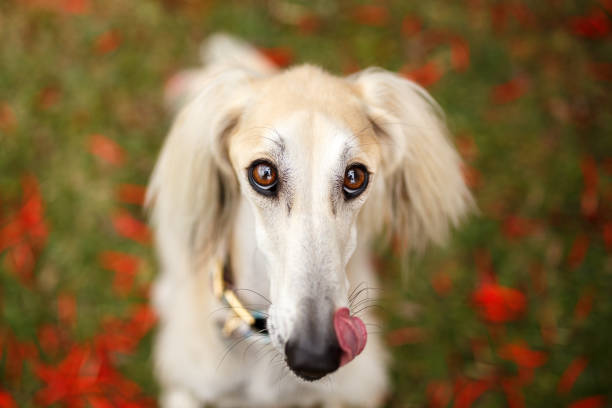
The intricate world of canine communication is a rich tapestry woven from barks, growls, whimpers, body postures, tail movements, and, perhaps most subtly and profoundly, the language of the eyes. Among the most critical visual cues dogs employ are the direct stare and the averted gaze. Far from being simple expressions, these ocular signals are multifaceted, carrying a spectrum of meanings ranging from profound affiliation and focus to intense threat, fear, and appeasement. Understanding this dichotomy is not merely an academic exercise; it is fundamental to fostering safe interactions, building robust bonds, and interpreting the emotional and social landscapes our canine companions navigate daily.
This comprehensive guide delves into the nuances of direct stares and averted gazes, exploring their biological underpinnings, their diverse interpretations across various contexts, and the critical role they play in the sophisticated social fabric of dog behavior. By dissecting these visual cues, we aim to empower dog owners, trainers, and enthusiasts with the knowledge to truly see and comprehend what their dogs are communicating, moving beyond anthropomorphic assumptions to an evidence-based understanding of canine intent.
The Anatomy and Physiology of Canine Vision and Gaze
Before dissecting the social implications of a dog’s gaze, it’s beneficial to briefly consider the mechanics of canine vision. Dogs possess a wider field of view than humans (around 240 degrees compared to our 180 degrees), aiding in the detection of movement, particularly in their peripheral vision. While their visual acuity is not as sharp as ours, and their color perception differs, their ability to detect movement and their superior night vision are adaptations for their predatory ancestry.
Crucially, dogs have a nictitating membrane (third eyelid) and larger pupils relative to the size of their eyes, which can dilate significantly. The muscles surrounding the eye allow for subtle shifts in gaze and expression, contributing to the overall visual communication. The directness or indirectness of a dog’s gaze is not just about where their pupils are pointing, but also about the tension around the eyes, the softness or hardness of their expression, and the accompanying movements of their head and body. Gaze, in this context, refers to sustained visual attention, whether directed or purposefully avoided.
The evolutionary roots of using gaze in communication are deeply embedded in the social structures of ancestral canids. In pack dynamics, eye contact can establish hierarchy, signal intent, and coordinate group activities. In predator-prey scenarios, direct visual focus is essential for hunting, while avoiding eye contact can signal submission to a dominant animal, thereby averting conflict. These ancient patterns continue to manifest in the social interactions of domestic dogs, both with their own kind and with humans.
The Direct Stare: Decoding Intensity
The direct stare is perhaps the most potent and frequently misunderstood visual cue in a dog’s repertoire. Its meaning is heavily influenced by the context, the dog’s overall body language, and the relationship between the individuals involved. A direct stare is characterized by a sustained, unwavering gaze, often accompanied by a fixed head position, directly toward the object or individual of interest.
A. Threat and Aggression: The Hard Stare
The most commonly recognized and often dangerous interpretation of a direct stare is as a signal of threat or impending aggression. This is often referred to as a “hard stare.”
- Context: This type of stare typically arises in situations where a dog feels threatened, is resource guarding (food, toys, space, owner), is territorial (at a fence line, within their home), or perceives a challenge to their status or safety. It is very common towards unfamiliar individuals (dogs or humans) who approach too quickly, invade personal space, or make direct eye contact themselves.
- Accompanying Body Language: A hard stare is rarely isolated. It is almost always paired with a composite of other assertive or aggressive signals:
- Stiff, rigid posture: The dog’s weight might be shifted slightly forward, indicating readiness to act.
- Raised hackles (piloerection): Hair standing up along the spine, particularly over the shoulders and hips, signifies arousal and often a readiness to confront.
- Tense mouth and lips: Lips pulled back to show teeth (a snarl), or a tightly closed mouth with visible tension around the muzzle.
- Low, rumbling growl: A clear auditory warning.
- Forward-oriented ears: Erect and often slightly forward, indicating full attention and alertness to the perceived threat.
- Stiff, sometimes slowly wagging tail: A broad, loose tail wag is friendly; a stiff, low, or high tail wag can indicate high arousal and potential aggression.
- Direct body orientation: The dog will often square its body directly towards the perceived threat, minimizing profile and maximizing frontal presence.
- Physiological Responses: Internally, the dog’s sympathetic nervous system is highly activated. Heart rate increases, blood pressure rises, adrenaline and cortisol surge, preparing the dog for a “fight or flight” response, though in this context, “fight” is often the chosen initial pathway.
- Misinterpretation by Humans: Humans often misinterpret this as a challenge to engage in a “staring contest.” This is incredibly dangerous. Prolonged direct eye contact from a human, especially with an unfamiliar or fearful dog, can be perceived as an escalation of the threat, potentially leading to a bite. It is a direct cultural clash: in human society, direct eye contact often signifies sincerity or confidence; in the canine world, it can be a declaration of challenge.
B. Assertion and Control: Nuances of Dominance
While the traditional “dominance theory” in dog behavior has been largely re-evaluated and nuanced by modern ethology, the concept of assertion and control through gaze still holds relevance, though with less emphasis on rigid hierarchies.
- How it Works: A direct stare can be used by one dog to assert their will or control the movement or resources of another dog. This might manifest as an older, more confident dog staring down a younger, boisterous one to encourage calm, or a dog staring at another to prevent them from approaching a valued toy.
- Subtleties: This type of stare is often less intense than a full-blown aggressive hard stare. The duration might be shorter, and the accompanying body language might be less rigid, perhaps just a fixed gaze with a slight head turn rather than a full body threat display. It’s more about maintaining order or establishing personal boundaries without necessarily resorting to conflict. This is often seen in established social groups where roles are generally understood.
C. Focus and Intent (Non-Threatening): The Engaged Stare
Not all direct stares are indicators of aggression or assertion. Many are simply expressions of intense focus, anticipation, or curiosity. This is often referred to as an “engaged stare.”
- Predatory Focus: A cat stalking a bird, or a dog watching a squirrel, will fix its gaze with intense concentration. This is a hard stare, but its intent is not social threat but rather a highly focused, almost trance-like visual acquisition of prey. The body might be low, ready to spring, but the target is not a social rival.
- Anticipation: A dog staring intently at a treat in its owner’s hand, or at a ball poised for throwing, is exhibiting a direct stare born of eager anticipation. They are focused on the object and the potential reward or activity. The body language here is generally relaxed but highly alert.
- Learning/Observation: Dogs are keen observers. They might stare at their owner performing a task, attempting to understand the sequence of actions, or watching another dog to learn social cues. This is a learning stare.
- Problem-Solving: A dog staring at a puzzle toy it’s trying to manipulate, or at a closed door it wants opened, is using an engaged stare to actively process its environment and devise a strategy.
- Accompanying Body Language: For these non-threatening stares, the body language is typically more relaxed:
- Soft but attentive eyes: The eyes may still be fixed, but the muscles around them are not tense or narrowed.
- Relaxed posture: No stiffness, hackles down, tail often relaxed or giving a soft, slow wag.
- Head tilt: A classic sign of curiosity or active listening, often accompanying a focused stare.
- Open or slightly open mouth: Panting softly, or a relaxed “smile.”
D. Affiliation and Connection: The Oxytocin Gaze
This is a very specific and special form of direct gaze, almost exclusively observed between dogs and humans with whom they share a deep, trusting bond. This is the “soft stare” or “loving gaze.”
- The “Oxytocin Gaze”: Research, notably led by Dr. Takefumi Kikusui, has shown that mutual gazing between a dog and its owner can increase levels of oxytocin in both species. Oxytocin, often called the “love hormone,” plays a crucial role in social bonding and attachment.
- How it Differs from a Hard Stare: This gaze is characterized by:
- Soft, relaxed eyes: Often accompanied by slow blinks, giving a gentle, almost sleepy appearance.
- Relaxed body posture: The dog might be leaning into the owner, relaxed in their lap, or lying nearby.
- Soft mouth: A relaxed, open-mouthed expression or a slight lift at the corners of the mouth.
- Slow, broad tail wag: A true sign of happiness and contentment.
- Context: Typically occurs during calm, affectionate interactions—petting, cuddling, or simply sharing a quiet moment. It’s a mutual exchange of affection, not a challenge or a demand.
- The Human-Dog Bond: This affiliative gaze is a cornerstone of the unique interspecies bond we share with dogs, demonstrating a capacity for complex emotional connection that transcends species barriers. It underscores why dogs are often called “man’s best friend,” as they actively engage in social bonding rituals mirroring those seen between humans.
The Averted Gaze: Signals of De-escalation and Submission
In stark contrast to the direct stare, the averted gaze is a powerful signal of deference, appeasement, and a desire to de-escalate potential conflict. It involves purposefully avoiding direct eye contact, often by turning the head, body, or both away from the perceived threat or dominant individual.
A. De-escalation and Appeasement: “I Mean No Harm”
The primary function of an averted gaze is to communicate non-threat and a desire to avoid confrontation. These are often referred to as “calming signals” or “appeasement gestures.”
- Context: Dogs will avert their gaze when they perceive tension in the environment, are approached by an unfamiliar or assertive dog/human, or have inadvertently caused offense. It’s a way of saying, “I understand you’re upset, and I mean no harm.”
- Accompanying Body Language: An averted gaze is almost always part of a larger cluster of calming signals:
- Head turn/body turn: The dog will turn its head sharply away, sometimes even presenting its side or back to the other individual.
- Lip licking: A quick flick of the tongue over the lips, even when not thirsty.
- Yawning: A slow, exaggerated yawn, not necessarily due to tiredness.
- Softening of the eyes: Pupils might dilate slightly, and the overall expression is less direct, often squinting slightly.
- Lowered posture: Crouching, slinking, or even lying down, making themselves appear smaller.
- Tail tuck: The tail is held low, often tucked between the legs, signifying submission or fear.
- Ears flattened: Pinned back against the head, indicating apprehension or submission.
- Slow movement: Moving slowly or freezing to avoid provoking a reaction.
- Purpose: These signals are universally understood among canines as a means of diffusing tension and preventing aggressive escalation. By displaying humility and non-aggression, the dog hopes to elicit a corresponding de-escalation from the other party.
B. Submission and Respect for Social Hierarchy
While often intertwined with appeasement, an averted gaze can also explicitly signal submission or respect for social boundaries within an established group.
- Acknowledging Rank: A younger or less confident dog might avert its gaze when a more senior or confident dog approaches, especially during resource allocation (e.g., coming close to a food bowl). This isn’t necessarily fear, but an acknowledgment of the other dog’s social standing.
- “Respecting Authority”: In a structured human-dog relationship, a dog might avert its gaze momentarily when corrected or when asked to perform a behavior it might not initially want to do, as a sign of acknowledging the human’s “authority” or request. It’s a way of saying, “I hear you.”
- Lack of Direct Challenge: By avoiding direct eye contact, the dog is explicitly stating, “I am not challenging you.” This is crucial in maintaining social harmony and avoiding unnecessary conflict.
C. Discomfort and Stress
An averted gaze can also be a clear indicator of a dog experiencing discomfort, anxiety, or stress due to environmental factors, handling, or social pressure.
- Overwhelming Environments: In busy, noisy, or unfamiliar places, a dog might avert its gaze from stimuli that overwhelm it, attempting to cope by disengaging visually.
- Punishment or Scolding: If a dog is being scolded or subjected to a harsh tone, it will very often avert its gaze, not necessarily because it “knows it did wrong” in the human moral sense, but because it is trying to appease the angry human and de-escalate the perceived threat.
- Uncomfortable Handling: During veterinary exams, grooming, or unwanted petting (especially from strangers), a dog may avert its gaze to signal its discomfort and desire for the interaction to cease.
- Other Stress Signals: This type of averted gaze is often accompanied by other subtle or overt stress signals such as panting (when not hot), drooling, repetitive behaviors (licking paws, self-grooming), excessive shedding, shaking, or tail tucked low and stiff.
- Crucial for Intervention: Recognizing averted gaze as a sign of stress allows owners to intervene, remove the dog from the stressful situation, or modify their approach to alleviate the dog’s anxiety, thereby preventing a potential escalation to fear-based aggression.
D. Avoidance and Indifference
While less common as a primary signal, an averted gaze can, in some circumstances, simply indicate avoidance or disinterest.
- Ignoring: A dog might actively turn its head away if it wants to ignore another dog or a person it finds annoying or irrelevant. This isn’t necessarily appeasement or fear, but a clear attempt to disengage.
- “Not My Business”: In a dog park, a dog might passively avert its gaze from squabbles or interactions it has no interest in, signaling a lack of involvement.
- Context is Key: Differentiating this from appeasement or stress requires observing the entire body language. If the body is relaxed and neutral, it leans towards indifference. If there’s tension, lip licking, or a tucked tail, it points to appeasement or stress.
Context is King: Interpreting Gaze Cues Holistically
It is impossible to accurately interpret a dog’s gaze in isolation. The meaning of a direct stare or an averted gaze is profoundly dependent on the surrounding context, the dog’s entire body language, the relationship between the interactants, and individual differences.
A. The Role of Body Language: The Integrated Message
Gaze is but one component of a dog’s complex communication system. It must always be read in conjunction with:
- Ears: Erect and forward (alert/attentive/assertive), flattened back (fear/submission), relaxed (neutral).
- Mouth: Tense and closed (stress/assertive), loose and open (relaxed/happy), snarling (threat), lip lick (calming).
- Tail: High and stiff (arousal/assertion), low and tucked (fear/submission), relaxed wag (friendly), stiff, low wag (anxiety/conflict).
- Posture: Stiff and forward (threat), low and slinking (fear/submission), relaxed (calm), weight shifted back (fear).
- Hackles: Raised (arousal/fear/aggression).
- Muscle Tension: Overall body tension, visible in the face, neck, and limbs.
Examples:
- A hard stare + stiff body + raised hackles + growl unequivocally signals threat.
- A soft stare + relaxed body + slow tail wag + gentle lean signals affiliation.
- An averted gaze + lip lick + lowered body + tucked tail signals appeasement/fear.
- An engaged stare + relaxed body + wagging tail + open mouth signals anticipation/play.
B. Social Relationship: Familiarity Breeds Nuance
The identity of the individual the dog is interacting with dramatically alters the interpretation of gaze cues.
- Familiar Dogs vs. Unfamiliar Dogs: A direct stare between two unfamiliar dogs is far more likely to be a challenge than between two kennel mates. An averted gaze might be a routine appeasement in a multi-dog household, but a critical de-escalation signal when meeting a new dog.
- Dog and Human (Owner vs. Stranger): A direct, soft stare from an owner’s dog towards them often signals affection. The same stare from a strange dog might be curiosity, but if accompanied by a tense body, it quickly shifts to a threat. A dog might avert its gaze from its owner after a perceived infraction, but it will almost certainly avert its gaze from an approaching, unknown child who is staring at it.
- Established Trust vs. Lack of Trust: A history of positive, predictable interactions builds trust, allowing for more affiliative or relaxed interpretations of gaze. A dog with a history of negative experiences will default to more defensive or appeasing gazes, especially with strangers.
C. Environmental Factors: The Immediate Surroundings
The physical environment and the presence of resources exert significant influence on how gaze is used and perceived.
- Resource Guarding: A direct stare at another animal or human approaching a food bowl, a special toy, or the dog’s bed strongly indicates resource guarding.
- Territoriality: A dog staring intently at a perceived intruder (person or animal) entering its yard or home is displaying territorial guarding behavior.
- Crowded vs. Open Spaces: In a crowded, high-stress environment, an averted gaze is a necessary coping mechanism. In an open, relaxed field, a focused stare might just be interest in a distant object.
- Novelty vs. Familiarity: Novel stimuli often elicit more cautious (averted) or intensely focused (engaged) gazes. Familiar environments allow for more relaxed communication.
D. Individual Dog Variations: Personality and History
Just like humans, individual dogs have unique personalities, breed predispositions, and life histories that shape their communication style.
- Breed Tendencies: Some breeds, like certain herding dogs, are bred for intense stares (e.g., the “eye” of a Border Collie). While this is functional for herding, it can be misinterpreted in social contexts. Others might be naturally more gregarious or reserved.
- Personality: A naturally confident, assertive dog might use direct stares more frequently than a shy, reserved one, which might default to averted gazes even in non-threatening situations.
- Past Experiences: A dog with a history of trauma, neglect, or punitive training might be more prone to showing extreme appeasement (averted gaze, intense calming signals) or fear-based aggression (hard stare, bite), even in seemingly benign interactions. Conversely, a well-socialized dog with positive experiences will exhibit a broader, more nuanced communication repertoire.
- Age: Puppies often don’t have fully developed social graces and might stare inappropriately. Older dogs might have vision impairments or be less tolerant of close proximity, affecting their gaze.
Human Interpretation and Interaction
Our understanding of canine gaze cues is critical for effective and humane interaction. Misinterpretations can lead to fear, aggression, and a breakdown in the human-dog bond.
A. Common Misunderstandings
- Mistaking a dog’s direct stare for affection (when it’s a warning): This is perhaps the most dangerous error. Assuming a tense, direct stare from an unfamiliar dog is a sign of friendliness can lead to a bite.
- Forcing eye contact with an uncomfortable dog: Many trainers advocate for “watch me” commands. While valuable for known, comfortable dogs, forcing eye contact with an anxious, fearful, or even a naturally polite dog can be highly stressful and counterproductive.
- Misinterpreting averted gaze as disinterest or rudeness: When a dog turns its head away, we might think it’s ignoring us or being stubborn. In reality, it’s often a polite request for space or a powerful appeasement signal. Punishing this behavior (e.g., forcing the head back) not only damages the bond but also suppresses a vital calming signal, potentially leading to a dog that escalates to biting without prior warning.
B. How Humans Should Respond
Knowing how to react appropriately to a dog’s gaze signals is paramount for safety and building trust.
- To a direct, hard stare (from any dog, especially unfamiliar):
- Avert your gaze slowly: Do not stare back. Break eye contact gradually by shifting your eyes to their shoulder or the floor.
- Turn your body slightly: Present your side, not your front. This reduces your perceived threat.
- Avoid direct confrontation: Do not advance, raise your voice, or make sudden movements.
- Create distance: Slowly back away, giving the dog space.
- Do not turn your back and run: This can trigger a chase response.
- To a direct, soft, affiliative stare (from your own trusted dog):
- Gently engage: Return affection, perhaps with soft words or a gentle touch (if the dog clearly enjoys it).
- Reinforce positive interaction: This mutual gaze strengthens the bond.
- Use in training: Voluntary, soft eye contact can be a powerful tool for attention in positive reinforcement training (“watch me” or “look”).
- To an averted gaze (from any dog):
- Respect the dog’s space: Give them room. If they are turning away, they are asking for less pressure.
- Back off: Stop what you are doing. If you are approaching, pause or retreat.
- Avoid forcing interaction: Do not try to make them look at you or physically turn their head.
- Use calming signals yourself: Yawn, lip lick, turn your head slightly, speak in a soft tone. This communicates back in their language that you are also non-threatening.
- Consider the context: If it’s your dog consistently averting gaze during handling, it might be signaling discomfort with the activity itself.
C. Building Trust
Understanding and respecting canine communication, particularly gaze cues, is foundational to building a relationship based on trust and mutual respect.
- Never punish calming signals: Punishing a dog for averting its gaze, licking its lips, or yawning teaches it that its attempts to de-escalate are met with further aggression. This can lead to a dog that suppresses these warning signals, making it more likely to bite without apparent warning.
- Reward voluntary, soft eye contact: When your dog offers you a soft, affiliative gaze, acknowledge and reward it. This strengthens the positive association with eye contact in appropriate contexts.
- Be predictable and gentle: Consistent, gentle interactions build a secure attachment, reducing the need for fearful or assertive gaze displays.
The “Oxytocin Gaze” and Human-Dog Bond Reinforcement
The scientific exploration into the mutual gaze between dogs and humans has illuminated a profound aspect of our shared lives. As mentioned, Dr. Takefumi Kikusui and his team in Japan conducted groundbreaking research demonstrating that both dogs and their owners experience a surge in oxytocin levels during sustained, positive eye contact. This effect mirrors the oxytocin loop observed between human mothers and infants, underscoring the depth and biological basis of the human-dog bond.
This “oxytocin gaze” is distinctly different from the challenging or threatening direct stare. It is characterized by:
- Mutual Willingness: Both dog and human willingly engage in the eye contact.
- Relaxed Posture: The dog’s body is soft, often leaning into the human, with a relaxed mouth and soft eyes.
- Positive Emotional State: The interaction is imbued with feelings of warmth, affection, and security for both parties.
- Reinforcement: The release of oxytocin reinforces the bond, making both dog and human more inclined to seek out similar positive interactions in the future.
This understanding moves beyond anecdotal evidence of “my dog looks at me with love” to provide a physiological explanation for the deep emotional connection we feel with our dogs. It highlights the unique capacity of dogs to form interspecies attachments that tap into ancient mammalian bonding mechanisms, making them truly unparalleled companions.
Cultural and Subcultural Differences
It’s also worth acknowledging that human interpretation and interaction with dog gaze can be influenced by cultural norms and subcultural training philosophies. In some cultures, direct eye contact with any animal might be considered rude or threatening. In others, or within certain training methodologies, forcing eye contact through harsh corrections can be seen as a way to establish “dominance” or compliance, often to the detriment of the dog’s welfare and its ability to communicate stress.
The prevalence of “watch me” commands in modern positive reinforcement training, while generally beneficial for building focus, requires nuance. Trainers must teach it in a positive, non-aversive way, ensuring the dog chooses to look at the handler and associates it with positive outcomes, rather than being forced into it through pressure, which could evoke an appeasement or fearful gaze instead of an engaged, willing one. Educating owners on the difference between a soft, willing gaze and a tense, forced one is crucial here.
Conclusion
The language of a dog’s eyes—the direct stare and the averted gaze—offers a profound window into their emotional state, social intentions, and perception of the world. Far from simple actions, these visual cues are complex, nuanced, and intricately woven into the dog’s overall body language. A hard, direct stare can serve as a potent warning of aggression, while a soft, direct gaze can signify deep affection and connection. Conversely, an averted gaze is a powerful signal of appeasement, discomfort, or respect for social boundaries.
Mastering the art of interpreting these signals requires consistent, observant practice and a commitment to understanding canine behavior from their perspective, not ours. Recognizing the subtle shifts in eye tension, pupil dilation, and accompanying body language allows us to respond appropriately, preventing dangerous encounters, alleviating stress, and deepening the trusting bond we share with our dogs. By embracing the complexity of their visual communication, we not only become more effective caregivers but also gain a richer, more empathetic relationship with these remarkable animals, ensuring their well-being and enhancing our shared lives. Ultimately, a fluent understanding of direct stares versus averted gazes is not just about comprehending dog behavior; it is about fostering a safer, more harmonious, and more loving coexistence.
#DogBehavior, #CanineCommunication, #DogBodyLanguage, #DogTrainingTips, #UnderstandingDogs, #DogSocialCues, #DirectStareDog, #AvertedGazeDog, #DogEyeContact, #PetParenting, #DogPsychology, #DogSafety, #CalmingSignals, #DogAggression, #DogTrust, #HumanDogBond, #DogLover, #PetEducation, #ResponsibleDogOwnership, #DecodeYourDog, #CanineCues, #DogWhisperer, #DogLife, #FluentInFido





Add comment