

CRITICAL DISCLAIMER: PROFESSIONAL VETERINARY CONSULTATION
This guide provides general recommendations based on current veterinary cardiology protocols. However, exercise protocols for dogs with heart disease must be strictly individualized.
NEVER begin, modify, or terminate an exercise regimen without explicit clearance and specific guidelines from your Veterinary Cardiologist or primary care veterinarian. A sudden increase in activity can precipitate an acute cardiac event.
1. Understanding the Goal: Safety Over Stamina
For a dog with heart disease, the primary purpose of exercise is not to improve athletic performance but to maintain muscle mass (preventing sarcopenia), manage weight (preventing obesity, which stresses the heart), and enhance mental well-being (quality of life).
The goal is to provide sub-maximal aerobic activity—light, consistent motion—that avoids reaching the point where the existing cardiac condition is overwhelmed (i.e., avoiding high heart rates, excessive blood pressure, or pulmonary congestion).
2. The Cornerstone of Management: Cardiac Staging
Exercise limitations must correlate directly with the severity of the heart disease, typically categorized using the ACVIM (American College of Veterinary Internal Medicine) Consensus Guidelines for Chronic Valvular Heart Disease (CVHD) or similar staging systems.
| ACVIM Stage | Description of Heart Disease | Exercise Recommendation | Key Caution Points |
|---|---|---|---|
| Stage A | High risk, but no structural changes (e.g., purebreds prone to disease). | Normal, active life encouraged. Focus on fitness and ideal weight. | Establish a baseline fitness level now. |
| Stage B1 | Structural heart disease (e.g., murmur present) but no clinical signs and no evidence of remodeling or enlargement. | Near-Normal Activity: Moderate, consistent exercise is safe. Maintain current routine, but avoid intense, sudden bursts of speed (sprinting, intense high-impact fetch). | Begin monitoring Resting Respiratory Rate (RRR) nightly. |
| Stage B2 | Structural heart disease with significant enlargement/remodeling, but still asymptomatic. Often on medication. | Moderate Restriction: Consistent, low-intensity activity is key. Walks should be frequent and short (e.g., 3-4 walks of 10-15 minutes). Must avoid extreme exertion. Stop when the dog shows any sign of fatigue. | Avoid long, uphill climbs or competition. Monitor hydration closely. |
| Stage C | Clinical signs of heart failure (e.g., coughing, breathing difficulty) currently or previously managed with medication. | Severely Restricted Activity: Focus is on light movement for maintenance. Leisurely, flat strolls only. Walks should be 5-10 minutes, focusing on mobility rather than cardio. Passive range of motion (PROM) exercises may be recommended. | STOP IMMEDIATELY if coughing, struggling to breathe, or pronounced panting occurs. The risk of sudden collapse is elevated. |
| Stage D | Refractory (end-stage) heart failure that is resistant to standard treatment. | Minimal to Passive Movement: Exercise is generally contraindicated. Focus solely on comfort and passive movement to prevent joint stiffness and bed sores. Frequent repositioning is necessary. | Absolutely no exertion. Any activity must be directly supervised and extremely brief (e.g., 2-3 minutes to urinate). |
3. The Exercise Spectrum: Recommended vs. Contraindicated
A. Recommended Low-Impact Activities (For Stages B1/B2/Early C)
These activities minimize sharp increases in heart rate and are generally safer, provided the duration is controlled.
- Leisurely, Consistent Walking (The Gold Standard):
- Focus: Walking on level ground.
- Duration: Shorter, more frequent walks are better than one long one (e.g., four 10-minute walks instead of one 40-minute walk).
- Pace: Should be a gentle stroll where the dog can easily sniff and move without heavy breathing.
- Hydrotherapy/Light Swimming (If Cleared):
- Benefit: Excellent for maintaining muscle mass without stressing joints. The buoyancy reduces gravitational load.
- Caution: Only recommended if the dog is comfortable swimming and does not struggle or panic. The resistance of the water can be intense, so sessions must be very short (5-10 minutes).
- Passive Range of Motion (PROM) Exercises:
- Use: Ideal for Stages C and D, or highly restricted dogs.
- Method: The owner gently manipulates the dog’s hips, knees, and elbows through their natural range of motion while the dog lies down. This maintains joint flexibility and prevents muscle atrophy without raising the heart rate.
- Mental Stimulation:
- Benefit: Keeps the dog engaged without physical strain.
- Examples: Puzzle feeders, slow-sniffing walks (2-3 minutes focused purely on high-value odors), or teaching new, stationary tricks (e.g., “stay,” “touch”).
B. Activities That Must Be STRICTLY AVOIDED
These activities cause sudden, intense cardiac pressure, which can lead to arrhythmia, collapse, or acute pulmonary edema.
- Intense Anaerobic Activity: Sprinting, high-impact fetch (especially with hard stops and starts), or abrupt changes in speed.
- Competition: Agility, flyball, or other activities requiring sustained high heart rate.
- Wrestling/Rough Play: Any activity that involves sudden, high-intensity excitement leading to rapid, uncontrolled heart rate spikes.
- Extreme Environmental Conditions: Exercising in high heat and humidity (increases cardiac load and risk of aspiration pneumonia) or extreme cold (which can cause vasoconstriction, raising blood pressure).
- Strenuous Inclines: Hiking steep hills or long flights of stairs put significant strain on the heart muscle.
4. The Art of Monitoring: Reading Your Dog’s Signals
The dog must be closely monitored before, during, and after exercise. The owner must become highly attuned to subtle signs of cardiac distress.
A. Baseline Metrics (Daily Tracking)
The most critical non-invasive metric an owner can track is the Resting Respiratory Rate (RRR).
- Method: Count the number of breaths (inhalation + exhalation = 1 breath) the dog takes while deeply asleep over a 30-second period, then multiply by two.
- Normal Range: Typically less than 30 breaths per minute (bpm).
- Significance: An RRR consistently higher than the baseline (e.g., >35 bpm) suggests fluid accumulation or congestion in the lungs, indicating decompensation (worsening heart failure). If RRR increases significantly, exercise must cease immediately, and the veterinarian must be contacted.
B. Immediate “STOP” Signals During Exercise
If you observe any of the following signs, stop the activity immediately, allow the dog to rest, and contact your veterinarian if symptoms persist:
| Symptom | Significance | Action |
|---|---|---|
| Excessive Panting or Labored Breathing | Sign of heart and lung distress. | Stop. Do not resume activity. |
| Pronounced or Wet Coughing | May indicate fluid accumulation in the lungs (pulmonary edema). | Stop. Seek veterinary attention immediately. |
| Sudden Weakness or Reluctance to Move | The dog is struggling to maintain perfusion. | Carry or gently lead the dog to rest. |
| Gingival Color Change (Pale or Blue/Purple) | Sign of poor oxygen saturation or perfusion (a medical emergency). | EMERGENCY VET VISIT. |
| Fainting or Collapse (Syncope) | Lack of blood flow to the brain, requiring immediate medical intervention. | EMERGENCY VET VISIT. |
5. Practical Management Tips
- Timing is Everything: Schedule exercise during the coolest parts of the day (early morning/late evening) to avoid thermal stress.
- Consistency Over Intensity: Daily, short periods of movement are far superior to occasional, strenuous bursts. A routine helps the heart adapt.
- Pre-Medication Schedule: Ensure all prescribed cardiac medications (especially diuretics) are administered on time and according to the veterinarian’s instructions, particularly before activity.
- Hydration: Always carry water. Dogs with heart disease, especially those on diuretics, are prone to dehydration, which can worsen cardiac function.
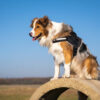
- Harness vs. Collar: Always use a well-fitting harness for walks. A collar can put pressure on the trachea if the dog pulls, potentially triggering a cough or exacerbating breathing difficulties.





Add comment