
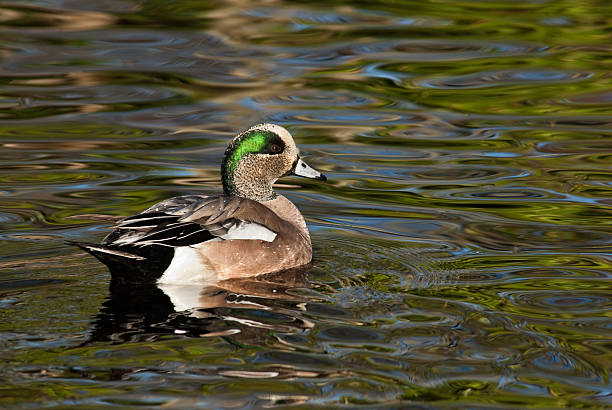
Ducks, often regarded for their practical contributions—meat, eggs, and pest control—are also celebrated for their aesthetic beauty and refinement in exhibition settings. Exhibition duck breeds represent the pinnacle of selective breeding, where conformation, posture, plumage, and overall appearance meet exacting standards defined by poultry associations and duck fanciers’ societies worldwide. Whether you’re a seasoned breeder, a novice backyard enthusiast, or someone preparing for your first duck show, understanding the nuances of conformation and show standards is essential to succeed and truly appreciate the artistry behind exhibition waterfowl.
This comprehensive guide dives deep into the world of exhibition duck breeds, exploring their history, key characteristics, conformation requirements, grooming techniques, and judging criteria. We’ll cover the most prominent breeds seen in the show ring, dissect the standards set by authoritative bodies like the American Poultry Association (APA) and the Poultry Club of Great Britain (PCGB), and provide practical tips for preparing and presenting your ducks to win ribbons and admiration.
The Rise of Exhibition Duck Breeding
Exhibition duck breeding has evolved significantly over the past two centuries. While ducks were initially domesticated primarily for utilitarian purposes, the 19th century marked a cultural shift in Europe and North America where ornamental and show qualities gained prominence. As poultry shows became popular social events, fanciers began selectively breeding ducks for symmetry, color, and elegance, much like their attention to chickens and pigeons.
The emergence of breed standards formalized this practice. Organizations such as the American Poultry Association, established in 1873, began cataloging and standardizing breeds through publications like the American Standard of Perfection. Similarly, the United Kingdom developed its own standards, promoting breeds that emphasized grace and ideal form. Today, these standards remain the benchmark for exhibition success.
Exhibition ducks are not just “pretty faces”—they are the result of meticulous breeding programs aimed at preserving genetic integrity, enhancing desirable traits, and eliminating flaws. Breeders often spend years perfecting a single line to meet the exact criteria outlined in the standard.
What Are Exhibition Duck Breeds?
Exhibition duck breeds are those specifically bred and maintained to meet exact conformation standards for show competition. Unlike utility breeds, which are bred primarily for egg and meat production, exhibition ducks are evaluated on appearance, structure, and adherence to breed-specific ideals.
These breeds typically include:
- Pekin (Exhibition strain)
- Rouen (Show/Rouen Clair)
- Cayuga
- White Crested
- Swedish Blue
- Silver Appleyard
- Buff Orpington
- Call Duck (various varieties)
- Indian Runner (Exhibition strain)
While some of these breeds have utility counterparts, the exhibition version often diverges in body shape, carriage, and plumage. For example, while a utility Pekin is bred for rapid growth and meat yield, an exhibition Pekin is bred for a long, horizontal body, high breast carriage, and pure white plumage without blemishes.
Understanding Conformation: The Blueprint of Excellence
Conformation refers to the physical structure and proportions of a duck in accordance with its breed standard. Judges evaluate conformation based on a duck’s posture, body shape, head profile, neck length, wing placement, tail angle, and leg structure. Each element contributes to the overall impression of balance, elegance, and breed purity.
Key Conformation Points:
- Body Shape and Carriage
A well-conformed exhibition duck should carry its body horizontally, parallel to the ground. The back should be broad, long, and smoothly contoured. For heavier breeds like the Rouen or Pekin, the body should appear deep and well-rounded, with a full, rounded breast held high. Lighter breeds like Indian Runners or Calls should have a more upright stance but still maintain a balanced silhouette. - Head and Bill
The head should be clean and well-shaped, proportional to the body. The bill must match the breed-specific color and length—e.g., the Pekin has a short, bright orange bill, while the Silver Appleyard has a bluish-green bill with black bean (the nail at the tip). The eyes should be bright and alert, placed to complement facial symmetry. - Neck
The neck should be of medium length, full, and gracefully curved. In larger breeds, it blends smoothly from head to shoulders, contributing to a regal bearing. In Runs and Calls, the neck may be slightly longer to emphasize verticality. - Wings and Tail
Wings should lie flat and tight against the body, with primary feathers not drooping. The tail should be short, carried horizontally (except in Runners and Calls, which may carry it more erect), and free of deformities. - Legs and Feet
Legs must be positioned to support the body evenly. In heavier breeds, they are set farther back to balance the deep breast. Legs and feet should be clean, unblemished, and of correct color (e.g., orange in Pekins, blue in Swedish ducks). Webbing must be intact. - Plumage
Feathers must be tight, glossy, and lie smoothly. Color patterns are strictly defined. Any discoloration, missing feathers, or uneven molting is heavily penalized. Cleanliness and feather condition are paramount at shows.
Breed-by-Breed Breakdown: Show Standards and Ideal Traits
Let’s delve into some of the most prominent exhibition duck breeds and the standards that define them.
1. Exhibition Pekin
Often the star of duck shows, the Exhibition Pekin is larger and more refined than its utility counterpart. The APA Standard of Perfection describes it as having a long, broad body carried nearly horizontal, with a high, full breast. The plumage is pure white, and the skin should be pinkish-yellow. The bill is short, bright orange, and ideally straight. The head is large and rounded with an arched crown.
Common Faults:
- Crooked or upturned bill
- Yellow or grayish plumage tinge
- Swayback
- Poor breast development
Show Tips:
- Bathe ducks 1–2 weeks before the show to allow time for preen oil to restore feather luster.
- Use a soft brush to keep feathers aligned.
- Restrict outdoor access to keep ducks clean.
2. Rouen (Show Type / Rouen Clair)
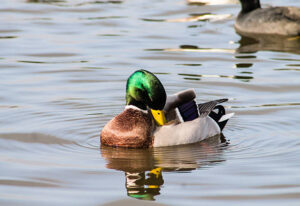
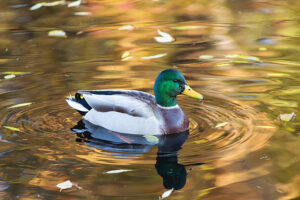
Originally developed in France, the Rouen is a majestic breed resembling the wild Mallard but on a much larger scale. The standard calls for a duck that is long-bodied, deep-breasted, and carried horizontally. Drakes are vividly colored with iridescent green heads, white neck rings, and rich chestnut-brown breasts. Hens have a more subdued brown mottling.
Ideal Traits:
- Drake: Rich green head, white neck ring, claret breast, gray body
- Hen: Uniform sooty brown with buff undercolor
- Bill: Yellowish olive-green in drakes, dusky orange in hens
- Stance: Majestic and horizontal
Critical Flaws:
- Narrow breast
- Lack of neck ring in drakes
- White spotting in hens
- Poor color intensity
3. Cayuga
Named after Cayuga Lake in New York, this breed is prized for its striking all-black plumage with emerald-green iridescence. Both drakes and hens exhibit this sheen, though drakes are typically darker. The standard requires a medium-sized duck with good body depth, a slightly upturned tail, and orange legs.
Note: Cayugas often develop white feathers with age (after 2–3 years), which is acceptable in older birds but penalized in young stock entered in juvenile classes.
Faults to Avoid:
- Rusty or brown feathering
- Excessive white in young birds
- Pale legs
Grooming Tip: Keep Cayugas dry and clean; wet black feathers can appear dull at shows.
4. Swedish Blue
A Nordic breed with a striking blue-gray body, white breast, and black crown and tail, the Swedish Blue is a favorite in dual-purpose and exhibition barns. The body is compact, with a short, straight back and moderately upright stance.
Color Standards:
- Blue variety: Slate blue body, white breast, black crown and tail
- Black and White: Glossy black with white breast and neck stripe
- Penciled: Delicate black penciling on a blue or white base (a newer, rare variety)
Common Issues:
- Smudged or patchy white markings
- Poor definition in black crown
- Feather faults in penciled lines
5. Silver Appleyard
Bred in England by Reginald Appleyard, this breed combines utility and beauty. Exhibition Silver Appleyards are judged on their lustrous, intricate plumage pattern. Drake plumage resembles a Mallard’s but with richer colors: green head, buff breast, white-bordered black flanks, and a white belly. Hens are a rich buff with delicate brown barring.
Key Traits:
- Drake: Bright orange legs, bluish-green bill with black bean
- Hen: Soft buff with dark brown penciling
- Body: Broad and rounded
Judging Focus:
Color symmetry and pattern accuracy—especially the distinct white lacing on flank feathers.
6. Buff Orpington
Developed by William Cook (of Orpington chicken fame), the Buff Orpington duck is an exhibition favorite for its soft, warm buff color and docile temperament. Both drakes and hens are a rich, even buff without shading or spotting.
Conformation Highlights:
- Deep, broad body
- Short, well-carried neck
- Bright orange bill and legs
- Fluffy underfluff that gives a plush appearance
Strict Rule: Any dark feathering—especially on the head, tail, or flight feathers—is disqualifying.
7. Call Duck (Exhibition)
Small, vocal, and charming, the Call Duck is one of the tiniest domestic ducks. Exhibition Calls are bred for extreme compactness and high, upright stance. The head is large and round, with a short, upturned bill.
Sizes:
- Bantam: Under 18 oz (510 g)
- Standard: Up to 25 oz (710 g)
Varieties:
White, Black, Mallard, Pied, Blue, and others.
Critical Judging Factors:
- Compact “ball”-like shape
- Alert, upright posture
- Proportionate head and neck
Common Faults:
- Long neck or legs
- Drooping wings
- Poor color contrast
8. Indian Runner (Exhibition)
Famous for their penguin-like gait, exhibition Indian Runners are bred for height and verticality. They stand nearly upright, with long necks and slender bodies. The APA recognizes several color varieties: Fawn and White, White, Black, Gray, Chocolate, and more.
Conformation Goals:
- Body carried at a 60–70 degree angle to the ground
- Long, flowing backline
- Clean, bright leg and bill color appropriate to variety
Note: Runners are prone to leg splay in youth—ensure proper flooring and nutrition to maintain leg strength.
The Role of Plumage Color and Pattern
Color is more than beauty—it’s genetics made visible. Show judges assess color based on hue, intensity, patterning, and purity. Many breeds have complex feather genetics involving multiple genes for pigmentation and distribution.
For example:
- The Mallard gene complex governs the wild-type pattern seen in Rouens and Silver Appleyards.
- The dilution gene creates the Blue Swedish from a black base.
- The recessive white gene produces pure white Pekins.
Understanding these genetics helps breeders predict offspring traits and eliminate undesirable markings.
Color Faults Commonly Penalized:
- Off-color bills or legs
- Smudged or incomplete neck rings
- White flight feathers in non-white birds
- Feather lacing irregularities
- Dull or faded plumage
Enhancing Plumage:
- Feed a balanced diet rich in protein and essential amino acids (methionine, lysine).
- Provide access to UV light or natural sunlight to boost feather vibrancy.
- Avoid high-stress environments during feather growth (pin feather stage).
Grooming and Pre-Show Preparation
Winning in the show pen isn’t just about genetics—it’s also about presentation. A well-groomed duck stands out.
Bathing Tips:
- Use lukewarm water and mild, fragrance-free duck shampoo or dish soap.
- Rinse thoroughly—soap residue causes feather clumping.
- Dry in a warm, draft-free area. Use a hairdryer on low heat if necessary.
- Time the bath 7–14 days before the show to allow feathers to re-oil naturally.
Feather Fluffing and Alignment:
- Use a soft makeup brush or grooming comb to align feathers, especially on the back and breast.
- Gently blow on feathers to raise them, then smooth with fingers.
Beak and Leg Care:
- Wipe bills with a damp cloth to remove algae or food stains.
- Scrub legs gently with a soft toothbrush to remove dirt.
- Avoid harsh chemicals.
Conditioning and Handling:
- Handle ducks daily to acclimate them to human contact.
- Practice “show stance” by gently placing ducks on flat surfaces and encouraging proper posture.
- Keep ducks calm—stress leads to feather loss and drooping posture.
Understanding the Judging Process
Judges evaluate ducks using a point system based on the official breed standard. While exact scoring varies by organization, common categories include:
| Category | Typical Weight |
|---|---|
| General Appearance | 20–25% |
| Body Conformation | 25–30% |
| Head, Bill, and Neck | 15% |
| Plumage and Color | 20–25% |
| Legs and Feet | 10–15% |
Judges move down the row, comparing birds side-by-side. They look for the duck that most closely matches the written ideal. Small deviations—like a slightly crooked bill or uneven feather lacing—can cost crucial points.
Common Reasons Ducks Lose:
- Poor posture (sitting too low or tilting)
- Feather damage or missing wing feathers
- Dirty plumage
- Behavioral issues (excessive vocalization, fleeing)
- Disqualification faults (wrong color, deformities)
Choosing the Right Breed for Showing
Not all ducks are show material. When selecting birds for exhibition:
- Source from reputable breeders with show-winning bloodlines.
- Look for parent stock with strong conformation and clean records.
- Raise ducklings with show goals in mind—ensure proper nutrition, space, and care from day one.
- Cull early—birds with structural faults won’t improve with age.
Consider starting with beginner-friendly breeds like Pekins or Call Ducks, which are widely available and have clear, consistent standards.
Joining the Show Circuit: What to Expect
Entering your first duck show can be intimidating. Here’s what to expect:
- Registration: Submit entries in advance, including breed, variety, age class (pullet, yearling, adult), and gender.
- Housing: Bring secure, ventilated carriers. Show organizers provide pens—usually labeled and bedded.
- Inspection: Judges examine each bird up close, often picking them up to assess weight, muscle tone, and leg structure.
- Ribbons and Feedback: Top birds earn ribbons (Blue, Red, Yellow, etc.). Some shows offer judge’s critique cards.
Recommended organizations:
- American Poultry Association (APA)
- American Livestock Breeds Conservancy (ALBC)
- Poultry Club of Great Britain (PCGB)
- Local duck fanciers’ clubs
Participating in club shows, youth fairs, and state exhibitions builds experience and connects you with mentors.
Ethics and Responsibilities in Exhibition Breeding
With great beauty comes great responsibility. Ethical breeders:
- Prioritize health and welfare over extreme conformation.
- Avoid inbreeding and maintain genetic diversity.
- Cull humanely and responsibly—do not propagate birds with serious defects.
- Educate the public about proper duck care.
- Preserve heritage breeds at risk of extinction.
Breeding solely for show can lead to health issues (e.g., obesity in Pekins, leg problems in Runners). Balance aesthetics with functionality and longevity.
Resources for Aspiring Exhibitors
- Books:
- The Book of Ducks by Rob Ryerss
- Storey’s Guide to Raising Poultry (includes waterfowl)
- American Standard of Perfection (APA)
- The Poultry Club Standards (UK)
- Websites:
- American Poultry Association (poultrykeeper.com)
- The American Livestock Breeds Conservancy (livestockconservancy.org)
- DomesticDucks.com (community forums and care guides)
- Supplies:
- Show pens, grooming kits, duck shampoo, foot baths
- Feed supplements (niacin for duckling development)
- Carrier crates (plastic or wire with ventilation)
Conclusion: The Art and Science of Duck Exhibition
Exhibition duck breeding is a rewarding blend of science, art, and tradition. It demands patience, attention to detail, and a deep love for these remarkable birds. Success in the show ring comes not just from possessing beautiful ducks, but from understanding and mastering the standards that define excellence.
Whether you aim for a blue ribbon or simply wish to improve your flock, the journey into exhibition waterfowl is filled with learning, camaraderie, and the quiet pride of stewarding heritage breeds for future generations. Every well-groomed feather, every straight back, and every bright eye reflects your dedication to the craft.
So clip those toenails, brush those feathers, and step into the show pen with confidence. Your duck deserves nothing less than perfection.
#ExhibitionDucks, #DuckBreeds, #ShowDucks, #DuckConformation, #PekinDuck, #RouenDuck, #CayugaDuck, #SwedishBlueDuck, #SilverAppleyard, #BuffOrpington, #CallDuck, #IndianRunnerDuck, #DuckShowTips, #DuckGrooming, #DuckFanciers, #PoultryShow, #BackyardDucks, #DuckBreeding, #DuckCare, #APAStandard, #DuckPlumage, #DuckGenetics, #FancyDucks, #DuckLovers, #HeritageBreeds, #DuckLife, #WaterfowlShow, #DuckOfTheDay, #DuckKeepers, #SmallFarmLife
Add comment