
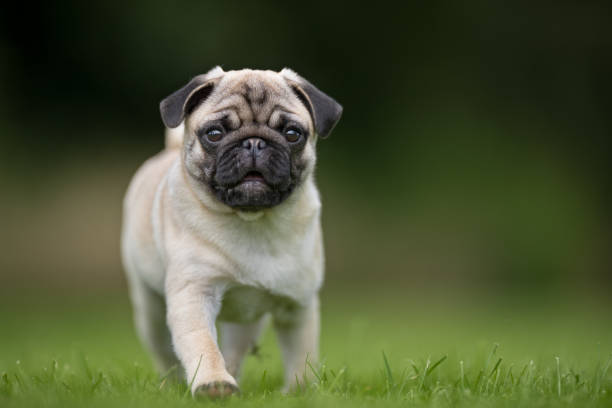
Introduction: The Myth of the Mop-Headed Saint
The Pug dog occupies a unique space in the canine consciousness. A breed with an ancient, royal pedigree, tracing its lineage back to the Han Dynasty of China, the modern Pug is often viewed through the filtered lens of internet celebrity. They are the quintessential “cute” dog—portable, perpetually smiling, and seemingly built for a life of cozy cuddles and minimal exertion.
The popular expectation of owning a Pug is often synthesized from viral videos: a tiny, low-maintenance companion, effortlessly adapting to apartment life, requiring only short, charming waddles, and providing endless, sleepy affection. They are depicted as the ultimate, non-challenging best friend.
However, the reality of living with a Pug is a complex tapestry woven with deep loyalty, stubborn charm, and intense, specialized care requirements. The gap between the adorable, simple pet of expectation and the demanding, high-maintenance reality is arguably wider for the Pug than for almost any other companion breed.
This comprehensive guide delves into this critical expectation-versus-reality dynamic across appearance, temperament, health, and lifestyle, providing the necessary depth to inform prospective owners fully.
Section 1: The Iconic Appearance – Expectation vs. Reality of Look and Maintenance (The Grooming Gauntlet)
Expectation: The Low-Shedding, Wash-and-Wear Companion
The Pug’s short, fine coat gives the impression of minimal grooming needs. Expectation suggests a quick weekly brush and an occasional bath to maintain their sleek, fawn or black presentation. Their small size often leads owners to assume that any mess will be proportional—small, manageable, and localized.
Reality 1.1: The Blizzard of Black and Fawn Hair
The single greatest shock for new Pug owners is the intensity of their shedding. Despite their short hair, Pugs possess a unique double coat (though often described as a single coat, the density of the undercoat on many lines behaves like a shedder’s double coat). They shed constantly and profusely, regardless of the season.
- The Fine Needle Effect: Pug hair is stiff, straight, and fine, allowing it to embed deep into carpets, upholstery, and clothing, making removal difficult. It is not uncommon for Pug owners to find hair months after ownership began, even on items stored away.
- The “Never-Ending Molt”: While shedding cycles exist, Pugs seem to operate perpetually in a state of ‘minor molt.’ Daily rigorous brushing with specialized tools (like a deshedding rake or curry brush) is mandatory, not optional, merely to keep the hair accumulation at bay.
Reality 1.2: The Wrinkle Warfare – Intensive Skin Care
The hallmark of the Pug is its scrunched, worried face. These deep facial folds are the source of much expected cuteness but require stringent, daily maintenance to prevent serious health issues.
- Dermatological Hotspots: The wrinkles (or the rope) trap moisture, food particles, saliva, and environmental debris. This warm, moist, dark environment is the perfect Petri dish for fungal and bacterial infections (e.g., Malassezia yeast infections or pyoderma).
- The Daily Ritual: Reality demands daily cleaning of the facial folds, typically using specialized wipes, mild antiseptic solutions, or soft cotton cloths, followed immediately by thorough drying. Failure to do so rapidly results in redness, odor, irritation, and potentially painful deep-fissure infections that require veterinary intervention.
- Tail Pocket Maintenance: Many Pugs also have a tightly curled tail that forms a small pocket at the base. This area is equally prone to infection and must be checked and cleaned regularly, adding another step to the grooming routine.
Section 2: Temperament & Training – Expectation vs. Reality of Personality
Expectation: The Goofy, Effortlessly Obedient Lap Dog
Pugs are universally recognized as companion dogs. The expectation is that they are inherently happy, eager to please, and docile. While their clownish disposition is real, prospective owners often underestimate the complexity of their character and the challenges of training a breed bred for ornamentation rather than function.
Reality 2.1: The Stubborn Sentient Couch Ornament
The Pug’s primary historical role was to sit on the laps of royalty and look charming. They were not bred for herding, hunting, or complex tasks. This history impacts their motivation and responsiveness to traditional training methods.
- Selective Hearing: Pugs are intelligent, but their willingness to comply is entirely dependent on their motivation level at that moment. They are easily distracted and possess a legendary capacity for selective hearing, often feigning ignorance when they know the command but prefer to stay put.
- The Food Motivation Paradox: While Pugs are famously food-motivated—a huge asset in initial training—this motivation must be carefully managed. Their propensity for overeating is a major health risk, meaning that owners must balance positive reinforcement with strict calorie control, complicating training efforts.
- Housetraining Hurdles: Pugs can be notoriously difficult to housetrain. Their small bladder capacity, refusal to go out in inclement weather, and a lack of inherent urgency often lead to accidents. Consistency, vigilance, and potentially using pee pads for extended periods are a necessary reality.
Reality 2.2: The Velcro Dog and Separation Anxiety
Pugs are affectionate to an extreme. They are true “Velcro dogs,” demanding constant physical contact and proximity to their owners.
- Emotional Dependence: This intensity of bonding often translates into a high risk of separation anxiety (SA). While the expectation is a dog happy to sleep while you are gone, the reality is often a dog who cries, chews door frames, or soils the house when left alone, even for short periods.
- Management Over Cure: Managing Pug separation anxiety requires structured crate training, specialized calming techniques, and sometimes, veterinary behavioral modification plans. Owners must realistically adjust their schedule, recognizing that the Pug is not a dog suited for long hours alone.
Reality 2.3: Socialization and “Big Dog” Syndrome
While generally friendly, Pugs require careful socialization. Their compact, sturdy build often masks a fragile respiratory system, meaning rough play must be monitored.
- Misunderstood Play: Pugs have a clumsy, roly-poly style of play. They can sometimes struggle to interpret dog signals accurately and may be overly brave (or oblivious) when interacting with larger breeds, sometimes resulting in conflicts due to their lack of protective instincts. Owners must be their Pug’s advocate and gatekeeper in social settings.
Section 3: The Health Gauntlet – The Largest Reality Check (The Financial and Emotional Cost)
This is the most critical section where expectation crashes violently into reality. The expectation is that, like any small breed, a Pug will require routine annual care. The reality is that the Pug’s distinctive anatomy—the very features that make them cute—is a catalogue of potential, severe medical issues requiring specialized, expensive, and ongoing management.
Reality 3.1: Brachycephalic Obstructive Airway Syndrome (BOAS)
The flat face (brachycephaly) is the defining feature of the Pug but is also a structural abnormality that impairs their ability to breathe and regulate temperature.
- The Anatomy of Suffocation: BOAS is not one ailment but a complex syndrome involving several conditions simultaneously:
- Stenotic Nares: Pinched, narrow nostrils that restrict airflow.
- Elongated Soft Palate: Flaps of soft tissue that obstruct the entrance to the trachea (windpipe).
- Hypoplastic Trachea: An abnormally narrow windpipe.
- Everted Laryngeal Saccules: Tissue around the larynx that gets sucked into the airway due to negative pressure.
- The Sound of Struggle: The cute snorts, grunts, and snores owners expect are often the sounds of a dog struggling to inhale sufficient oxygen.
- The BOAS Reality: Many Pugs require corrective surgery (BOAS surgery, including nares widening and palate trimming) to live a comfortable life—a procedure that costs thousands of dollars and requires recovery and lifelong management.
- Heatstroke Vulnerability: Pugs cannot pant efficiently to cool themselves. A 10-minute walk on a 75°F day can result in life-threatening heatstroke, requiring immediate veterinary intervention and specialized chilling protocols. Owners must embrace the reality that summer activities are severely restricted or eliminated entirely.
Reality 3.2: Ocular Emergencies and Specialized Eye Care
Pugs have disproportionately large, prominent eyes (globe). While this contributes to their characteristic expression, it puts them in constant danger.
- Proptosis (Eye Popping Out): Due to their shallow eye sockets, a rough bump, aggressive collar pull, or even highly excited play can cause the eyeball to pop out of the socket. This is a severe, time-sensitive veterinary emergency demanding immediate specialist attention.
- Corneal Ulcers: Because their eyes protrude, Pugs are constantly exposed to dust, grass, and debris, leading to frequent corneal abrasions and ulcers. These can progress rapidly, sometimes requiring expensive grafting surgery to save the eye.
- “Pug Eye” (Keratoconjunctivitis Sicca): Chronic dry eye is common, requiring lifelong, daily moisturizing drops or ointments to prevent pain and blindness.
Reality 3.3: Orthopedic and Spinal Difficulties
The Pug’s stocky, compressed structure leads to several common skeletal issues.
- Hemivertebrae: This is a congenital condition where the vertebrae are malformed (wedge-shaped), leading to spinal instability, curvature (scoliosis or kyphosis), and potential compression of the spinal cord. While some Pugs are asymptomatic, many face progressive pain, weakness, and paralysis, requiring specialized imaging (MRIs) and sometimes complex surgical spine stabilization. This is often an unbudgeted health time bomb.
- Patellar Luxation: Dislocating kneecaps are common in small breeds, including Pugs, which may require surgery to correct, impacting their mobility and requiring careful management of weight and exercise.
Reality 3.4: Allergy and Chronic Skin Issues
While Section 1 covered daily wrinkle care, the reality extends to chronic, systemic skin issues.
- The Fungus Among Us: Pugs are prone to generalized environmental and food allergies that manifest as itchy, greasy skin, chronic ear infections (often deep-seated and difficult to treat), and dark pigmentation changes (hyperpigmentation).
- Lifelong Management: The reality is that skin issues often require specialized, expensive diets (hydrolyzed or novel protein), frequent medicated baths, topical treatments, and sometimes long-term, expensive medications (like Apoquel or Cytopoint injections) to maintain comfort.
The Financial Reality: Insurance and Emergency Funds
The reality of these pervasive health risks means that standard veterinary costs are often insufficient. Prospective owners must budget for frequent specialist visits, potential emergency room trips for respiratory distress or eye trauma, and complex surgeries. Pet insurance becomes a virtual necessity, and even then, high deductibles and limits must be factored into the preparation. A realistic assessment places the Pug among the most medically expensive companion breeds to maintain.
Section 4: Lifestyle & Logistics – Expectation vs. Reality of Daily Life
Expectation: The Easy Apartment Dog
Pugs are small, so the expectation is that they are ideal for urban or apartment living, requiring minimal space and exercise. They are expected to be quiet, adaptable, and easily portable.
Reality 4.1: Exercise—Less is Not None, and Quality Over Quantity
While Pugs are not marathon runners, the expectation of a purely sedentary life is inaccurate and detrimental to their health.
- The Weight Battle: Because of their anatomy (BOAS risk) and their love of food, Pugs gain weight easily. Obesity exacerbates every single health problem they face—BOAS, joint issues, skin folds, and heart strain.
- Structured Activity: The reality is that Pugs need daily, structured, short bursts of low-impact activity (e.g., sniffing games, short walks in cool weather, indoor play) to maintain muscle tone and a healthy weight. They are generally poorly suited for high-impact activities, running, or extended periods outdoors in warm weather.
- The Climate Restriction: Owning a Pug requires constant climate consciousness. Owners must adjust daily schedules (early morning or late evening walks) and be prepared to cancel outdoor activities entirely based on temperature and humidity indexes.
Reality 4.2: The Decibel Level of Snoring and Snorting
The unique noises Pugs make are part of their charm, but the reality of their volume can be disruptive.
- The Nighttime Symphony: Due to their partially obstructed airways, Pugs snore, snort, wheeze, and reverse sneeze loudly. This is not a subtle humming; it often reaches decibel levels comparable to a human partner snoring.
- Impact on Living: For couples or light sleepers, the reality is that the Pug may require its own sleeping space in a separate room, or owners must invest in earplugs. If the sounds are extremely loud and constant, it is often a critical sign that the dog is struggling and may require a visit to the vet regarding BOAS correction.
Reality 4.3: The Portability Paradox
They are small enough to travel, but their health complexities make logistics challenging.
- Air Travel Restrictions: Because of their brachycephalic status and high risk of respiratory distress at elevation or under stress, most major airlines have severely restricted or banned Pugs from flying in cargo holds. Even in-cabin travel requires careful monitoring and often vet clearance.
- The Travel Kit: Traveling with a Pug requires a mobile first aid kit that includes specialized eye lubricants, cooling vests, emergency cooling instructions, and often, an anxiety preventative medication, adding complexity and stress to vacations.
Section 5: The Financial and Emotional Investment – The True Cost
The expectation is a low-cost, easy-to-manage pet. The reality is a significant, high-cost, high-engagement commitment.
The Financial Reality Summary
| Category | Expectation (Low Estimate) | Reality (High Estimate, Annual) |
|---|---|---|
| Food & Treats | Basic Maintenance Diet | Specialized Allergy/Weight Management Diet |
| Grooming | Occasional Brush/Bath | Daily Wipes, Medicated Shampoos, Deshedding Tools |
| Routine Vet Care | Annual Check-up, Vaccines | Quarterly BOAS Checks, Eye Specialist Consults |
| Medications | Standard Flea/Tick Prevention | Allergy Meds, Eye Drops (Lifelong), Chronic Pain Management |
| Surgeries/Emergencies | None/Rare | High risk of BOAS Surgery, Proptosis repair, or Spinal Care ($5,000 – $15,000+) |
The reality is that owners often pay a premium for the Pug’s distinctive appearance through high vet bills. This requires not just financial planning but an emotional resilience to manage frequent medical concerns.
The Emotional Reality: Unconditional Love, Unconditional Stress
Pugs offer unparalleled affection. They are loyal, humorous, and deeply bonded companions. However, the reality of ownership involves:
- Constant Anxiety: Owners live with the constant underlying anxiety of heatstroke, potential eye trauma, or a severe breathing crisis. This means always monitoring room temperature, humidity, and the dog’s respiration rate, even during sleep.
- End-of-Life Concerns: Due to the complexity of BOAS and associated conditions, the end-of-life decision-making process for Pugs can be highly focused on their quality of breathing, which is an intensely heavy burden for owners to bear.
Conclusion: Embracing the Reality of the Clown in a Compromised Body
The Pug dog is a study in contradictions: a clownish, deeply loving personality residing within a body that is structurally vulnerable. The expectation of a carefree owner-pet relationship is utterly shattered by the reality of specialized, daily health maintenance and the ever-present threat of a medical crisis.
For the right owner—one who is financially prepared, highly disciplined in health and grooming routines, and capable of adjusting their lifestyle to accommodate a dog that struggles to breathe efficiently—the reality of Pug ownership is profoundly rewarding. The humor, fierce loyalty, and unique character of the Pug compensate tenfold for the challenges.
But ultimate success in Pug ownership lies not in admiring the expectation, but in accepting and planning for the complex, deeply committed reality. They are not low-maintenance; they are high-return investments of time, love, and care.
#PugLife #ExpectationVsReality #PugOwnership #PugHealthGuide #BOASawareness #BrachycephalicLife #PugChallenges #PugLove #DogOwnershipReality #WrinkleCare #PugTrainingTips #VelcroDog #PugShedding #PugMom #PugDad #HighMaintenanceDogs #PugCareTips #DogAnxiety #FlatFacedDogProblems #PugCommunity





Add comment