
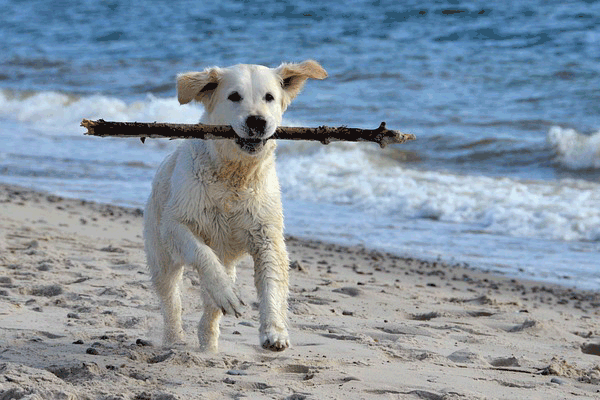
The eyes of a dog are complex sensory organs responsible for vision, playing a crucial role in their interaction with the world. Understanding their anatomy and function can provide valuable insights into canine behavior and health.
I. Ocular Anatomy: A Detailed Breakdown
The canine eye, while sharing many similarities with the human eye, possesses unique adaptations that enhance their visual capabilities. Let’s dissect its structure:
A. External Structures (The Protective Shield):
- Eyelids (Palpebrae): These are folds of skin that cover and protect the eyeball. Dogs have upper and lower eyelids.
- Function: Protection from foreign bodies, drying out, and injury. They also help spread tears across the corneal surface.
- Third Eyelid (Nictitating Membrane): A thin, translucent membrane located in the medial (inner) corner of the eye. It sweeps across the cornea from the medial side.
- Function: Provides additional lubrication and protection, clearing debris and helping with tear distribution. Its visibility can sometimes indicate illness or discomfort.
- Eyelashes: While less prominent than in humans, dogs have eyelashes on their upper eyelids, which help to deflect dust and debris away from the eye.
- Lacrimal Glands: The primary lacrimal gland is located behind the eyeball and produces most of the watery component of tears. The gland of the third eyelid also contributes to tear production.
- Function: To produce tears, which lubricate, nourish, cleanse, and protect the cornea, as well as flush out foreign particles.
- Conjunctiva: A thin, transparent mucous membrane that lines the inner surface of the eyelids and covers the anterior part of the eyeball (sclera).
- Function: Protects the eye, produces mucus to trap debris, and contributes to the tear film.
- Cornea: The transparent, avascular (lacks blood vessels) outer layer at the front of the eye. It’s the first refractive surface light encounters.
- Function: Protection of the inner eye and significant bending of light rays entering the eye (refraction). Its transparency is vital for clear vision.
- Sclera: The tough, white, fibrous outer layer of the eyeball, continuous with the cornea.
- Function: Provides structural integrity and shape to the eye and protects the delicate inner structures. The extrinsic eye muscles attach here, allowing for eye movement.
B. Internal Structures (The Visual Machinery):
- Anterior Chamber: The space between the cornea and the iris, filled with aqueous humor.
- Function: Maintains intraocular pressure and provides nutrients to the avascular cornea and lens.
- Iris: The colored part of the eye, a muscular diaphragm that surrounds the pupil. Dogs typically have brown, blue, or bi-colored irises.
- Function: Controls the size of the pupil, regulating the amount of light entering the eye. In bright light, it constricts the pupil; in dim light, it dilates it.
- Pupil: The opening in the center of the iris. It appears black because light entering it is absorbed by the tissues inside the eye.
- Function: Allows light to pass through to the lens and retina.
- Lens: A transparent, biconvex structure located behind the iris and pupil.
- Function: Fine-tunes the focusing of light onto the retina by changing its shape (accommodation). It also contributes to light refraction.
- Ciliary Body/Muscle: A ring of tissue inside the eye that surrounds the lens. It includes the ciliary muscle and ciliary processes.
- Function: Produces aqueous humor and controls the shape of the lens for focusing (accommodation).
- Posterior Chamber: The space behind the iris and in front of the lens, also filled with aqueous humor.
- Vitreous Humor (Vitreous Body): A clear, gel-like substance that fills the large space behind the lens and in front of the retina.
- Function: Maintains the shape of the eyeball and holds the retina in place.
- Retina: The light-sensitive tissue lining the back of the eye. It contains photoreceptor cells (rods and cones) that convert light into electrical signals.
- Function: Detects light and color, converting it into neural signals that are sent to the brain via the optic nerve.
- Rods: Highly sensitive to light, responsible for vision in dim light (scotopic vision) and detecting motion. Dogs have a higher proportion of rods than humans.
- Cones: Responsible for color vision and sharp detail in bright light (photopic vision). Dogs have fewer cones than humans and perceive colors differently, primarily in shades of blue and yellow (dichromatic vision).
- Choroid: A vascular layer of tissue located between the retina and the sclera.
- Function: Provides nourishment to the outer layers of the retina.
- Tapetum Lucidum: A reflective layer located within the choroid of many nocturnal animals, including dogs. It lies behind the retina.
- Function: Reflects light back through the retina, giving the photoreceptors a second chance to absorb the light. This significantly improves vision in low-light conditions and is responsible for the “eyeshine” seen when light reflects off a dog’s eyes in the dark.
- Optic Nerve: A bundle of nerve fibers that transmits visual information from the retina to the brain.
- Function: Carries the electrical signals generated by the retina to the visual cortex of the brain for interpretation as sight.
II. Functions of Dog Eyes: More Than Just Sight
The canine eye performs a multitude of functions essential for survival and interaction:
- Vision: The primary function, allowing dogs to perceive their environment.
- Low-Light Vision: Due to a higher concentration of rods and the presence of the tapetum lucidum, dogs have superior vision in dim light compared to humans. This aids in hunting and activity during dawn and dusk.
- Motion Detection: Dogs are exceptionally good at detecting movement, even subtle movements at a distance. Their wider peripheral vision also contributes to this.
- Color Vision: While not as rich as human color vision, dogs can perceive colors, primarily in the blue and yellow spectrum. They are essentially red-green colorblind.
- Depth Perception: Binocular vision (where the visual fields of both eyes overlap) provides depth perception, crucial for judging distances when jumping, running, or chasing prey.
- Protection: The eyelids, conjunctiva, and tears work together to protect the delicate corneal surface from injury, infection, and dryness.
- Communication: A dog’s eyes are powerful tools for communication.
- Facial Expressions: Eye contact, pupil dilation, squinting, and even the glance of a dog can convey a range of emotions and intentions, such as happiness, anxiety, aggression, or appeasement.
- Gaze: A direct, hard stare can be perceived as a challenge, while a soft gaze can indicate submission or affection.
- Tear Production and Drainage: The lacrimal system ensures adequate lubrication and cleanses the ocular surface. Excess tears drain through the nasolacrimal duct into the nasal cavity. Blockages in this duct can lead to tear staining.
- Light Regulation: The iris actively adjusts pupil size to control the amount of light entering the eye, optimizing vision in varying light conditions.
III. Unique Adaptations in Canine Vision
- Wider Field of Vision: Most dog breeds have eyes positioned more laterally on their heads, providing a broader field of vision (around 250 degrees) compared to humans (around 180 degrees). This offers better awareness of their surroundings but can sometimes lead to slightly less binocular overlap.
- Tapetum Lucidum: As mentioned, this reflective layer is a key adaptation for nocturnal or crepuscular activity.
- High Number of Rods: The abundance of rods further enhances their ability to see in low light.
- Different Focus: Dogs tend to focus on movement and objects closer to them more effectively than on distant, stationary objects. Their visual acuity (sharpness) is generally lower than that of humans.
IV. Common Eye Conditions in Dogs
Understanding the anatomy and function also helps in recognizing potential problems. Some common canine eye conditions include:
- Conjunctivitis (Pink Eye): Inflammation of the conjunctiva.
- Keratitis: Inflammation of the cornea.
- Cataracts: Clouding of the lens.
- Glaucoma: Increased intraocular pressure.
- Entropion/Ectropion: Inward or outward rolling of the eyelids.
- Cherry Eye: Prolapse of the gland of the third eyelid.
- Progressive Retinal Atrophy (PRA): A degenerative disease affecting the retina.
Regular veterinary check-ups are crucial for early detection and treatment of any eye issues.
Conclusion
The canine eye is a marvel of biological engineering, perfectly adapted for their lifestyle and sensory needs. From the protective outer layers to the intricate light-sensing machinery within, each component plays a vital role in their ability to see, navigate, and communicate. By appreciating the complexity of their ocular anatomy and the functions it serves, we gain a deeper understanding of our canine companions and can better care for their vision health.
#DogAnatomy, #DogEyes, #CanineEyes, #DogVision, #DogEyeStructure, #DogEyeFunction, #CanineEyeAnatomy, #VeterinaryOphthalmology, #VetMed, #CanineHealth, #DogEyeHealth, #TapetumLucidum, #DogRetina, #NictitatingMembrane, #HowDogsSee, #DogsOfInstagram, #DogFacts, #LearnAboutDogs, #PetEducation, #DidYouKnow, #DogScience, #AnimalAnatomy, #DogOphthalmology, #CanineSight, #PetCareEducation, #DogBodyParts, #EyeHealthForDogs, #UnderstandingDogs, #CanineBiology, #DogInsights, #DogAnatomy, #CanineEyes, #DogVision, #DogHealth, #DogEyesight, #DogOptics, #DogOcularFunction, #DogRetina, #TapetumLucidum, #DogSight, #K9Vision, #DogCare, #VeterinaryAnatomy, #AnimalAnatomy, #PetHealth, #DogLover, #DogFacts, #UnderstandingDogs, #DogEducation, #CanineHealth, #DogEyes, #NightVisionDog, #DogCommunication






Add comment