
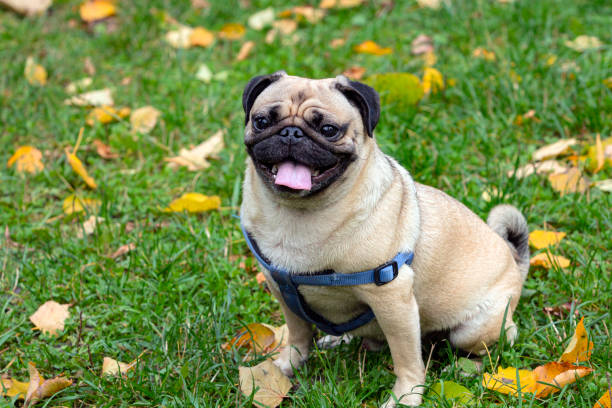
The Pug is one of the world’s most ancient and popular companion breeds, known for its wrinkled face, curly tail, and charismatic personality. These FAQs address common questions about the history, health, temperament, and care required for this unique brachycephalic breed.
PUG DOG: 20 FREQUENTLY ASKED QUESTIONS (FAQS)
| # | FAQ (Question) | Description (Answer) |
|---|---|---|
| 1 | What is the origin and history of the Pug breed? | Pugs originated in China, dating back to the Han Dynasty (206 B.C. to A.D. 200). They were highly valued companions of Chinese emperors and were typically guarded by soldiers. They later became popular in Europe during the 16th century through Dutch traders. |
| 2 | What is the average lifespan of a Pug? | The average lifespan for a Pug is typically between 12 and 15 years, though this is highly dependent on diet, exercise, and proactive management of common breed-specific health issues. |
| 3 | Why do Pugs snort, wheeze, and snore so loudly? | Pugs are a brachycephalic (flat-faced) breed, meaning they have shortened snouts and often narrower nostrils and throats. This anatomical structure restricts airflow, causing the characteristic snorting, snuffling, and loud snoring sounds. |
| 4 | Do Pugs shed a lot? | Yes, Pugs are surprisingly heavy seasonal or year-round shedder, despite their short coats. They typically have a double coat, requiring frequent brushing (daily or every other day) to manage the amount of hair they drop. |
| 5 | How much exercise does a Pug need? | Pugs are low-to-moderate energy dogs. They require about 30 to 45 minutes of moderate low-impact activity daily, such as short walks. Over-exertion, especially in warm weather, must be avoided due to breathing difficulties. |
| 6 | Are Pugs good with children and other pets? | Generally, yes. Pugs are known for their friendly, playful, and stable temperament, making them excellent companions for well-behaved children and often getting along well with other dogs and even cats. |
| 7 | What are the most common Pug health problems? | The most common issues include Brachycephalic Obstructive Airway Syndrome (BOAS), eye problems (proptosis, corneal ulcers), hip dysplasia, patellar luxation, and potential nerve degeneration (Pug Myelopathy). |
| 8 | How often should I clean my Pug’s wrinkles? | The facial folds (wrinkles) must be cleaned daily or every other day using a damp cloth or specialized wipe, and then thoroughly dried. Moisture trapped in the folds can quickly lead to bacterial or yeast infections (skin fold dermatitis). |
| 9 | Do Pugs handle heat and humidity well? | Absolutely not. Pugs are highly susceptible to heat stroke because they cannot pant efficiently to cool down due to their restricted airways. They should never be left outside unattended in warm weather and must have air conditioning access. |
| 10 | Is it true Pugs are prone to eye problems? | Yes. Their prominent, bulging eyes are susceptible to injuries, drying out, and a condition called proptosis (where the eyeball pops out of the socket), which requires immediate veterinary attention. |
| 11 | Are Pugs easy to train? | Pugs are intelligent but possess a stubborn or “willed” streak. They respond best to positive reinforcement, food rewards, and consistent, short training sessions. Housebreaking can sometimes be a challenge. |
| 12 | What kind of diet is best for a Pug? | A high-quality, balanced diet (kibble or fresh food) formulated for small breeds is essential. Pugs are highly prone to obesity, so strict portion control is necessary, as is limiting treats. |
| 13 | What is Pug Dog Encephalitis (PDE)? | PDE is a serious, often fatal inflammatory disease of the central nervous system that is believed to be hereditary. It primarily affects younger Pugs and requires immediate veterinary diagnosis and aggressive treatment. |
| 14 | How long can Pugs be left alone? | Pugs thrive on human companionship and can be prone to separation anxiety. While they can tolerate being alone for 4–6 hours (crate or safe space), they should not be routinely left alone for extended workdays without a caregiver or dog walker. |
| 15 | Do Pugs bark often? | Pugs are not generally excessive barkers. They are more likely to make other noises like snorting, growling, or the occasional warning ‘woof’ when someone is at the door, making them suitable for apartment living. |
| 16 | Why do Pugs have curly tails? | The Pug’s iconic tight curl is a breed standard and is caused by a hemivertebra (a wedge-shaped vertebra) in the tail section. The tightest, most double-curled tail is considered ideal in the show ring. |
| 17 | Are Pugs high-energy or lazy dogs? | Pugs are commonly described as “lounge-bound clowns.” While they have bursts of playful energy, they are primarily companion dogs happiest when sleeping, cuddling, or sitting on their owner’s lap. |
| 18 | Should I use a collar or a harness for my Pug? | A harness is strongly recommended. Collars can place pressure on the Pug’s already compromised trachea, especially if the dog pulls on the leash, which can exacerbate breathing difficulties. |
| 19 | What is the ideal weight range for an adult Pug? | The ideal weight for an adult Pug, male or female, is typically between 14 and 18 pounds (6.3–8.1 kg). Maintaining this weight is crucial for preventing joint issues and reducing stress on the respiratory system. |
| 20 | Are Pugs considered hypoallergenic? | No. Pugs are not hypoallergenic. They are moderate-to-heavy shedder, and the dander they release in their hair and skin cells is a primary trigger for human allergies. |
#PugLife, #PugDog, #PugLove, #DogsofInstagram, #PugCareGuide, #BrachycephalicBreeds, #PugHealth, #FlatFaceGang, #PugCommunity, #DogFAQ, #PetOwnership, #FunnyDogs






Add comment