
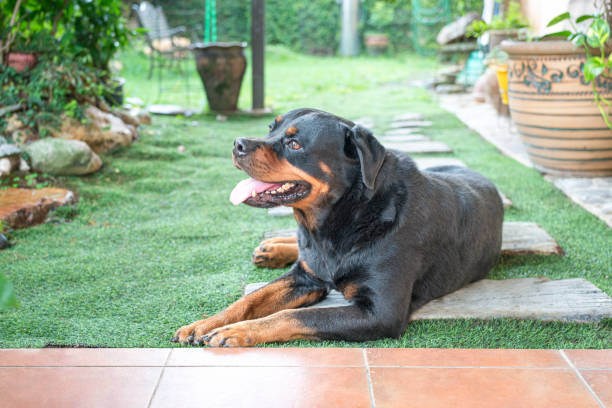
- What is the typical temperament of a Rottweiler?
- Description: Rottweilers are known for being calm, confident, and courageous dogs. They are naturally protective of their family and territory. A well-socialized and trained Rottweiler is typically docile, devoted, and an excellent companion. They can be aloof with strangers but should never be overly shy or aggressive without provocation. Early socialization is crucial to develop their stable temperament.
- Are Rottweilers good family dogs?
- Description: Yes, Rottweilers can be excellent family dogs when properly raised, socialized, and trained. They often form strong bonds with their human family members, including children, and are known for their loyalty and affectionate nature. Supervision is always recommended with any dog and young children, but a well-adjusted Rottweiler is typically gentle and patient with its family.
- How much exercise does a Rottweiler need?
- Description: Rottweilers are moderately active dogs that require regular daily exercise to stay healthy and happy. This typically includes at least 30-60 minutes of vigorous activity per day, such as brisk walks, jogging, playing fetch, or structured training sessions. Mental stimulation through puzzle toys and training is equally important to prevent boredom and destructive behaviors.
- Are Rottweilers easy to train?
- Description: Rottweilers are intelligent and eager to please, making them generally easy to train for experienced owners. They respond best to consistent, firm, but positive reinforcement training methods. Early obedience training and socialization are vital to channel their protective instincts and strong will into positive behaviors, ensuring they become well-behaved adults.
- What are common health problems in Rottweilers?
- Description: Like many large breeds, Rottweilers can be prone to certain health issues. Common concerns include hip and elbow dysplasia, osteosarcoma (bone cancer), heart conditions like subaortic stenosis (SAS), eye problems (e.g., progressive retinal atrophy), and bloat (gastric torsion). Responsible breeders screen their dogs for these conditions, and regular vet check-ups are essential for early detection.
- How long do Rottweilers typically live?
- Description: The average lifespan for a Rottweiler is generally between 8 to 10 years. With excellent nutrition, regular exercise, proper veterinary care, and a loving environment, some Rottweilers may live slightly longer.
- Do Rottweilers shed a lot?
- Description: Rottweilers have a short, double coat that experiences moderate shedding throughout the year, with heavier shedding periods typically occurring seasonally (spring and fall). Regular brushing (2-3 times a week) can help manage shedding and keep their coat healthy.
- What kind of diet is best for a Rottweiler?
- Description: A high-quality, balanced diet formulated for large breeds is crucial for a Rottweiler’s health, particularly during their rapid growth phase as puppies. This diet should be rich in protein and contain appropriate levels of fat, carbohydrates, vitamins, and minerals. Consulting with a veterinarian about specific dietary needs, especially regarding portion control and ingredients to support joint health, is recommended.
- Are Rottweilers aggressive?
- Description: A properly bred, socialized, and trained Rottweiler is not inherently aggressive. Their powerful build and protective instincts can be misinterpreted. Unprovoked aggression is a serious fault in the breed. Issues typically arise from poor breeding, lack of socialization, improper training, or abuse. With responsible ownership, they are stable and dependable.
- Do Rottweilers need a lot of grooming?
- Description: Rottweilers have a relatively low-maintenance coat. Regular brushing (2-3 times a week) is sufficient to remove loose hair and keep their coat shiny. They don’t require frequent bathing, usually only when dirty. Nail trims, ear cleaning, and dental hygiene are also essential parts of their grooming routine.
- Are Rottweilers good with children?
- Description: Many Rottweilers are exceptionally good with children within their own family, often displaying a patient and protective nature. However, due to their size and strength, all interactions between Rottweilers (or any dog) and young children should be supervised. Early socialization and teaching children how to interact respectfully with dogs are paramount.
- What’s the ideal living situation for a Rottweiler?
- Description: Rottweilers are adaptable but thrive best in a home with a securely fenced yard, as they need space to play and exercise. They are not suited for apartment living unless they receive ample outdoor activity. More importantly than space, they need to be an integral part of the family and should not be left alone for long periods or isolated outdoors.
- How much does a Rottweiler puppy cost?
- Description: The cost of a purebred Rottweiler puppy from a reputable breeder can range from $1,500 to $4,000 or more, depending on the breeder’s reputation, the puppy’s lineage, health clearances of the parents, and location. This cost often reflects the breeder’s investment in health testing, quality care, and proper socialization. Adoption fees from rescues are typically much lower.
- What are the legal or insurance considerations for Rottweiler ownership?
- Description: Due to breed-specific legislation (BSL) in some areas and insurance company policies, Rottweilers can face restrictions. Some cities or counties may ban or place severe restrictions on owning Rottweilers, and many insurance companies charge higher premiums or refuse coverage for homes with certain breeds, including Rottweilers. It’s crucial to research local laws and insurance policies before acquiring a Rottweiler.
- When should I start training a Rottweiler puppy?
- Description: Training should begin as soon as you bring your Rottweiler puppy home, typically around 8 weeks of age. Early socialization and basic obedience commands are essential. Puppy classes are highly recommended for structured learning and controlled exposure to other dogs and people. Consistent training throughout their life is key.
- How big do Rottweilers get?
- Description: Rottweilers are a medium-to-large breed. Males typically stand 24-27 inches (61-69 cm) at the shoulder and weigh 95-135 pounds (43-61 kg). Females are slightly smaller, usually 22-25 inches (56-63.5 cm) tall and weighing 80-100 pounds (36-45 kg).
- What are the signs of a well-bred Rottweiler?
- Description: A well-bred Rottweiler comes from parents with excellent health clearances (hips, elbows, heart, eyes), stable temperaments, and conformation to the breed standard. The breeder should be transparent, allow you to meet the parents, provide health guarantees, and be knowledgeable about the breed. They prioritize health and temperament over quick sales.
- Are Rottweilers good guard dogs?
- Description: Rottweilers possess natural guarding instincts and an imposing presence, making them excellent guard dogs. They are typically alert and observant, often adopting a “wait and see” approach before acting. Their protective nature means they will defend their family and home if they perceive a threat, but this instinct must be managed through proper training and socialization.
- Do Rottweilers bark a lot?
- Description: Rottweilers are not typically known as excessive barkers. They usually bark with purpose—to alert their owners to visitors, potential threats, or if they are bored or anxious. Consistent training can help manage nuisance barking.
- What is the history of the Rottweiler breed?
- Description: The Rottweiler’s origins trace back to Roman times, where they were likely descended from drover dogs used to drive cattle for the Roman legions across Europe. They served as cattle drivers and guard dogs in the German town of Rottweil, hence their name “Rottweiler Metzgerhund” (Butcher’s Dog of Rottweil). They later transitioned to police and military work and became popular companion dogs.
#RottweilerLife #RottweilerLove #RottweilersOfFacebook #RottweilerPuppy #RottweilerCare #DogOwnership #LargeBreedDogs #DogsOfFacebook #RottweilerFacts #BreedInformation Instagram: #Rottweiler #RottiesOfInstagram #Rottweilergram #RottweilerWorld #RottweilerLover #RottweilerNation #DogsofInstagram #RottweilerPuppies #MyRottie #RottweilerCommunity YouTube: #RottweilerTraining #RottweilerVlog #RottweilerHealth #RottweilerFacts #RottweilerDayInTheLife #RottweilerCareGuide #RottweilerPuppyTraining #RottweilerReview #RottweilerTips #DogBreedsExplained







Add comment