
The Ultimate Guide to Safe Dog Feeding: Separating Kibble from Curious Crawlers
If you are a parent of a newborn or a toddler, you know the struggle: babies are heat-seeking missiles, and their target often involves anything dirty, sticky, or frankly, disgusting. For dog owners, the primary magnet of curiosity is often the dog’s food or water bowl.
Keeping dog food separate and safe is not just about hygiene—it’s a critical component of household safety that protects your baby from potential hazards and prevents stress or resource guarding in your dog.
This comprehensive guide breaks down the essential feeding time strategies you need to implement to create a safe, harmonious environment for both your two-legged and four-legged family members.
Part 1: Why This Is a Non-Negotiable Safety Priority
Before diving into logistics, it’s vital to understand why casual or “grazing” feeding is unsafe once a crawler or toddler enters the picture.
1. The Choking and Digestive Hazard
Dog kibble, especially large-breed formulas, presents a significant choking risk for infants and toddlers. Beyond the immediate danger, dog food is formulated for canine digestive systems, not human ones. While most kibble is non-toxic, consuming large amounts can cause:
- Severe stomach upset, vomiting, and diarrhea.
- Risk of excessive fat intake.
2. The Bacteria and Contamination Risk
Dog bowls are teeming with bacteria. If your dog eats raw food, the risk of pathogens like Salmonella is extremely high. Even dry kibble bowls can harbor germs from your dog’s saliva, outdoor debris, and general floor contact.
3. Resource Guarding and Behavioral Safety
When a baby approaches an actively eating dog, the dog may view the child as a threat to its valuable resource (food). This can trigger resource guarding, leading to growling, snapping, or biting. Safety protocols must be designed to eliminate the possibility of this conflict entirely.
Part 2: The Immediate Fixes—Timing and Elevation
The quickest, simplest strategies involve changing when and where your dog eats.
1. Master the Feeding Schedule (No More Grazing)
The single most effective strategy is to eliminate free-feeding (leaving food out all day).
- Implement Scheduled Mealtimes: Feed your dog two or three specific times a day (e.g., 7:00 AM and 5:00 PM).
- The 15-Minute Rule: Put the food down, and after 15 or 20 minutes, pick the bowl up—regardless of whether the dog finished eating. If the dog is hungry, they will quickly learn that they must eat during the designated window.
- The Sleep Window Advantage: The best time to feed your dog is when your baby is safely contained, such as during a nap, or strapped into a high chair in another room.
2. Go High: Elevation is Your Friend
Crawlers and toddlers can’t reach what they can’t climb. Use height to your advantage:
- Countertop Feeds (Small Dogs): If you have a calm, smaller dog, feeding them up on a counter or stable, high washer/dryer unit may be feasible. Safety Note: Never attempt this with large, unruly, or jumping dogs.
- Elevated Feeding Stands: While these are primarily designed for large breed comfort, they still put the food slightly out of immediate reach of a crawling baby, though they are not a foolproof solution.
Part 3: Creating Designated, Isolated Feeding Zones
The most robust safety strategy involves physical separation using barriers and specific rooms.
1. The Crate: The Ultimate Separation Tool
The dog crate is the gold standard for safe, stress-free feeding.
- Safety and Comfort: Your dog views the crate as their den. Feeding them in the crate gives them privacy, reduces their anxiety about losing their food, and guarantees that the baby cannot approach them mid-meal.
- Crate Training: If your dog isn’t crate trained, start slowly, feeding them their meals inside with the door open, eventually graduating to short periods with the door closed.
2. The Baby Gate Barrier
Baby gates are essential management tools for multi-species households.
- Gate Off the Area: Use a sturdy baby gate to block off a room that can be designated as the dog’s feeding zone (e.g., the laundry room, a spare bathroom, or the mudroom).
- Gate Placement: Ensure the dog can easily access the food behind the gate, but the baby cannot. (If you use a gate with a small pet door, ensure the dog can fit, but the baby cannot crawl through.)
3. The Closed-Door Strategy
If you don’t use a crate or gate, designate a room with a closing door:
- Bathroom/Laundry Room: Place the food bowl inside the designated room, close the door while the dog is eating, and supervise from outside.
- Immediate Removal: The moment the dog signals they are finished, remove the bowl and open the door.
Part 4: Managing Water Bowls and Leftovers
The danger doesn’t end when the kibble is gone. Puddles and water bowls are also irresistible.
1. Water Bowl Placement
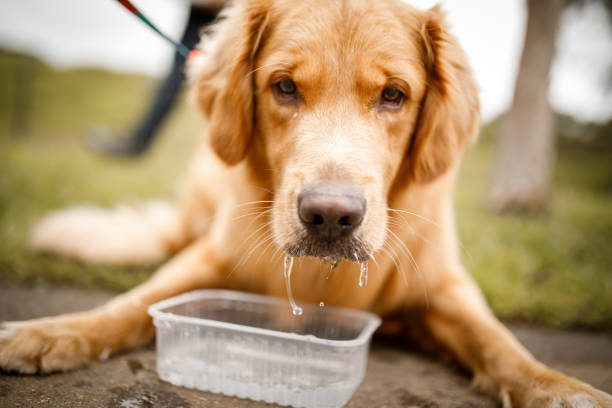
Water bowls are inherently messy and must be accessible all day, making them tricky to manage.
- Use Elevated/Heavy Bowls: Choose heavy ceramic or non-tip bowls that a baby can’t easily flip or drag. Place them on top of a rubber mat to manage splashing.
- Location, Location, Location: Place the water bowl in a gated-off area (like the dog’s feeding zone) or a location where the baby is rarely given free-roam access (e.g., a corner of the kitchen where the baby is always supervised, or behind the couch).
- Frequent Water Changes: Change the water daily and thoroughly sanitize the bowl several times a week to reduce bacterial build-up.
2. The Kibble Cleanup Protocol
Accidentally dropped kibble is the most common way babies ingest dog food.
| Strategy | Action Item |
|---|---|
| Immediate Patrol | Keep a handheld vacuum or dustpan and brush near the feeding area. |
| Post-Meal Sweep | Immediately after the 15-minute feeding window—even if the dog ate every bite—sweep or vacuum the area thoroughly to capture stragglers. |
| Look Under Furniture | Kibble often rolls! Check under tables, chairs, and cabinets where your baby might crawl. |
Summary Checklist for Zero-Risk Feeding
By implementing these strategies, you shift dog feeding from a chaotic hazard to a calm, controlled routine.
| Goal | Strategy |
|---|---|
| Avoid Choking/Ingestion | Eliminate free-feeding; implement the 15-minute rule; remove the bowl entirely afterward. |
| Prevent Resource Guarding | Feed the dog in complete isolation (crate or gated room) so the baby cannot approach mid-meal. |
| Manage Spills | Use the immediate “Kibble Cleanup Protocol.” |
| Control Water Access | Use heavy, non-tip bowls and place them in a designated, low-traffic area. |
Parenting while managing pets is challenging, but establishing strict, safety-focused routines will protect your baby and help your dog feel secure and comfortable in their home. Consistent management is the key to a happy, safe household.





Add comment