
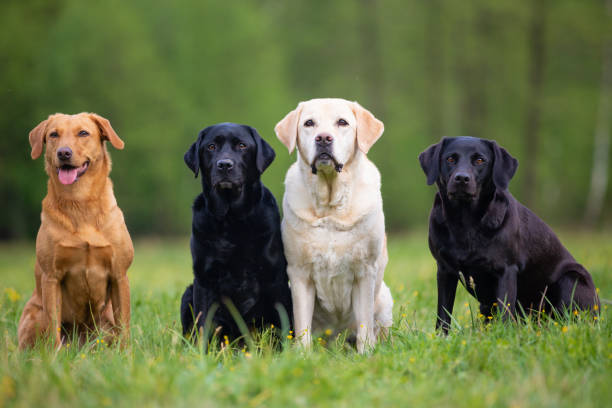
I. Introduction: The Necessity of Indoor Enrichment for the Labrador Retriever
The Labrador Retriever is one of the most beloved breeds globally, renowned for its friendly demeanor, unwavering loyalty, and robust energy levels. Bred originally as working dogs—specifically to retrieve fish and game—Labs possess a high drive, remarkable stamina, exceptional trainability, and an intense need for mental engagement.
While long walks and trips to the dog park are essential, relying solely on outdoor physical exercise is insufficient and often impossible due due to weather extremes, injury, age restrictions, or simply a busy day. Furthermore, physical exercise alone often builds more stamina; true exhaustion for a Lab comes through focused mental work.
This comprehensive guide delves into how to channel the Labrador’s powerful instincts—the “food drive,” the “retrieve drive,” and the need for “purpose”—into structured, calming, and highly beneficial indoor activities. These exercises are categorized to ensure holistic development, covering mental acuity, physical health, behavioral refinement, and crucial bonding.
II. Mental Stimulation and Cognitive Puzzle Play (The Core of Lab Happiness)
Mental exercises are arguably the most effective way to tire out a high-energy Labrador. Five minutes of complex cognitive work can be as tiring as an hour of running, as it forces the dog to problem-solve, focus, and use different parts of their brain.
A. Advanced Scent Work and “Find It” Games
Labs possess excellent noses, and engaging their olfactory senses burns energy efficiently while promoting calmness.
1. The Basic “Find It” Game (Foundation)
- Goal: To teach the dog to use their nose on command.
- Preparation: Start with high-value treats (small pieces of cheese or liver) that have a strong scent. Ensure the dog has a reliable ‘Stay’ or is confined temporarily.
- Procedure:
- Show the Lab the treat and use the cue, “Find It!”
- Initially, hide the treat in plain sight, just inches away, allowing immediate success.
- Gradually increase the difficulty: Hide the treat behind a chair, under a rug, or slightly behind a closed curtain.
- Progression (Level 2): Use empty yogurt containers or cardboard boxes scattered in a room. Hide the treat under only one container. The dog must learn to investigate each container systematically.
- Progression (Level 3 – Drug Search Simulation): Introduce specific items (keys, a toy, or a training aid) instead of food. Reward the dog only when they successfully find the non-food item and mark it (by touching it or sitting next to it). This turns the search into a complex task, utilizing the Lab’s natural retrieving instinct.
2. The Hide-and-Seek Retrieval (Person/Toy Search)
This exercise taps directly into the Lab’s historical role as a companion and retriever.
- Procedure: Have one person restrain the Lab while the other person hides in a simple location (behind a door, under a blanket). Use an excited voice and the command, “Go Find [Person’s Name]!”
- Lab Specific Benefit: When the Lab locates the person, reward them with a brief, energetic play session or high-value food. This strengthens the association between using their nose and the joy of finding their “flock.”
- Progression: Hide a favorite, scented toy instead of a person, requiring the Lab to bring the toy back upon finding it.
B. DIY and Commercial Puzzle Toys
While commercial puzzles are effective, DIY options allow for infinite variation and difficulty adjustment, critical for keeping an intelligent Lab engaged.
1. The Muffin Tin Challenge (Intermediate)
- Setup: Use a standard 12-cup muffin tin. Place a high-value treat in each cup.
- Procedure: Cover the treats either with tennis balls, small plush toys, or wadded-up paper. The Lab must use their nose, paws, and mouth to systematically remove the obstruction to access the food.
- Modification for Labs: Labs are powerful chewers. If they attempt to destroy the tennis balls, substitute them with rubber or hard plastic bottle caps that are too large to swallow but too hard to chew easily.
2. The Towel Burrito (Beginning to Intermediate)
- Setup: Lay out a bath towel flat. Sprinkle small kibble or treats across the surface.
- Procedure: Tightly roll the towel into a “burrito” shape. Secure the ends with a loose knot or rubber bands (if the dog is reliably non-chewing).
- Benefit: This requires patience and complex unwrapping/unrolling movements, engaging both snout and paws, which is mentally demanding.
3. The Water Bottle Crunch (For Mouth-Motivated Labs)
- Caution: Only use this supervised. Always remove the cap and the plastic ring to prevent ingestion.
- Setup: Place a few pieces of kibble inside a clean, empty plastic water bottle (ensure the label is removed).
- Procedure: The Lab has to hold the bottle between their paws or spin it with their mouth to dislodge the food. The satisfying crinkling sound provides sensory feedback and redirection for dogs that love to chew destructive items.
C. Conceptual Games
These games teach the Lab abstract concepts and promote patience and impulse control, essential for a large, excitable breed.
1. The Shell Game (Cognitive Focus)
- Setup: Use three identical cups, bowls, or sturdy containers.
- Procedure:
- Show the Lab the treat and place it under one of the cups while the dog watches.
- Ask the dog to “Stay.”
- Slowly shuffle the cups.
- Release the ‘Stay’ and command, “Which one?” or “Point!”
- Success Metric: The Lab must indicate the correct cup by touching it with their nose or paw, requiring critical thinking rather than just retrieving.
2. Name That Toy/Object Discrimination
If the Lab has a small collection of toys, teach them to retrieve specific items by name.
- Procedure:
- Start with two distinctly different toys (e.g., “Rope” and “Ball”).
- Place them side-by-side. Point to the rope and say, “Get the Rope!” When the dog touches/retrieves it, reward generously.
- Repeat until the association is strong.
- Increase the distance and complexity, adding more known objects (e.g., “keys,” “leash,” “shoe”).
- Lab Specific Requirement: Labs thrive on having a job. Being able to retrieve specific objects upon command provides them with deep satisfaction and purpose.
III. Training and Behavioral Refinement (Productive Downtime)
Indoor time is the perfect opportunity to refine fundamental commands and introduce advanced behaviors necessary for an exceptionally well-mannered companion. The absence of external stressors (traffic, other dogs) allows for focused concentration.
A. Proofing Foundational Skills
“Proofing” is practicing known skills under increasingly difficult indoor distractions.
1. Extended Stay and Relaxation Protocol
The inability to settle is a significant challenge for many Lab owners. The Relaxation Protocol (often associated with Dr. Karen Overall) involves systematically rewarding the dog for remaining in a ‘Down’ or ‘Place’ position while the owner introduces minor distractions.
- Distractions to Proof:
- Getting up and sitting down repeatedly.
- Tapping the dog’s paw or ear gently.
- Dropping non-breakable items (keys, plastic bowls).
- Walking around the dog in a figure eight.
- Opening and closing the refrigerator door.
- The Goal: The Lab learns that remaining calm and stationary, even during household disruption, is highly rewarding. This skill is paramount for polite indoor living.
2. Doorbell and Knock Management
Labs often exhibit high excitement when visitors arrive. Indoor training can mitigate this reactivity.
- Procedure:
- The Lab is positioned on their ‘Place’ mat.
- A helper stands outside and rings the doorbell once.
- If the Lab stays, reward heavily. If they break position, calmly redirect them without punishment and try again.
- Gradually increase the duration of the ringing and introduce a knock.
- Advanced Step: Have the helper actually open the door slightly while the Lab remains settled.
B. Advanced Trick Training
Teaching complex tricks utilizes the Lab’s natural athleticism and desire to please, strengthening focus and communication.
1. “Clean Up” or “Put Away Toys”
This task appeals directly to a Lab’s retrieving instinct and provides a practical household task.
- Procedure:
- Start by teaching the dog to pick up a toy and drop it directly into a designated basket or bin. Reward immediately upon release into the bin.
- Once they consistently target the bin, place the bin further away.
- Cue them with “Get the Ball” and then “Clean Up!”
- Motivation: Labs are intrinsically motivated by holding objects, making the “Clean Up” motion (retrieving and releasing) highly satisfying.
2. Weave Pole Simulation (Basic Agility)
Though not formal agility, using household items can introduce coordination skills.
- Setup: Line up three to five sturdy objects (e.g., water coolers, large books, cones) in a straight line, spaced far enough apart for the Lab to safely maneuver.
- Procedure: Lure the dog with a high-value treat or toy, guiding them slowly through the “weave” pattern (left, right, left, right). Use a clean, consistent hand motion and the cue “Weave.”
- Benefit: This enhances body awareness, coordination, and focus on the handler’s signals—all crucial for an energetic, often clumsy, young Lab.
3. Backing Up (Canine Fitness and Spatial Awareness)
Teaching the Lab to back up several steps is excellent for core strength and managing space politely.
- Procedure: Stand directly in front of the Lab in a narrow hallway. Take a step toward them while holding a treat close to their nose, moving your hand backward. As the dog steps back to maintain proximity to the treat, cue “Back Up!” and reward the movement.
- Application: Useful for getting large Labs out of the way when opening refrigerators, closets, or doors.
IV. Calming and Sensory Activities (Promoting Relaxation)
Labs are often perpetually “on.” It is vital to teach them to switch gears and engage in activities that naturally promote endorphin release and lower heart rate.
A. Lick Mats and Calming Chews
The act of sustained licking and chewing is scientifically proven to be soothing to dogs, releasing stress-reducing hormones. This is essential for highly aroused Labs.
1. Lick Mat Usage
- Preparation: Spread soft, appealing substances onto a silicone lick mat, such as low-fat yogurt, pumpkin purée, peanut butter, or mashed banana. For an extra challenge, freeze the mat for 30 minutes.
- Application: Present the mat during times of high anxiety (e.g., thunderstorms, owner preparing to leave) or immediately after an intense play session to signal the transition to rest.
2. Safe, Durable Chews
Labs require substantial, durable chew items to satisfy their powerful jaws and need to hold things.
- Recommended Items: Frozen raw bones (always supervised), high-quality, durable rubber chew toys (like Kongs filled with frozen food), or dental chews.
- The Rule of the Chew: Never allow the Lab to engage in destructive chewing (furniture, wires). Redirect any inappropriate chewing immediately to the designated chew item.
B. Therapeutic Massage and Touch
Desensitization to handling is necessary for vet visits, grooming, and general comfort.
- Procedure: While the Lab is in a relaxed ‘Down’ position, begin with long, slow strokes along the back. Progress to gently handling paws, lifting ears, opening the mouth briefly, and touching the tail base.
- Lab Specific Benefit: Many Labs love physical contact. Therapeutic massage strengthens the bond and allows the owner to check for lumps, ticks, or injuries in a low-stress environment. Pay special attention to the large hind leg muscles and shoulders, where tension builds up.
C. The “Capturing Calmness” Strategy
This is a training methodology designed to reward the Lab when they are doing nothing.
- Procedure: Keep high-value, easy-to-deliver treats handy (e.g., in a jar on the coffee table). Anytime the Labrador sighs, settles their head down, or just lies quietly on their mat without being asked, silently toss a reward toward them.
- Crucial Point: Do not speak or call attention to the act, as this might rouse them. The goal is to reward the state of tranquility, teaching the Lab that stillness is profitable.
V. Physical Exercise Indoors (When the Weather Fails)
While mental work is primary, Labs still need to move their bodies. These activities are designed to be high-intensity but confined, requiring spatial awareness and impulse control.
A. Controlled Hallway Fetch
If a long, straight hallway is available, low-impact fetch can still be utilized.
- Safety Precaution: Use soft, lightweight toys (plush toys, soft discs, crumpled paper balls) to prevent damage to floors or walls. Avoid hard balls that can cause slipping injuries.
- Procedure: Command the Lab to ‘Sit’ or ‘Wait’ at one end of the hallway. Throw the toy a short distance (enough for three to four strides). Release the Lab with the ‘Fetch’ cue and demand a swift, immediate return.
- Focus on Impulse Control: Use the wait time before the retrieve to practice patience. This turns the physical activity into a psychological exercise as well.
B. Stair Work (Strength and Conditioning)
Using stairs is an effective way to quickly build muscle and cardiovascular fitness.
- Safety Warning: Consult a vet before performing repetitive stair work with puppies (under 18 months, due to growth plates) or older/arthritic Labs.
- Procedure (Moderate Intensity): Have the Lab walk up and down the stairs ten times in quick succession. Reward at the bottom for settling immediately.
- Procedure (Advanced Conditioning): Teach the Lab to walk the stairs slowly, deliberately placing each paw—rewarding the slow, controlled movement. This builds muscle control and is safer than a rushed run.
C. Tugging and Release Games
Tug is an excellent energy burner, provided it is played with clear rules that reinforce human control.
- The Rules:
- The Lab must never initiate the game by biting the owner or the owner’s clothes/hands.
- The game starts and stops on the owner’s command (“Take It!” and “Drop It!”).
- If the Lab’s teeth touch skin, the game instantly stops for one minute.
- Benefit for Labs: The intense physical opposition satisfies their inherent drive for a strong, mouthy activity, while the structure reinforces impulse control. Always use a durable rope or rubber toy, never bare hands.
D. Canine Core and Stretching (Doga-Inspired)
Exercises that require the Lab to move their body in non-linear ways enhance flexibility and core strength.
1. Figure Eights and Spins
Lure the dog around your legs in a figure-eight pattern using a food lure. Cue “Weave” or “Figure 8.” Then teach them to turn quickly in place (“Spin” or “Twirl”). This engages core muscles needed for stability.
2. ‘Bow’ and Down-and-Up Repetitions
The ‘Bow’ (play bow) stretches the shoulders and hindquarters. Practicing rapid successions of ‘Down’ to ‘Stand’ and then into a controlled ‘Bow’ (where the rear remains high) is a powerful muscle workout.
VI. Bonding and Relationship-Building Activities
Labs are deeply motivated by social connection. These activities prioritize the human-dog relationship above task completion.
A. Cuddle Time and Grooming Rituals
Labs are often physically affectionate. Scheduled, low-pressure affection time reinforces trust.
- Grooming: Use a soft bristle brush or grooming glove. Labs shed immensely, making daily indoor grooming necessary. This ritual should be slow, peaceful, and paired with low-key praise and petting.
- Purpose: The rhythmic brushing mimics the calming effects of being licked by the mother dog, offering a deep sense of security.
B. Reading to Your Dog
While the Lab doesn’t understand the words, they respond to the calm, steady rhythm of the owner’s voice.
- Setup: The Lab should be settled on their mat or near the owner. Read a book aloud in a soft, even tone for 10-15 minutes.
- Benefit: This teaches the Lab that the owner can be present and calm without demanding interaction, reinforcing the “Capturing Calmness” protocol while strengthening the vocal bond.
C. Imitation Games (“Do As I Do”)
Teaching the Lab to link actions to gestures based on the owner’s body language enhances communication.
- Procedure: Start simple. The owner performs an action (e.g., touching their nose, raising an arm, taking a step backward) and cues the dog to perform a parallel, known action (e.g., ‘Touch,’ ‘Shake,’ or ‘Back Up’).
- Goal: The Lab learns to observe and predict the owner’s next move, deepening their attention to non-verbal cues.
VII. Safety, Preparation, and Troubleshooting
Successful indoor activities require a prepared, safe environment and an understanding of the Lab’s specific challenges.
A. Preparing the Indoor Environment
- Clear the Runway: Remove tripping hazards (rug edges, electrical cords, breakable decor) from areas used for training or movement.
- Flooring: Hardwood floors or tile can lead to severe hip injuries, especially in exuberant Labs. Lay down yoga mats, durable runners, or non-slip area rugs in high-traffic training zones to provide traction.
- Temperature Control: Labs, with their thick double coats, can overheat quickly during intense indoor training. Keep the area cool and always have fresh water available.
B. Addressing Labrador-Specific Challenges
1. Managing Intensity and Excitement
Labs often struggle to regulate their intensity. If a Lab becomes overly excited (barking, jumping, frantic behavior) during a game, immediately pause the activity. Ask for a known, calming behavior (like a ‘Sit’ or ‘Down’) and wait for two seconds of calmness before resuming. This teaches the Lab that self-control is the prerequisite for fun.
2. The Vacuum Cleaner Mouth
The Labrador’s tendency to swallow food whole or quickly ingest non-food items requires strict supervision during puzzle and scent games. Always use pieces of food that are small, soft, and easy to digest, and immediately remove any discarded pieces of paper or cardboard from DIY toys.
3. Age-Specific Modifications
- Puppies (Under 6 months): Focus on short bursts of training (2-3 minutes), heavy socialization to household sounds, and teaching quiet crate time. Avoid high-impact jumping or long stair work.
- Seniors (8+ years): Focus on low-impact scent work, gentle massage, cognitive puzzles that don’t require standing (e.g., lick mats, snuffle mats), and brief, deliberate stair exercises for muscle maintenance, not cardiovascular exhaustion.
C. The Importance of Schedule and Routine
Labs thrive on predictability. Establishing a routine for indoor activities (e.g., 20 minutes of scent work after breakfast, 15 minutes of training before dinner) helps manage their energy throughout the day and reinforces positive behavior.
VIII. Conclusion
The Labrador Retriever is a high-performance canine athlete and intellect wrapped in a friendly, enthusiastic package. Successfully managing a Lab indoors during inclement weather or periods of limited mobility requires shifting the focus from physical output to mental input. By incorporating structured puzzle play, advanced obedience, calming sensory engagement, and relationship-building rituals, owners can satisfy the Lab’s profound need for purpose, ensuring a well-adjusted, exhausted, and happy companion, regardless of what the weather brings.
#LabradorLife, #DogEnrichment, #IndoorDogGames, #SmartDogTraining, #LabradorRetriever, #RainyDayFun, #DogPuzzleToys, #DogScentWork, #PositiveReinforcement, #TrainYourDog, #CanineFitness, #HappyLab, #DogActivities, #LabradorLove, #TireYourDogOut, #PuppyTrainingTips, #DogBehavior, #WorkingDog.






Add comment