
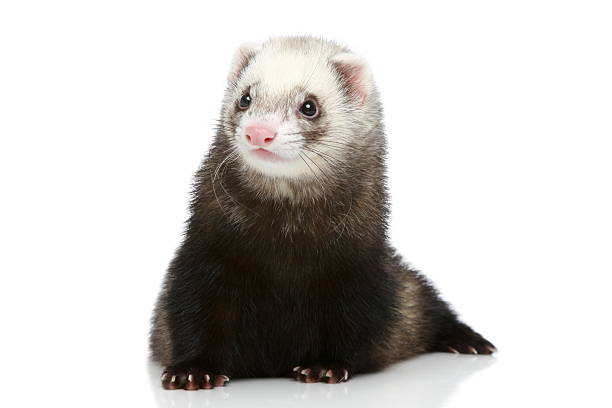
The Great Coexistence: Navigating the Introduction of Ferrets to Existing Household Pets
Bringing a ferret (or “carpet shark,” as they are affectionately known) into a home already inhabited by dogs, cats, or other animals is a rewarding social experiment, but one fraught with potential biological conflict. Ferrets, while highly domesticated, are unique predators—curious, relentless, and driven by scent and sound. Dogs and cats, meanwhile, retain primal instincts: the dog’s inherent prey drive and the cat’s territorial imperative.
Successfully integrating a ferret into a multi-species home demands extensive preparation, unwavering supervision, a profound understanding of animal behavior, and, above all, patience. This guide provides an elaborate framework, detailing the preparation, the multi-phase introduction methods for different species, and the crucial safety protocols necessary to ensure coexistence, not just tolerance.
SECTION 1: Understanding the Dynamics and Risk Factors
Before any physical introductions occur, it is essential to appreciate the inherent biological challenges. A ferret is a small, fast-moving, tubular animal, which activates specific predatory instincts in many dogs and cats.
1.1 Ferret Behavior and Defense Mechanisms
Ferrets are playful, but their play can often look like aggression (nipping, dragging, chasing). They communicate fear or pain primarily through three methods:
- The Scream: A terrifying, high-pitched scream usually reserved for genuine pain or crushing fear. This can trigger a heightened prey response in dogs or cause cats to panic.
- Hissing/Chattering: Used as minor warnings or signs of irritation during play.
- Scent Gland Release: If extremely frightened, a ferret may release its musky scent. While harmless, a sudden, strong musk odor can confuse or irritate other pets.
1.2 Defining the Risk Tiers
The level of risk depends heavily on the pre-existing pet:
| Pet Type | Primary Danger to Ferret | Primary Danger to Other Pet | Coexistence Potential |
|---|---|---|---|
| Dogs | Predatory Drift, Crushing Injuries, Shaking (Game/Play Instinct). | Nipping/Biting (if the ferret feels cornered). | High, but requires constant training and supervision. |
| Cats | Swatting/Claws (Puncture wounds, eye injuries), Territorial Aggression. | Nipping/Scramble marks on the cat’s nose or paws. | High, with slower, more meticulous introductions. |
| Birds/Rodents/Reptiles | Predation (Ferrets are hardwired hunters). | Minimal (unless the ferret is bitten defensively). | Virtually Zero. Must be managed via strict separation. |
SECTION 2: Pre-Introduction Planning and Preparation (The Foundation)
Safety is built in the preparation phase. Before the ferret leaves the carrier near another pet, several steps must be completed.
2.1 Health and Quarantine Protocols
- Veterinary Check-Ups: Both the ferret and the existing pets must be up-to-date on vaccinations, flea/tick prevention, and have recent clean bills of health. Stress and close contact can easily transmit parasites or minor illnesses.
- Quarantine (Minimum 7–14 Days): The new ferret must be housed in a separate room, completely isolated from other pets. This allows the ferret to decompress and reduces the likelihood of introducing illness.
2.2 Scent Acclimation: The Core of Acceptance
Animals primarily communicate and identify individuals through scent. Neutralizing the “foreign” scent is the most critical preparatory step.
- The Bedding Swap (Phase 1): Take a favorite blanket or bed from the ferret’s cage and place it in the common areas or the dog/cat’s bed. Simultaneously, introduce the dog/cat’s bedding into the ferret’s quarantine area (outside the cage).
- Targeted Scent Rubbing (Phase 2): Gently rub a clean cloth over the dog/cat and then rub the same cloth over the ferret (or vice versa). This mixes their essential body odors. Repeat daily, increasing the duration the pets have access to the cloths.
- Owner Scent Transfer: Handle the ferret extensively, then immediately handle the dog or cat without washing your hands. This links the ferret’s scent positively with the trusted human.
2.3 Territory Management and Safety Zones
Ferrets need guaranteed escape routes and safety zones.
- Identify Neutral Zone: Choose a small room (like a bathroom or laundry room) where initial introductions will occur. This room should not be strongly associated with the dog or cat.
- Ferret-Proofing: Ensure the neutral zone is escape-proof and hazard-free. Remove any large gaps the ferret could exploit to hide permanently.
- Elevated Escape: For cat introductions, ensure furniture or climbing spaces are available where the ferret cannot reach, allowing the cat to retreat and watch from a safe height. For dogs, ensure the ferret’s cage or den (when not in use) is readily accessible for quick retreat.
SECTION 3: Introducing Ferrets to Dogs
Dogs represent the highest potential risk due to their size, jaw strength, and strong prey drive. Successful integration relies 100% on the dog’s temperament and the owner’s ability to maintain absolute control. Never allow unsupervised interaction, even years after successful integration.
3.1 Initial Assessment: Understanding the Dog’s Prey Drive
Before proceeding, honestly evaluate your dog’s history:
| Prey Drive Level | Description | Recommended Caution Level |
|---|---|---|
| High | Has a history of killing small animals (squirrels, mice, rabbits). Breeds like Terriers (especially Rat Terriers), Sight Hounds (Greyhounds, Whippets), or herding breeds with strong nipping instincts. | Extreme Caution. May never be safe together. Introductions are mandatory barriers only. |
| Medium | Shows interest in chasing squirrels but backs off easily. Moderate energy level. Breeds like Retrievers, Standard Poodles, or many mixed breeds. | High Caution. Requires strict obedience review and muzzle training. |
| Low/None | Older, low-energy dogs; giant breeds (sometimes), or dogs raised exclusively with small pets. | Moderate Caution. Focus on teaching the dog gentle manners and awareness of the ferret’s fragility. |
3.2 Phase 1: Sight and Sound (Barrier Method)
Once scent swapping is complete, allow the dog and ferret to see each other safely.
- The Double Barrier: Place the ferret in its secure cage or carrier. Bring the dog into the room, keeping it securely leashed by a human handler.
- Controlled Observation: Allow the dog to sniff the carrier/cage. Watch ALL body language:
- Bad Signs: Stiff tail, raised hackles, low growling, obsessive focus, “prey bow” (front legs low, rear end high), whining, or frantic barking. Stop immediately and return to scent swapping.
- Good Signs: Loose body, soft gaze, curious sniffing, easy distraction by a treat or command.
- Duration: Keep these sessions brief (5-10 minutes maximum). End on a positive note, rewarding the dog heavily for calm behavior.
3.3 Phase 2: Controlled Physical Contact (Leash and Muzzle)
This phase requires two adults: one to handle the dog, one to supervise the ferret.
- Muzzle and Leash Up: The dog must be wearing a basket muzzle (allows breathing but prevents biting) and a sturdy leash held by a calm handler.
- Introducing the Ferret: The second handler should hold the ferret securely but loosely, allowing it to stretch and sniff. Do not hold the ferret tightly, as this signals distress.
- Initial Sniffing: Allow the dog to approach slowly. Keep the leash short enough to prevent jumping or lunging. Allow the dog to sniff the ferret’s rear end, which is the most informative area for scent.
- Ferret Release (Small Area): If sniffing goes well, briefly release the ferret in the neutral room. The ferret, being highly curious, will likely approach the dog. The handler must maintain verbal control (commands like “Leave it,” “Stay,” “Easy”).
- Monitoring Signals:
- If the dog becomes too excited: Give the “Leave it” command decisively. If the dog ignores the command, immediately escort the dog out of the room.
- If the ferret nips or zooms past the dog: This is normal ferret behavior. Monitor the dog’s reaction. Panic or aggression in the dog requires ending the session.
3.4 Phase 3: Unleashed and Un-muzzled (Proofing)
Only advance to this phase when the dog consistently shows calmness, obeys commands instantly, and the ferret seems unconcerned about the dog’s presence.
- Proofing Obedience: Conduct several sessions where the dog wears the muzzle but is off-leash. The dog must sit or lie down while the ferret explores. Reward the dog only for ignoring the ferret. If the dog moves aggressively, the session is over.
- Removing the Muzzle (Highly Supervised): If the dog passes the muzzle-off-leash test repeatedly, remove the muzzle. Keep the ferret session short (3–5 minutes) and maintain absolute focus. Your eyes must never leave the animals.
- Red Flag Behavior and Emergency Measures: If the dog attempts to pick up the ferret, shake it, or put its entire mouth around it (even in ‘play’), this indicates a deeply ingrained prey instinct. The animals should never interact freely again.
3.5 Long-Term Dog Safety Protocol
If successful, the following rules are non-negotiable:
- No Roughhousing: Do not allow the dog and ferret to play unsupervised. A ferret’s rough play style can trigger predatory drift in even the most docile dog.
- Designated Ferret Time: Ensure the ferret has plenty of play time outside the cage when the dog is secured elsewhere, reducing the dog’s stress load.
- Safe Retreats: Always provide ferret access to tunnels, under furniture, or elevated surfaces the dog cannot reach.
SECTION 4: Introducing Ferrets to Cats
Cats typically present a different challenge: quick, defensive strikes, often leading to puncture wounds, rather than the sustained, crushing danger posed by a dog. Most cats react to ferrets with high suspicion, often viewing their slithery movement as both fascinating and threatening.
4.1 Cat Temperament Assessment
Cats fall into three categories regarding ferrets:
- The Watcher: Curious but cautious. Observes from a distance, occasionally batting playfully without claws. (High success rate).
- The Hunter: Sees the ferret as moving prey. Pounces, swats with claws, and stalks. (Moderate danger).
- The Indifferent: Ignores the ferret entirely, retreating to high places. (Highest success rate).
4.2 Phase 1: Barrier and Scent Acclimation
Follow the detailed scent swapping procedures (Section 2.2). The difference with cats is that their territorial boundaries are often vertical.
- Vertical Separation: Place the ferret in a secure wire crate in the center of the neutral room. Allow the cat to enter and investigate. If the cat is anxious, it will retreat to a high shelf or chair.
- Observation: Watch the Cat’s Tail. A puffing tail, a rapidly twitching tail, or flattened ears are immediate signs of distress and potential aggression. A slow, gentle swish indicates curiosity.
- Controlled Duration: Keep the sessions short (10–15 minutes). If the cat is calm, reward it with high-value treats (e.g., Churu sticks) while it is near the crate. This creates a positive association with the ferret’s presence.
4.3 Phase 2: Managed Leash Interaction (Optional but Beneficial)
While cats rarely take well to traditional leashes, having the cat contained in a safe space can help.
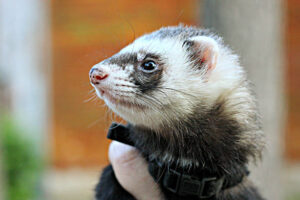
- Ferret on Leash: Place the ferret in its jacket and leash. Allow the ferret to explore the neutral room while the cat is loose. This gives the human handler instant ability to pull the ferret away if the cat attacks.
- Allowing Sniffing: When the ferret approaches the cat, allow them to sniff. Most cats will hiss or back away initially. This warning sign is healthy.
- Monitoring Claws: If the cat swats, check immediately if claws were extended. If claws were out, the session ends, and you must return to barrier methods. A cat swat poses a severe risk of lacerations and eye injury to a ferret.
- Cat Defense: Ferrets are often unfazed by a light swat and may even try to play back by nipping the cat’s tail or ankle. If the cat retreats but is not terrified, this interaction is often productive—it sets boundaries.
4.4 Phase 3: Supervised Freedom and Boundary Setting
Once the cat is consistently showing curiosity or indifference, allow brief periods of fully supervised, unconstrained interaction.
- Owner as Mediator: The owner must be positioned to intervene instantly. Use a water bottle or air horn as a distraction tool only if a genuine attack seems imminent.
- Encourage Retreats: Place blankets, tunnels, and low-standing furniture throughout the room. Ferrets are experts at diving into small spaces where a cat cannot follow. This gives the ferret control over the interaction.
- Play Dynamics: If the cat and ferret begin to play, ensure the cat is not using claws. Cat-ferret play often involves the ferret nipping at the cat’s legs and the cat lightly batting back. If it looks equally matched and low-intensity, allow it to continue briefly.
4.5 Addressing the Ferret’s Nipping Behavior
Ferrets are notorious for nipping ankles and toes, which can infuriate a cat.
- If the ferret irritates the cat repeatedly, immediately redirect the ferret to a toy. You must teach the ferret that the cat is not a suitable playmate for “tug-of-war” games.
SECTION 5: Ferrets and Other Small Household Pets (NO-GO ZONES)
In stark contrast to dogs and cats, the introduction of ferrets to smaller companion animals like guinea pigs, rabbits, hamsters, mice, rats, and birds must be avoided entirely.
5.1 The Biological Imperative
Ferrets are members of the Mustelidae family (weasels, stoats). They are obligate carnivores hardwired to hunt small prey.
- Rodents and Rabbits: The movement, sound, and smell of these animals trigger an immediate, non-negotiable prey drive in the ferret. A “fun” chase for a ferret is a death sentence for a rabbit or guinea pig.
- Birds: Birds’ fluttering movements are irresistible targets. Even if the bird is in a cage, the ferret may obsessively attempt to access it, causing lethal stress to the bird.
- Reptiles/Amphibians: While less common prey, ferrets can transmit harmful bacteria (like Salmonella) to reptiles if they interact, and some reptiles (large boas, pythons) could injure the ferret.
5.2 Strict Management and Separation
The presence of a ferret alongside small prey animals requires military-level separation protocols:
- Separate Air Space: The ferret should never be housed in the same room or wing of the house as the prey animals. Air circulation can carry scent, causing stress.
- Secure Caging: Prey animals must have CAGES THAT FERRETS CANNOT ACCESS. Ferrets can be exceptionally tenacious hunters, often manipulating cage latches or squeezing through surprisingly small gaps (if their head fits, their body follows). Use high-quality, heavy-duty caging materials.
- Supervised Out-of-Cage Time: If the prey animal needs floor time, the ferret must be locked safely away in its own cage or a separate room. Do not rely on doors alone; consider double-doored areas.
SECTION 6: Troubleshooting, Handling Regression, and Advanced Scenarios
Even the most meticulous introductions can hit snags. Understanding how to handle setbacks is key to long-term success.
6.1 Handling Aggression and Retreat
| Scenario | Immediate Action | When to Return to Previous Phase |
|---|---|---|
| Dog Nips or Lunges | SHARP “No!” or “Leave it!” command. Immediately remove the dog from the room. | Always return to the Muzzle/Leash phase (Phase 2). If three instances occur, consider the cohabitation unsafe without barriers. |
| Cat Swats (Claws Out) | Quickly separate the animals. Check the ferret for punctures. | Return to the Cage Barrier phase (Phase 1). Never allow leash interaction again until the cat shows sustained indifference. |
| Ferret Aggression (Overly Rough Nipping) | Redirect the ferret to a toy. If persistent, place the ferret in its cage for a short “time out” (5 minutes). | Continue supervision, but increase owner intervention to correct the ferret’s behavior. |
| Constant Hiding/Fear | Increase separation time. The frightened animal needs more time to acclimate to the scent without the visual stressor. | Increase scent swapping duration (Section 2.2). |
6.2 The Concept of Predatory Drift
Predatory Drift is the sudden, sometimes instantaneous, switch from play behavior (like chasing or rolling) to hunting behavior (biting down and shaking). This is the single biggest danger with dogs.
- Intervention: If you observe the dog suddenly go silent, stiffen, and lower its head slowly toward the ferret, intervene before contact is made. This slow, deliberate posture is often the prelude to a predatory bite.
- Proofing Against Drift: Only allow interaction when both animals are relatively low-energy (e.g., after the dog has been exercised). High energy, zoomies, or rough play greatly increase the likelihood of drift.
6.3 What Does Success Look Like?
Successful integration does not mean the dog and ferret are best friends, nor does it mean they should cuddle. Success means:
- Tolerance: The dog or cat can walk past the ferret without reacting, and the ferret can explore the room without seeking out or fearing the other pet.
- Mutual Play (Rare but Ideal): They may engage in brief, neutral play where both animals seem physically comfortable (e.g., a cat batting playfully at a secure plastic tunnel the ferret is inside).
- Calm Presence: Humans can handle the ferret in the presence of the other pet without triggering anxiety or aggression in either animal.
CONCLUSION: The Commitment to Safety
Introducing a ferret to existing household pets is a long-term project measured in weeks and months, not days. The effort you put into controlled, positive introductions directly correlates to the safety of your ferret.
The golden rule of ferret ownership in a multi-pet home is NEVER TRUST INSTINCTS OVER SUPERVISION. Regardless of how well your pets seem to get along, the immense size differential and ingrained predatory drives mean that a single moment of unsupervised excitement or confusion could lead to tragedy.
Commit to providing safety zones, enforcing strict leash and muzzle protocols when necessary, and always being present to mediate. When executed correctly, the reward is a dynamic, fascinating, and peaceful interspecies family unit.
#FerretSafety #MultiPetLife #FerretAndDog #CatAndFerret #PetIntroductionGuide #ExoticPetCare #PreyDrive #FerretLove #PetTrainingTips #SafePetIntegration #FerretsOfInstagram #PetSocialization #NewPetGuide #CarpetShark #PetHacks


Add comment