
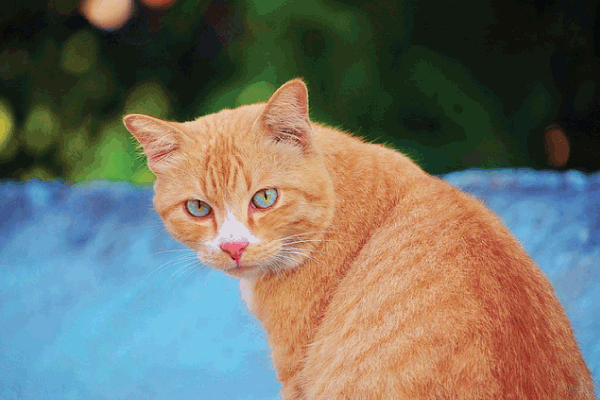
The domestic cat (Felis catus) is a marvel of evolutionary engineering, a creature whose grace, power, and agility are the stuff of legend. From the silent stalk of a hunt to the explosive leap onto a high shelf, every movement is a testament to a perfectly tuned musculoskeletal system. At the heart of this system, enabling both fluid motion and immense stability, are the joints and ligaments. This guide will delve deep into the intricate world of feline articulation, exploring the types of joints, key ligamentous structures, their functional adaptations, and the common injuries that can befall our agile companions.
Part 1: The Foundation – Understanding Joints and Ligaments
Before examining the specific anatomy of the cat, it’s crucial to understand what joints and ligaments are and what they do.
- Joints (Articulations): A joint is any point where two or more bones meet. Their primary function is to allow movement, but they also provide mechanical support. The type and amount of movement depend on the joint’s structure.
- Ligaments: These are tough, fibrous bands of connective tissue made primarily of collagen. They connect bone to bone, crossing over joints to provide stability, limit excessive or undesirable movement, and guide bones through their proper range of motion. Think of them as the strong, flexible ropes that hold the bones together at the joint, preventing dislocation.
Part 2: Classification of Feline Joints
Joints are classified both structurally (based on what connects the bones) and functionally (based on the degree of movement they allow). Cats possess all types, each suited to its specific location and purpose.
Functional Classification:
- Synarthroses (Immovable Joints): These joints are fixed and permit no movement. They are designed for strength and protection. The prime example in a cat (and all mammals) is the sutures between the bones of the skull.
- Amphiarthroses (Slightly Movable Joints): These allow only a small amount of movement, often through shock-absorbing cartilage. The pubic symphysis (where the two halves of the pelvis meet at the front) and the joints between the vertebrae are key examples. The intervertebral discs provide cushioning and limited flexibility, which is crucial for the cat’s spine.
- Diarthroses (Freely Movable Joints): Also known as synovial joints, these are the most common and most important joints for voluntary movement. They are highly mobile and complex. All major limb joints—shoulder, elbow, hip, knee—are synovial joints.
Structural Classification (Focusing on Synovial Joints):
Synovial joints have several characteristic features:
- Joint Capsule: A fibrous sleeve that encloses the joint.
- Synovial Membrane: Lines the capsule and secretes synovial fluid, a viscous, slippery lubricant that nourishes the cartilage and reduces friction.
- Articular Cartilage: A smooth, glassy layer of hyaline cartilage that covers the ends of the bones, acting as a shock absorber and providing a nearly frictionless surface for movement.
- Ligaments: Intrinsic (within the capsule) and extrinsic (outside the capsule) ligaments provide stability.
Synovial joints are further categorized by their shape, which determines their movement:
- Ball-and-Socket Joint (e.g., Hip & Shoulder): The rounded head of one bone fits into the cup-like socket of another. This allows for the greatest range of motion: flexion, extension, abduction, adduction, and rotation. The cat’s shoulder has a remarkably shallow socket (glenoid cavity), sacrificing some stability for an incredible range of motion, essential for climbing and reaching.
- Hinge Joint (e.g., Elbow & Hock/Ankle): These primarily allow movement in only one plane—flexion and extension—like a door hinge. This provides strong, stable movement for running and jumping.
- Gliding/Plane Joint (e.g., between carpal/tarsal bones): The flat surfaces of bones slide over one another, allowing for limited gliding movements. These add flexibility and shock absorption to the wrists and ankles.
- Pivot Joint (e.g., the atlas-axis joint at the top of the neck): Allows for rotational movement. This is why a cat can rotate its head nearly 180 degrees to groom its back or track prey.
- Condyloid/Ellipsoidal Joint (e.g., Radiocarpal joint in the wrist): An oval-shaped condyle fits into an elliptical cavity, allowing movement in two planes (flexion/extension, abduction/adduction) but not rotation.
Part 3: A Tour of the Major Feline Joints and Their Ligaments
1. The Forelimb
- Shoulder Joint (Glenohumeral Joint): A ball-and-socket joint connecting the scapula (shoulder blade) to the humerus (upper arm bone).
- Key Ligaments: The joint capsule is relatively loose, aided by muscles like the biceps brachii which acts as a stabilizer. The glenohumeral ligaments are weak, but the supraglenoid tendon (where the biceps muscle originates) is a crucial stabilizer. This minimalist ligamentous structure is key to the cat’s ability to contort its front limbs.
- Elbow Joint: A complex hinge joint involving the humerus, radius, and ulna. It allows only flexion and extension.
- Key Ligaments: The collateral ligaments (medial and lateral) are strong bands on either side of the joint that prevent side-to-side wobble. The annular ligament wraps around the head of the radius, holding it snugly against the ulna and allowing it to rotate for paw movement (supination/pronation).
2. The Hindlimb
- Hip Joint (Coxofemoral Joint): A classic ball-and-socket joint where the head of the femur fits into the acetabulum of the pelvis. It is built for both mobility and powerful propulsion.
- Key Ligament: The most important is the round ligament (ligament of the head of the femur). This short, strong ligament runs from the femoral head directly into the acetabulum, acting like a tether to hold the femur in place. The accessory ligament (unique to cats and some other species) provides additional stability. The joint capsule itself is also thick and strong.
- Stifle Joint (Knee): This is one of the most complex joints in the body, essentially comprising two joints: the femorotibial and the femoropatellar. It is a modified hinge joint.
- Key Ligaments:
- Cruciate Ligaments: These are located inside the joint capsule and are vital for stability. The Cranial Cruciate Ligament (CCL) prevents the tibia from sliding forward relative to the femur, while the Caudal Cruciate Ligament prevents backward sliding. CCL rupture is a very common and serious injury in cats.
- Collateral Ligaments (Medial & Lateral): Prevent side-to-side movement of the joint.
- Patellar Ligament: Connects the kneecap (patella) to the tibia; it is essentially the continuation of the quadriceps tendon.
- Key Ligaments:
- Hock Joint (Tarsal Joint/Astragalus): The feline equivalent of the human ankle. It is a compound hinge joint involving several tarsal bones.
- Key Ligaments: Multiple collateral ligaments (medial and lateral) stabilize the joint. The calcaneal tendon (Achilles tendon) inserts on the point of the hock (calcaneus) and is the combined tendon of several powerful muscles that extend the hock, providing the final “push-off” in a leap.
3. The Spine
The feline spine is a masterpiece of flexibility and strength, consisting of numerous amphiarthroses joints between vertebrae.
- Structure: Each vertebral joint involves the vertebral bodies separated by an intervertebral disc (a fibrocartilaginous pad acting as a shock absorber) and the articular processes at the back, which are true synovial joints.
- Key Ligaments: A series of long, strong ligaments run the length of the spine.
- Supraspinous Ligament: Runs along the top of the dorsal spinous processes.
- Nuchal Ligament: A powerful elastic ligament in the neck that helps support the head.
- Dorsal Longitudinal Ligament: Runs inside the vertebral canal along the back of the vertebral bodies.
- Ventral Longitudinal Ligament: Runs along the front of the vertebral bodies. These ligaments allow the cat to arch its back dramatically (as in the “Halloween cat” pose), bend laterally, and compress its body while still protecting the delicate spinal cord.
Part 4: Functional Adaptations for an Agile Predator
A cat’s joints and ligaments are not just standard mammalian issue; they are specially adapted for a life of predation and acrobatics.
- Elasticity and the Psoas Muscles: A cat’s sleekness comes from having relatively few large, strong muscles. The psoas muscles, which connect the lumbar spine to the femur, are particularly powerful, enabling the powerful tuck-and-extension motion of the hindlimbs for jumping.
- The Floating Clavicle: Unlike humans, a cat’s clavicle (collarbone) is small, rudimentary, and not connected to the rest of the skeleton by a joint. It is buried in the muscle of the shoulder. This allows the scapula to move with incredible freedom, enabling the cat to squeeze through any space its head can fit through and to lengthen its stride dramatically while running.
- Spinal Flexibility: The incredibly flexible spine, with its highly elastic ligaments and supple intervertebral discs, acts like a spring. It coils and uncoils to provide the power for running and the ability to right itself in mid-air—the “cat righting reflex.”
- Shock Absorption: The joints of the limbs, particularly the carpal and tarsal joints, are designed to absorb the immense impact of landing from a height, protecting the bones and internal organs.
Part 5: Common Injuries and Conditions
Despite their resilience, a cat’s joints are susceptible to injury and disease.
- Cranial Cruciate Ligament (CCL) Rupture: A traumatic tear of this vital knee ligament leads to sudden lameness, pain, and knee instability. It is a common cause of hindlimb lameness and can lead to debilitating arthritis if not treated.
- Luxating Patella: A condition where the kneecap dislocates or moves out of its normal groove. It can be congenital or traumatic.
- Hip Dysplasia: A developmental condition where the hip joint is malformed, leading to laxity, pain, and progressive arthritis. It is less common in cats than dogs but is seen, especially in large breeds like Maine Coons.
- Arthritis (Osteoarthritis): The progressive, irreversible deterioration of joint cartilage. It is a common cause of pain and reduced mobility in older cats. Signs can be subtle: reluctance to jump, stiffness, decreased activity, and even changes in grooming habits.
- Sprains and Strains: Overstretching or tearing of ligaments (sprains) or muscles/tendons (strains) from trauma, missteps, or overexertion.
- Intervertebral Disc Disease (IVDD): Although less common than in dogs, it can occur, where a disc herniates and presses on the spinal cord, causing pain, nerve dysfunction, or even paralysis.
Part 6: Supporting Your Cat’s Joint Health
- Weight Management: This is the single most important factor. Excess weight places tremendous stress on joints, accelerating arthritis and increasing the risk of injury.
- Nutrition: A balanced diet with high-quality protein is essential. For cats with joint issues, diets or supplements containing Omega-3 fatty acids (EPA/DHA), Glucosamine, and Chondroitin Sulfate can support joint health and reduce inflammation.
- Environmental Enrichment: Provide ways for your cat to exercise safely. Encourage climbing and play with interactive toys. For older cats, provide ramps or steps to access favorite high places, reducing the need for painful jumps.
- Regular Veterinary Care: Annual check-ups allow your vet to detect early signs of joint disease. Any sign of lameness or changes in mobility should be promptly investigated. Early intervention is key to managing chronic conditions like arthritis.
Conclusion
The joints and ligaments of a cat are a breathtakingly elegant biological system. They represent a perfect balance between hypermobility and staunch stability, between skeletal strength and elastic flexibility. Every silent step, every gravity-defying leap, and every intricate contortion is a direct result of this complex interplay of bones, cartilage, and tough, fibrous bands. By understanding this hidden anatomy, we gain a deeper appreciation for the feline form and can become better, more informed guardians of their musculoskeletal health, ensuring they move with grace and comfort throughout their lives.
#CatAnatomy, #FelineHealth, #JointHealth, #PetCareTips, #InsideTheCat, #CatOwnerAdvice, #VeterinaryScience, #HealthyCat, #ArthritisInCats, #CatMobility Instagram: #CatAnatomy, #FelineBiomechanics, #CoolCats, #CatScience, #VetMed, #CatHealth, #JointSupport, #CatsofInstagram, #LearnAboutCats, #CatPhysiology YouTube: #CatDocumentary, #FelineAnatomy, #HowCatsWork, #PetHealth, #VeterinaryEducation, #AnimalBiomechanics, #CatFacts, #ScienceOfCats, #DIYPetCare, #CatWellness


Add comment