
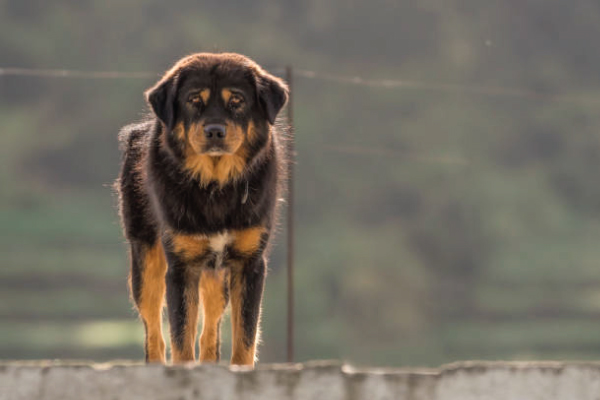
The skeletal system of a dog, a marvel of biological engineering, is designed for agility, speed, and endurance. At the heart of this remarkable mobility lie the intricate joints and resilient ligaments that connect bones and enable movement. Understanding their structure and function is paramount for anyone involved in canine care, from pet owners to veterinarians and trainers.
Joints: The Articulations of Movement
A joint, or articulation, is the point where two or more bones meet. These structures are not merely passive connections; they are dynamic, complex mechanisms that allow for varying degrees of movement, from the precise, controlled motions of the toes to the wide, sweeping arcs of the shoulder and hip. The primary function of joints is to facilitate locomotion, whether it’s running, jumping, playing, or simply turning.
Types of Joints in Dogs:
While a simplified classification exists, dogs, like most mammals, exhibit a primary type of movable joint crucial for their locomotion:
- Synovial Joints: These are the most common type of movable joint in dogs, responsible for the majority of their range of motion. They are characterized by:
- Articular Cartilage: A smooth, strong, and elastic connective tissue that covers the ends of the bones within the joint. It acts as a shock absorber, reducing friction and wear between the bones during movement.
- Joint Capsule: A fibrous, sac-like structure that encloses the joint. It has two layers:
- Outer Fibrous Layer: Provides structural support and strength to the joint, helping to prevent dislocation.
- Inner Synovial Membrane: Lines the joint capsule (except where articular cartilage is present) and produces synovial fluid.
- Synovial Fluid: A viscous, lubricating fluid that fills the joint cavity. It nourishes the articular cartilage, reduces friction between the cartilaginous surfaces, and absorbs shock.
- Joint Cavity: The space between the articulating bones, filled with synovial fluid.
- Ligaments: Strong, fibrous bands of connective tissue that connect bone to bone, providing stability to the joint. (More on these below).
Functions of Synovial Joints:
- Mobility: Enabling a wide range of movements, including flexion (bending), extension (straightening), abduction (moving away from the midline), adduction (moving towards the midline), rotation, and circumduction (circular movement).
- Stability: While allowing movement, joints also require a degree of stability to prevent excessive motion or dislocation. This is achieved through the shape of the bones, the joint capsule, and the surrounding ligaments and muscles.
- Shock Absorption: The articular cartilage and synovial fluid work together to cushion the impact of movement, protecting the bones from damage.
- Nourishment: Synovial fluid provides nutrients to the avascular articular cartilage.
Common Synovial Joints in Dogs:
- Shoulder Joint (Scapulohumeral Joint): A ball-and-socket joint allowing for extensive movement, crucial for running and pushing off.
- Elbow Joint: A hinge joint, primarily allowing for flexion and extension of the foreleg.
- Wrist Joint (Carpus): A complex hinge joint with some gliding capabilities, enabling fine adjustments in gait.
- Hip Joint (Coxofemoral Joint): Another ball-and-socket joint, providing powerful propulsion and stability for the hind limbs.
- Stifle Joint (Knee Joint): A complex hinge joint with rotational capabilities, essential for jumping and running.
- Ankle Joint (Tarsus): Similar to the wrist, it provides flexibility and shock absorption for the hind limbs.
- Intervertebral Joints: Joints between the vertebrae of the spine, allowing for spinal flexibility.
Ligaments: The Connective Tissue Anchors
Ligaments are tough, inelastic bands of dense fibrous connective tissue that play a vital role in joint stability. Their primary function is to connect bone to bone, reinforcing joints and preventing excessive or abnormal movements that could lead to injury. They act as passive stabilizers, guiding and restricting motion to keep the bones aligned correctly.
Structure of Ligaments:
Ligaments are composed primarily of collagen fibers, which are arranged in parallel bundles. This parallel arrangement provides strength and resistance to stretching in the direction of the fiber alignment. While strong, ligaments are not entirely rigid; they possess a degree of elasticity that allows for normal joint movement without tearing.
Functions of Ligaments:
- Joint Stability: This is their most crucial role. Ligaments prevent bones from dislocating or moving beyond their normal range of motion. They act as internal “guy wires” that anchor the bones together.
- Proprioception: Ligaments contain sensory receptors (mechanoreceptors) that provide the brain with information about the position and movement of the joint. This sense, known as proprioception or kinesthesia, is vital for coordinated movement and balance.
- Guiding Movement: Ligaments can also help to guide the direction of movement within a joint, ensuring that the bones articulate smoothly.
- Preventing Overstretching: They act as a natural brake, limiting extreme movements that could injure the joint.
Types of Ligaments in Dogs:
Ligaments can be classified based on their location and function:
- Intracapsular Ligaments: Located inside the joint capsule. A prime example in dogs is the crucial cruciate ligaments of the stifle (knee) joint.
- Cranial Cruciate Ligament (CCL): Prevents the tibia (shin bone) from shifting forward relative to the femur (thigh bone).
- Caudal Cruciate Ligament (CCL): Prevents the tibia from shifting backward relative to the femur.
- Extracapsular Ligaments: Located outside the joint capsule, providing external support. These are common in all synovial joints and include:
- Collateral Ligaments: Found on the sides of joints (e.g., medial and lateral collateral ligaments of the stifle and elbow) that prevent excessive side-to-side motion.
- Oblique Ligaments: Run diagonally across a joint, providing additional stability.
Common Ligament Injuries in Dogs:
Due to their critical role in stability, ligaments are susceptible to injury. Overexertion, sudden twists, impacts, or degenerative changes can lead to:
- Sprains: Stretching or tearing of a ligament. These can range from mild (slight stretching) to severe (complete rupture). The most common ligament injury in dogs is cranial cruciate ligament rupture (CCLR), often leading to lameness in the hind leg.
- Tears: Partial or complete ruptures of ligament fibers.
Interplay Between Joints and Ligaments
Joints and ligaments are inextricably linked. The effectiveness of a joint is directly dependent on the integrity and function of its surrounding ligaments.
- Healthy Joints: Strong ligaments provide the necessary stability for the smooth articulation of bones within a healthy joint. This allows for efficient and pain-free movement.
- Injured Ligaments: When ligaments are stretched or torn, the stability of the joint is compromised. This can lead to abnormal bone movement, pain, swelling, and eventually, the development of arthritis due to increased wear and tear on the articular cartilage.
- Consequences of Injury: Ligament injuries can significantly impact a dog’s mobility and quality of life. Prompt diagnosis and appropriate treatment, which may include rest, medication, physical therapy, or surgery, are crucial for recovery.
Conclusion
The anatomical marvel of canine joints and ligaments is fundamental to their athleticism and overall well-being. Joints, with their complex synovial structures, facilitate a wide range of movements, while ligaments act as the strong, silent guardians, providing essential stability and proprioceptive feedback. Understanding these components is not just an academic exercise; it empowers owners and professionals to recognize signs of injury, implement preventive measures, and ensure their canine companions can continue to enjoy a mobile and fulfilling life. From the powerful stride of a working dog to the playful pounce of a companion animal, the intricate dance of bones, cartilage, and ligaments is what enables them to move with grace and power.
#DogAnatomy, #CanineAnatomy, #DogJoints, #CanineJoints, #DogLigaments, #CanineLigaments, #DogSkeletalSystem, #MusculoskeletalHealth, #DogMobility, #JointHealthForDogs, #CanineHealth, #DogMovement, #VeterinaryAnatomy, #VetMed, #DogOrthopedics, #CanineOrthopedics, #DogRehab, #InjuryPrevention, #DogWellness, #HealthyDogs, #DogScience, #PetHealth, #KnowYourDog, #DogFacts, #DogCare, #DogAnatomy, #CanineJoints, #DogLigaments, #JointHealth, #DogHealth, #CanineOrthopedics, #DogMobility, #VeterinaryAnatomy, #DogCare, #PetHealth, #DogLovers, #CaninePhysiology, #DogStructure, #AnatomyExplained, #DogMovement, #LigamentInjury, #KneeInjuryDog, #CruciateLigamentDog, #DogSportsMedicine, #PetWellness, #PuppyAnatomy, #SeniorDogHealth, #DogBiomechanics, #LearnAboutDogs, #VeterinaryScience






Add comment