
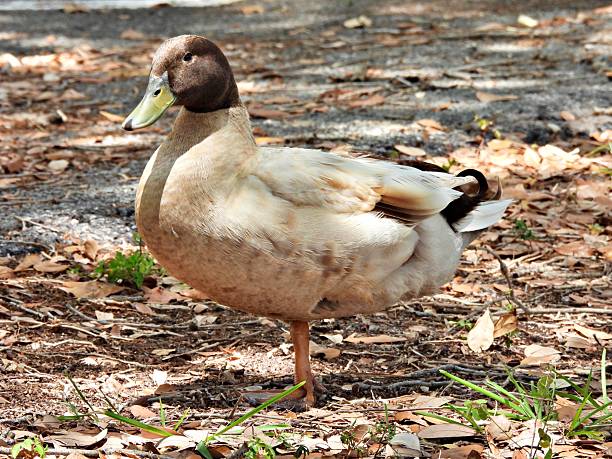
The Khaki Campbell duck is a versatile and prized breed renowned for its exceptional egg production and adaptability. Originating in the United Kingdom in the early 20th century, this breed was developed as a dual-purpose duck for both meat and eggs, though its egg-laying capabilities have made it a favorite among backyard enthusiasts and small-scale farmers. Known for its docile temperament, hardy constitution, and striking slate-gray plumage, the Khaki Campbell thrives in a range of environments. This guide explores the breed’s history, physical traits, husbandry needs, and role in sustainable agriculture, providing a thorough resource for duck keepers of all experience levels.
2. Other Names & Synonyms
The Khaki Campbell is also referred to as the “Khaki” or “Campbell duck,” but it is most famously recognized by its full name. The “Khaki” designation was trademarked by Arthur Campbell, a British fur farmer who marketed the breed as a practical alternative to other ducks. No synonyms exist for the breed itself, but it is often grouped with utility ducks due to its productivity.
3. Primary Breed Purpose
The Khaki Campbell was selectively bred for dual-purpose use, combining meat and egg production. However, its high annual egg output—up to 300 eggs—has made it a primary egg-producing breed. It is also valued for its lean meat and ability to forage, reducing feed costs. The breed is ideal for small-scale farming, homesteading, and backyard flocks due to its manageable size and docile nature.
4. Physical Characteristics
Khaki Campbells are medium-sized ducks with a streamlined, compact body. Males (drakes) and females (hens) share the same slate-gray, silky plumage, though males have a green iridescence on their heads and a small ring of curling feathers at the base of their tails. Hatchlings are born with golden yellow down, transitioning to adult plumage by 6–8 weeks. Key features include:
- Coloration: A gradient from a charcoal-gray breast to lighter, almost white under the tail.
- Bill and Legs: Yellow bills and legs with black webbed feet.
- Wattles and Ears: Distinctive black ear patches and red wattles.
5. Weight & Growth Curve
Khaki Campbells reach maturity in 5–6 months. Weight ranges are as follows:
- Males: 2.3–2.6 kg (5–5.7 lbs)
- Females: 1.8–2.1 kg (4–4.6 lbs)
Growth milestones: - 1 week: 22–25 g (0.78–0.88 oz)
- 4 weeks: 500–650 g (1.1–1.4 lbs)
- 12 weeks: 1.2–1.5 kg (2.6–3.3 lbs)
- Maturity: Full weight by 16 weeks.
6. Climatic Tolerances
Khaki Campbells are resilient and adaptable to various climates:
- Cold Tolerance: Thrive in cold weather due to dense plumage and high energy intake. Provide shelter but not excessive heat.
- Heat Tolerance: Require ample shade, fresh water, and misting systems in temperatures above 27°C (80°F).
- Humidity: Tolerate moderate humidity but avoid stagnant air to prevent respiratory issues.
7. Reproduction & Egg Production
Khaki Campbells are prolific layers:
- Egg Output: 250–300 eggs annually, with a 5–6 month laying period.
- Egg Characteristics: Oval, warm white to cream-colored shells, 80–83 g (2.8–3 oz) each.
- Mating Behavior: Males become sexually mature at 5–6 months; optimal breeding pairs are 1:3 (drake:hens). Incubation requires 28 days under a broody hen or artificial incubation (99.5°F, 88% humidity).
- Maturity Age: Hens begin laying at 5 months.
8. Flying Ability
While capable of short flights, Khaki Campbells are not strong fliers due to their compact build. They rarely roost and prefer ground nesting. Secure enclosures prevent escape but need not be excessively high.
9. Breed History & Origin
Developed by Olive Smith and Arthur Campbell in 1907 in the UK, the Khaki Campbell emerged from crosses between Indian Runners, Pomeranian ducks, and other utility breeds. Campbell, a fur farmer, named the breed “Khaki” after the military khaki uniform, a term trademarked for marketing. The goal was to create a bird with the foraging efficiency of the Indian Runner and the body size of the Pomeranian. The breed was standardized in the UK by 1911 and gained global popularity for its productivity.
10. Life Expectancy
With proper care, Khaki Campbells live 5–8 years. Productivity declines after 2–3 years of laying, but they remain healthy and active with balanced nutrition and regular veterinary care.
11. Common Health Issues
- Vitamin D Deficiency: Requires 30–45 minutes Daily sunlight.
- Parasites: Monitor for lice, mites, and worms; rotate dewormers.
- Bumblefoot: Maintain clean, dry enclosures to prevent bacterial infections.
- Egg Yolk Peritonitis: Often caused by over-laying; ensure hens rest 1–2 months between cycles.
- Diarrhea: Often linked to poor diet or pathogens like Cryptosporidium.
12. Breeding & Genetics – Tips for the Advanced Keeper
- Selection Criteria: Favor males with strong leg structure and females with consistent egg production.
- Inbreeding Avoidance: Rotate bloodlines to maintain genetic diversity.
- Incubation Techniques: Fresh eggs incubate best (6–7 days post-laying). Monitor humidity closely (87% for the first three weeks, 95% for hatching).
- Broody Management: If a hen is broody, provide a warm nest with eggs to conserve energy.
13. Nutritional Requirements
- Laying Diet: 16–18% protein, 2–3% calcium. Pelleted feed ensures balanced nutrition.
- Foraging: Supplement with leafy greens, insects, and foraged materials (avoid avocados, rhubarb, and citrus).
- Water Quality: Clean, fresh water daily to prevent parasitic infections.
- Supplements: Add oyster shell or grit for calcium and digestive health.
14. Housing & Environmental Design
- Pond Access: 1–2 m² per duck, with 15 cm deep water (0.5–1 ft).
- Coop Design: Predator-proof, well-ventilated, and 0.5 m² per duck. Provide nesting boxes (20 cm x 30 cm) filled with straw.
- Outdoor Enrichment: Floating logs, shallow pools, and varied perches to stimulate natural behavior.
- Winter Modifications: Insulate coops but avoid overly warm enclosures to preserve natural thermoregulation.
15. Behavioral Traits & Enrichment
- Social Nature: Thrive in groups but may peck if overcrowded (1 duck per 3 m²).
- Vocality: Less noisy than chickens but alert and conversational.
- Enrichment Ideas: Rotate feeding areas, provide mud baths, and introduce floating toys.
- Bonding Opportunities: Hand-feed treats to encourage social interaction.
16. Economic Considerations
- Cost-Benefit Analysis: Initial costs are ~$15–$20 per duck, but feed efficiency (250–300 eggs/year) offsets expenses.
- Income Streams: Sell eggs, meat, or ducklings. Community-supported agriculture (CSA) programs or farm-to-table collaborations enhance profitability.
- Labor Requirements: Daily feed/watering, weekly coop cleaning, biweekly egg collection.
17. Environmental Impact
- Sustainability: Low methane emissions and efficient feed conversion (1.8:1 feed-to-egg ratio).
- Manure Management: Use composted manure as organic fertilizer (avoid fresh due to high nitrogen).
- Foraging Benefits: Natural pest control of snails, slugs, and insects in gardens.
18. Conclusion
The Khaki Campbell duck is a versatile, hardy breed that excels in small-scale and commercial settings. Its high egg production, foraging ability, and adaptability make it a sustainable choice for modern farmers and homesteaders. By understanding its husbandry needs and genetic potential, keepers can maximize productivity while ensuring the ducks’ well-being.
19. Frequently Asked Questions (FAQs)
Q1. How many eggs does a Khaki Campbell lay daily?
A. On average, 1–1.5 eggs every 24 hours, with a 5–6 month laying cycle.
Q2. Can Khaki Campbells be kept in cold climates?
A. Yes, they tolerate cold but require dry shelter and 1–2 hours of sunlight daily.
Q3. What is their preferred feed?
A. Pelleted feed with 16–18% protein, supplemented with forage, greens, and calcium.
Q4. Are they good layer ducks?
A. Yes, with 250–300 eggs annually, making them one of the top egg-laying ducks.
Q5. How long do they live?
A. 5–8 years with proper care and nutrition.
Q6. Do they fly well?
A. Short flights only; high fences prevent escape.
Q7. Can they be raised for meat?
A. Yes, though their smaller size makes them more suited to egg production.
Q8. Are they noisy?
A. Less vocal than chickens but loud if stressed or during mating.
Q9. Do they need a pond?
A. Yes, access to water for swimming is essential for health and hygiene.
Q10. What are common signs of illness?
A. Lethargy, fluffed feathers, decreased egg production, or isolation from the flock.
#KhakiCampbellDuck, #DuckBreed, #BackyardDucks, #PoultryFarming, #EggProducers, #WaterfowlLovers, #DuckKeeping, #Aquaculture, #SustainableFarming, #DuckCare, #KhakiCampbell, #DuckBreeding, #DuckNutrition, #DuckHousing, #DuckEggProduction, #KhakiCampbellCare, #DuckFarm, #DuckEnrichment, #KCCampbellDuck, #KhakiCampbellHistory, #DuckEconomics, #DuckGenetics, #DuckHealth, #DuckLifespan, #KhakiCampbellGrowth, #DuckClimateTolerance, #KhakiCampbellEggs.
Add comment