
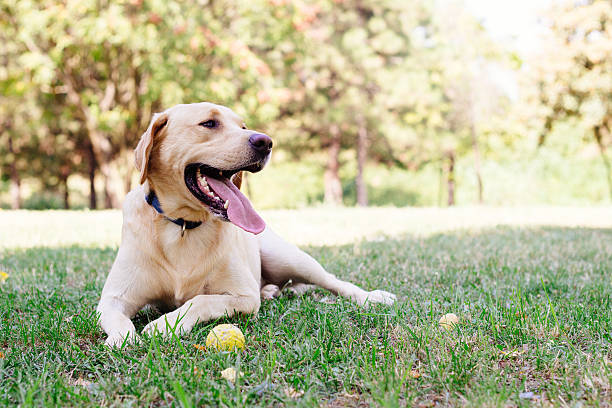
The Silent Language of Stress and De-escalation: An Ethological Examination
The behavior of the domestic dog (Canis familiaris) is a rich tapestry of complex communication, relying heavily on non-verbal cues. Among the most frequently observed, yet often misinterpreted, signals are lip licking and yawning. To the casual observer, a dog repeatedly flicking its tongue across its nose might simply be anticipating a treat, and a deep, audible yawn might indicate nothing more than a need for sleep. However, an in-depth ethological understanding reveals a far more nuanced reality: these behaviors are typically powerful indicators of stress, anxiety, discomfort, or an active attempt to communicate non-aggression and de-escalate tension.
This elaborate guide delves into the mechanisms, contexts, and psychological functions of lip licking and yawning, shifting the focus decisively from simple physiological needs (hunger or tiredness) toward their critical role as Calming Signals—a concept meticulously defined by canine ethologist Turid Rugaas.
Section 1: The Ethological Groundwork—Understanding Calming Signals
The foundation for understanding stress-related lip licking and yawning lies in the concept of Calming Signals. These signals are part of a dog’s innate repertoire designed to negotiate social space, prevent conflict, and reduce perceived threat, both from other dogs and from humans. They are the dog’s way of saying, “I mean no harm,” or “I am uncomfortable; please back off.”
1.1 Defining Calming Signals (Appeasement Behaviors)
Calming Signals are proactive or reactive behaviors dogs use in socially awkward or high-pressure situations. Their primary functions are threefold:
- Self-Soothing: Reducing the dog’s own internal cortisol levels (stress hormones) when faced with a perceived threat or conflict.
- De-escalation: Signaling to the external environment (human or dog) that the dog is not a threat and wishes to avoid confrontation.
- Communication of Discomfort: Indicating that the current situation, proximity, or interaction is causing anxiety.
While there are dozens of identified calming signals (including head turns, soft eyes, and slow movement), lip licking and yawning are among the most overt and frequent.
1.2 The Misinterpretation of Normal Behaviors
The inherent difficulty in accurately interpreting these signals stems from their potential to occur in non-stressful contexts. A dog yawns when waking up; a dog licks its lips after eating peanut butter. The challenge for the observer is distinguishing the context and the intensity to determine if the behavior serves a communicative vs. physiological function.
Key Principle of Context: If lip licking or yawning occurs in the absence of food, sleep cues, or environmental stimuli that explicitly demand those actions, the probability that the behavior is stress-related approaches certainty.
Section 2: Deep Dive into Lip Licking (Mouth Licking)
Lip licking, often called mouth licking, is a rapid, usually brief flick of the tongue that may touch the nose or simply wet the lips. When analyzed as a calming signal, it is rarely directed toward cleaning the maw. Instead, it is a response to internal arousal or external pressure.
2.1 Mechanics and Differentiation
The movement is swift and typically subtle. An owner engrossed in giving a verbal command may entirely miss the quick, sideways flick of the tongue.
Differentiating Lip Licking Contexts:
| Context | Appearance/Speed | Physiological Driver | Communicative Function |
|---|---|---|---|
| Nutritional Anticipation/Desire | Slow, deliberate, often chewing movements. Follows sight/smell of food. | Salivation, Gastric juices. | Expresses hunger or desire. |
| Stress or Anxiety (Calming Signal) | Rapid flick, often repetitive. Occurs upon receiving a direct stare, correction, or environmental noise. | Cortisol spike, Adrenaline surge. | Self-soothing, de-escalation, displacement. |
| Displacement Activity | Highly exaggerated or stiff. Occurs when the dog is unable to perform a desired action. | Internal conflict (approach/avoidance). | Redirection of thwarted energy. |
2.2 Lip Licking as a Response to Conflict and Correction (The Apex of Stress)
The most robust evidence for lip licking as a stress signal occurs when dogs are placed in direct social pressure scenarios.
The Direct Stare and Proximity Invasion
In the canine world, a direct, prolonged stare is often interpreted as a challenge or a prelude to conflict. When a human leans over a dog, makes direct eye contact, or invades the dog’s personal space (e.g., placing hands on the dog while it is sleeping), the dog’s immediate, non-aggressive response is often a lip lick.
- Physiological Explanation: The dog experiences a moment of internal conflict: remain submissive (a survival tactic) or react aggressively (high risk). To resolve this internal conflict, the body releases action that redirects energy away from aggression. Lip licking provides a momentary, self-soothing feedback loop.
Training and Corrections
Lip licking is an incredibly common signal during training sessions, particularly those involving physical corrections or high-pressure demands. When a dog is confused by a cue, fears the consequence of failure, or is subjected to frustrating repetitive demands, lip licking often surfaces.
- Example: If an owner harshly corrects a dog for pulling on the leash, the dog might immediately lick its lips. The dog is not acknowledging that it understands the correction; it is indicating that the interaction was aversive and stressful. Continued training under these conditions risks exacerbating anxiety.
2.3 The Role of Displacement Behavior
Lip licking frequently manifests as a displacement behavior. Displacement activities are normal, self-maintenance actions (like scratching, sniffing, or licking) that appear out of context when a dog is experiencing high motivation for two contradictory behaviors (e.g., wanting to approach a strange dog but also wanting to flee) or when it is prevented from performing a highly motivated behavior.
The energy that cannot be expended on the intended action (approach or retreat) is displaced into the seemingly irrelevant act of lip licking. This momentarily breaks the internal deadlock, allowing the dog to process the stressful input.
2.4 Contextual Analysis of Exaggerated Licking
While a subtle, quick lick is often the hallmark of minor discomfort, repeated, rhythmic, or highly exaggerated lip licking (sometimes coupled with excessive drooling) implies a deeper level of visceral anxiety or fear.
- Veterinary Visits: This is a classic environment for exaggerated licking. The combination of unfamiliar smells, physical restraint, and perceived threats leads to intense stress. The dog may lick the air repeatedly, soak its lips, and display other accompanying signals like rapid panting or low posture.
- Atypical Sensory Input: Exposure to very loud, sudden noises (fireworks, thunderstorms) can trigger licking, as the dog tries to communicate its distress over noise it cannot physically escape.
Section 3: Deep Dive into Yawning
The perception that a dog’s yawn is purely an indication of exhaustion is the most common error in canine behavior interpretation. While dogs certainly yawn when tired, the vast majority of out-of-context yawns are powerful indicators of mild-to-moderate stress, confusion, or the need to settle.
3.1 Yawning Mechanics: More Than Just Oxygen Intake
Human science often links yawning to a mechanism for cooling the brain or increasing oxygen intake. In the context of canine communication, the physiological function is tied to the autonomic nervous system’s stress response.
When a dog is stressed, cortisol levels rise, and the sympathetic nervous system is engaged (fight or flight). Yawning, particularly the slow, deliberate, deep inhale-exhale cycles, can be seen as a rapid, rudimentary mechanism to:
- Regulate Heart Rate: The deep inhale and controlled exhale briefly shifts the body toward parasympathetic activation (rest and digest), offering immediate, albeit temporary, self-soothing.
- Signal De-escalation: The wide, often exaggerated opening of the mouth and the exposure of the tongue signal vulnerability and non-aggression to other canines.
3.2 Yawning as a Response to Ambiguity and Uncertainty
Yawning frequently appears when a dog is uncertain about what it is supposed to do, or when the environment is ambiguous.
Training Confusion
If a dog is learning a new command and the handler’s cues are inconsistent, the dog may yawn. This is not defiance or boredom; it is a clear expression of cognitive overload and frustration. The dog is signaling, “I do not understand the demand, and this lack of clarity is stressful.”
Awkward Social Encounters
When meeting an unfamiliar dog in an uncomfortable proximity (e.g., on a narrow sidewalk), one or both dogs may yawn to break the tension. This is a primary proactive calming signal, used before any conflict arises to communicate peaceful intentions.
- Scenario: Two dogs are approaching each other on leash. As the distance closes, one dog looks away and executes a dramatic, seemingly sleepy yawn. This dog is using the signal to convey: “I am not interested in challenging you; please pass peacefully.”
3.3 Differentiating Stress Yawning from Sleep-Related Yawning
The distinction relies almost entirely on the surrounding context and accompanying body language:
| Feature | Stress/Calming Yawn | Tiredness Yawn |
|---|---|---|
| Context | Direct social pressure, confusion, loud noises, being restrained, anticipation of aversive event. | Occurs upon waking, during low-stimulus periods, or immediately before settling into sleep. |
| Accompanying Signals | Often coupled with lip licking, flattened ears, hard stare (briefly), low tail carriage, slight tenseness around the mouth. | Relaxed posture, heavy eyelids, stretching (“pandiculation”), general slowness. |
| Speed/Intensity | Often exaggerated, sometimes very quiet (tight-lipped). May be repeated rapidly. | Usually slow, loose, and deep. Rarely repeated quickly. |
The Contagious Yawn (The Exception): Research has shown that dogs can exhibit contagious yawning, particularly in response to their humans. This context is tied to emotional bonding and empathy. If a dog yawns immediately after its owner does, it is less likely to be stress-related and more likely a sign of emotional connection or social synchronicity. However, this is a distinct, measurable phenomenon and should not override the interpretation of yawns that occur during conflict or training.
Section 4: The Overlap and Co-occurrence of Calming Signals
It is exceptionally rare for dogs to deploy a single calming signal in isolation when experiencing significant stress. Instead, they often present a cluster of behaviors, reinforcing their message. The co-occurrence of lip licking and yawning is a powerful indicator that the dog’s threshold for handling stress has been breached.
4.1 The Displacement Cluster
When a dog is in a high state of conflict or arousal and cannot physically move away, the need to release that trapped energy results in a cluster of displacement activities:
$$\text{Tension} \rightarrow \text{Internal Conflict} \rightarrow \text{Lip Lick + Yawn + Sniffing Ground}$$
This sequence is commonly observed in the waiting area of a veterinary clinic or during a prolonged photographic session where the dog is being held still. The dog is trying desperately to calm its own nervous system while communicating to its environment that it is fragile and vulnerable.
4.2 The Role in the Freeze Response
In the “Fight, Flight, Freeze” continuum of survival responses, lip licking and yawning often precede or accompany the ‘Freeze’ state. When a dog freezes (becomes momentarily immobile, often wide-eyed), it is temporarily paralyzed by fear. The accompanying lip lick or yawn is a final, desperate attempt to reduce the threat level before the dog is forced into a reactive aggressive (fight) or escape (flight) state.
A Critical Note for Owners: If a dog is repeatedly lip licking and yawning while being handled, scolded, or restrained, the handler must recognize that they are pushing the dog toward its breaking point. Ignoring these signals increases the likelihood of a defensive snap or bite, as the dog feels its non-verbal communication has failed.
Section 5: Physiological and Neurological Correlates of Stress Signals
The ethological observations linking yawning and lip licking to stress are strongly supported by neurological and physiological findings related to the Hypothalamic-Pituitary-Adrenal (HPA) axis.
5.1 The Cortisol-Communication Link
When a dog perceives a threat (direct gaze, loud noise), the HPA axis is activated, rapidly releasing cortisol and adrenaline. The calming signals function as an emotional pressure release valve.
Studies monitoring heart rate variability (HRV) and salivary cortisol levels in dogs have consistently shown that:
- Periods immediately preceding, during, or following highly stressful events (e.g., being left alone, exposure to new stimuli) are correlated with significant increases in lip licking and yawning frequency.
- Dogs exhibiting a high frequency of these signals in novel environments often have higher baseline cortisol levels, indicating higher generalized anxiety.
- The performance of a calming signal does not eliminate stress but helps the dog manage the immediate arousal, preventing the escalation into aggressive or panic behaviors.
5.2 The Olfactory Component of Lip Licking
Lip licking is sometimes associated with enhanced olfaction—the licking action transfers molecules from the air/surfaces to the vomeronasal organ (Jacobson’s organ) located on the roof of the mouth, enhancing the sense of smell (similar to flehmen response in cats or stallions).
When stressed, the dog is highly motivated to gather information about its environment (e.g., who has been here? is the threat gone?). The stress-induced lick may be an attempt to rapidly process novel or concerning chemical signals in the air, thereby reducing uncertainty.
Section 6: Practical Application and Effective Response
Recognizing lip licking and yawning as stress signals is only half the battle; the responsible owner must know how to respond appropriately to mitigate the dog’s anxiety.
6.1 Avoiding Aversive Stimuli
The first step is to immediately identify and reduce the intensity of the stressor.
| Stressor | Dog’s Signal | Effective Response | Ineffective Response (Increases Stress) |
|---|---|---|---|
| Direct Stare/Closeness | Yawn, Lip Lick | Look away, turn side-on, increase distance. | Continue staring, lean over the dog, hold the dog tighter. |
| Harsh Correction | Rhythmic Lip Licking | Stop the correction, use a softer tone, clarify the cue, or end the session. | Repeat the correction louder, scold the dog for “ignoring” the command. |
| Social Tension | Yawn (when meeting dog) | Increase leash slack, allow a curved approach, gently redirect the dog away. | Force the dogs into stiff, head-on interaction (“meet and greet”). |
6.2 Managing the Environment
If the dog is displaying frequent stress signals, the environment is too challenging for their current coping mechanisms.
- Distance is Key: If the dog is licking and yawning repeatedly due to the proximity of other people or dogs, increase the distance until the behavior ceases. This is the dog’s indicator that it has reached its comfort zone.
- Deflection and Redirection: Instead of forcing the dog to face the stressor, introduce a low-stakes activity, such as a gentle sniff-search for treats on the ground. This refocuses the dog and allows it to self-regulate through a natural, calming behavior (sniffing).
- Provide a Sanctuary: Ensure the dog has a safe space (crate, bed) where it can retreat and where interactions are strictly off-limits. Repeated yawning and licking are often cues that the dog needs to leave the social interaction.
6.3 Using Calming Signals Back (Mirroring)
One of the most powerful tools handlers possess is the ability to use calming signals proactively. If a dog is nervous or highly aroused, a human can communicate non-threat by deploying signals that the dog understands:
- Slow Blinking/Soft Eyes: Reduces the intensity of the human stare.
- Head Turn: Turning the head slightly away or presenting a side profile (not squaring up) reduces perceived confrontation.
- Exaggerated Yawning: A slow, deliberate, quiet yawn from the human can often initiate a calming response in a stressed dog, signaling to them that the environment is safe enough for relaxation.
Conclusion: The Imperative of Fluent Communication
The dog behavior puzzle is complex, but the interpretation of lip licking and yawning provides one of the most reliable keys to understanding canine emotional states. While these actions may occasionally be related to hunger or true exhaustion, the overwhelming evidence from ethology and neurobiology categorizes them as vital Calming Signals—immediate, non-aggressive communications of anxiety, conflict, and the need for space.
For the modern dog owner, mastering the recognition of these subtle cues is not merely a component of good training; it is a fundamental ethical responsibility. Ignoring a dog’s repeated lip licks or stress yawns is akin to silencing its voice. By recognizing and respecting this silent language, we move beyond simply managing behavior and forge a deeper, more trusting relationship based on mutual understanding and clear, compassionate communication.
#DogBehavior #CalmingSignals #DogStress #LipLicking #DogYawning #CanineCommunication #DogBodyLanguage #AnxiousDog #DogTrainingTips #Ethology #DogWelfare #ReadingYourDog #DecodingDogs #DogAnxietyRelief #CanineScience #StressSigns #DogHealth #PetParentTips #TuridRugaas #UnderstandingDogs






Add comment