
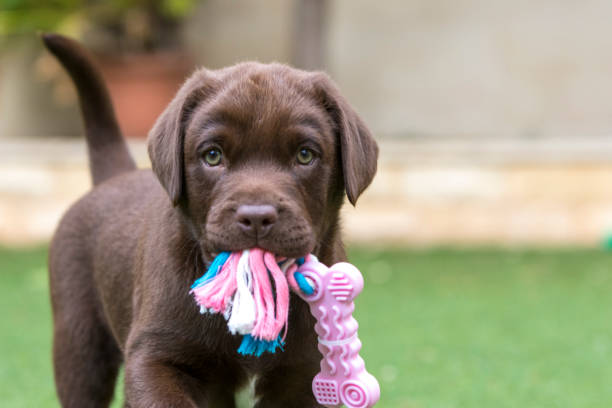
Walking a puppy can be one of the most enriching experiences, fostering bond, providing exercise, and offering mental stimulation. However, it can just as easily turn into a frustrating tug-of-war, with your little companion overwhelmed by the sensory explosion of the outside world. Managing distractions on walks is not just about obedience; it’s about setting your puppy up for success, ensuring their safety, and making walks an enjoyable experience for both of you.
This comprehensive guide will walk you through understanding why puppies get distracted, foundational training, essential gear, practical strategies, and specific techniques to navigate the myriad of distractions you’ll encounter on your journeys.
Understanding Why Puppies Get Distracted
Before we dive into solutions, let’s empathize with our furry learners:
- Everything is New and Exciting: For a young puppy, the world is a giant amusement park. Every smell, sound, sight, and texture is novel and demands investigation.
- Sensory Overload: Imagine experiencing hundreds of new sights, sounds, and smells all at once. Puppies don’t have the filter that adult dogs (or humans) do; their brains are trying to process it all simultaneously.
- Natural Instincts: Puppies are hardwired to explore, chase (prey drive), and socialize. These instincts are powerful and can easily override commands, especially when they haven’t been thoroughly proofed.
- Limited Impulse Control: Just like human toddlers, puppies haven’t fully developed the ability to resist immediate gratification or make a “better” choice when presented with a highly stimulating distraction.
- Lack of Focus/Attention Span: Puppy attention spans are short. Expecting sustained focus in a distracting environment is unrealistic without significant training.
- Association: If pulling towards a distraction has ever resulted in getting to that distraction (even once!), the puppy learns that pulling works.
I. Foundations: Setting Your Puppy Up for Success (Before You Even Step Outside)
Effective distraction management starts long before you open the front door. Build these skills first, in low-distraction environments.
1. Establish a Strong “Watch Me” or “Look” Command:
**Why:** This is your primary tool for gaining focus. It teaches your puppy to look at you, breaking their fixation on a distraction.
* **How:**
1. Hold a high-value treat near your eye.
2. Say “Watch Me” or “Look.”
3. The instant your puppy makes eye contact, mark the behavior (with a clicker or a verbal “Yes!”) and reward them.
4. Gradually increase the duration of eye contact before rewarding.
5. Practice in various rooms of your home, then in the yard, gradually introducing mild distractions.
2. Teach “Leave It”:
**Why:** Crucial for preventing your puppy from eating dangerous things, sniffing inappropriate items, or fixating on something you don’t want them to.
* **How (Basic):**
1. Hold a treat in a closed fist. When your puppy sniffs or licks, keep your fist closed.
2. The moment they back away or look at you, say “Yes!” and reward with a *different*, higher-value treat from your *other* hand.
3. Repeat, gradually moving to an open palm, then placing the treat on the floor, then using less desirable items (e.g., a piece of kibble) that they need to “Leave It” for a higher reward.
3. Master Loose-Leash Walking (Indoors First):
**Why:** If your puppy pulls constantly indoors, they’ll pull even harder outside.
* **How:**
1. Start in a quiet room. Hold the leash loosely.
2. Reward your puppy frequently for walking beside you with a slack leash (every few steps initially).
3. If they pull, stop immediately. Wait for the leash to slacken, then resume walking and reward.
4. Use an encouraging tone and change directions frequently to keep them engaged.
4. Build a Rock-Solid Recall (“Come!”):
**Why:** Essential for safety and for disengaging from major distractions.
* **How:**
1. Start in a quiet, enclosed space. Get excited, say “Come!” (or your chosen cue), and run a few steps away.
2. When your puppy comes, reward with a party (treats, praise, gentle play).
3. Never use “Come!” for something your puppy dislikes (e.g., nail trims).
4. Practice regularly, gradually increasing distance and introducing mild distractions.
5. Introduce a Marker Word or Clicker:
**Why:** Provides precise communication, telling your puppy *exactly* what behavior earned the reward, speeding up learning.
* **How:** “Charge” the clicker by clicking, then immediately giving a treat, 10-20 times in a row, without asking for anything. Your puppy learns “click = treat.”
6. High-Value Rewards:
**Why:** In a distracting environment, a piece of kibble won’t cut it. You need treats that are more enticing than the distraction itself.
* **Examples:** Small pieces of cooked chicken, cheese, hot dogs, freeze-dried liver, or special soft training treats.
II. Essential Gear for Distraction Management
Having the right tools can make a significant difference.
- Appropriate Leash:
- Recommendation: A standard 4-6 foot leash (nylon or leather).
- Avoid: Retractable leashes. They teach pulling, offer poor control, and can be dangerous.
- Comfortable Harness or Flat Collar:
- Harness (Front-Clip): Often recommended for puppies as it discourages pulling by redirecting their momentum sideways. It also puts less pressure on their neck. Ensure it’s well-fitting and doesn’t restrict movement.
- Flat Collar: If using a collar, ensure it’s secure but not too tight. Attach ID tags.
- Treat Pouch:
- Why: Hands-free, easy access to high-value treats (speed of delivery matters!).
- High-Value Training Treats:
- As discussed above, have a variety, including your puppy’s absolute favorites.
- Poop Bags & Water Bottle:
- Always be a responsible dog owner.
III. General Strategies for Managing Distractions On Walks
These overarching principles will guide your training approach.
- Start Simple, Progress Gradually:
- Begin in the quietest possible environment (your yard, a deserted park).
- Slowly introduce one mild distraction at a time, then increase intensity.
- Critical: If your puppy is failing, you’ve moved too fast. Go back to an easier level.
- Be Prepared (Mentally & Physically):
- Have all your gear ready.
- Be in a positive, patient mindset. Frustration travels down the leash.
- Know your puppy’s limits (attention span, energy levels).
- Timing is Key:
- Walk your puppy when they are not overly tired, hungry, or bursting with energy. A tired or overstimulated puppy will struggle to focus.
- Avoid peak hours if possible when initially training.
- Be the Most Interesting Thing:
- Your puppy should perceive you as the source of all good things (treats, praise, play).
- Talk to them, praise them, reward them frequently even for just glancing at you.
- Engage them with quick games or short obedience bursts.
- Positive Reinforcement ONLY:
- Never punish your puppy for being distracted. They are puppies! Punishment creates fear, inhibits learning, and damages your bond.
- Instead, reward desired behaviors (e.g., looking at you instead of the squirrel).
- Observe and Anticipate:
- Learn to read your puppy’s body language. Notice when they start to stiffen, stare, or get “locked on” to a distraction before they react.
- This gives you time to intervene proactively.
- Short, Frequent Sessions:
- Puppies have short attention spans. 10-15 minute training walks are more effective than one long, overwhelming walk.
- End on a Positive Note:
- Always try to finish your walk with a successful interaction or exercise, even if it means going somewhere quiet for a final “Watch Me” or “Sit.”
IV. Specific Training Techniques for Common Distractions
Here’s how to apply your foundational skills to real-world scenarios.
A. Other People & Dogs:
These are often the biggest draws for puppies!
- “Watch Me” & Pass:
- Scenario: You see a person or dog approaching in the distance.
- Action: As soon as your puppy notices them (but before they’re over threshold – i.e., before they start pulling/reacting), use your “Watch Me” command.
- Reward: Heavily reward for sustained eye contact as the distraction passes. If they break eye contact, gently redirect and try again.
- Distance: Start with large distances. Gradually decrease the distance as your puppy improves.
- Parallel Walking (Dogs):
- Scenario: Your puppy is excited but not reacting aggressively to another dog.
- Action: Ask a friend with a calm, friendly dog to walk parallel to you at a significant distance. Walk in the same direction.
- Reward: Reward your puppy for calm walking, glances at you, and general non-reaction.
- Gradual Approach: Slowly decrease the distance between the two dogs over multiple sessions, always rewarding calm behavior.
- Change Direction/U-Turn:
- Scenario: Your puppy is fixated and pulling hard towards a person or dog, and you can’t get their attention.
- Action: Immediately turn 180 degrees and walk away in the opposite direction. Don’t say anything, just move.
- Reward: When your puppy follows you and the leash is slack, immediately reward them for disengaging and walking with you. This teaches them that pulling doesn’t get them closer, and turning towards you does.
- “Excuse Me” (People):
- Scenario: Your puppy tries to jump on or greet every person they see.
- Action: Teach “Excuse Me” by having your puppy sit and wait while a person walks past. Reward heavily for staying seated and looking at you. If they jump, the person immediately turns their back and ignores them until all four paws are on the floor.
B. Smells & Sniffing:
Puppies’ noses are incredibly powerful, and sniffing is a natural, enriching behavior. The goal isn’t to stop sniffing entirely, but to manage it.
- Structured Sniff Breaks:
- Scenario: Your puppy wants to sniff every blade of grass.
- Action: Instead of letting them pull you to every interesting smell, designate specific “sniff zones.” Walk nicely for a bit, then say “Go sniff!” and allow them a few minutes to explore.
- Recall: After a few minutes, use your recall cue (“Come!”) to gather their attention and continue walking. This teaches them that you control when and where sniffing happens.
- “Leave It” for Inappropriate Smells/Items:
- Scenario: Your puppy is fixated on sniffing or eating something inappropriate (e.g., trash, discarded food).
- Action: Use your “Leave It” command. If they disengage, reward with a high-value treat and praise.
- Proactive: Watch ahead and anticipate potential hazards. If you see something, use “Leave It” before your puppy gets to it.
C. Moving Objects (Cars, Bikes, Squirrels, etc.):
These can trigger chase instincts or fear.
- Counter-Conditioning and Desensitization:
- Scenario: Your puppy barks/lunges/is fearful of cars, bikes, or squirrels.
- Action: Start by finding a distance where your puppy notices the object but doesn’t react.
- Reward: As soon as the object appears in their sight, before they react, start feeding them high-value treats. Continue feeding until the object disappears. The goal is to create a positive association: “Car/Bike/Squirrel = Treats!”
- Gradual Approach: Slowly decrease the distance over many sessions. If your puppy starts reacting, you’re too close – increase the distance again.
- “Watch Me” & Redirection:
- Scenario: A squirrel darts across the path.
- Action: Immediately get your puppy’s attention with “Watch Me.” Once you have their focus, redirect them with a treat or a quick obedience command (like “Sit” or “Down”). Reward for the redirection.
- Prevention: If you know squirrels are common in an area, have your puppy on a shorter leash and ready to engage with you.
D. Sounds:
Sudden loud noises (sirens, construction, barking dogs) can startle or overstimulate.
- Positive Association:
- Scenario: Your puppy is reactive to sirens.
- Action: When a siren starts, immediately start feeding them treats. Don’t soothe or coddle (which can inadvertently reinforce fear), just make it a positive experience.
- Desensitization (if severe): Play recordings of various sounds at a very low volume at home, pairing them with treats and praise. Gradually increase the volume.
V. What to Do When Things Go Wrong (Troubleshooting)
Despite your best efforts, your puppy will have moments of complete distraction. Don’t get discouraged!
- Increase Distance: This is your primary tool. If your puppy is over threshold (barking, lunging, ignoring you completely), you’re too close to the distraction. Move further away until they can focus again.
- “Emergency” Treats: Have a secret weapon – a treat so incredibly high-value that it can snap your puppy out of almost any fixation (e.g., a tiny piece of steak). Only use these for dire emergencies to maintain their specialness.
- Redirection (Gentle): If your puppy is fixated, try a quick “Watch Me” or a simple “Sit” command, followed by a reward. This can break their focus and get them thinking about you.
- Go Home: If your puppy is clearly overwhelmed, stressed, or incapable of focusing, end the walk. It’s better to finish the session on a slightly negative but controlled note than to push them to their breaking point. Try again later, in an easier environment.
- Re-evaluate: After a tough walk, think about what went wrong. Did you go too fast? Were you in too distracting an environment? Was your puppy tired? Adjust your next training session accordingly.
VI. Advanced Tips & Proofing Distraction Management
Once your puppy is doing well in moderate environments, you can start to proof their skills.
- Vary Environments: Practice in different parks, neighborhoods, urban settings, and rural areas. Each new environment presents unique distractions.
- “Set Up” Success: Arrange controlled scenarios. Have a helper walk a friendly dog past you at a distance, or have a friend walk by with a bike. This allows you to control the intensity and duration of the distraction.
- Practice Impulse Control at Home: Incorporate games like “It’s Your Choice” (where they have to make eye contact before getting a treat) or “Stay” with increasing distractions at home.
- Utilize “Real-Life” Rewards: Sometimes, the reward for successfully ignoring a distraction can be getting to sniff that other, less distracting patch of grass, or getting to continue the fun walk.
- Mental and Physical Enrichment at Home: A puppy whose mental and physical needs are met at home is less likely to be frantic and overstimulated outside. Provide puzzle toys, chew items, and structured play sessions.
VII. Common Mistakes to Avoid
- Getting Frustrated/Yelling: It’s counterproductive and damages your relationship.
- Punishing Distraction: Your puppy isn’t purposely being defiant; they’re reacting naturally.
- Expecting Too Much Too Soon: Training is a marathon, not a sprint. Be patient.
- Using a Retractable Leash: Hinders consistent training and control.
- Inconsistent Training: Everyone in the household needs to use the same cues and methods.
- Not Having High-Value Treats: Treats that aren’t exciting won’t compete with squirrels or other dogs.
- Over-Walking a Young Puppy: Puppies need appropriate amounts of exercise for their age and breed; too much can lead to overstimulation and injury.
Conclusion
Managing distractions on puppy walks is an ongoing journey that requires immense patience, consistency, and a deep understanding of your puppy’s developmental stage. By building a strong foundation of positive communication, utilizing the right tools, and gradually exposing your puppy to the world, you’ll transform potentially chaotic walks into joyful experiences that strengthen your bond and ensure your puppy grows into a well-mannered, confident companion. Remember to celebrate every small victory and always keep it positive!





Add comment