
Moldy feed toxicosis (MFT) is a syndrome caused by the ingestion of feed contaminated with mycotoxins—secondary metabolites produced by fungi that thrive in warm, humid, and poorly ventilated storage conditions. While MFT is widely documented in chickens, turkeys, and other land‑based poultry, waterfowl—especially domestic ducks (Anas platyrhynchos domesticus) and wild duck species—are frequently overlooked despite their susceptibility.
Ducks possess a comparatively rapid gastrointestinal transit time, a high water intake, and a tendency to graze on the ground and water surfaces where moldy debris can accumulate. Consequently, they can develop acute or chronic toxicoses that impact growth, reproduction, immune competence, and overall flock productivity.
This guide collates the latest scientific literature (peer‑reviewed papers up to 2024), extension bulletins, and field observations to provide a full‑spectrum reference on the causes, clinical picture, diagnosis, treatment, prevention, nutritional management, and zoonotic implications of moldy feed toxicosis in ducks.
2. Causes
2.1. Mycotoxins – The Toxic Agents
| Mycotoxin | Primary Fungal Genera | Typical Feed Substrates | Key Toxic Effects in Ducks |
|---|---|---|---|
| Aflatoxin B₁ (AFB₁) | Aspergillus flavus, A. parasiticus | Corn, peanuts, wheat bran, oilseed meals | Hepatotoxicity, immunosuppression, hemorrhagic disease, embryonic mortality |
| Ochratoxin A (OTA) | Aspergillus ochraceus, Penicillium verrucosum | Cereals, dried fruits, coffee, barley | Nephrotoxicity, growth retardation, immunomodulation |
| Fumonisins (FB₁, FB₂) | Fusarium verticillioides, F. proliferatum | Maize, sorghum | Pulmonary edema, liver lesions, impaired lipid metabolism |
| Deoxynivalenol (DON, “vomitoxin”) | Fusarium graminearum, F. culmorum | Wheat, barley, oats | Reduced feed intake, vomiting, intestinal inflammation |
| Zearalenone (ZEA) | Fusarium spp. | Corn, wheat, barley | Estrogenic effects, reproductive failure |
| T-2 and HT-2 toxins | Fusarium spp. | Wheat, barley, oats | Immunosuppression, hemorrhagic lesions, high mortality |
| Patulin | Penicillium expansum | Apples, pears, fruit pomace | Gastrointestinal irritation, liver damage |
| Satratoxin G | Stachybotrys chartarum (black mold) | Damp building materials, straw bedding | Severe necrotizing dermatitis, respiratory distress (rare in feed) |
Why Ducks Are Particularly Vulnerable
- Higher feed conversion ratio: Ducks consume 2–3 × their body weight in feed per day, increasing toxin load.
- Water‑based foraging: Moist environments facilitate fungal growth on spilled feed and on natural vegetation.
- Less efficient hepatic detoxification: Compared with chickens, ducks have lower activities of cytochrome P450 isoenzymes that metabolize AFB₁ to the less toxic aflatoxin‑M₁.
2.2. Pre‑disposing Factors
- Improper Storage Conditions
- Temperature > 25 °C, relative humidity > 65 % → rapid fungal proliferation.
- Lack of aeration, compacted piles, or storage in earthen silos encourages Aspergillus and Fusarium growth.
- Physical Damage to Grains
- Cracks, splits, or insect‐bored kernels provide entry points for fungal spores.
- Moisture Intrusion
- Leaking roofs, damp ground, or flood water can raise seed moisture content > 14 % (critical threshold for aflatoxin production).
- Contaminated By‑products
- Use of food‑industry leftovers (e.g., brewers’ yeast, distillers’ grains) without mycotoxin testing.
- Seasonality
- Warm, rainy periods (late spring–early autumn in temperate zones) often coincide with spikes in mycotoxin incidence.
- Lack of Mycotoxin Monitoring
- Absence of routine sampling or rapid test kits (e.g., ELISA, lateral flow) leads to unnoticed contamination until clinical disease appears.
3. Clinical Signs and Symptoms
MFT manifests across a spectrum—from subtle performance deficits to fulminant organ failure. The clinical picture varies according to the specific mycotoxin(s), dose, exposure duration, and the age/physiological status of the duck.
| System | Common Signs | Remarks |
|---|---|---|
| Gastrointestinal | Anorexia, reduced water intake, watery/hemorrhagic diarrhea, crop stasis, regurgitation, vomiting (especially with DON) | Chronic exposure often leads to pyloric erosions and ulceration. |
| Hepatic | Jaundice (yellowing of skin and sclera), hepatomegaly, abdominal distension, ascites, lethargy | Aflatoxin B₁ is the classic hepatotoxin; liver enzymes (AST, ALT, GGT) are markedly elevated. |
| Renal | Polyuria, polydipsia, edema of the legs/vent, reduced uric acid excretion | OTA produces tubular necrosis; uric acid levels rise, predisposing to gout. |
| Respiratory | Dyspnea, coughing, nasal discharge, interstitial lung edema (fumonisin) | Respiratory distress is often secondary to hepatic or renal edema. |
| Reproductive | Decreased egg production, thin-shelled eggs, embryonic death, infertility (ZEA, AFB₁) | Estrogenic mycotoxins cause ovarian cysts and testicular degeneration. |
| Immune | Increased susceptibility to secondary bacterial or viral infections, poor vaccine response | Immunosuppression is especially apparent with aflatoxin and T‑2 toxin. |
| Neurological | Ataxia, tremors, convulsions (high‑dose T‑2/HT‑2) | Rare but indicative of severe systemic toxicosis. |
| Dermatological | Cutaneous erythema, necrotic lesions (especially with satratoxin) | Usually associated with direct contact with contaminated bedding rather than feed. |
3.1. Acute vs. Chronic Presentation
- Acute MFT – Usually follows a single high‑dose ingestion (e.g., a batch of heavily aflatoxin‑contaminated corn). Ducks may die within 24–72 h with profound hemorrhage, severe hepatocellular necrosis, and shock.
- Chronic MFT – Low‑to‑moderate toxin levels over weeks to months cause stunted growth, poor feed conversion, reproductive failure, and recurrent secondary infections. Mortality is lower, but economic losses are substantial.
4. Duck Breeds at Risk
4.1. Overview
All domestic duck breeds can develop moldy feed toxicosis, but certain genetic lines display heightened susceptibility due to differences in metabolism, production purpose, and management practices.
| Breed | Typical Use | Why the Breed May Be More Susceptible |
|---|---|---|
| Pekin (American Pekin) | Meat production (fast‑growing) | Rapid growth demands high feed intake; hepatic enzyme capacity may be overwhelmed. |
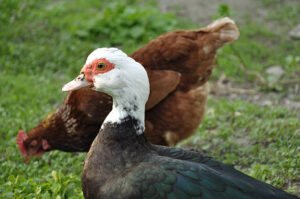
| Muscovy (Cairina moschata domesticus) | Meat and specialty foie gras | Larger body size and slower metabolism of aflatoxin; tendency to graze on pond vegetation where mold may accumulate. |
| Khaki Campbell | Egg production (high‑laying) | Egg‑producing hens allocate nutrients to yolk synthesis, making them more vulnerable to estrogenic mycotoxins (ZEA). |
| Rouen | Dual‑purpose (meat + eggs) | Moderate growth rate but extensive outdoor foraging, exposing them to environmental mold spores. |
| Mallard‑type (wild‑type domesticates) | Ornamental, free‑range | Frequent access to natural wetlands where decaying vegetation can harbor Fusarium and Aspergillus. |
| Aylesbury | Premium meat (heritage) | Traditional rearing in deep‑litter houses with high humidity can foster mold growth in litter and spilled feed. |
4.2. Paragraph Explanation
Pekin ducks, being the most prevalent commercial meat breed worldwide, are raised in high‑density, intensive systems where feed is the cornerstone of production. Their high metabolic rate and feed conversion efficiency mean that even modest levels of mycotoxin contamination quickly reach toxic thresholds. Muscovy ducks, on the other hand, have a larger liver relative to body size and are often fed richer diets (including high‑fat concentrates for foie gras). This increases the liver’s exposure to lipophilic toxins like aflatoxin B₁ and fumonisins, and their lower baseline activity of glutathione‑S‑transferase reduces detoxification capacity. Khaki Campbell layers lay up to 300 eggs per year; estrogen‑mimicking mycotoxins such as zearalenone disrupt the hypothalamic‑pituitary‑gonadal axis, leading to thin‑walled or shell‑less eggs, reduced hatchability, and premature ovarian atrophy. Rouen and Aylesbury breeds, often kept outdoors or in heritage‑style houses, encounter environmental mold sources (wet straw bedding, pond vegetation) that supplement feed‑borne toxin exposure. Finally, Mallard‑type ducks that roam free in wetlands are exposed to natural fungal reservoirs in decaying plant material, making them a sentinel population for environmental mycotoxin monitoring.
Collectively, these breed‑specific factors highlight that management strategies must be tailored to the duck’s production type, housing system, and foraging behavior to effectively mitigate MFT risk.
5. Affected Life Stages
| Life Stage | Vulnerability | Typical Clinical Manifestations |
|---|---|---|
| Embryo (in‑egg) | Highly sensitive to aflatoxin & ZEA transferred from the hen | Embryonic death, retarded development, shell thinning |
| Day‑old to 2‑week ducklings | Immature hepatic detox pathways; high feed intake per kg BW | Acute liver failure, severe diarrhea, high mortality |
| 3‑week to 8‑week growers | Rapid growth; moderate enzymatic capacity | Stunted growth, poor feather quality, intermittent vomiting |
| Adult laying ducks | Hormone‑dependent reproductive axis | Decreased egg production, thin shells, ovarian cysts |
| Breeding/seasonal molt birds | Physiological stress + high protein demand | Increased susceptibility to secondary infections, prolonged molt |
Key Point: The younger the bird, the lower the threshold for mycotoxin‐induced disease. For instance, a 5 ppm aflatoxin level might be subclinical in a mature Pekin, yet lethal in a 7‑day‑old duckling. Monitoring programs should, therefore, prioritize hatchery feed and starter mash.
6. Diagnosis
Accurate diagnosis hinges on a systematic approach that combines clinical assessment, feed analysis, and laboratory work‑up.
6.1. History and Physical Examination
- Feed History – Source, batch numbers, storage conditions, recent changes in supplier.
- Environmental Review – Humidity, temperature, ventilation, presence of damp straw or standing water.
- Morbidity/Mortality Patterns – Sudden spikes, progressive decline, age groups affected.
A thorough physical exam should note jaundice, abdominal distension, respiratory rate, egg quality, and any dermatologic lesions.
6.2. Laboratory Diagnostics
| Test | Sample | What It Detects | Interpretation |
|---|---|---|---|
| Serum Biochemistry | Blood | ALT, AST, GGT, ALP, bilirubin, uric acid, creatinine | Elevated liver enzymes → hepatotoxic mycotoxins; high uric acid → nephrotoxic OTA. |
| Hematology | Blood | Packed cell volume (PCV), leukocyte count | Anemia, leukopenia indicate immunosuppression. |
| Mycotoxin ELISA or Lateral Flow | Feed (or serum) | Quantitative detection of AFB₁, OTA, DON, ZEA, FB₁ | Levels above regulatory limits (e.g., EU: AFB₁ ≤ 20 µg kg⁻¹ for duck feed) confirm exposure. |
| High‑Performance Liquid Chromatography (HPLC) | Feed, plasma | Precise mycotoxin profiling | Gold standard; distinguishes co‑contamination. |
| Gas Chromatography–Mass Spectrometry (GC‑MS) | Feed | Detects volatile mycotoxins (e.g., patulin) | Useful for complex matrices. |
| Histopathology | Liver, kidney, intestine (post‑mortem) | Necrosis, vacuolation, eosinophilic inclusion bodies | Characteristic lesions support toxicosis. |
| Molecular Detection (qPCR) | Feed or environmental swabs | Fungal DNA (e.g., Aspergillus spp.) | Confirms source of contamination. |
6.3. Differential Diagnosis
- Bacterial septicemia (e.g., E. coli or Salmonella) – Often co‑occurs due to immunosuppression but presents with more pronounced fibrinous exudates.
- Viral hepatitis (e.g., Duck Hepatitis Virus) – Causes liver necrosis but lacks associated feed history.
- Nutritional deficiencies (e.g., vitamin A, E) – May cause similar growth retardation but without hepatic lesions.
- Heavy metal poisoning (e.g., lead, arsenic) – Leads to organ damage; requires specific toxicology.
A diagnostic algorithm:
- Suspect MFT → History of moldy feed →
- Run rapid ELISA on feed → Positive? →
- Confirm with HPLC (optional) →
- Collect blood for biochemistry →
- If needed, necropsy for histopathology →
- Rule out differentials (bacterial cultures, viral PCR).
7. Treatment
Moldy feed toxicosis is primarily supportive, as there are no specific antidotes for most mycotoxins. Treatment should begin immediately once a case is identified to limit morbidity and mortality.
7.1. Immediate Steps
- Remove Contaminated Feed – Dispose of all suspect feed; replace with a certified mycotoxin‑free source.
- Clean and Disinfect – Remove spilled feed, dry the house, improve ventilation.
- Isolate Affected Birds – Prevent spread of secondary infections.
7.2. Therapeutic Measures
| Intervention | Dosage/Regimen (Duck) | Mechanism | Comments |
|---|---|---|---|
| Mycotoxin Binders (e.g., hydrated sodium calcium aluminosilicate, bentonite, zeolite) | 0.5–1 % of feed (w/w) for 7–14 days | Adsorb mycotoxins in gut lumen, reducing absorption | Choose binders with proven efficacy against the identified toxin(s). |
| Antioxidants (Vitamin E 100 IU kg⁻¹, Selenium 0.3 mg kg⁻¹, N‑acetylcysteine 2 g L⁻¹ in water) | Daily for 5–10 days | Counteract oxidative stress from hepatic injury | Particularly helpful in aflatoxin‑induced liver damage. |
| Hepatoprotective Agents (Silymarin 0.5 g kg⁻¹ feed) | 5 days | Stabilizes hepatocyte membranes | May improve survival in acute aflatoxicosis. |
| Fluid Therapy (Warm electrolytes, 10 mL kg⁻¹ h⁻¹ subcutaneously) | As needed | Correct dehydration, support renal function | Add glucose (2 %) for energy. |
| Antibiotics (e.g., enrofloxacin 10 mg kg⁻¹ IM bid) | 3–5 days | Prevent/treat secondary bacterial infections | Use based on culture‑sensitivity when possible. |
| Uric Acid Lowering (Allopurinol 5 mg kg⁻¹ PO bid) | 5 days | Reduces hyperuricemia from OTA | Monitor uric acid levels. |
| Supportive Nutrition (Feed with high‑quality protein, digestible carbohydrates, and added amino acids) | Replace regular feed for 2–3 weeks | Promotes recovery, compensates for nutrient loss | Soft, pelleted diets are easier to ingest for debilitated birds. |
7.3. Treatment of Specific Mycotoxin Syndromes
- Aflatoxin B₁ – Focus on hepatic support (silymarin, vitamin E, selenium) and mycotoxin binders effective against aflatoxin (e.g., hydrated sodium calcium aluminosilicate).
- Ochratoxin A – Emphasize renal protection (allopurinol, adequate hydration) and bentonite as a binder.
- Fumonisins – Provide high‑lysine diets and vitamin B₆ to aid sphingolipid metabolism.
- Deoxynivalenol – Reduce intestinal irritation with probiotics (Lactobacillus spp.) and adsorbents such as glutamine‑enriched feeds.
7.4. Prognosis
| Severity | Expected Outcome | Key Factors Influencing Prognosis |
|---|---|---|
| Mild/Chronic (low‑dose exposure) | Full recovery with appropriate feed change and supportive care (80–90 % survival) | Age, overall health, rapidity of feed replacement. |
| Moderate (sub‑acute, mixed toxins) | 60–80 % survival; may have residual production losses (reduced weight gain, egg quality) | Presence of secondary infections; liver/renal function at presentation. |
| Severe/Acute (high‑dose single exposure) | 30–50 % survival; high mortality within 48 h if untreated | Toxin type (aflatoxin B₁ most lethal), bird’s age (ducklings > mortality). |
8. Complications
- Secondary Bacterial Septicemia – Immunosuppression predisposes birds to E. coli and Clostridium infections.
- Gout – Resulting from OTA‑induced renal failure; uric acid crystals deposit on joints and viscera.
- Reproductive Failure – Chronic estrogenic mycotoxins cause permanent ovarian damage, leading to lifelong reduced egg output.
- Fibrosis – Persistent hepatic injury can culminate in collagen deposition, impairing liver function permanently.
- Reduced Vaccine Efficacy – Mycotoxins suppress cell‑mediated immunity, compromising protection against common duck diseases (e.g., Duck Viral Enteritis).
9. Prevention
Prevention is far more cost‑effective than treatment. A holistic “Feed Safety Management System” (FSMS) should be implemented, comprising the following pillars.
9.1. Feed Procurement
- Supplier Audits – Verify that vendors test every batch for mycotoxins (ELISA/HPLC).
- Certificates of Analysis (CoA) – Require documentation showing toxin levels below regulatory limits (EU, FDA, Codex).
9.2. Storage Practices
| Practice | Implementation Tips |
|---|---|
| Drying | Ensure grain moisture ≤ 13 % before storage; use grain dryers or dehumidifiers. |
| Ventilation | Install perforated floor or sidewall fans; maintain air flow of ≥ 0.5 m s⁻¹. |
| Temperature Control | Keep storage temperature ≤ 20 °C; use temperature loggers. |
| Segregation | Separate new feed from older stock; use “first‑in‑first‑out” (FIFO) rotation. |
| Pest Management | Implement integrated pest control (IPM) to reduce insect damage that invites fungi. |
| Moisture Monitoring | Use handheld moisture meters weekly; discard any batch > 14 % RH. |
9.3. Feed Processing
- Heat Treatment – Pelleting at > 85 °C can inactivate some fungi but does not destroy all mycotoxins.
- Chemical Detoxifiers – Incorporate enzymatic binders (e.g., fumonisin esterase) when feeds are known to be at risk.
9.4. Monitoring and Early Warning
- Routine Sampling – Collect representative feed samples monthly (or bi‑weekly during high‑risk seasons).
- Rapid Test Kits – Use lateral‑flow immunoassays for on‑farm screening; confirm positives with lab‑based HPLC.
- Environmental Sampling – Swab stored grain bins for fungal DNA; high spore loads prompt pre‑emptive feed replacement.
9.5. Animal Management
- Dry Feeding Areas – Keep feed troughs off the ground, use raised feeders.
- Clean Water Supply – Avoid standing water next to feed; provide fresh water daily.
- Biosecurity – Limit personnel entry during humid periods; enforce clean clothing and shoe covers.
9.6. Record‑Keeping
Maintain a Flock Health and Feed Log that records:
- Feed batch numbers, source, and mycotoxin test results.
- Storage conditions (temperature, humidity).
- Clinical observations and mortalities.
Analyzing trends over time enables predictive interventions before a full‑blown outbreak.
10. Diet and Nutrition – Supporting Recovery & Building Resilience
10.1. Nutrient Requirements for Ducks (General)
| Nutrient | Recommended Level (Adult Ducks) | Role in Mycotoxin Resilience |
|---|---|---|
| Metabolizable Energy | 2 800–3 200 kcal kg⁻¹ (growers) | Provides energy for detoxification pathways. |
| Crude Protein | 18–22 % (growers), 16–18 % (layers) | Supplies amino acids for hepatic enzyme synthesis. |
| Methionine + Cystine | 0.6–0.8 % of diet | Sulphur‑containing amino acids aid glutathione production (critical antioxidant). |
| Vitamin E | 150–200 IU kg⁻¹ | Membrane protection against peroxidative damage from aflatoxin. |
| Selenium | 0.2–0.3 mg kg⁻¹ | Cofactor for glutathione peroxidase. |
| Vitamin A | 10 000 IU kg⁻¹ | Supports mucosal integrity, reduces susceptibility to secondary infections. |
| B‑Complex Vitamins (B₆, B₁₂, niacin) | Adequate levels (≥ 5 mg kg⁻¹) | Essential for hepatic metabolism of toxins. |
| Calcium & Phosphorus | 3.5 % Ca, 0.5 % P (layers) | Proper eggshell formation; counteracts ZEA‑induced calcium loss. |
| Trace Minerals (Zn, Cu, Mn) | 30–50 ppm each | Enzyme cofactors for detoxification pathways. |
10.2. Feed Additives That Counteract Mycotoxins
| Additive | Mode of Action | Recommended Inclusion |
|---|---|---|
| Hydrated Sodium Calcium Aluminosilicate (HSCAS) | Physical adsorption of aflatoxin, OTA, FB₁ | 0.5 % w/w |
| Bentonite Clay | High surface area binds OTA, ZEA | 1 % w/w |
| Yeast Cell Wall Extract (β‑glucans, Mannan‑oligosaccharides) | Immunomodulation, binds multiple mycotoxins | 0.2 % w/w |
| Organic Acids (Sorbic, Propionic) | Inhibit fungal growth in stored feed | 0.5–1 % w/w |
| Fumonisin Esterase (FUMzyme®) | Enzymatically hydrolyzes fumonisins to non‑toxic compounds | 0.1 % w/w |
| Lactobacillus spp. Probiotics | Competitive exclusion of mold spores; gut barrier support | 10⁸ CFU g⁻¹ feed |
| Silymarin (Milk Thistle Extract) | Hepatoprotective antioxidant | 0.02 % w/w |
| N‑Acetylcysteine (NAC) | Glutathione precursor; reduces oxidative stress | 0.2 % w/w (in water) |
10.3. Feeding Strategies During an Outbreak
- Phase‑1 (Detoxification) – Switch to a low‑mycotoxin starter diet fortified with binders and antioxidants. Provide easily digestible, high‑energy feed to reduce gut transit time (e.g., finely ground, pelleted mash).
- Phase‑2 (Recovery) – Gradually re‑introduce standard diet while maintaining binders for an additional 10–14 days.
- Phase‑3 (Maintenance) – Continue low‑level inclusion of binders (0.2–0.5 %) as a prophylactic measure throughout the production cycle.
11. Zoonotic Risk
11.1. Human Exposure to Mycotoxins via Ducks
- Direct Contact – Farm workers handling contaminated feed or sick birds may inhale aerosolized spores or ingest mycotoxins via contaminated hands.
- Food Chain – Mycotoxins can accumulate in duck meat and eggs. Aflatoxin B₁, for instance, is metabolized to aflatoxin M₁ and can be secreted in eggs, posing a carcinogenic risk to consumers.
11.2. Public Health Guidelines
| Situation | Recommended Action |
|---|---|
| Feed Handling | Use personal protective equipment (gloves, masks), wash hands thoroughly, and keep feed storage separate from living areas. |
| Egg and Meat Consumption | Ensure that ducks have been on a clean feed for at least 10 days before slaughter; test a representative sample of eggs for aflatoxin residues when prior contamination is suspected. |
| Regulatory Limits | Follow Codex Alimentarius maximum limits: aflatoxin B₁ ≤ 10 µg kg⁻¹ for poultry feed; aflatoxin M₁ ≤ 0.5 µg kg⁻¹ in eggs (EU). |
| Medical Surveillance | Workers with chronic exposure to high‑dose aflatoxin may require periodic liver function tests. |
11.3. Environmental Considerations
Moldy feed left in the environment can become a source of airborne spores, potentially affecting neighboring farms or residential areas. Implementing proper feed disposal (e.g., incineration, deep burial) and dust control (air filtration) mitigates this risk.
12. Integrated Management Summary
| Step | Key Action | Who Is Responsible |
|---|---|---|
| 1. Risk Assessment | Conduct seasonal mycotoxin risk mapping (climate, storage) | Farm manager / Extension officer |
| 2. Supplier Verification | Require CoA, perform random feed audits | Procurement officer |
| 3. Storage Control | Install ventilation, moisture sensors, pest management | Facility manager |
| 4. Routine Monitoring | Monthly feed sampling, ELISA testing, environmental swabs | Veterinary technician |
| 5. Early Intervention | Immediately discard contaminated batches, replace feed, apply binders | Veterinarian |
| 6. Clinical Management | Provide supportive therapy, monitor blood chemistry | Veterinarian & farm staff |
| 7. Record Keeping | Update flock health & feed log, track outcomes | Farm manager |
| 8. Review & Adjust | Analyze data, refine FSMS, educate staff | Whole team (vet, manager, workers) |
By embedding these steps into the daily routine, producers can dramatically reduce the incidence of moldy feed toxicosis, safeguard animal welfare, protect public health, and maintain economic viability.
13. Future Directions & Research Gaps
- Genomic Selection for Mycotoxin Tolerance – Identifying duck lines with enhanced expression of detoxifying enzymes (e.g., CYP450, GST) could provide a breeding‑based solution.
- Nanoparticle‑Based Binders – Emerging research on functionalized silica nanoparticles shows promise for higher binding capacities across multiple mycotoxins.
- Vaccination‑Like Approaches – Development of recombinant antibodies or peptide vaccines that neutralize aflatoxin in the gut is under investigation.
- Predictive Modelling – Integrating climate data with storage conditions into AI‑driven models could forecast high‑risk periods and trigger pre‑emptive feed testing.
14. Conclusions
Moldy feed toxicosis in ducks is a multifactorial disease that intertwines feed safety, environmental management, bird physiology, and human health. While the spectrum of mycotoxins is broad, the most common culprits—aflatoxins, ochratoxin A, fumonisins, deoxynivalenol, and zearalenone—share common pathways of hepatic, renal, and immunological injury. Prompt identification, removal of the source, and supportive therapy are essential for favorable outcomes.
Prevention remains the cornerstone: rigorous feed procurement standards, optimal storage, regular monitoring, and nutritional fortification with binders and antioxidants form an effective shield against MFT. By adopting an integrated approach and staying vigilant to zoonotic implications, duck producers can maintain flocks that are healthy, productive, and safe for consumers.
#MoldyFeedToxicosis, #DuckHealth, #MycotoxinAwareness, #WaterfowlVeterinary, #PekinDucks, #MuscovyDucks, #KhakiCampbell, #DuckFarming, #FeedSafety, #Aflatoxin, #Ochratoxin, #Fumonisins, #Deoxynivalenol, #Zearalenone, #PoultryNutrition, #VeterinaryMedicine, #AnimalWelfare, #ZoonoticRisk, #FoodSafety, #EggSafety, #DairyFree, #SustainableFarming, #FarmManagement, #MycotoxinMonitoring, #VeterinaryTips, #AgricultureInnovation, #HealthyDucks, #PreventionIsKey, #FeedStorage, #LivestockHealth, #OneHealth, #PoultryIndustry, #BackyardDucks, #OrganicFarming, #Biosecurity, #VeterinaryEducation, #MycotoxinResearch, #FutureOfFarming, #ClimateAndMycotoxins, #FeedAdditives, #ProbioticsForDucks, #Hepatoprotective, #Antioxidants, #VeterinaryScience, #DucksOfInstagram, #DucksOfYouTube, #FarmersOfFacebook.






Add comment