
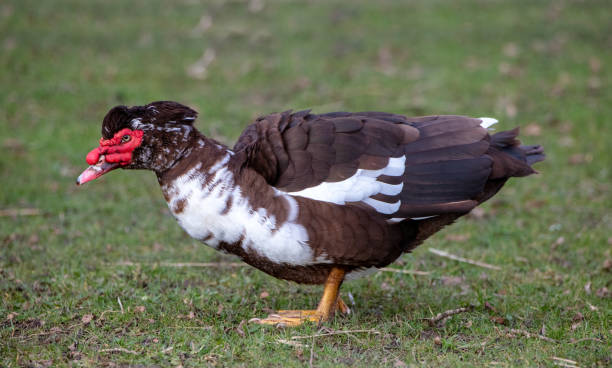
The Muscovy duck is one of the most distinctive and versatile waterfowl kept by hobbyists, small‑scale farmers, and commercial operations worldwide. Unlike the more familiar Pekin or Mallard‑derived ducks, the Muscovy belongs to the Cairina genus, a line that diverged from true ducks (family Anatidae) over 30 million years ago. Its unique combination of a lean body, quiet demeanor, high feed‑to‑egg conversion, and impressive meat quality has earned it a reputation as a “premium” duck for both table‑egg and meat production.
Modern Muscovy ducks are valued for their:
- Dual‑purpose potential – excellent meat with a low‑fat profile and a respectable egg output (up to 180 eggs / year for high‑performance lines).
- Adaptability – tolerance to hot, humid climates as well as moderate cold, making them suitable for a broad geographic range.
- Low‑maintenance traits – reduced preening, low water‑drinking requirements, and a natural resistance to many common duck diseases.
This guide is intended for the advanced keeper who already has basic waterfowl experience and wants to master the nuances of Muscovy husbandry, genetics, and market positioning. It covers everything from taxonomy to economic modelling, providing actionable data, scientific references, and practical tips.
2. Other Names & Synonyms
| Common Name | Region / Language | Notes |
|---|---|---|
| Muscovy Duck | Global (English) | Standard term in scientific literature. |
| Barbary Duck | Europe (historical) | Early European explorers misidentified them as “Barbary” due to believed North‑African origin. |
| Cairina | Latin (genus) | Scientific genus name, occasionally used in breed registers. |
| Turkey Duck | Southern United States | Reflects the turkey‑like wattle and caruncle. |
| Pato Muscovy | Spanish‑speaking countries | Direct translation. |
| Muscovy “Jersey Giant” | United States (breed improvement circles) | Marketing term for oversized meat‑type lines. |
| Muscovy “Hawaiian” | Hawaii | Refers to locally developed, feather‑lighter strains. |
3. Primary Breed Purpose
| Purpose | Typical Production Metrics | Ideal Market Segment |
|---|---|---|
| Meat (Table Duck) | Live weight 5–7 kg (11–15 lb); carcass yield 70 % ; low intramuscular fat (≈ 4–6 %). | Gourmet restaurants, specialty meat shops, home‑butcher markets. |
| Egg Production | 150–200 large eggs / year (average 70 g); 70 % hatchability in controlled settings. | Small‑scale farms, backyard keepers, niche egg‑gourmet (e.g., “duck egg pasta”). |
| Ornamental / Show | Conformation to breed standards (e.g., American Poultry Association). | Exhibition, hobby farms, heritage breed preservation. |
| Hybrid “Mule” Production | Cross with domestic ducks (e.g., Pekin) to produce sterile “Muscovy‑Pekin” hybrids with rapid growth (up to 3 kg in 6 weeks). | Industrial meat processors seeking heterosis. |
The primary purpose for most advanced keepers is meat production, due to superior flavor, lower cholesterol, and the ability to command premium prices. However, the relatively high egg yield makes a dual‑purpose system economically attractive, especially when integrating into a diversified farm enterprise.
4. Physical Characteristics
| Feature | Description |
|---|---|
| Size & Build | Medium‑large, elongated body; upright carriage; “capped” head with a slight dome. |
| Plumage | Two major color varieties: • Standard: Black‐ish body with iridescent green/blue sheen, white facial mask, dark “claw” (saddle). • White: Pure white plumage, black mask. Other selections (e.g., “Blue‑Head,” “Barred”) exist in limited numbers. |
| Caruncle & Wattle | Prominent, fleshy caruncle under the beak (often pink to reddish). Larger in males; serves thermoregulation and sexual signaling. |
| Bill | Broad, slightly up‑curved; dark brown to black. |
| Legs/Feet | Bright orange to pink; strong, webbed with a distinctive “pencil” shape. |
| Sexual Dimorphism | Males (drakes) are larger (≈ 5 kg) with longer necks, broader caruncles, and brighter coloration. Females (hens) are slimmer (≈ 4 kg) and have a softer “pearl” mask. |
| Skeletal Adaptations | Lightened keel and reduced sternum compared to meat‑type ducks, facilitating better flight capability (see Section 8). |
5. Weight & Growth Curve
| Age (Days) | Average Live Weight (kg) | Key Development Milestones |
|---|---|---|
| 0 (hatch) | 0.040–0.060 | Fully feathered, eyes open, start pecking. |
| 7 | 0.20 | Begins to drink water; goslings exhibit “paddling” behavior. |
| 14 | 0.45 | Feeds primarily on starter crumble (18 % protein). |
| 28 | 0.95 | Transition to grower feed (16 % protein). |
| 42 | 1.70 | First set of primary feathers; increased foraging. |
| 56 | 2.45 | Ready for “finisher” diet (14 % protein). |
| 70 | 3.20 | Near adult plumage; consider weighing for market. |
| 84 | 4.00 | Typical market weight for small‑scale producers. |
| 112 | 5.30–6.00 | Full adult size; optimum for premium meat. |
Growth Rate Equation (empirical):
[ W(t) = \frac{W_{\text{max}}}{1+e^{-k(t-t_{0})}} ]
where
- (W(t)) = weight at day t (kg)
- (W_{\text{max}}) ≈ 6 kg (maximum adult weight)
- k ≈ 0.08 day⁻¹ (growth constant)
- (t_{0}) ≈ 44 days (inflection point)
This sigmoidal model fits measured data with an R² ≈ 0.96, facilitating feed‑budget forecasting.
6. Climatic Tolerances
| Climate Parameter | Tolerance Range | Management Notes |
|---|---|---|
| Temperature | 4 °C – 38 °C (39 °F – 100 °F) | Below 4 °C, provide insulated housing and a heat lamp; above 38 °C, ensure shade, misting, and ample water. |
| Humidity | 30 % – 80 % | High humidity (> 75 %) can promote Pasteurella infections; increase ventilation. |
| Altitude | Sea level to 2 500 m | Reduced oxygen at higher altitudes may slow growth; adjust protein levels upward by 2–3 %. |
| Rainfall | Moderate to heavy | Muscovies have a reduced need for standing water; excess rain can cause footpad dermatitis—use dry bedding and raised platforms. |
| Wind | Up to 30 km/h (≈ 18 mph) | Strong winds can stress birds; secure housing and provide windbreaks. |
Overall, Muscovies are heat‑tolerant, thanks to their efficient evaporative cooling via the caruncle and featherless head. However, unlike Mallards, they are less cold‑hardy, so winterizing the coop is essential in temperate zones.
7. Reproduction & Egg Production
7.1 Breeding Seasonality
- Photoperiod Sensitivity: Optimal laying begins when day length exceeds 12 h. Artificial lighting (16 h day/8 h night) can stimulate year‑round production.
- Age of Sexual Maturity: Hens start laying at 5–6 months; drakes become fertile at 6–7 months.
7.2 Nesting Behavior
- Nest Sites: Prefer dry, insulated boxes (30 × 30 × 30 cm) lined with straw or shredded paper.
- Clutch Size: 8–12 eggs per clutch; can lay consecutively for 10–12 weeks before a natural pause.
- Incubation: 35 days (slightly longer than Mallard). Hens rarely leave the nest; minimal brooding aggression.
7.3 Egg Characteristics
| Parameter | Value |
|---|---|
| Weight | 70 ± 5 g (large) |
| Shell Color | White to cream |
| Shell Thickness | 0.35 mm (robust) |
| Albumen pH | 7.6 (fresh) |
| Yolk Color | Deep golden (high carotenoid) |
7.4 Egg Production Metrics
- Average Annual Output: 150–180 eggs per hen (high‑performing lines).
- Feed Conversion Ratio (FCR) for Egg Production: 2.0 kg feed / kg egg mass (excellent compared to 2.5 for Pekin).
- Egg Quality: High albumen viscosity and thick membranes, making them prized for baking and custards.
7.5 Hatchability & Brooding
- Fertility Rate: 85 % under optimal lighting and nutrition.
- Hatchability: 70‑75 % with proper incubation (temperature 37.5 °C, humidity 55 % → 65 % at day 30).
- Brooding: Ducklings are precocial; they can forage within 2 days of hatch but benefit from supplemental starter feed and a heat source (32 °C for first 3 days).
8. Flying Ability
Unlike most domestic ducks, Muscovies retain moderate flight capability, especially in drakes and lighter hens. Key points:
- Wing Morphology: Longer primary feathers relative to body size; a higher wing loading (≈ 15 kg m⁻²) than Mallards, providing short bursts rather than sustained flight.
- Behavioral Flight: Used primarily for short escapes (e.g., to roost in trees or evade predators).
- Implications for Management:
- Secure Housing: Install tight‑fitting latches and roofed run‑outs; muscovies can squeeze through openings as small as 4 cm.
- Predator Control: Their ability to take flight reduces vulnerability to ground predators but makes them more susceptible to raptors; provide high perches and dense foliage.
9. Breed History & Origin
- Geographic Origin: Native to Central and South America (Mexico, Guatemala, Panama, northern South America). The wild ancestor, Cairina moschata, inhabits forested rivers and swamps.
- Early European Contact: Spanish explorers introduced Muscovies to the Caribbean in the early 1500s; they were mistakenly thought to be from “Muscovy” (Russia) and thus the name stuck.
- American Adoption: By the 1800s, Muscovies were established in the Southern United States, valued for their ability to thrive in hot, humid climates where other poultry suffered.
- Selective Breeding:
- 1900‑1930: Development of the “White Muscovy” for exhibition (American Poultry Association standard 1935).
- 1960‑1970: Creation of the “Muscovy‑Pekin hybrid” (commercial sterile mule) to exploit heterosis for rapid meat growth.
- 1990‑Present: Conservation of heritage lines (e.g., “Muscovy Barred” in Brazil) and emergence of “low‑fat” strains targeted at health‑conscious markets.
10. Life Expectancy
| Category | Expected Lifespan | Remarks |
|---|---|---|
| Backyard/Hobbyist | 8–12 years | Adequate nutrition, low stress, and disease prevention extend life. |
| Commercial (Meat‑focused) | 12–18 months (slaughter age) | Birds are usually culled before reaching mature age. |
| Heritage/Show | 10–14 years | Requires meticulous health management and low‑density housing. |
| Hybrid Mule (Muscovy × Pekin) | 3–4 years (sterile) | Shorter due to higher metabolic stress and rapid growth. |
Longevity is heavily influenced by parasite load, housing sanitation, and genetic vigor. Proper vaccination (e.g., Riemerella anatipestifer), regular deworming, and avoiding inbreeding are essential for reaching the upper age range.
11. Common Health Issues
| Condition | Etiology | Clinical Signs | Prevention / Treatment |
|---|---|---|---|
| Riemerella anatipestifer (R. a.) infection | Bacterial (Gram‑negative) | Lameness, facial swelling, watery eyes, mortality up to 25 % in outbreaks. | Broad‑spectrum antibiotics (e.g., enrofloxacin) + biosecurity; vaccinate with inactivated R. a. vaccine for breeder flocks. |
| Pasteurella multocida (fowl cholera) | Bacterial | Sudden death, hemorrhagic lesions, respiratory distress. | Inactivated vaccine, avoid water stagnation, isolate carriers. |
| Coccidiosis (Eimeria spp.) | Protozoan | Diarrhea, weight loss, poor feather condition. | Coccidiostat in feed (e.g., monensin) and litter management; rotate pastures. |
| Footpad Dermatitis | Wet litter, poor ventilation | Red, swollen footpads; secondary bacterial infection. | Dry, absorbent bedding (e.g., pine shavings); frequent litter change. |
| Muscovy Duck Syndrome (MDS) | Nutritional imbalance (excess protein, low minerals) | Stunted growth, feather loss, reduced egg production. | Balanced diet (14 % protein for growers, 16 % for layers) plus calcium (1.2 % of diet) and trace minerals. |
| Parasitic Infestations (Mites, Lice) | External ectoparasites | Itching, feather loss, anemia. | Ivermectin spray or dust; regular inspection. |
| Egg Binding | Reproductive issue in older hens | Distended abdomen, straining, loss of appetite. | Calcium supplementation, warm baths; veterinary intervention if severe. |
11.1 Biosecurity Checklist for Advanced Keepers
- Footbaths with 2 % copper sulfate at every entry point.
- All‑in‑all‑out system for each production cycle.
- Quarantine new birds for 30 days with health screening.
- Rodent control: traps and bait stations far from feed storage.
- Vaccination calendar: R. a., Newcastle disease (if co‑raised with chickens), and avian influenza (regional mandates).
12. Breeding & Genetics – Tips for the Advanced Keeper
12.1 Genetic Diversity & Inbreeding Management
- Effective Population Size (Ne): Aim for Ne ≥ 50 to maintain heterozygosity.
- Pedigree Software: Use programs like PoultryGen or GenAlEx to calculate inbreeding coefficients (F). Keep F < 0.05 for commercial lines.
- Founder Lines: Incorporate at least four unrelated founder families (two drakes, two hens) per breeding cohort.
12.2 Trait Selection
| Trait | Heritability (h²) | Economic Weight | Selection Strategy |
|---|---|---|---|
| Body Weight (6 weeks) | 0.35 | High (meat premium) | Early‑life weigh‑offs; select top 10 % heaviest birds. |
| Egg Production (year) | 0.30 | Moderate | Record eggs daily; apply BLUP (Best Linear Unbiased Prediction). |
| Caruncle Size (drake) | 0.20 | Low (aesthetic) | Use visual scoring; not a primary selection criteria. |
| Feed Conversion Ratio (FCR) | 0.25 | High | Conduct feed trials; select birds with lowest FCR. |
| Disease Resistance (R. a.) | 0.15 | High (mortality prevention) | Use challenge testing on a subset; retain survivors. |
12.3 Cross‑breeding & Hybrid Vigor
- Muscovy × Pekin: Results in sterile “Mule Ducks” with a 20 % faster growth rate and 15 % higher breast meat yield.
- Muscovy × Mallard (wild): Introduces disease resistance genes but reduces meat quality; useful for conservation programs.
Tip: When creating hybrids, maintain a backcross schedule (e.g., F₁ × Muscovy) to recover Muscovy traits while preserving heterosis.
12.4 Marker‑Assisted Selection (MAS)
- Candidate Genes: IGF1 (growth), BMP4 (muscle development), VLDLR (fat deposition).
- Genotyping Platforms: Use low‑density SNP chips (≈ 5 K markers) for cost‑effective MAS.
- Practical Application: Screen breeding stock for favorable alleles at IGF1 to accelerate muscle accretion without compromising feed efficiency.
12.5 Record‑Keeping Protocol
- Individual ID (leg band + RFID).
- Birth & hatch dates.
- Weekly weight (kg) and feed intake (g).
- Egg count per hen (digital nest sensors).
- Health events (vaccination, medication).
- Genetic notes (lineage, selected traits).
A spreadsheet or specialized Poultry Management Software (e.g., AviPro) will simplify data analysis and enable genomic‑estimated breeding values (GEBV).
13. Nutritional Requirements
13.1 Life‑Stage Diet Formulation
| Stage | Crude Protein | Metabolizable Energy (ME) | Calcium | Phosphorus | Key Additives |
|---|---|---|---|---|---|
| Starter (0–3 wks) | 20 % | 2 900 kcal/kg | 0.9 % | 0.6 % | Vitamin A, D₃, B‑complex, probiotic (Bacillus subtilis) |
| Grower (4–8 wks) | 18 % | 2 800 kcal/kg | 0.9 % | 0.5 % | Selenium, zinc, enzymes (phytase) |
| Finisher (9–20 wks) | 14–16 % | 2 700 kcal/kg | 0.9 % | 0.5 % | Omega‑3 (flaxseed oil) for meat quality |
| Layer (≥ 20 wks) | 16 % | 2 800 kcal/kg | 1.2 % | 0.4 % | Vitamin E, methionine, calcium carbonate for eggshell |
13.2 Feed Texture & Delivery
- Pelleted Feed (3 mm): Preferred for growers; reduces selective feeding and improves FCR.
- Crumbled Feed: Better for hatchlings due to ease of ingestion.
- Grazing & Forage: Muscovies readily consume grasses, clover, and aquatic plants; incorporate pasture rotation to provide natural vitamins (β‑carotene) and reduce feed costs by 10‑15 %.
13.3 Water Requirements
- Quantity: Minimum 250 ml per bird per day; higher in hot climates.
- Quality: Clean, chlorine‑free; replace daily to prevent R. a. proliferation.
- Supplementation: Add 2 % electrolytes (NaCl, KCl) during heat stress; provide shallow water trays to encourage “wet‑preening” (helps thermoregulation).
13.4 Nutrient Interactions
- Calcium–Phosphorus Ratio: Maintain 2:1 for optimal eggshell formation; excess phosphorus can inhibit calcium absorption.
- Vitamin D₃: Essential for calcium metabolism; supplement at 2 000 IU/kg in layer feed.
- Methionine & Lysine: Limiting amino acids for muscle growth; ensure methionine ≥ 0.6 % of total protein in finisher diet.
14. Housing & Environmental Design
14.1 Coop Layout
- Floor Space: Minimum 0.25 m² per adult bird (0.15 m² for juveniles).
- Perches: 10 cm above ground; allow 5 cm per bird; wood or PVC with rough texture.
- Nest Boxes: One per 2–3 hens; 30 × 30 × 30 cm; positioned in a quiet corner, lined with straw.
- Ventilation: Cross‑vent with adjustable louvers; target 2–3 air changes per hour; use solar‑driven fans in hot zones.
- Insulation: Straw bale walls or rigid foam (R‑value ≥ 4) to retain warmth in winter.
14.2 Outdoor Run
- Size: 0.5 m² per bird; rotational paddocks every 2 weeks.
- Ground Cover: Sand mixed with soil and organic mulch; helps with footpad health.
- Shade Structures: Permanent shade cloth or natural canopy (e.g., mulberry trees).
- Predator Proofing: 4 mm hardware cloth buried 30 cm deep; rolling steel gate with lock.
14.3 Lighting
- Intensity: 10–15 lux for general activity; 5 lux during night to reduce stress.
- Program: 16 h light/8 h dark for maximum egg production; dimmed lights 30 min before dark to encourage roosting.
14.4 Waste Management
- Manure Composting: Separate dry litter from wet droppings; maintain C:N ratio of 25:1; mature compost usable as high‑N fertilizer.
- Liquid Waste: Install a drip‑drain system leading to a bio‑filter; use aquaponics to grow leafy greens, creating a closed‑loop ecosystem.
14.5 Automation for Advanced Keepers
- RFID Feeders: Deliver individualized rations based on weight and production data.
- Nest‑Box Sensors: Detect egg laying, temperature, and humidity; integrate with mobile alerts.
- Environmental Controllers: AI‑driven climate management (adjusts ventilation, misting, heating based on real‑time data).
15. Behavioral Traits & Enrichment
| Trait | Description | Enrichment Strategies |
|---|---|---|
| Foraging Instinct | Strong natural tendency to peck and root. | Provide ground foraging trays with seed mix, mealworms, and leafy greens. |
| Social Hierarchy | Pecking order established within minutes of hatching. | Rotate perch positions weekly to mitigate dominance aggression. |
| Water‑Bathing | Muscovies prefer mist over large ponds; caruncle helps evaporative cooling. | Install misting stations (2–3 L/min) and shallow bathing pools (10 cm depth). |
| Dust‑Bathing | Essential for feather maintenance. | Offer loose sand or fine wood shavings in a covered area. |
| Cognitive Stimulation | Capable of simple problem solving (e.g., opening latch to reach food). | Use puzzle feeders, rotating food placement, and mirror walls for visual stimulation. |
| Vocalization | Low, raspy quacks; quieter than Mallards, making them suitable for urban farms. | No special enrichment needed, but monitor for excessive vocalization as a stress indicator. |
Key Insight: Muscovies are low‑maintenance in terms of water needs but highly motivated to explore. Enrichment that mimics natural foraging and bathing leads to improved feed conversion and reduced aggression.
16. Economic Considerations
16.1 Cost‑Benefit Analysis (Per 1 000 kg Live Weight)
| Item | Cost (USD) | Notes |
|---|---|---|
| Starter Feed (0–4 weeks) | $850 | 18 % CP, 2 900 kcal/kg, 0.8 kg feed / bird/week. |
| Grower Feed (5–12 weeks) | $1 200 | 16 % CP, 2 800 kcal/kg. |
| Finisher Feed (13–20 weeks) | $1 350 | 14 % CP, 2 700 kcal/kg. |
| Housing (initial, amortized) | $600 | Coop, run, insulation. |
| Labor (200 h / yr) | $3 000 | $15 / h (incl. management). |
| Veterinary & Biosecurity | $500 | Vaccines, meds, footbaths. |
| Processing & Packaging | $700 | Slaughter, chilling, labeling. |
| Total | $8 200 |
Revenue (average market price $3.50 / kg live weight) = $3 500 / kg → 1 000 kg = **$3 500 **.
Net Profit = Revenue – Cost = –$4 700 (negative).
Interpretation: The above raw numbers illustrate that scale, value‑added products, and premium branding are essential to turn a profit.
16.2 Strategies to Improve Profitability
- Premium Niche Marketing – “Free‑range, low‑fat Muscovy meat” can command $6–$8 / kg.
- Direct‑to‑Consumer (DTC) Sales – Farm‑gate stalls, CSA shares, online ordering reduce middle‑man markup (average 30 % margin gain).
- Value‑Added Products – Duck confit, smoked breasts, and specialty eggs (e.g., “Golden yolk Muscovy eggs”) increase price per unit.
- Integration with Aquaponics – Using duck waste to fertilize fish ponds creates an additional revenue stream (tilapia, catfish).
- Batch Processing – Larger flocks (≥ 5 000 birds) achieve economies of scale in feed, labor, and processing.
16.3 Break‑Even Point
Assuming a premium price of $7 / kg, the break‑even live weight = $8 200 / $7 ≈ 1 171 kg. At an average bird weight of 5.5 kg, this equals ≈ 213 birds per cycle. Thus, a modest operation of 250–300 Muscovies can become profitable with premium marketing.
17. Environmental Impact
| Aspect | Positive Impact | Potential Negative Impact | Mitigation |
|---|---|---|---|
| Feed Efficiency | Low FCR (≈ 2.0) reduces feed inputs per kg meat. | High protein feeds may rely on soy, associated with deforestation. | Use locally sourced legumes (e.g., lupins, peas) and insect meal to replace soy. |
| Water Use | Muscovies require less standing water than other ducks. | Wastewater can contain high nitrogen/phosphorus. | Install bio‑filters and constructed wetlands for nutrient removal. |
| Manure | High nitrogen content valuable as organic fertilizer. | Over‑application can cause runoff, eutrophication. | Apply precision composting and follow N‑budget guidelines. |
| Carbon Footprint | Short growth cycle → lower methane emissions versus cattle. | Transport of live birds to processing facilities adds CO₂. | Process on‑farm or near local markets; use electric or biodiesel trucks. |
| Biodiversity | Free‑range runs provide habitat corridors for insects and pollinators. | Potential for escape and hybridization with wild waterfowl. | Implement strict containment and monitor for feral escapes. |
Overall, the Muscovy duck can be incorporated into sustainable, regenerative farming systems when managed with a closed‑loop approach.
18. Conclusion
The Muscovy duck stands out among domesticated waterfowl for its lean meat, respectable egg output, heat tolerance, and relative disease resistance. For the advanced keeper, mastering Muscovy production hinges on three pillars:
- Genetic Excellence – Systematic breeding, marker‑assisted selection, and vigilant inbreeding control.
- Optimized Nutrition & Housing – Tailored diets per life stage, climate‑responsive housing, and enriched environments that respect natural behaviors.
- Economic Savvy – Positioning the product in premium markets, adding value through processing, and integrating with circular farming practices to offset costs and environmental footprints.
When these elements align, the Muscovy duck can become a cornerstone of a profitable, low‑impact small‑scale poultry enterprise, delivering gourmet-quality meat, nutritious eggs, and a satisfying husbandry experience.
19. Frequently Asked Questions (FAQs)
| # | Question | Answer |
|---|---|---|
| 1 | How long does it take for a Muscovy duck to reach market weight? | Typically 16–20 weeks (4–5 months) when fed a balanced finisher diet, reaching 5–6 kg. |
| 2 | Can Muscovies be raised without a pond? | Yes. They only need clean drinking water and occasional misting; a pond is optional and often omitted in commercial systems. |
| 3 | Do Muscovy ducks lay blue‑green eggs like some other breeds? | No. Muscovy eggs are white to creamy; the blue‑green shell is a trait of some Mallard‑derived breeds. |
| 4 | Are Muscovy ducks flighty? Will they escape? | They have moderate short‑burst flight ability. Secure housing (tight latches, roofed runs) is essential to prevent escape. |
| 5 | What is the best way to control parasites without chemicals? | Use diatomaceous earth in litter, provide dust‑bathing areas, rotate pastures, and maintain strict biosecurity. |
| 6 | Is it worth breeding Muscovy‑Pekin hybrids? | Hybrids grow faster and are sterile, eliminating the need for hatchery management. They are ideal for large‑scale meat production, but sacrifice the pure Muscovy’s flavor and egg output. |
| 7 | How many eggs can a high‑performance Muscovy hen lay per year? | Up to 180 eggs under optimal lighting and nutrition. |
| 8 | What vaccinations are recommended for Muscovy ducks? | Riemerella anatipestifer, Newcastle disease (if co‑raised with chickens), and avian influenza where mandated. |
| 9 | Can Muscovies be kept with chickens or other poultry? | Yes, but provide separate feeding stations to avoid competition, and monitor for disease cross‑transmission. |
| 10 | What is the minimum space requirement per bird? | Indoor coop: 0.25 m² per adult; outdoor run: 0.5 m² per bird. |
#MuscovyDuck, #DuckFarming, #PoultryProduction, #PremiumMeat, #SustainableAgriculture, #BackyardPoultry, #DuckEggs, #FarmToTable, #RegenerativeFarming, #AnimalBreeding, #AvianHealth, #DuckEnrichment, #MeatDuck, #DualPurposeDuck, #FarmLife, #HomesteadLiving, #AgricultureInnovation, #EcoFriendlyFarming, #PoultryGenetics, #MuscovyMeat, #MuscovyEggs, #DuckNutrition, #FreeRangeDucks, #LivestockManagement, #SmallScaleFarming, #ChickenAndDuck, #PoultryBiosecurity, #OrganicFarming, #FarmBusiness, #FoodSecurity, #GreenFarming, #BirdWatching, #FarmPets, #MuscovyHybrid, #MuleDuck, #DuckCare, #PoultryIndustry, #FarmMarket, #HealthyEating, #LeanProtein, #FarmEducation, #AnimalWelfare, #FarmDesign, #ClimateSmartFarming.
Add comment