
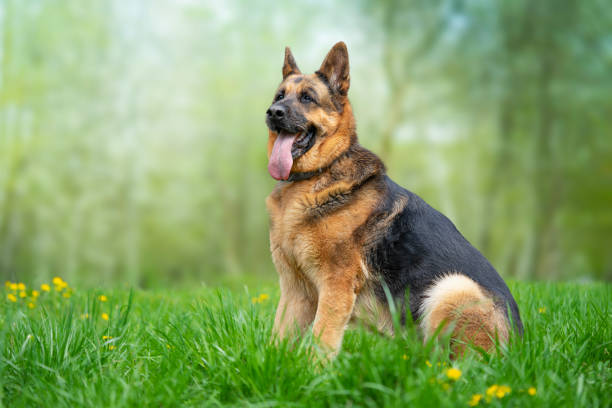
The intelligence, athleticism, and sheer drive of breeds like the Border Collie and German Shepherd are legendary. These dogs were bred for intense work, for tasks that demanded focus, problem-solving, and unyielding dedication. When channeled correctly, this inherent drive makes them exceptional partners in various canine activities, from herding and agility to search and rescue. However, without proper guidance and stimulation, this same drive can manifest as destructive behavior, anxiety, or excessive barking. Obedience training for these breeds isn’t just about teaching “sit” and “stay”; it’s about building a partnership, managing their boundless energy, and satisfying their deep-seated need to work and please.
This guide delves into high-energy strategies specifically tailored for Border Collies and German Shepherds, exploring how to leverage their intelligence and athleticism to create well-behaved, happy companions. We will cover everything from foundational principles and understanding breed-specific needs to advanced training techniques and troubleshooting common challenges.
Understanding the Working Breed Psyche: Why Energy & Intelligence Matter
Before diving into training techniques, it’s crucial to understand what makes breeds like Border Collies and German Shepherds tick.
The Border Collie: Often hailed as the epitome of canine intelligence, Border Collies are driven by an intense desire to work and a remarkable ability to learn. Their history as sheepdogs means they possess an innate understanding of movement, spatial awareness, and problem-solving. They thrive on mental stimulation and can become bored and anxious if their minds aren’t engaged. Their energy levels are astronomical; they need significant physical activity to be content. They often exhibit a “herding eye” and can try to “herd” anything that moves, including children, other pets, or even cars, if not properly trained.
The German Shepherd: Renowned for their loyalty, courage, and versatility, German Shepherds are natural protectors and intelligent working dogs. Bred for herding and guarding, they are highly trainable, adaptable, and possess a strong work ethic. They are confident, brave, and can be aloof with strangers, making proper socialization crucial from a young age. Their physical and mental stamina is considerable, requiring daily outlets for both. They often excel in roles like police work, military service, and as assistance dogs.
The Core Principle: Work is Their Reward
For these breeds, obedience training is not a chore but an opportunity. They don’t just want to earn treats; they want to earn the right to do something. They are motivated by challenges, by completing tasks, and by the positive reinforcement that comes from a job well done. This means our training approach must incorporate elements that tap into this innate desire to work.
Foundational Principles for High-Energy Breeds
The bedrock of successful training for any dog, but especially intelligent, high-energy breeds, lies in a few key principles:
- Consistency is Paramount: Inconsistency is the enemy of progress. Every member of the household must use the same cues, have the same expectations, and enforce the same rules. This prevents confusion and frustration for the dog.
- Positive Reinforcement: Modern, science-based training emphasizes positive reinforcement – rewarding desired behaviors. This builds a strong bond, fosters trust, and makes training enjoyable for both dog and handler. For high-energy breeds, the “reward” can be more than just treats; it can be the release of a toy, a game, or the opportunity to perform a learned behavior.
- Management is Key: Until a dog reliably performs a behavior, management tools prevent them from practicing unwanted behaviors. This might include using leashes, crates, baby gates, or redirecting their attention. For example, a Border Collie puppy prone to nipping during play should be managed or redirected to a chew toy.
- Clear and Concise Communication: Dogs don’t understand human language. They learn to associate specific sounds (words) and gestures with actions and consequences. Keep cues short, distinct, and always use the same ones.
- Understanding Drive: Recognize that their high energy and intelligence are not flaws but inherent traits. Training should aim to harness this drive, not suppress it. This means providing enough physical and mental exercise, not too little.
- Socialization, Socialization, Socialization: For breeds with potential guarding instincts or high prey drives, early and extensive socialization is non-negotiable. Expose them to a wide variety of sights, sounds, people, and other well-behaved dogs in positive ways.
Building the Foundation: Essential Obedience Commands
Even for the most energetic dog, basic obedience is the cornerstone of control and safety. For Border Collies and Shepherds, mastering these early on allows for more complex training later.
1. Sit: * Why it’s important: A foundational command for impulse control. It teaches the dog to pause and focus on you. * High-Energy Strategy: Instead of just a passive sit, make it a responsive sit. As soon as their rear touches the ground, mark (with a clicker or word like “yes!”) and reward. You can also use a “sit-wait-release” pattern where they must wait for permission to get up, followed by a reward or the release cue for a short chase game. * Progression: Increase duration, distance, and distractions.
2. Down: * Why it’s important: A more advanced release of tension than sit. It promotes relaxation and can prevent “over-arousal.” * High-Energy Strategy: Often, dogs find a down more challenging if they are highly excited. Practice in calm environments first. Once they understand the motion, you can reward a quick down with a “release” into a toy or a short play session. Think of it as “down for the game.” * Progression: Increase duration. Add “stay” to the down position.
3. Stay: * Why it’s important: Crucial for safety and impulse control. It teaches the dog to remain in a position until released. * High-Energy Strategy: Initially, keep “stays” short and immediately reward. For high-energy dogs, a long, static stay can be difficult and boring. Make “stays” part of active training. For example, “sit-stay” while you toss a toy a short distance, then release them to retrieve it. This makes the stay a precursor to a desired activity. * Progression: Gradually increase duration, distance (from the dog), and distractions. Always return to your dog to reward the stay before releasing them, especially at first.
4. Come (Recall): * Why it’s important: Potentially life-saving. A reliable recall is non-negotiable. * High-Energy Strategy: Make coming to you the absolute best thing in the world. Use high-value rewards – special treats, a favorite toy, or enthusiastic praise. Never call your dog to you for something unpleasant (like punishment or ending a fun activity). Practice in increasingly distracting environments, using a long line for safety. Consider a “two-staged recall” where they first come to a point, then are rewarded again to come all the way to you. * Progression: Practice from short distances, then gradually increase. Add distractions like other dogs, toys, or people.
5. Leave It: * Why it’s important: Teaches impulse control around tempting items, preventing ingestion of dangerous objects or unwanted scavenging. * High-Energy Strategy: For breeds that are naturally inclined to grab or chase, “leave it” is vital. Practice with low-value items first, then gradually increase the temptation. Make ignoring the object more rewarding than chasing or grabbing it. Reward with a higher-value item that you hold. * Progression: Increase the value of the item being left, the proximity of the item, and distractions.
6. Heel (Loose-Leash Walking): * Why it’s important: A well-mannered dog is a pleasure to walk. For strong, energetic breeds, it’s about preventing pulling and maintaining control. * High-Energy Strategy: Teach the dog that loose-leash walking is the pathway to forward movement or sniffing opportunities. If they pull, stop moving. Only resume walking when the leash slackens. Reward them when they are in the correct position, with the leash loose. Incorporate “dance steps” or turns to keep them engaged and focused on your movement. * Progression: Increase durations, add distractions, and practice in different environments.
High-Energy Training Strategies: Tapping into Their Drive
This is where we move beyond basic obedience and embrace the unique needs of Border Collies and German Shepherds.
1. Harnessing Play Drive: * The Principle: Play is a powerful motivator and a fantastic reward. For these breeds, a well-timed game of fetch, tug, or chase can be more valuable than any treat. * Implementation: * Conditional Play: Make access to favorite toys contingent on good behavior. “Sit, then chase the ball!” “Down-stay, then tug!” * Reward-Based Fetch: Use fetch as a reward for a solid recall. Call them to you, reward with a fantastic treat, then immediately send them for their ball. * Tug-of-War with Rules: Teach a clear “take” and “drop it” cue. Ensure the dog maintains control and doesn’t get over-excited or mouth your hands. This builds impulse control within a game they love. * Chase Games: Incorporate short, controlled chase games as a release of energy and a reward for focus.
2. Mental Stimulation is Non-Negotiable: * The Principle: An under-stimulated working dog is a recipe for disaster. Mental work is as exhausting (and satisfying) as physical exercise. * Implementation: * Puzzle Feeders: Kibble can be dispensed through Kongs, treat balls, or snuffle mats. This turns mealtime into a mental workout. * Nose Work/Scent Games: Hide treats or toys around the house or yard and encourage your dog to find them. This is a fantastic way to tap into their natural scavenging instincts and problem-solving abilities. * Trick Training: Teaching new tricks provides immense mental stimulation. Start with simple ones and progress to more complex sequences. * “Find It” Games: Teach your dog to find specific toys or objects by name. This is a highly engaging activity. * DIY Agility: Even in your backyard, you can create simple agility obstacles (jumps made from broomsticks and buckets, tunnels from blankets) to practice skills.
3. Structured Work and “Jobs”: * The Principle: These dogs were bred to do things. Giving them tasks, even simple ones, provides purpose and satisfaction. * Implementation: * Fetching Specific Items: Train them to retrieve particular toys and bring them to you. * Carrying Items: Once they’ve mastered fetching, teach them to carry a basket or bag (lightweight initially) for you. * “Helping” Around the House: Teach them to put their toys away in a designated bin. Older dogs can be trained for more complex “chores.” * “Go to Mat/Place”: A highly useful command that teaches the dog to go to a designated spot and stay there. This is invaluable for managing their energy in the home and during guest visits.
4. Controlled Outlets for Herding/Chasing Instincts: * The Principle: For Border Collies especially, the instinct to move and control is profound. For Shepherds, the instinct to chase can be strong. These need safe, appropriate outlets. * Implementation: * Herding Balls: Specialized balls designed for chasing and manipulating. * Agility Training: A structured sport that provides intense physical and mental challenges, perfectly suited for these breeds. * Flyball: A fast-paced team sport that incorporates chasing, retrieving, and jumping. * Frisbee/Disc Dog: Excellent for dogs who love to chase and catch. Ensure proper technique to avoid injury. * Herding Lessons: If available, actual herding is the ultimate fulfillment for a Border Collie.
5. Balancing Energy Expenditure and Impulse Control: * The Principle: It’s not just about burning energy; it’s about teaching them to be calm and composed after or between bursts of activity. * Implementation: * Interval Training: Alternate short bursts of high-intensity activity (fetch, chase) with periods of calm obedience or rest. * Reward Calmness: Actively reward moments of stillness, relaxation, or self-settling. This teaches them that being calm is also a positive state. * “Settle” Command: Train a specific cue for them to relax and lie down.
Advanced Training Techniques for Working Breeds
Once the foundation is solid and you’re incorporating high-energy strategies, you can move to more advanced concepts.
1. Proofing Behaviors: * The Principle: Making commands reliable in any situation, with any distraction. For working breeds, this is crucial for real-world applicability. * Implementation: Gradually introduce distractions during obedience practice. Start with mild distractions (a quiet park) and progress to more challenging environments (busy streets, dog parks). Use high-value rewards to reinforce correct responses amidst chaos. * Examples: * Dog stays while another dog runs past. * Dog comes when called (recall) with a dropped toy nearby. * Dog walks loosely on leash past a squirrel.
2. Shaping and Targeting: * The Principle: Shaping involves rewarding successive approximations of a desired behavior. Targeting involves teaching the dog to touch an object with a specific body part (nose, paw). * Implementation: * Shaping: If you want your dog to spin, you might first reward them for looking at their tail, then for turning their head, then for a full body turn. * Targeting: Teach them to touch a target stick with their nose. This can be a precursor to more complex behaviors like “go to place” or navigating obstacle courses. * Benefit: These techniques appeal to the problem-solving nature of these breeds and can be incredibly engaging.
3. Discrimination Training: * The Principle: Teaching the dog to differentiate between objects, commands, or situations. * Implementation: * Object Discrimination: Teach them to fetch a specific toy from a pile of others. * Scent Discrimination: Teach them to identify specific scents. * Command Discrimination: Ensure they respond to “sit” and not “stay,” or “heel” and not “come.” * Application: Crucial for roles in scent detection or assistance work.
4. Chaining Behaviors: * The Principle: Linking multiple known behaviors together to create a complex sequence. * Implementation: Once a dog knows “sit,” “stay,” and “paw,” you can chain them: “Sit, Paw, Stay.” * Application: This is the basis for many complex jobs and tasks.
Troubleshooting Common Challenges with Working Breeds
Even with the best intentions, you might encounter hurdles.
Challenge 1: Excessive Barking/Vocalization * Cause: Boredom, anxiety, territoriality, attention-seeking, frustration. * Solutions: * Increase Physical & Mental Exercise: Ensure they are adequately tired. * “Speak” and “Quiet” Commands: Teach both. Reward barking on cue (“speak!”), then immediately reward silence (“quiet!”). * Ignore Attention Barking: If they bark for attention, don’t look, don’t talk, don’t touch until they are quiet for a few seconds, then reward. * Address Triggers: For territorial barking, manage the environment (blinds, fences) and desensitize them to triggers. * Provide “Jobs”: A busy, working dog is less likely to bark out of boredom.
Challenge 2: Destructive Chewing/Digging * Cause: Boredom, teething (puppies), anxiety, lack of appropriate outlets. * Solutions: * Adequate Exercise: A tired dog is less destructive. * Appropriate Chew Toys: Provide a variety of safe, durable chew toys. Rotate them to keep them interesting. * Puzzle Feeders: Make meal times mentally stimulating. * “Leave It” Command: Crucial for preventing them from chewing forbidden items. * Management: When unsupervised, provide a safe space (crate, playpen) with approved chew toys. * Redirect: If you catch them chewing something inappropriate, calmly redirect to an approved toy.
Challenge 3: Over-Arousal/Hyperactivity * Cause: Too much stimulation, lack of impulse control, general high energy. * Solutions: * Break Down Activities: If a retrieve game leads to frenzy, make it shorter or add a “sit-stay” before and after. * Teach Relaxation: Actively reward moments of calm. Use a “settle” command. * “Go to Mat/Place”: A vital tool for teaching them to disengage and relax in a designated spot. * Interval Training: Mix high energy with calm periods. * Avoid Over-Stimulating Environments: Be mindful of when your dog is getting too overwhelmed.
Challenge 4: Reactivity (Leash Reactivity, Barking at Strangers etc.) * Cause: Fear, anxiety, frustration, territoriality, lack of socialization. * Solutions: * Controlled Socialization: Expose them to triggers at a distance where they remain calm. Reward positive associations. * Counter-Conditioning: Change their emotional response to triggers by pairing them with high-value rewards. * Management: Avoid situations that trigger reactivity until you’ve had success with training. Use distance. * “Look at That” Game: Reward the dog for looking at a trigger (e.g., another dog) calmly, then looking back at you. * Professional Help: This can be complex and often requires guidance from a qualified professional trainer or veterinary behaviorist.
The Handler’s Role: Partnership and Patience
Training a Border Collie or German Shepherd is a journey, not a destination. It requires dedication, understanding, and a willingness to learn.
- Be a Leader, Not a Dictator: Provide guidance, structure, and clear expectations.
- Be Patient: Some days will be better than others. Dogs, like humans, have good and bad days.
- Celebrate Small Wins: Acknowledge progress, no matter how minor.
- Never Stop Learning: Stay updated on training methods and canine behavior.
- Build the Bond: The stronger your relationship, the more motivated your dog will be to work with you. Training should be a collaborative effort.
Conclusion: A Rewarding Partnership
Training high-energy working breeds like Border Collies and German Shepherds is an immensely rewarding endeavor. By understanding their inherent drive, intelligence, and needs, and by employing a combination of structured obedience, high-energy strategies, and consistent positive reinforcement, you can forge an unbreakable bond with your dog. These breeds aren’t just pets; they are intelligent partners eager to work and contribute. When you provide them with the mental and physical stimulation they crave, and channel their energy into purposeful training and activities, you unlock their full potential, creating a well-behaved, confident, and devoted companion for life. The key is to embrace their nature, understand their motivations, and commit to providing them with the fulfilling “job” they were bred for.
#BorderCollieTraining, #GermanShepherdTraining, #WorkingDog, #DogObedience, #HighEnergyDog, #DogTrainingTips, #PositiveReinforcement, #MentalStimulation, #CanineIntelligence, #DogBehavior, #RecallTraining, #LooseLeashWalking, #DogSports, #AgilityDog, #DiscDog, #ScentWork, #DogLife, #PuppyTraining, #SmartDog, #DogHandler, #TrainingGoals, #DogCommunity, #IntelligentDogs, #ShepherdLove, #CollieLove







Add comment