
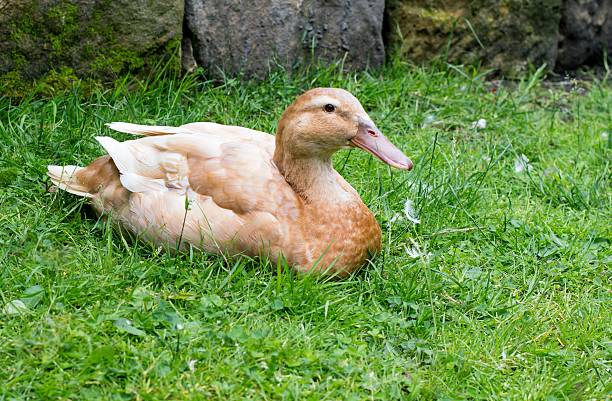
The Orpington Duck is a beloved breed known for its gentle temperament, dual-purpose utility (meat and eggs), and charming appearance. Developed in the early 20th century by William Cook in Orpington, Kent, England, this breed was intended to be a backyard-friendly, hardy, and productive waterfowl option for smallholders and homesteaders. Named after the town of its origin, the Orpington Duck stands out with its large build, soft feathering, and calm demeanor—qualities that make it a favorite among poultry enthusiasts, beginner and advanced alike.
Unlike many aggressive or flighty duck breeds, Orpingtons are notably placid, making them ideal for families with children or mixed flocks. Designed to thrive in temperate climates, these ducks are also adaptable, though they prefer sheltered, moist environments where they can forage freely. With their broad bodies and sturdy limbs, Orpingtons are primarily raised for meat, but they also lay a respectable number of eggs—placing them in the dual-purpose category.
Despite being less common than breeds such as Pekins or Khaki Campbells, the Orpington Duck has secured a niche in the backyard poultry world due to its excellent temperament and versatility. Their docility and easygoing nature allow them to integrate seamlessly into farm settings, while their impressive size makes them competitive in meat production even outside industrial farming systems.
Today, the breed remains relatively rare but is championed by heritage breed preservation groups and backyard flock enthusiasts who value biodiversity, humane farming practices, and self-sufficiency. Whether you’re considering starting a small flock or expanding your knowledge of rare poultry, the Orpington Duck provides a rewarding blend of beauty, productivity, and companionship.
Other Names & Synonyms
The Orpington Duck is most commonly referred to simply as the Orpington Duck, but it may also be called:
- English Orpington Duck (to distinguish it from the chicken breed of the same name)
- Cook’s Orpington (a nod to its creator, William Cook)
- Orpington Fowl (historical or regional term, though this may cause confusion with chickens)
- Orpington Waterfowl
It should not be confused with the Buff Orpington Chicken, a separate and entirely different breed created by the same breeder. While the chicken breed is far more popular, the duck version maintains its own unique status and appeal among poultry aficionados. There are no widely recognized regional nicknames for the duck form, though some keepers affectionately refer to them as “Orpies.”
Primary Breed Purpose
The Orpington Duck is classified as a dual-purpose breed, meaning it is raised for both meat and egg production. Its development was guided by the need for a reliable, large-bodied duck that could provide substantial meat yield without sacrificing egg-laying capabilities.
- Meat Production: With their broad breast, deep body, and rapid growth, Orpingtons reach a marketable weight efficiently. Mature birds typically weigh between 6 to 8 pounds, offering a generous meat-to-bone ratio. Their flesh is tender and flavorful, making them a favorite for roasting or stewing. Their slower growth rate compared to commercial Pekins allows for better muscle development and taste.
- Egg Production: While not as prolific as specialist layers like Khaki Campbells or Indian Runners, Orpingtons are consistent producers. A healthy female can lay between 100 to 150 eggs per year, each averaging 70–80 grams in weight. Eggs are typically white to tinted cream, occasionally with a faint blue or green tinge.
Additionally, Orpingtons are often raised as ornamental or show birds due to their elegant appearance and calm disposition. Their excellent maternal instincts also make them valuable for natural incubation and brood raising.
Physical Characteristics
Orpington Ducks exhibit a robust, well-rounded physique with distinctive features that set them apart from other breeds:
- Body Shape: Broad, deep, and level, with a long, full breast and well-rounded body. Their carriage is horizontal, lending them a dignified posture.
- Head: Medium-sized with a straight, strong bill. The head is clean and free of crests or tufts.
- Neck: Medium-length and fairly thick, blending smoothly into the shoulders.
- Eyes: Large, bright, and expressive.
- Plumage: Soft, dense, and abundant. Feathers lie close to the body and should appear smooth and well-groomed. The breed standard recognizes several color varieties.
- Color Varieties: The American Poultry Association (APA) officially recognizes the Buff Orpington. Other accepted varieties in international standards include White, Black, Blue, Blonde, and Chestnut. The Buff is the most common and iconic, featuring a rich, golden-brown coloration fading to a lighter underside.
- Bill, Legs, and Feet:
- Buff: Orange to yellow bill; orange legs and feet.
- Black: Black bill; dark orange legs.
- Blue: Blue-gray bill; gray legs.
- White: Yellow-orange bill; orange legs.
- Size: Large; males (drakes) are visibly larger than females (hens).
The Orpington’s gentle, teddy-bear-like appearance—especially in the Buff variety—makes it a favorite at agricultural shows and in backyard settings.
Weight & Growth Curve
Orpington Ducks are slow to medium growers compared to commercial fast-growing breeds. Their growth is steady and sustainable, ideal for free-range and organic farming methods.
- Newborn Duckling: 50–60 grams
- 1 Week: 150–180 grams
- 2 Weeks: 300–350 grams
- 4 Weeks: 600–750 grams
- 8 Weeks: 2.0–2.8 kg (4.5–6.2 lbs)
- 12 Weeks: 3.0–3.6 kg (6.6–8 lbs)
At 12 to 16 weeks, Orpington Ducks reach slaughter weight. Drakes may grow slightly larger than hens. Their slower maturity rate contributes to improved meat texture and flavor, as muscles develop more evenly than in faster-growing breeds.
For egg-laying purposes, hens begin laying at approximately 24 to 28 weeks of age, depending on nutrition, daylight hours, and environmental conditions.
Climatic Tolerances
Orpington Ducks are well-adapted to temperate climates and are particularly suited to the maritime conditions of the British Isles, where they originated. However, they exhibit moderate adaptability:
- Cold Tolerance: Good. Their dense plumage and large body mass help retain heat. Provide access to unfrozen water and draft-free shelter in winter. Avoid prolonged exposure to sub-zero temperatures without protection.
- Heat Tolerance: Moderate. Their heavy build and thick feathering make them susceptible to overheating. Provide ample shade, cool water for swimming, and ventilation during hot summers. Avoid keeping them in arid or tropical climates without cooling measures.
- Humidity: Tolerate high humidity well, especially in temperate zones. However, wet bedding in excessively damp enclosures can lead to health issues like bumblefoot or respiratory infections.
- Wind & Rain: Excellent. As waterfowl, they are naturally waterproof and enjoy foraging in damp conditions.
Best results are seen in mild, moist environments with seasonal variation—ideal for backyard keepers in zones 4–8 of the U.S. hardiness scale.
Reproduction & Egg Production
Orpington Ducks are noted for their excellent reproductive traits:
- Laying Age: Hens begin laying at 5–7 months, depending on season and management.
- Annual Egg Yield: 100–150 eggs per year under optimal conditions.
- Egg Size: Large to extra-large (70–80 g).
- Egg Color: Cream to white, sometimes with a slight blue or green tint.
- Laying Season: Heaviest in spring and early summer; production may slow in winter unless supplemented with artificial light.
- Broodiness: Highly broody. Orpington hens are renowned for their strong maternal instincts, making them ideal natural incubators.
- Incubation Period: 28 days.
- Hatch Rate: High, especially when eggs are kept clean and rotated properly.
- Fertilization Rate: Good with one drake for every 3–5 hens.
Due to their broodiness, Orpingtons are often used to hatch eggs from less maternal breeds. However, their tendency to go broody may interrupt egg laying cycles, so flock managers should plan accordingly.
Flying Ability
Orpington Ducks are non-flying or very limited fliers due to their large, heavy body structure and relatively short wings. While young ducklings may flutter short distances, adult Orpingtons cannot sustain flight.
This makes them ideal for open pens or free-range environments without high fencing—typically, a 3-foot (1 meter) barrier is sufficient to contain them. Their inability to fly reduces escape risks and simplifies enclosure design.
Pinioning (surgical wing clipping) is generally unnecessary, though some owners may clip flight feathers for added security. Their non-migratory nature and docility further reduce flight motivation.
Breed History & Origin
The Orpington Duck was developed by William Cook, a renowned poultry breeder from Orpington, Kent, England, around 1900–1910. Cook was already famous for creating the Buff Orpington Chicken and sought to develop a duck of similar utility and appearance.
He crossed buff-colored Indian Runner Ducks, Blue Swedish Ducks, and possibly Rouens or Aylesburys to achieve the desired traits: a large, dual-purpose bird with buff plumage, excellent temperament, and good egg and meat production.
Originally called “Cook’s Buff Duck,” the breed was officially recognized in the British Poultry Standard in 1910 and later in the American Standard of Perfection in 1914.
Despite early popularity, the breed declined during the mid-20th century due to the rise of industrial poultry farming favoring faster-growing breeds like the Pekin. However, thanks to dedicated heritage breeders and the backyard poultry movement, the Orpington Duck has seen a resurgence in recent decades.
Today, it is listed as “watch” or “recovering” by organizations such as The Livestock Conservancy, emphasizing the importance of conservation efforts.
Life Expectancy
With proper care, Orpington Ducks are long-lived compared to many poultry breeds:
- Average Lifespan: 8 to 12 years
- Maximum Lifespan: Up to 15 years in ideal conditions
- Peak Productivity: 2 to 5 years for egg laying; meat birds are harvested by 5–6 months
Factors influencing longevity include diet, predator protection, access to clean water, and overall flock management. Their calm disposition reduces stress-related health issues, contributing to their longer life.
Common Health Issues
While generally hardy, Orpington Ducks are prone to certain health problems, particularly if management practices are suboptimal:
- Bumblefoot (Pododermatitis): Caused by rough flooring, wet bedding, or trauma. Results in swollen, infected footpads. Prevent with clean, dry bedding and smooth flooring.
- Respiratory Infections: Especially in damp, poorly ventilated coops. Look for sneezing, nasal discharge, or wheezing.
- Avian Influenza & Duck Virus Enteritis (Duck Plague): Vaccination and biosecurity are essential in high-risk areas.
- Mites and Lice: Check under wings and around vents. Treat with poultry-safe pesticides or diatomaceous earth.
- Egg Binding: Overweight hens or calcium deficiency may lead to retained eggs. Symptoms include lethargy, straining, and loss of appetite.
- Fatty Liver Disease: Caused by excessive calorie intake and lack of movement. Prevent with balanced diet and foraging access.
- Worms (Internal Parasites): Regular deworming and rotational grazing help prevent infestations.
Routine health checks, clean water, and a stress-free environment are key to maintaining optimal health.
Breeding & Genetics – Tips for the Advanced Keeper
For breeders aiming to preserve or improve Orpington stock, attention to genetics and selection is crucial:
- Line Breeding vs. Outcrossing: While line breeding can fix desirable traits (e.g., color, temperament), it increases the risk of genetic defects. Outcrossing with compatible breeds (e.g., Rouen) can enhance vigor—but avoid diluting breed standards.
- Select for Key Traits: Prioritize body conformation, plumage quality, temperament, fertility, and egg production. Avoid breeding birds with flightiness, deformities, or poor broodiness.
- Color Genetics: Buff coloration is a complex trait. Ensure consistency in hue and pattern. Recessive genes in blue or black variants require careful pairing.
- Hatch Records: Maintain detailed logs of fertility, hatch rates, and duckling survival. Use this data to refine breeding pairs.
- Culling: Remove birds that deviate from breed standards or show poor health. Ethical culling ensures a strong, sustainable flock.
- Biosecurity: Quarantine new birds for 30 days to prevent disease introduction.
- Genetic Diversity: Preserve rare color variants and support conservation programs to maintain genetic resilience.
Participate in poultry associations and shows to network with other breeders and stay updated on genetic trends.
Nutritional Requirements
Orpington Ducks have different dietary needs than chickens and require a balanced, species-specific diet:
Duckling Stage (0–2 weeks)
- Starter Feed: 18–20% protein, crumbled.
- Medicated Feed? Optional—only if disease risk is high. Avoid amprolium if raising for breeding (can affect immunity).
- Niacin Supplementation: Critical—ducklings require more niacin than chicks. Add brewer’s yeast to feed (5% of ration) or use duck-specific starter.
- Water: Always available, but shallow to prevent drowning.
Grower Stage (3–18 weeks)
- Grower Feed: 15–16% protein.
- Foraging: Encourage access to grass, insects, and aquatic plants.
- Grit: Provide insoluble grit for digestion.
Adult Maintenance (Non-Laying)
- Layer Feed (with Caution): Only if laying; otherwise, use maintenance feed or forage-based diet.
- Calcium: Critical for eggshells. Offer oyster shell separately to laying hens.
Laying Hens
- Layer Feed: 16–18% protein, high calcium (3–4%).
- Supplements: Greens, vegetables, mealworms, and calcium boosters.
Always avoid medicated chick feed in waterfowl—many contain toxins harmful to ducks.
Housing & Environmental Design
Proper housing ensures health, security, and productivity:
Coop Requirements
- Space: 3–4 sq ft per duck inside; 10–15 sq ft per duck in run.
- Ventilation: High vents for airflow without drafts.
- Bedding: Straw, pine shavings, or hemp. Change regularly.
- Nesting Boxes: One per 3–4 hens; 12” x 12” x 12”, filled with soft bedding.
- Predator Protection: Secure wire mesh (1/2” hardware cloth), locked doors, and elevated coops.
Outdoor Run & Free-Range
- Fencing: 3–4 feet high—no need for tall fencing due to poor flight.
- Shade: Essential for heat management.
- Water Feature: Shallow pond, kiddie pool, or duck-safe fountain for splashing.
- Foraging Area: Grass, clover, and insect-rich zones.
Winter vs. Summer Design
- Winter: Insulate coop, prevent freezing water, use deep litter method.
- Summer: Provide shade, misters, and cool water access.
Ducks thrive in moist environments but need dry resting areas—balance is key.
Behavioral Traits & Enrichment
Orpington Ducks are known for their:
- Docility: One of the calmest breeds, ideal for families.
- Sociability: Prefer living in groups; avoid isolation.
- Curiosity: Enjoy exploring new spaces and objects.
- Foraging Instinct: Excellent at grazing and rooting.
Enrichment Ideas
- Scatter feed in grass or straw.
- Hang cabbages or greens for pecking.
- Introduce shallow water tubs with floating treats.
- Rotate grazing areas to prevent boredom.
- Allow supervised interaction with gentle pets.
Their calm nature makes them suitable for therapy or educational programs.
Economic Considerations
Raising Orpington Ducks can be economically viable in niche markets:
- Meat Sales: Premium price for heritage, free-range duck meat.
- Egg Sales: Large, rich eggs sell well at farmers’ markets.
- Hatching Eggs/Day-Old Ducklings: High demand from backyard breeders.
- Show Birds: Valuable in poultry exhibitions.
- Manure: High-nitrogen waste excellent for composting.
Startup Costs:
- Ducklings: $5–$10 each
- Coop & Run: $200–$500
- Feed: ~$0.50 per duck per day
- Veterinary & Supplies: Variable
Return on Investment: 6–12 months, depending on scale and market.
Environmental Impact
Orpington Ducks have a moderate environmental footprint:
- Positive Impacts:
- Natural pest control (slugs, insects).
- Fertilizer production via nutrient-rich manure.
- Soil aeration through foraging.
- Negative Impacts:
- Overgrazing if not rotated.
- Water pollution if pools are not managed.
- Noise (moderate quacking).
Sustainable practices:
- Rotational grazing
- Rainwater harvesting for pools
- Composting manure
- Avoiding chemical fertilizers (replace with duck waste)
They support regenerative agriculture when managed responsibly.
Conclusion
The Orpington Duck is a remarkable breed that embodies the perfect balance of utility, beauty, and temperament. Whether you’re a backyard homesteader, a small-scale farmer, or a conservationist, this duck offers unmatched versatility. From its robust meat yield and consistent egg production to its exceptional maternal instincts and calm personality, the Orpington Duck excels in multiple roles.
Though less common than commercial breeds, its resurgence reflects a growing appreciation for sustainable, ethical poultry keeping. With proper care, nutrition, and housing, Orpingtons can thrive for over a decade, providing joy, utility, and ecological benefits.
By supporting and raising Orpington Ducks, you not only gain a productive farm animal but also contribute to the preservation of agricultural biodiversity. Their gentle quacks and golden feathers are a testament to the enduring charm of heritage breeds in a modern world.
Frequently Asked Questions (FAQs)
Q: Are Orpington Ducks good for beginners?
A: Yes! Their calm nature, low flight risk, and hardiness make them excellent for first-time duck keepers.
Q: How many eggs do Orpington Ducks lay per year?
A: 100–150 large cream-colored eggs annually.
Q: Can Orpington Ducks fly?
A: No. Their heavy bodies prevent sustained flight.
Q: What do Orpington Ducks eat?
A: A balanced diet of duck-specific starter, grower, and layer feed, supplemented with greens and foraging.
Q: Are they cold-hardy?
A: Yes. They handle cold well but need shelter from wind and moisture.
Q: Do they go broody?
A: Yes, and they are excellent mothers—often used to hatch other breeds’ eggs.
Q: How long do they live?
A: 8–12 years, sometimes up to 15 with good care.
Q: What colors do Orpington Ducks come in?
A: Buff (most common), White, Black, Blue, Blonde, and Chestnut.
Q: Are they noisy?
A: Moderate. Hens quack less than Runners or Mallards; drakes are nearly silent.
Q: Can they live with chickens?
A: Yes, but ensure ducks have access to water and extra niacin.
Q: Are Orpington Ducks endangered?
A: Not extinct, but considered “watch” status by conservation groups due to low numbers.
Q: How much space do they need?
A: 3–4 sq ft per duck in the coop, 10+ sq ft in the run, and access to outdoor foraging.
Q: Do they need a pond?
A: Not essential, but they benefit greatly from swimming water—even a kiddie pool helps.
#OrpingtonDuck, #BuffOrpington, #DuckBreed, #BackyardDucks, #HeritagePoultry, #DuckKeeping, #DuckCare, #Homesteading, #SustainableFarming, #DualPurposeDuck, #DuckEggs, #DuckMeat, #PoultryBreeds, #DuckLovers, #FarmLife, #DuckHousing, #DuckHealth, #DuckBehavior, #BeginnerDucks, #DuckEnrichment, #Waterfowl, #DuckFarming, #EggProduction, #DuckBreeding, #DuckConservation, #RaisingDucks, #DuckTips, #DuckLife, #DuckCoop, #DuckForaging
Add comment