
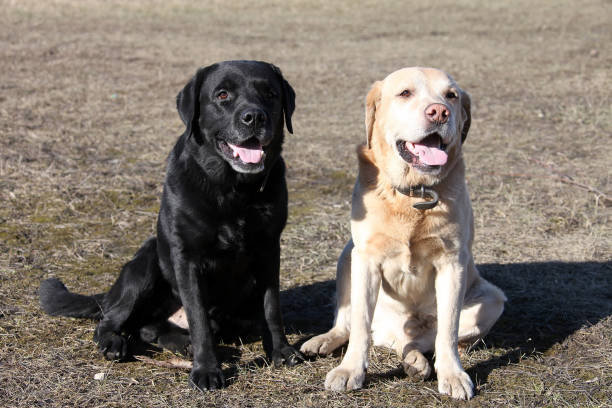
Introduction: The Quintessential Outdoor Companion
The Labrador Retriever is, by design, the ultimate outdoor adventure partner. Originating in Newfoundland as a working dog assisting fishermen—retrieving nets and fish from icy waters—the breed possesses an indelible combination of high energy, intelligence, physical stamina, and an overwhelming desire to please. These traits make the Lab not just capable of enduring varying environments, but one that actively thrives when given a job to do outdoors.
A Labrador’s needs extend far beyond standard daily walks. Their innate work drive and powerful build require strenuous physical and mental engagement to prevent boredom, which often manifests as destructive behavior indoors. This guide delves deeply into a vast array of outdoor activities, categorized by intensity and focus, ensuring that owners can maximize their Lab’s potential as a field athlete, water enthusiast, and loyal trail companion.
Section I: The Aquatic Labrador—Mastering the Water Element (The Natural Calling)
No discussion of Labrador outdoor activities is complete without recognizing their unparalleled passion for water. Their dense, short double coat provides insulation, and their “otter tail” serves as a powerful rudder. For most Labs, water is not merely tolerated; it is a necessity for their physical and mental well-being.
1. Swimming and Water Retrieval
Swimming is the perfect low-impact, high-energy exercise, ideal for Labs of all ages—including seniors who need to protect their joints.
Prerequisites and Safety:
- Water Acclimation: Start in shallow, warm water, graduating slowly to deeper areas. Never force a Lab into the water.
- Life Jackets (PFDs): Essential for young, old, or inexperienced swimmers, and mandatory when participating in deep water sports (like paddleboarding) or cold water environments. A good PFD has a handle for easy retrieval.
- Post-Swim Care: Labs are prone to ear infections (otitis externa) due to water retention in their floppy ears. Always dry the inner ear canal thoroughly after swimming.
Advanced Retrieval Games:
- Blind Water Retrieves: This elevates the game from simple fetch. The handler commands the Lab to swim to an area where the bumper or dummy was not seen being thrown, relying solely on directional whistles and hand signals. This demands high focus and reinforces obedience.
- Long-Distance Drills: Use buoyant, high-visibility bumpers (orange or yellow) to encourage long-distance swims, building cardiovascular endurance.
2. Dock Diving (The High-Flying Retriever)
Dock diving (or Canine Aquatics) is a rapidly growing competitive sport that tests a Lab’s drive and athleticism. The dog runs down a 40-foot dock and launches into a pool, attempting to retrieve a tossed toy.
Competition Categories:
- Distance (Big Air): Measuring the horizontal distance the dog jumps. Labs often excel here due to their powerful rear drive.
- Vertical (Extreme Vertical): The dog leaps to grab a toy suspended above the water.
- Speed Retrieve: Timing how fast the dog can run down the dock, jump, retrieve a bumper at the end of the pool, and return to the dock.
Venue and Training:
Requires access to specialized facilities, but the foundation can be built by encouraging enthusiastic toy drive and practicing explosive starts on dry land. This sport is demanding and requires a financially mature Lab (typically over 18 months) whose growth plates are closed.
3. Paddle Sports (Canoeing, Kayaking, and SUP)
Labs are excellent companions for personal watercraft, provided they are stable and well-behaved.
Integration Strategy:
- Tethering and Position: Teach the Lab to load and settle in the center of the vessel immediately. Use a harness with a handle, but never tie the dog to the craft, as this creates a drowning hazard if the boat capsizes.
- Stability Training: Practice commands like “Stay” and “Settle” on unstable surfaces (e.g., an upside-down laundry tub) before attempting water.
- Safety Gear: The Lab must wear a PFD with high buoyancy and reflective elements. The handler must also be prepared to retrieve a swimming Lab back into the boat (practice the “scoop lift”).
Section II: Trail and Terrain Adventures—Endurance and Stamina
Labrador Retrievers possess significant stamina, making them ideal partners for long-distance activities on varied terrain. Their short coat is advantageous for cooling in milder temperatures, though caution is required in extreme heat.
4. Hiking and Backpacking
Hiking engages a Lab’s senses, provides necessary physical output, and strengthens the handler-dog bond through shared challenge.
Trail Etiquette and Safety:
- Leash Management: Even in off-leash areas, keep a long line (15-30 ft) to ensure control around wildlife, hikers, or cliffs.
- Yielding: Teach the dog to stand still and “Heel” when encountering other hikers or horses, showing respect for trail right-of-way.
- Pacing: Labs have a faster walking gait than humans. Use a comfortable pace that allows the dog to explore without pulling constantly, but still provides a workout. Short bursts of uphill sprinting followed by structured cool-downs are beneficial.
Canine Backpacking:
Once a Lab is fully grown (usually 18–24 months), they can carry a small percentage of their body weight (typically 10–12%) in a specialized dog pack. This is an excellent way to provide mental “work.”
- Contents: The pack should carry the dog’s own food, collapsible bowl, potty bags, and basic first-aid items. Never load more weight than recommended.
- Fit: The pack must fit snugly to prevent chafing and distribute weight evenly over the shoulders and ribcage.
5. Trail Running and Canicross
Labs are enthusiastic runners, capable of maintaining a steady pace for moderate distances (3-6 miles, depending on fitness and temperature).
Gear and Technique:
- Hands-Free System: Canicross uses a specialized harness for the dog (sled-dog style, allowing unrestricted shoulder movement), a bungee leash (to absorb shock), and a waist belt for the human. This system prevents jerking on the dog’s neck and allows the runner to maintain proper form.
- Surface Selection: Prefer soft surfaces (dirt trails, grass, mulch) over pavement, especially for young Labs, to protect their elbows and hips.
- Interval Training: Incorporate structured bursts of speed followed by recovery periods to build endurance efficiently and maintain the Lab’s focus.
6. Geocaching and Urban Exploration
Geocaching involves using GPS coordinates to find hidden containers (caches). When done with a dog, it transforms a simple walk into a rewarding treasure hunt.
- Integrated Scent Work: Use the environment to practice scent differentiation. While the human searches for the cache, the dog can be commanded to locate a hidden treat or toy nearby, enhancing focus in distracting environments.
- Navigational Puzzles: Teach the Lab to walk confidently over different textures and through unusual urban landscapes (grates, bridges, uneven steps), building their environmental resilience.
Section III: Specialized Retrieval and Field Work (The Breed’s Heritage)
The name “Retriever” is not incidental. The Lab excels in activities that utilize their soft mouth and keen nose to find and return objects. These activities provide the highest form of mental stimulation.
7. Competitive Field Trials and Hunt Tests
These activities simulate real hunting scenarios, judging a Lab’s marking ability (remembering where the dummy/bird fell), handling ability (taking directional commands to a blind location), and water entry.
Training Components:
- Marking: The dog must watch the descent of the dummy, memorize the location, and retrieve it upon command.
- Blind Retrieves (Crucial): The dog is directed to a location it has not seen the object fall, relying entirely on the handler’s whistle stops and hand signals (overs, backs, sides). This is the hallmark of a trained working Lab and takes dedicated, detailed practice.
- Steadying: The dog must remain steady and quiet at the line until the handler gives the release command (“Fetch”). Lack of steadiness (breaking) is usually a disqualifier.
8. Shed Hunting (Antler Retrieval)
Shed hunting leverages the Lab’s natural olfactory abilities in a non-violent, enjoyable way. Handlers train their Labs to specifically locate naturally shed deer and elk antlers.
Training Methodology:
- Scent Association: Begin by teaching the dog to recognize the odor of the antler. Use a positive reward system where the Lab is only rewarded for interacting with the antler, ignoring sticks or rocks.
- Hide-and-Seek: Progress from finding antlers in short grass to hiding them in dense cover, mirroring actual field conditions. A strong “Search” command is necessary.
9. Advanced Fetch Variants
Move beyond the simple tennis ball toss to engaging games that require problem-solving.
- Floating Throwing Toys: Use objects (like specialized bumpers or plastic rings) whose movement is unpredictable on water, forcing the Lab to use scent and visual tracking simultaneously.
- The Three-Bumper Stack: Throw three bumpers into a field and command the Lab to retrieve them one by one in a specific, handler-determined order, requiring excellent memory and impulse control.
Section IV: Canine Sports and Agility—Focus and Physical Coordination
Canine sports channel the Lab’s physical energy and intelligence into structured, rule-based activities, demanding handler cooperation and precision.
10. Agility Training
Agility involves navigating an obstacle course (jumps, tunnels, weave poles, dog walk) based on handler signals. Labs are generally powerful and enthusiastic agility dogs, though their size means they require careful attention to joint protection.
Focus on Form:
- Weave Poles: The most technically challenging obstacle. Requires consistent short training sessions to teach the complex serpentine movement.
- Contact Zones: Training the dog to deliberately touch the marked “contact zones” on obstacles like the A-frame and seesaw ensures safety and precision.
- Joint Care: Due to their susceptibility to hip and elbow issues, agility training should be done on forgiving surfaces and limited until the dog is physically mature.
11. Flyball
Flyball is a relay race involving two teams of four dogs. Each dog runs over four hurdles, triggers a box that releases a tennis ball, retrieves the ball, and returns.
Requirements:
Flyball is intense, requiring powerful acceleration, quick turns (the “swimmer’s turn” at the box), and a high energy level. The competitive environment is often crucial for Labs who thrive on noise and excitement. It is one of the best activities for burning off pent-up physical and social energy.
12. Rally Obedience and Outdoor Trials
Rally O is a sport where dog and handler navigate a course featuring 10–20 stations. At each station, they perform a specific obedience exercise (e.g., “Sit-Down-Sit,” “Spiral Right,” “Figure 8”).
Benefits:
This reinforces practical, real-world obedience commands in a distracting environment, making subsequent outdoor adventures safer and more enjoyable. Labs excel due to their biddability and focus when motivated by food or toy rewards.
Section V: Low-Impact and Mellow Outings (All Ages and Temperaments)
Not every adventure needs to be high-octane. Some activities focus more on sensory input and social enrichment.
13. Scent Work and Nose Games
Labs have exceptional noses. Scent work, where the dog learns to locate specific odors (like birch, anise, or clove), provides immense mental fatigue without the physical strain.
Outdoor Application:
- Container Searches: Hiding scented swabs inside containers placed outdoors (e.g., behind benches, under pots) simulates detection work.
- Exterior Searches: Searching a defined outdoor area, such as a garden or picnic shelter, for a hidden scent source. This is excellent for senior Labs or those restricted by orthopedic limitations.
14. Urban Parkours and Balance Training
Using existing environmental features—not specialized equipment—to practice balance, coordination, and focus.
- Activities: Walking along low walls, sitting on large tree stumps, jumping onto sturdy picnic tables, weaving between lampposts.
- Goal: Building strength in core stabilizing muscles, spatial awareness, and confidence in navigating novel terrain.
15. The Art of the Camping Companion
Labs are fantastic campers, adapting quickly to tent or RV life, provided they are taught boundary control.
- Boundary Training: Use a long ground tie or a portable pen, teaching the Lab that the perimeter of the campsite is sacred ground and they cannot leave it without permission, despite surrounding distractions.
- Fire Safety: Teach a reliable “Stay back” command when near campfires or cooking areas.
- Leash Management in Transit: Ensure the Lab is comfortable spending structured time tied near the tent or camper, without barking at every passing squirrel or hiker.
Section VI: Essential Preparation, Safety, and Gear Management
The high-energy nature of the Labrador, combined with their susceptibility to common joint issues (especially Hip and Elbow Dysplasia), requires meticulous preparation for all outdoor activities.
16. Gear Essentials for the Adventure Lab
Harnesses and Leashes:
- Standard Walking: A non-restrictive Y-front harness is preferred over neck collars for long walks, protecting the trachea.
- Running/Pulling: A specialized tracking or Canicross harness that allows the dog to pull naturally without restricting shoulder movement is essential.
- Leashes: Carry both a standard 6-foot nylon leash and a 30-foot biothane long line for practicing off-leash commands in secured areas.
Hydration and Nutrition:
- Water Supply: Labs can overheat quickly. Always carry 50% more water than you think is necessary, plus a collapsible bowl.
- Electrolytes: For long, strenuous hikes (over 90 minutes), consider adding canine-specific electrolyte powders to their water to replenish lost minerals.
- High-Value Snacks: Use highly palatable, high-calorie treats during training sessions to maintain motivation in distracting outdoor environments.
17. Environmental Hazards and Safety Protocols
Heat Management and Overheating Risk:
Labs are prone to overheating, especially black Labs absorbing solar radiation.
- Schedule: Exercise primarily in the early morning or late evening during summer months.
- Warning Signs: Excessive panting (louder than normal), lethargy, dark red gums, or staggering require immediate cessation of activity and cooling measures. Wetting the paws, belly, and inner thighs is the most effective way to drop core temperature. Never use ice water immediately, as this can cause vasoconstriction.
Ticks, Parasites, and External Threats:
- Prevention: Maintain rigorous monthly flea and tick prevention.
- Snake Avoidance: In areas prone to venomous snakes (rattlesnakes, copperheads), professional avoidance training may be necessary. Lab curiosity often overrides caution.
- Toxic Algae: Be acutely aware of stagnant water sources containing blue-green algae (cyanobacteria), which is rapidly fatal if ingested. If water is murky or has a visible green film, keep the dog away.
Paw Protection:
- Booties: Mandatory for extreme conditions (snow, ice, hot asphalt, or sharp volcanic rock). They also serve as a wound dressing in emergencies.
- Conditioning: Gradually condition a Lab’s paws to rough terrain. Apply paw wax before long outings to prevent cracking and irritation.
18. First Aid and Emergency Preparedness
A comprehensive canine first-aid kit is non-negotiable for serious outdoor activities.
- Wound Care: Antiseptic wipes, non-stick gauze pads, vet wrap (cohesive bandage), and medical tape.
- Tools: Tick keys, blunt-end scissors, tweezers (for splinters), and saline solution for eye flushing.
- Minor Injuries: Benadryl (for insect stings/allergic reactions—consult vet for dosage) and styptic powder (for quick-stop bleeding on torn nails).
- Orthopedic Management: Carry a makeshift splint material (e.g., rigid cardboard or small branches) and a sling or large towel to carry a non-weight-bearing dog in case of serious injury.
Section VII: Training Prerequisites and Behavior Integration
A successful outdoor partner is defined by their reliability, not just their physical ability. Key commands must be bomb-proof in highly distracting environments.
19. Core Commands for Outdoor Safety
- Reliable Recall (“Come”): Must work 100% of the time, regardless of squirrels, other dogs, or wildlife. Start practicing at long distances and high distraction levels.
- The Emergency Down (“Down/Stay”): A critical safety command used to stop the dog instantly if it bolts toward a road, cliff edge, or aggressive animal. This should be practiced with high-value reinforcement.
- “Leave It”: Essential for preventing the ingestion of toxic garbage, dropped food, or dead animals on the trail.
20. Socialization and Environmental Exposure
A Lab must be comfortable with the unpredictable nature of the outdoors:
- Exposure to noisy events (motorcycles, kids yelling, industrial sounds).
- Comfort around various animals (horses, livestock, strange dogs).
- Confidence navigating tricky ground (loose gravel, bridges, deep mud).
Conclusion: Fulfilling the Labrador’s Purpose
The Labrador Retriever is a masterpiece of canine engineering, built for function, cooperation, and boundless enthusiasm. Providing a Lab with a rich tapestry of outdoor activities—from the explosive power of dock diving to the quiet intensity of scent work—is not merely leisure; it is fulfilling the dog’s historical purpose and ensuring a balanced, happy, and obedient companion.
By prioritizing consistent training, safety preparedness, and understanding the Lab’s unique physical needs, owners can transform their dogs into reliable, robust, and joyful partners, ready for any trail, stream, or field the world has to offer. The greatest gift you can give a Labrador is a job and an open door to the great outdoors.
#LabradorLife #AdventureDog #OutdoorLab #WaterDog #TrailDog #DogHiking #DockDiving #SportingDog #WorkingDog #LabradorRetriever #DogLover #FurryAdventures #CanineFitness #FetchMaster #DogTraining #RetrieversOfInstagram #FitDog #DogsofInstagram #Pupfluencer #LabLove #HappyDogHappyLife #Canicross #ShedHunting #FieldTrialDog #K9Sports





Add comment