
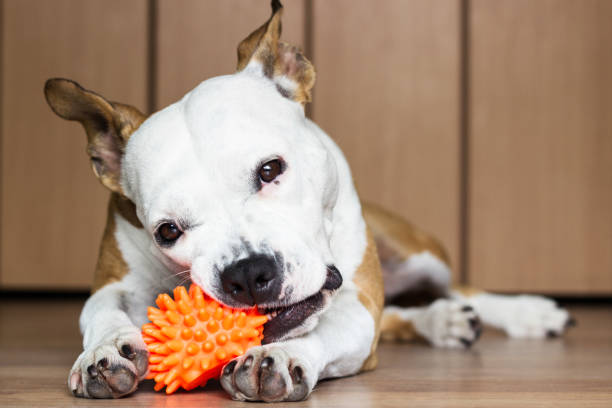
Dogs, our loyal companions, communicate with us constantly, though often without uttering a single word. Their language is a symphony of subtle cues: tail wags, body posture, eye contact, vocalizations, and, perhaps most expressively, their ears. The intricate dance of a dog’s ears, moving with remarkable agility and precision, offers a profound window into their emotional state, intentions, and perceptions of the world around them. Understanding the difference between “pricked ears” and “pinned back ears” is not merely an academic exercise; it is a fundamental skill for anyone sharing their life with a canine, enabling deeper connection, clearer communication, and the ability to respond appropriately to their needs.
This comprehensive guide will delve into the nuances of these distinct ear positions, exploring their myriad interpretations, the vital role of accompanying body language, common misinterpretations, and practical advice for effectively decoding your dog’s silent messages. By the end, you will possess a significantly enhanced ability to understand your dog’s internal world, fostering a relationship built on mutual respect and profound comprehension.
The Canine Ear: An Anatomical Marvel of Communication
Before dissecting specific ear positions, it’s crucial to appreciate the anatomical and evolutionary marvel that is the dog’s ear. Unlike humans, whose external ears (pinnae) are largely fixed, dogs possess an incredible array of muscles – typically around 18 and sometimes up to 32 – dedicated solely to ear movement. These muscles allow dogs to independently rotate, lift, lower, and flatten their ears, providing an impressive 180-degree range of motion. This mobility serves a dual purpose: enhancing their already superior hearing capabilities by funneling sound waves and acting as a primary visual communication tool.
The form of a dog’s ear varies widely across breeds, from the erect, pointed ears of a German Shepherd or Husky to the long, pendulous ears of a Basset Hound or Cocker Spaniel, and the semi-erect or “rose” ears of a Bulldog. While the appearance of pricked or pinned ears may differ significantly between these types (a Basset Hound cannot “prick” its ears in the same way a Husky can), the intent behind the ear muscles’ action remains surprisingly consistent. A dog with drop ears might still pull them back or stiffen them forward, indicating similar emotional states, albeit with less dramatic visual effect than a dog with naturally erect ears. This underscores the importance of observing the direction and tension of the ear muscles, rather than just the absolute position, and always considering the dog’s breed-specific anatomy.
Section 1: Pricked Ears – The Alert and Engaged Canine
When a dog’s ears are “pricked,” they are typically held high, pointed forward, and often slightly rotated, as if actively listening or focusing on something in the environment. This position is a hallmark of an attentive and engaged canine, deeply processing sensory information.
Core Interpretations of Pricked Ears:
- Alertness and Attention: This is the most common and straightforward interpretation. Pricked ears signal that the dog has detected something of interest – a sound, a movement, a scent – and is actively processing it. They might be listening for the jingle of keys, the rustle of a treat bag, a distant siren, or the approach of another animal.
- Example: Your dog is snoozing, and suddenly every hair on its body seems to awaken as its ears snap up, pointed towards the kitchen. It’s heard the sound of the kibble bag.
- Curiosity and Investigation: When exploring a new environment, encountering an unfamiliar object, or investigating a novel scent, a dog’s ears will often be pricked. This indicates an open, inquiring mind, eager to gather more information.
- Example: On a walk, your dog stops abruptly, ears forward, nose twitching, intently sniffing a patch of grass where another dog recently passed.
- Engagement and Interest: Pricked ears often accompany focused engagement with a person, another dog, or a toy. This shows that the dog is actively participating in an interaction, whether it’s a training session, a game of fetch, or a friendly greeting.
- Example: During a training session, your dog’s ears are up, eyes fixed on your face, eagerly awaiting your next command or cue.
- Confidence and Self-assuredness: A dog that is comfortable and secure in its surroundings will often carry its ears in a naturally pricked or relaxed-forward position. This isn’t necessarily dominance, but rather a posture of calm awareness and self-possession. They are ready to respond to their environment as needed, without apprehension.
- Example: A well-socialized, confident dog walks through a dog park with its ears held high, surveying the scene with a relaxed, open posture.
- Positive Anticipation: Dogs often display pricked ears when they are happily anticipating a desired outcome, such as a walk, a meal, a play session, or a beloved human returning home.
- Example: As you put on your shoes, your dog’s ears pop up, its tail begins to wag, anticipating the upcoming adventure.
Subtle Nuances of Pricked Ears:
- Slightly Forward/Relaxed Prick: This suggests general interest or a mild level of awareness. The dog is attentive but not intensely focused or aroused.
- Strongly Forward/Stiff Prick: This indicates a higher level of alertness or arousal. The dog is intensely focused, and its body might be tensed. This can precede a positive reaction (e.g., intense excitement for a toy) or a potentially negative one (e.g., suspicion of a stranger). Context is key here.
- One Ear Pricked, One Relaxed/Back: This often signifies that the dog is attempting to pinpoint a sound, or has divided attention. It might be listening to something behind it while still paying some attention to what’s in front.
- Rapid Ear Swiveling: The ears might move rapidly, swiveling back and forth, as the dog tries to locate the source of a sound or shifts its attention between multiple stimuli.
Contextual Cues with Pricked Ears:
To accurately interpret pricked ears, always observe the entire dog:
- Tail: A relaxed, high-held, or gently wagging tail usually indicates positive engagement. A stiff, high tail could suggest high arousal or potential warning.
- Eyes: Wide, soft, focused eyes typically accompany positive alertness. Hard, staring eyes, or overly dilated pupils, might indicate high arousal or a potential threat response.
- Mouth: A closed, relaxed mouth, or a soft, open pant (without excessive tension), is generally good. A tightly closed mouth or lip tension might suggest a higher level of arousal.
- Body Posture: A relaxed, balanced, or slightly forward-leaning body confirms positive engagement. A stiff, rigid body, especially with raised hackles, points to apprehension or potential aggression.
- Vocalizations: Soft woofs, whines of excitement, or silence coupled with other relaxed cues are positive. Growls or intense, repetitive barks indicate a problem.
Breed Variations:
While a German Shepherd’s erect ears clearly prick forward, a Labrador with drop ears will still use its ear muscles to pull its ears forward and slightly up, often making them appear more attentive and less relaxed than normal. Similarly, a Golden Retriever might hold its ears slightly higher and more forward than its usual relaxed position, indicating alertness. The key is to know your individual dog’s baseline ear position and observe the movement and tension in relation to that baseline.
Section 2: Pinned Back Ears – The Spectrum of Emotion
The term “pinned back ears” describes a state where a dog’s ears are flattened against its head, pulled back towards its neck. This position is far more complex than pricked ears, encompassing a wide spectrum of emotions, from fear and anxiety to extreme happiness and even pain or defensive aggression. Misinterpreting pinned back ears can lead to misunderstandings that damage the human-animal bond or, in extreme cases, put people at risk.
Core Interpretations of Pinned Back Ears:
- Fear, Anxiety, and Submission: This is often the most commonly recognized interpretation. When a dog is fearful, anxious, or attempting to show submission, its ears will be pulled back. This gesture makes the dog appear smaller and less threatening, a classic appeasement signal used to de-escalate potential conflict.
- Severity: This can range from subtly pulled back (hesitation, mild discomfort) to plastered flat against the head (terror, extreme fear).
- Context: Approaching a stranger, being scolded, encountering a loud or sudden noise, in a new and overwhelming environment.
- Example: A timid dog encountering a boisterous child for the first time might flatten its ears, lower its head, and try to back away.
- Calming and Appeasement: Similar to submission, but often proactive. A dog might pull its ears back as part of a greeting ritual with a higher-ranking or unfamiliar dog, or when approaching a person cautiously. This signal says, “I mean no harm, please don’t perceive me as a threat.”
- Example: Two dogs meet, and one slightly lowers its head, averts its gaze, and pulls its ears back as a polite greeting, communicating deference.
- Excitement and Happiness (The “Airplane Ears” or “Relaxed Back” Phenomenon): This is a crucial distinction and a frequent source of misinterpretation. Many dogs, particularly sighthounds (like Greyhounds or Whippets) and breeds with mobile ears, will pull their ears back when they are ecstatically happy or excited. These are often referred to as “airplane ears” because they sit out to the sides, or simply “relaxed back” ears because the tension is different from fear-based pinning.
- Distinction: Unlike fear-based pinning, which is often tight, stiff, and accompanied by other stress signals, happy pinned ears are typically looser, more fluid, and accompanied by a relaxed body, wagging tail, and soft eyes. The dog’s overall demeanor is joyful and enthusiastic, not tense or withdrawn.
- Context: Greeting an owner after a long absence, intense play, receiving praise or affection, anticipating a favorite activity.
- Example: You walk through the door, and your dog’s whole body wiggles, tail wagging furiously, and its ears pull back, sometimes almost fluttering, as it dances with joy.
- Pain or Discomfort: A dog experiencing physical pain or discomfort will often pull its ears back, sometimes quite tightly. This is a protective mechanism, and a sign that the dog is feeling vulnerable or unwell.
- Context: After an injury, during an illness, during a veterinary examination, or when touched in a sensitive area.
- Example: A dog with an ear infection might hold one or both ears tightly back, wince when touched, or shake its head frequently.
- Aggression (Defensive/Fear-based): While confident or offensively aggressive dogs might have pricked or forward-tensed ears, a dog that is fearfully aggressive will often pin its ears back. This posture signals “I want you to go away, I’m scared, but I will defend myself if pushed.” This is a dangerous state, as the dog feels cornered and may lash out.
- Distinction: This differs from offensive aggression (ears forward, confident stance) and purely submissive fear (ears back, trying to escape). Here, fear is combined with a readiness to fight.
- Context: A dog being cornered, feeling threatened by an approaching stranger, or a dog with resource guarding issues.
- Example: A dog tightly guarding its food bowl might pin its ears back, growl, show teeth, and stiffen its body as a warning to anyone who approaches.
Contextual Cues with Pinned Back Ears:
Interpreting pinned back ears demands even more attention to the full body language:
- Tail:
- Tucked tightly between the legs: Strong indicator of fear or severe submission.
- Low, stiff wag: Often signals anxiety or appeasement, not true happiness.
- Rapid, low wag: Can be a stress signal, especially if the dog’s body is tense.
- High, stiff wag (with pinned ears): Less common, but could indicate a tense, potentially aggressive state.
- Loose, high, broad wag (with “airplane ears”): Clear sign of happiness and excitement.
- Eyes:
- Whale eye (whites of the eyes showing): Significant stress or anxiety.
- Squinting or avoiding gaze: Fear, submission, discomfort.
- Dilated pupils: Fear, pain, high arousal.
- Soft, relaxed gaze (with “airplane ears”): Happiness, contentment.
- Mouth:
- Tightly closed, tense lips: Stress, apprehension, pain.
- Lip licking, yawning (when not tired): Common stress signals.
- Panting (when not hot or exerted): Stress.
- Growling, baring teeth: Warning, often defensive aggression.
- Loose, slightly open (relaxed pant or soft smile): Happiness
- Body Posture:
- Crouched, low to the ground, trying to make itself small: Fear, submission.
- Trembling, shaking: Extreme fear, anxiety.
- Leaning away, turning head away: Avoidance, fear.
- Stiff, rigid, hackles raised: Fear-based aggression, high arousal.
- Loose, wiggly, “play bow”: Happiness, excitement.
- Vocalizations: Whimpering, soft growls, silence (in fearful situations), or excited yips/barks (with happy pinned ears).
Breed Variations:
Again, drop-eared breeds like Beagles might not be able to “pin” their ears as dramatically as a Husky. However, they will still pull their ear leather tighter against their head, or further back towards their neck, and the muscles around the ears will be tense. The key is to look for the effort and direction of the ear movement relative to their relaxed state. For the “happy airplane ears,” breeds like Greyhounds are excellent examples, often pulling their ears back so far they appear almost inside out, but with a universally joyful accompanying body language.
Section 3: Decoding the Full Picture – Beyond Ear Position
Relying solely on ear position to interpret a dog’s behavior is akin to reading only one word of a sentence. While ear positions provide invaluable clues, they are but one component of a holistic communication system. True understanding comes from integrating ear signals with all other aspects of a dog’s body language, vocalizations, and, crucially, the surrounding context.
The Importance of Holistic Interpretation:
A dog’s body language is a dynamic, complex tapestry. Every part of its body works in concert to convey its internal state. A single cue, like ear position, can be ambiguous. For example, pinned ears could mean fear, happiness, or pain. The ambiguity vanishes when you consider the dog’s tail, eyes, mouth, posture, and the specific situation.
Multi-Modal Communication: Integrating All Cues:
- Eyes: Often called the “windows to the soul,” a dog’s eyes provide profound insights.
- Pupil Dilation: Dilated pupils (large, black part of the eye) can indicate fear, excitement, pain, or high arousal.
- Squinting: Often seen with pain, discomfort, or submission.
- “Whale Eye”: Showing the whites of the eyes, especially when the head is turned away, is a significant stress signal.
- Direct Stare (Hard Eyes): Can be a challenge or a warning, especially if combined with a stiff body and pricked ears.
- Soft Gaze: Relaxed, friendly, and comfortable.
- Averted Gaze: Appeasement, submission, or discomfort.
- Mouth:
- Lip Licking: A common sign of stress or appeasement, especially when no food is present.
- Yawning: Another stress signal when not naturally tired or bored.
- Tight, Closed Mouth: Tension, fear, or discomfort.
- Panting (Disproportionate to activity/temperature): Stress or anxiety.
- Snarl/Growl/Bared Teeth: A clear warning sign, indicating discomfort and potential aggression.
- Relaxed Open Mouth/Soft Smile: Contentment, sometimes seen during play or relaxation.
- Tail: The tail is a powerful communicator, but its wagging alone does not always mean happiness.
- Position: High (confidence, arousal), neutral (relaxed), low (nervousness, submission), tucked between legs (fear, extreme submission).
- Movement: Broad, loose wag (happiness); short, stiff, rapid wag (tension, anxiety); slow, tentative wag (uncertainty).
- Direction of Wag: Studies suggest a wag to the right might indicate positive emotions, while a wag to the left indicates negative ones, though this is harder for humans to discern.
- Body Posture:
- Stiff/Rigid: Tension, fear, potential aggression, high arousal.
- Loose/Relaxed: Contentment, comfort.
- Crouched/Low to the Ground: Fear, submission, trying to appear smaller.
- Leaning Forward: Interest, confidence, sometimes a precursor to approach.
- Leaning Back/Away: Avoidance, fear.
- “Play Bow”: Front end down, rear end up, tail usually wagging – an invitation to play.
- Rolling Over (Exposing Belly): Extreme submission, but can also be an invitation for a belly rub in a playful context (distinguish by other cues like soft eyes vs. tense body).
- Hair (Piloerection): Raised hackles (hair standing up on the back of the neck, spine, or tail base) indicate arousal, which can be fear, excitement, or aggression. It’s a physiological response, not necessarily an aggressive intent, but it signals a heightened state.
- Vocalizations: Growls, barks, whines, whimpers, howls – all carry specific meanings that must be interpreted alongside body language. A growl with pricked ears and a stiff body is different from a growl during play.
Situational Context:
The environment and specific circumstances are paramount. Ask yourself:
- Who is the dog interacting with (familiar person, stranger, child, other dog)?
- What happened just before the behavior started?
- Where is the interaction taking place (home, park, vet, crowded street)?
- Are there any known triggers for this dog (loud noises, specific objects, certain types of people)?
A dog with pricked ears and a wagging tail greeting its owner at the door is different from the same dog showing pricked ears and a stiff body when a stranger approaches its food bowl. Similarly, pinned back ears at the vet’s office (pain/fear) are very different from pinned back ears during an excited reunion (happiness).
Individual Dog’s Personality and Baseline:
Every dog is an individual with its own personality, past experiences, and genetically influenced predispositions. A naturally timid dog might show subtle fear signals that a confident dog would ignore. A highly excitable dog might have a higher baseline level of arousal. Knowing your dog’s normal, relaxed posture and typical reactions to various stimuli is critical for discerning deviations that signal distress or excitement.
Reading Sequences:
Body language is rarely static. It evolves as the situation unfolds. Observe the sequence of cues. Does the dog start with pricked ears (curiosity), then lower them (hesitation), then pin them back (fear)? Or does it go from relaxed to pricked (alert), then a play bow (inviting play)? Observing these transitions provides a richer, more accurate understanding.
Section 4: Common Misinterpretations and How to Avoid Them
Even experienced dog owners can fall prey to common misinterpretations if they don’t consider the full picture.
- “A Wagging Tail Always Means Happy”: This is perhaps the most dangerous misconception. A low, stiff, rapid tail wag accompanying pinned ears and a tense body almost always signifies anxiety, apprehension, or stress, not happiness. A tucked tail can also wag, indicating extreme fear. True happy wags are usually broad, loose, and often involve the whole rear end.
- “Pinned Ears Always Mean Fear”: As discussed, the “happy airplane ears” are a significant exception. Differentiating between fear-based tension and relaxed excitement is vital. Look for the softness in the eyes, the looseness of the body, and the overall context.
- “Pricked Ears Mean Aggression”: While a stiffly pricked ear can be part of an aggressive display, it’s more often a sign of alertness, curiosity, or engagement. An aggressive dog’s ears might be pricked, but they will be accompanied by other warning signs like a hard stare, tense mouth, raised hackles, and a stiff body.
- Anthropomorphism: Attributing human emotions or intentions to dogs (e.g., “He looks guilty,” “She’s being stubborn”). Dogs don’t experience complex human emotions like guilt in the same way we do. Their “guilty” look is often an appeasement or fear response to a disapproving human. Focus on observable behaviors and their likely canine interpretations rather than projecting human traits.
- Ignoring Subtle Cues: Not all signals are dramatic. A slight ear twitch, a fleeting lip lick, a momentary gaze aversion – these subtle cues can be early warning signs of discomfort or escalating emotions, and recognizing them allows for early intervention.
Section 5: Practical Application – What to Do When You See These Cues
Understanding dog behavior is only half the battle; knowing how to respond appropriately is equally important.
When Ears are Pricked (Alert/Engaged):
- Acknowledge and Engage (if appropriate): If your dog is pricking its ears at you, it’s likely seeking engagement. Call its name, offer a verbal cue, or initiate a game.
- Assess the Focus: Where is its attention directed? Is it something positive (a toy, a familiar person) or potentially problematic (an unfamiliar, potentially threatening dog; a loud, startling noise)?
- Observe Surroundings for Triggers: If your dog is highly alert and stiff, scan the environment for what might be catching its attention. Be prepared to intervene or redirect if the situation could lead to an undesirable reaction (e.g., barking excessively, resource guarding, fear).
- Reinforce Calm Alertness: If your dog is calmly observing its environment, reward that relaxed attention.
When Ears are Pinned Back (Fear/Anxiety/Submission/Discomfort):
- Create Distance/Remove the Threat: If the pinned ears are indicative of fear or anxiety, the most crucial step is to remove your dog from the perceived threat or create more space. This might mean moving away from a stranger, a loud noise, or an overwhelming situation.
- Avoid Punishment: Never punish a dog for showing fear, anxiety, or submission. This will only increase its distress and can suppress the outward display of warning signs, making future aggressive reactions more unpredictable.
- Provide Comfort (if sought): If your dog seeks reassurance, offer gentle, slow petting or a calm voice. Do not force interaction if the dog is trying to retreat. Allow it to come to you. Avoid overly enthusiastic or “pitying” tones, which can inadvertently reinforce fear.
- Observe for Pain/Illness: If there’s no obvious external stressor, a dog consistently pinning its ears back or showing signs of discomfort may be in pain or unwell. Consult a veterinarian.
- Respect Boundaries: If the dog is showing appeasement or submission, respect its space. Don’t crowd it, stare at it, or make sudden movements.
- If Happy Pinned (“Airplane Ears”): Enjoy the moment! This is a sign of pure joy. Respond with affection, praise, and reinforce the positive emotion. This is a moment for connection and celebration.
- If Fear-Aggression Pinned (Defensive Warning): This situation requires extreme caution. Do not approach or attempt to interact. Safely back away and seek professional help from a certified professional dog trainer or veterinary behaviorist immediately. This signals a dog that feels it has no other option but to defend itself.
When to Seek Professional Help:
- Persistent Fear/Anxiety: If your dog regularly displays fear-based pinned ears in common situations, impacting its quality of life.
- Aggression: Any signs of aggressive behavior, whether fear-based or otherwise, warrant immediate professional intervention.
- Sudden Behavioral Changes: A sudden shift in ear posture or overall body language without an obvious cause could indicate pain or an underlying medical condition.
- Inability to Decode: If you consistently struggle to understand your dog’s signals, a professional can teach you how to read them more effectively.
Conclusion
The subtle language of a dog’s ears offers an eloquent narrative of their inner world. From the sharp, attentive prick of curiosity to the nuanced spectrum of the pinned-back position, these movements are vital components of canine communication. However, the true art of understanding lies not in isolating individual cues, but in observing the harmonious chorus of tail, eyes, mouth, body posture, and vocalizations, all within the context of the situation.
By dedicating ourselves to learning and consistently practicing the comprehensive interpretation of canine body language, we deepen our bond with our dogs exponentially. We move from merely coexisting to truly communicating, anticipating their needs, comforting their fears, and celebrating their joys. This profound understanding transforms our relationship, fostering trust, respect, and a shared journey through life’s countless moments, silent yet rich with meaning.
#DogBodyLanguage, #CanineCommunication, #DogEars, #PrickedEars, #PinnedBackEars, #DogBehavior, #DogSignals, #DogEmotions, #FearInDogs, #AnxietyInDogs, #HappyDog, #AlertDog, #DogEarPositions, #StressSignalsDog, #AppeasementDog, #SubmissionDog, #DogAggression, #DogTrainingTips, #DogWelfare, #DecodingDogs, #DogCare, #PetEducation, #DogOwnerGuide, #CaninePsychology, #UnderstandingDogs, #DogSafety, #AirplaneEars, #LearnYourDog, #DogLove







Add comment