
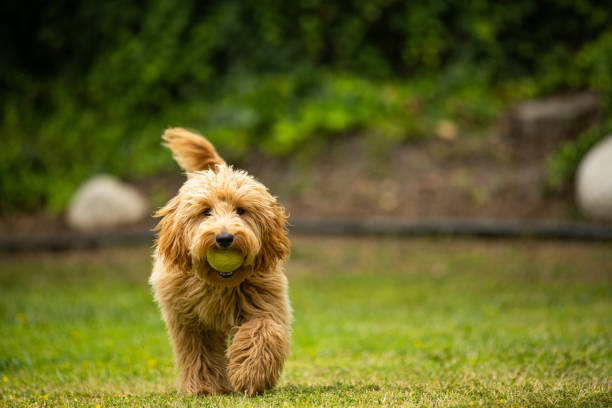
The phenomenon known universally as “Puppy Dog Eyes” transcends mere cuteness. It is a powerful, highly specialized behavioral and anatomical adaptation—a testament to the symbiotic co-evolutionary path shared by Canis familiaris and Homo sapiens. This guide delves into the intricate mechanisms, profound evolutionary significance, and complex behavioral applications of the iconic canine gaze, revealing it as one of the most effective non-verbal communication tools in the animal kingdom.
I. Defining the Phenomenon: Anatomy and Behavioral Mechanics
The “Puppy Dog Eyes” expression is not a simple widening of the eyes or a look of anticipation. It is a specific, coordinated facial movement designed to maximize the apparent diameter of the inner eye, creating an illusion of vulnerability, sorrow, or intense focus.
The Anatomical Revelation: The Muscle of Manipulation
The ability to generate this expression hinges almost entirely on a single, specialized facial muscle: the Levator anguli oculi medialis (LAOM).
This muscle, located above the eye, is responsible for drawing the inner eyebrow upward and medially (toward the center of the face). When fully contracted, the LAOM achieves three key visual effects that are highly potent to the human observer:
- Exposure of the Sclera: The upward movement of the brow exposes a significant portion of the white of the eye (sclera) below the iris. In most mammals, the sclera is barely visible or pigmented. The visible white sclera is an unusual feature shared primarily by humans and, to a lesser extent, by domesticated dogs, making the dog’s expression more relatable and readable to us.
- The Infant Schema Effect (Neoteny): The raised brow simultaneously makes the eyes appear larger and more rounded relative to the muzzle, mimicking the characteristic features of human infants—a biological trigger known as neoteny or the “baby schema.” This subconscious trigger activates deep-seated caregiving and nurturing instincts in humans.
- Facial Mobility Contrast: Dogs possess a vastly greater range of facial mobility compared to their wild ancestors, the wolves (Canis lupus). This critical difference is almost entirely attributed to the LAOM. While wolves possess the homologous muscle, it is often rudimentary or poorly developed, making the characteristic, pronounced “sad eye” expression functionally impossible for them to sustain.
Behavioral Definition: The Solicitation Gaze
Behaviorally, the puppy dog look is a form of solicitation gaze. It is a deliberately deployed non-verbal signal used to elicit a specific response from a human caregiver, typically attention, comfort, food, or permission. Crucially, the gaze is often accompanied by a temporary relaxation of the overall facial musculature and a lowering of the ear carriage, softening the dog’s overall appearance and minimizing perceived threat.
II. The Evolutionary Imperative: Domestication and Selective Pressure
The prevalence and effectiveness of the LAOM in dogs is not a random genetic mutation; it is a direct consequence of thousands of years of human-driven selective pressure. The Puppy Dog Eyes are a direct byproduct of domestication, illustrating the profound impact of co-evolution.
The Timeline of Adaptation
Approximately 33,000 years ago, as wolves began to tentatively associate with human settlements, a powerful and unintentional selection process began. Early humans were highly attuned to social cues, and any wolf or proto-dog exhibiting traits that fostered tolerance or positive interaction with humans was more likely to survive, access resources, and reproduce.
The theory posits that individuals who could make the “puppy dog face”—even slightly more effectively than their peers—were perceived as less aggressive, more dependent, or simply more endearing by humans.
Scientific Evidence: The Comparative Anatomy Study
A groundbreaking 2019 study published in the Proceedings of the National Academy of Sciences (PNAS) provided definitive anatomical proof linking the LAOM muscle directly to domestication.
Researchers compared the facial musculature of domestic dogs and gray wolves. The findings were stark:
- Dogs: Nearly all dogs studied possessed a well-developed, fully functioning LAOM capable of producing the expressive brow movement.
- Wolves: Wolves consistently lacked the LAOM or possessed only vestigial, minimal fibers. The connective tissue around the wolf’s eye is far less pliable, making controlled, isolated brow movement impossible.
The conclusion was unequivocal: this specific facial musculature evolved rapidly (relatively speaking, in thousands of years rather than millions) after the split from the wolf lineage, specifically in response to the pressure of human companionship. The muscles for the puppy dog look are a genetic marker of domestication.
The Survival Advantage
This adaptation yields substantial survival advantages:
- Resource Acquisition: A dog capable of eliciting the caregiving response is more likely to receive scraps, protection, and shelter, particularly in marginalized or competitive environments.
- Reduced Aggression: The raised-brow look is an appeasement signal. It softens the dog’s countenance, mimicking a distress cue that inhibits aggressive responses from potential human threats or rivals.
- Enhanced Bonding: By mimicking the features of human infants, the gaze short-circuits sophisticated human cognitive filters, tapping directly into the primal need to nurture.
III. The Neurochemical Foundation: The Oxytocin Feedback Loop
If anatomy provides the structure, neurochemistry provides the power source. The effectiveness of the puppy dog gaze is cemented by a powerful, mutually reinforcing hormonal mechanism involving oxytocin—often dubbed the “love hormone” or “bonding hormone.”
The Nagasawa Study: The Gaze Bond
Dr. Miho Nagasawa and colleagues at Azabu University in Japan demonstrated in a seminal 2015 study that the interaction between dogs and humans via sustained eye contact triggers a powerful interspecies feedback loop strikingly similar to the bonding mechanism between human mothers and their infants.
The Mechanism:
- Dog Gaze: The dog initiates the prolonged, expressive gaze (the puppy dog look).
- Human Response: The human observes the infant-like expression. This recognition triggers a significant spike in the human’s oxytocin levels.
- Human Behavior: The resulting oxytocin surge encourages nurturing behavior (e.g., petting, speaking in a soft voice, offering treats).
- Dog Response: When the dog is rewarded for the gaze (via attention or affection), the dog’s own oxytocin levels increase. This positive reinforcement encourages the dog to employ the gaze more frequently to initiate the bonding interaction.
In essence, the Puppy Dog Eyes act as the key that unlocks the human oxytocin response, forging an intense, mutually addictive neurochemical bond that reinforces the dog’s use of the expression. The longer the dog and human maintain the gaze, the stronger the hormonal surge, strengthening the attachment over time.
Human Bias and Cognitive Dissonance
The success of the gaze also relies heavily on inherent human cognitive biases:
- Anthropomorphism: Humans have a powerful, innate urge to attribute human emotions and intentions to animals. When we see the raised brow, we instantly translate it as “sadness,” “guilt,” or “disappointment,” allowing the dog to benefit from our emotional projection.
- The Theory of Mind Limitation: While dogs are highly skilled at reading human emotional states, they do not necessarily possess the human capacity for complex emotions like “guilt” in the abstract sense. When a dog looks “guilty” or “sad” after an accident (e.g., chewing a shoe), the expression is not driven by remorse for the action itself, but by an immediate, adaptive response (appeasement/solicitation) to the human’s obvious distress or anger.
IV. The Behavioral Contexts and Applications of the Gaze
While the LAOM is physiologically designed to produce the look, the dog’s decision to deploy it is entirely contextual and based on extensive learning and reinforcement history. The gaze is a sophisticated tool used across a range of behavioral scenarios.
1. Solicitation and Resource Acquisition (The Most Common Use)
This is the classic scenario: the dog wants something specific.
- Food: The dog stares intently while the owner is eating, often resting the chin or paw near the owner, combining the intense gaze with still body language. The sustained stare is a powerful, learned signal that often breaks the human’s resolve.
- Play/Attention: The gaze can be initiating behavior, especially when accompanied by a soft whine or a slight tail wag. Here, the expression serves as an invitation: “I am being cute and harmless; please interact with me.”
2. Learned Manipulation and Operant Conditioning
Dogs are masters of operant conditioning—learning behaviors that yield positive reinforcement. If deploying the puppy dog eyes successfully results in a reward (a treat, a cuddle, being let onto the couch), the dog will catalog that behavior as highly effective and use it rapidly in similar future contexts.
Research has shown dogs are more likely to execute the raised-brow movement when a human is actively looking at them, demonstrating that the behavior is not merely a passive emotional state but a deliberate communicative action aimed at a receptive audience. If the human is looking away or not paying attention, the dog reserves the energy, proving the look is a calculated attempt to engage.
3. Appeasement and De-escalation (The “Guilt” Look)
As noted, the look often appears when a dog anticipates or receives human displeasure. This is a critical appeasement signal, widely misinterpreted by humans as “guilt.”
When a dog is confronted with evidence of a transgression (a shredded pillow) and the human’s angry posture and tone, the dog’s immediate reaction is to display deference and submission—the puppy dog eyes, lowered head, tucked tail, and soft body. This is a highly effective survival strategy: by appearing vulnerable and non-threatening, the dog attempts to de-escalate the perceived threat of human anger and inhibit disciplinary action.
4. Distinguishing the Gaze from Stress and Fear
It is crucial for owners to differentiate the deliberate, communicative LAOM action from expressions of acute stress, anxiety, or fear, which can superficially resemble the puppy dog look.
| Feature | Puppy Dog Eyes (Solicitation/Appeasement) | Stress/Fear Signals |
|---|---|---|
| Gaze Duration | Sustained, purposeful eye contact. | Quick, darting glances, avoiding direct contact. |
| Mouth/Tongue | Generally closed mouth, soft lip line. | Lip licking, excessive panting (when not hot), tight lips. |
| Pupils | Normal or slightly dilated (depends on context). | Heavily dilated (stress-induced mydriasis). |
| Whale Eye (Sclera) | Visible primarily at the top/inner corner (due to LAOM). | Visible primarily at the sides, often accompanied by a rigid head position. |
| Body Language | Relaxed posture, often stationary, soliciting closeness. | Tense body, low crouching, trembling, attempts to retreat. |
If the dog raises the brow but shows concurrent signs of stress (panting, shaking, excessive yawning), the expression is likely an involuntary display of anxiety rather than a purely communicative bonding effort.
V. Implications for Training, Bonding, and Ethical Interaction
Understanding the scientific basis of the puppy dog eyes is essential for fostering a healthy, constructive relationship with Canis familiaris. It shifts the dynamic from one of manipulation to one of informed communication.
1. Harnessing the Power of the Gaze for Bonding and Therapy
The neurochemical power of the oxytocin feedback loop is a core reason why dogs are so successful in therapeutic roles (e.g., service dogs, emotional support animals). The sustained, reciprocal gaze strengthens the bond required for complex service tasks and provides measurable emotional comfort to the human.
In training, owners should intentionally incorporate positive, non-demanding eye contact initiated by the dog. When the dog offers a soft, brief gaze, rewarding it with quiet praise and affection reinforces the bond and the dog’s comfort with interaction, making training smoother overall.
2. Addressing Learned Manipulation: Setting Boundaries
Because the gaze is so inherently rewarding for the dog, it can quickly develop into a highly effective manipulative tool, leading to unwanted behaviors (e.g., begging, constant interruptions).
Owners must learn to distinguish between a request for bonding and a request for resources that violates boundaries (e.g., staring during human mealtimes).
Strategic Response:
- Ignore the Solicitation: When the puppy dog eyes are deployed specifically for food or persistence (like getting up on the bed), the most effective solution is to completely ignore the request. No eye contact, no verbal scolding, and no physical touch.
- Redirect and Reward Alternatives: Redirect the dog to an appropriate, alternative behavior (e.g., lying on their designated mat) and reward that alternative heavily. This helps the dog learn that resource acquisition comes from compliant, appropriate behavior, not from intense staring.
3. Ethical Considerations: Avoiding Emotional Exploitation
The human tendency to anthropomorphize means many owners interpret the gaze as evidence of deep, human-like sadness or guilt. This can, unfortunately, lead to counterproductive behaviors, such as showering the dog with treats to “apologize” for leaving them alone, or over-coddling a dog who exhibits the look after misbehaving.
This misinterpretation reinforces the appeasement behavior, but it does not address the underlying issue (e.g., separation anxiety, lack of training). An ethically responsible relationship requires seeing the dog’s behavior for what it is—an ancient, evolved communicative tool—and responding rationally, not just emotionally.
4. The Broader Implications for Canine Breeding
The study of the LAOM and the gaze bond offers profound insights for the future of dog breeding. It suggests that selecting for animals that possess enhanced facial mobility is implicitly selecting for dogs that are better communicators with humans, potentially reducing owner frustration and enhancing successful integration into human society. Dogs bred for specific service or therapy roles, where tight bonding is paramount, are likely to be those that demonstrate this highly effective anatomical and behavioral trait.
VI. Conclusion: The Masterpiece of Co-Evolution
The Puppy Dog Eyes are far more than a simple, endearing gesture; they are a masterpiece of co-evolution. They represent a specialized behavioral and neurochemical weapon honed over millennia of selective pressure, designed specifically to exploit the human caregiving instinct.
From the evolution of the delicate Levator anguli oculi medialis muscle to the powerful interspecies oxytocin feedback loop, the gaze is the foundational non-verbal language of the dog-human partnership. By understanding the science behind the stare, owners can move beyond simple emotional reaction and forge a deeper, more informed, and ultimately healthier bond with their canine companions, recognizing this iconic look as the very genetic signature of domestication. The dog’s ability to manipulate our hearts with a simple upward twitch of the brow is the genius loci of our shared history.
#PuppyDogEyes #DogBehaviorScience #CanineCommunication #DogEvolution #OxytocinBond #DogTrainingTips #ScienceOfDogs #DogFacts #LevatorAnguliOculiMedialis #DogBonding #DogLovers #EvolutionaryBiology #PetPsychology #CanineCognition #WhyDogsStare #DogDomestication #HappyDogHappyLife #AnimalBehavior #DeepDiveDogFacts #TheGazeBond





Add comment