
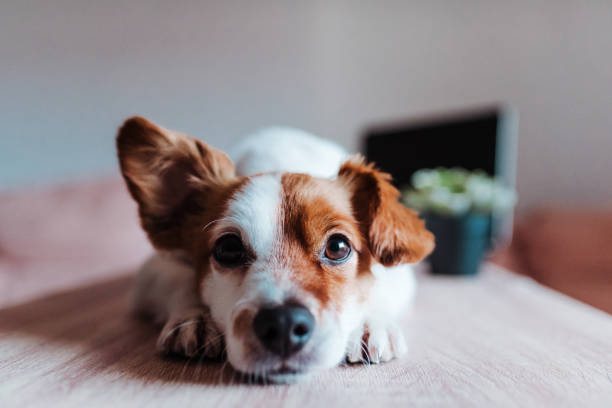
Puppy Training: Name Recognition & Attention – The “Watch Me” or “Look” Cue for Focus
The ability to capture and hold your puppy’s attention is the single most important skill you can teach. Without focus, reliable obedience and safety are impossible. This guide provides a detailed, step-by-step approach to establishing a strong, positive association with your puppy’s name and teaching the critical “Watch Me” or “Look” cue.
SECTION 1: The Foundation – Why Focus Matters
Before diving into techniques, it is essential to understand the primary goal: making the puppy’s name and your face the most rewarding things in their environment.
1.1 The Role of the Name
A puppy’s name should exclusively serve as an attention signal, not a command or a warning.
- Correct Use: “Fido… [look]… Good boy!”
- Incorrect Use: “Fido! Stop that!” (The name becomes associated with punishment or frustration.)
If a puppy hears their name only when they are about to get corrected or scolded, they will learn to associate the name with something negative and actively ignore it.
SECTION 2: Phase 1 – Establishing Positive Name Recognition
The goal of this phase is to create a Pavlovian response: Name = Reward.
2.1 The Positive Association Game
Criteria: Low-distraction environment (quiet room), high-value treats (chicken, hot dogs, soft cheese), and a marker word (“Yes!”) or a clicker.
| Step | Action | Timing & Marker | Goal |
|---|---|---|---|
| 1. The Whisper | Wait for your puppy to move away slightly, or look elsewhere. Say their name softly (you don’t need to yell). | The instant the puppy turns their head toward you, mark the behavior (“Yes!” or click). | The puppy learns that turning toward the name is profitable. |
| 2. The Reward | Immediately follow the marker with a high-value treat delivered right to the puppy’s mouth. | Wait 5 seconds between repetitions. | The puppy associates their name with a sudden, positive event. |
| 3. High Repetition | Repeat this 10–15 times in a short session (1–2 minutes). Keep it fun and quick. | End the session before the puppy gets bored. | Solidifies the connection quickly. |
2.2 Troubleshooting Name Recognition
- Puppy ignores the name: You are likely in an environment that is too distracting, or your treats are not high-value enough. Move to a sterile, quiet room and use the best food they have ever had.
- Puppy starts ignoring the marker: This often means you are repeating the exercise too frequently without breaks. Give the pup a two-minute play break before starting again.
SECTION 3: Phase 2 – Teaching the “Watch Me” or “Look” Cue
Once the puppy reliably turns and looks at you upon hearing their name, you can move to sustained eye contact using a specific cue.
3.1 Choosing Your Cue
Use a clear, concise word that is easy to say:
- “Watch Me” (Very common)
- “Look”
- “Focus”
3.2 Method A: The Lure Method (Beginner)
This method uses food to guide the puppy’s eyes up to your face.
- Preparation: Hold a high-value treat pinched between your index finger and thumb. Have a handful of treats ready in your other hand for delivery.
- The Guide: Bring the treat right to the puppy’s nose (so they smell it) and then slowly arc the treat up towards the bridge of your nose/forehead.
- The Mark: The moment the puppy’s gaze leaves the food and connects with your eye area, mark the behavior (“Yes!” or click).
- The Reward: Immediately deliver a treat from your opposite hand (the reward hand). This ensures the puppy learns that the reward comes from you, not from following the lure.
- Adding the Cue: Once the pup reliably follows the lure to your eyes, say your cue (“Watch Me”) just before you begin the arcing motion.
3.3 Method B: The Empty Hand (Intermediate)
This method teaches the puppy that the visual hand signal itself is the prompt, removing reliance on the food lure.
- Position: Hold your hand flat, palm facing the puppy, near your face (or where you want them to look).
- The Wait: Wait silently. Your puppy is likely sniffing around trying to figure out where the treat is.
- The Mark: The moment the puppy looks up at your face, even if it’s just a fleeting glance, mark the behavior (“Yes!”).
- The Reward: Deliver the reward from a pocket or pouch.
- Fading the Hand: Once the puppy understands this, you can start using a less obvious hand gesture (e.g., pointing a finger at your eye, or just resting your hands briefly).
SECTION 4: Building Duration and Generalization
A “Watch Me” cue is useless if the puppy can only do it for one second in a quiet room. We must build the duration of the gaze and generalize the skill to real-world environments.
4.1 Building Duration (Holding the Gaze)
Once the puppy offers 1 second of eye contact reliably, start adding time.
- Give the cue: “Watch Me.”
- Count silently: 1… 2…
- Mark and Reward.
- If the puppy breaks eye contact before you mark, simply reset and start the count over. Do not scold.
- Slowly increase the required duration: 1 second, then 3 seconds, then 5 seconds. Note: Longer durations require significantly higher value rewards initially.
4.2 The Integration Drill: Name + Cue
This is the practical application of both skills.
| Sequence | Purpose |
|---|---|
| 1. Gain Orientation | Say the puppy’s Name (e.g., “Fido”). |
| 2. Request Focus | As soon as Fido looks at you, say the Cue (e.g., “Watch Me”). |
| 3. Sustain & Reward | Mark and reward after the required duration is held. |
4.3 Generalization (The 3 Ds)
You must practice this skill in increasing levels of difficulty using the “3 Ds” of training: Duration, Distance, and Distraction.
| Trainee Status | Environment | Focus |
|---|---|---|
| Beginner | Quiet living room; handler seated. | Short duration (1-3 seconds); handler very close. |
| Intermediate | Kitchen, backyard, or quiet park; handler standing. | Medium duration (5-10 seconds); handler steps back 3-5 feet. |
| Advanced | Busy park, sidewalk with people, near other dogs. | Long duration (10+ seconds); handler moves around the pup; High-value reward only. |
Crucial Rule: When introducing a new Distraction or Distance, dramatically reduce the required Duration. Set the puppy up for success!
SECTION 5: Advanced Applications and Troubleshooting
5.1 Using Focus for Emotional Regulation
The “Watch Me” cue is a powerful tool for interrupting unwanted or anxious behavior.
- Interrupting Nipping/Jumping: Instead of reacting angrily, use a quick “Watch Me” during an outburst. When the puppy breaks focus to look at you, they have interrupted the unwanted behavior. Mark and reward the focus.
- During Stressful Events: Use the cue before introducing a new environment, meeting a stranger, or during a grooming session. If the puppy focuses on you, it reduces their ability to panic about the external stimulus.
5.2 Common Training Errors and Solutions
| Problem | Root Cause | Solution |
|---|---|---|
| The puppy constantly stares at the treat hand. | The lure was faded too slowly, or the reward is always delivered from the lure hand. | Use Method B (Empty Hand). Ensure the reward comes from a pouch or your other hand, not the hand giving the cue/signal. |
| The puppy is sluggish or slow to respond. | Lack of motivation or low-value environment. | Move to a quieter area and use higher-value rewards. If they are bored, end the session and try later. |
| The puppy barks or jumps during the “Watch.” | Excitement or confusion about the requirement. | Before giving the reward, wait for a moment of calm (the “4 paws on the floor” rule). If they jump, pull the treat back and wait for the brief moment of stillness before marking. |
| I have to repeat the cue (“Watch Me! Watch Me!”). | The cue is being used as a plea, not a command. | If the puppy ignores the cue the first time, you are asking too much. Decrease the difficulty (less distance, fewer distractions) until they respond successfully 8 out of 10 times. Avoid repeating cues. |
Key Takeaways
- Name = Attention, not Command. Keep the name positive and separate from corrections.
- Mark the Moment. Use your marker word or clicker the instant eye contact is made, before the treat is delivered.
- Reward from the Opposite Hand. This teaches the puppy to look at your face, not your food-holding hand.
- Practice in Small Bursts. Short, frequent, successful sessions (2-3 minutes) are exponentially better than one long, frustrating session.






Add comment