
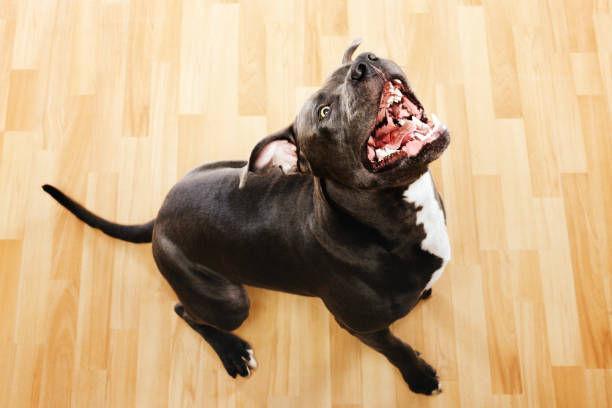
Bringing a newborn home introduces a massive, life-altering change to your dog’s established routine, environment, and social structure. Successfully navigating the first few encounters relies entirely on your ability to accurately read the room—that is, interpreting your dog’s subtle (and not-so-subtle) body language signals.
Safety is paramount. These initial interactions must be strictly managed, short, and focused on reinforcing calm coexistence, not forced interaction.
SECTION I: The Foundation – Pre-Encounter Preparation
A successful first encounter begins long before the baby walks through the door. If you haven’t done these steps, pause the direct introduction and implement a scent exchange first.
1. Scent Introduction (The First Step)
The dog must process the baby’s scent before they see the baby.
- Bring home a blanket, hat, or item the baby has worn.
- Place the item in the dog’s designated “relaxed” area (e.g., their bed or crate).
- Allow the dog to sniff it freely. Do not force the interaction.
- Observe: Look for loose curiosity, not apprehension or intense arousal. If the dog is tense while sniffing, move the item farther away and try again later.
2. Establish a Safe Sanctuary
The dog needs a designated escape location where they will never be disturbed by the baby, no matter the age. This should be a crate, a bed behind a gate, or a separate room.
3. Management Tools
For the first meeting, the dog must be managed.
- Leash: The dog should be on a standard leash (not a retractable lead) held by a calm, non-baby-holding adult.
- Gates: Use baby gates to create physical barriers between the dog and high-traffic areas where the baby will be (e.g., the bassinet area).
SECTION II: Decoding the Signals – The 3 Categories
Dog communication is complex and usually involves a cascade of signals, starting with subtle signs of stress and escalating if those signals are ignored. Your job is to intervene at the highest level of Stress/Anxiety—before it moves to Warning.
A. The Ideal: Calm, Neutral, and Positive Signals
These are the signals you are aiming for and should reinforce with quiet praise or high-value treats (away from the baby).
| Signal | Description | Interpretation |
|---|---|---|
| Soft Eyes | Eyes are almond-shaped, blink often, no visible white. | Relaxed, accepting, low threat perception. |
| Loose Body | Weight is evenly distributed, tail hangs naturally (or wags loosely), no stiffness or freezing. | Comfortable in the environment. |
| Relaxed Ears | Ears are in their natural position (not pinned back, forward, or swiveling rapidly). | Pay attention without being aroused. |
| Mouth Slightly Open | Mouth is relaxed, sometimes resembles a gentle “smile” or slight pant (if not too rapid). | Low stress, relaxed breathing. |
| Head Turns Away | The dog gently turns their head or body away from the baby. | A polite signal of deference or avoidance, indicating they do not want conflict. |
B. The Critical Category: Stress, Anxiety, and Appeasement
These are crucial signals often missed by owners. They indicate the dog is uncomfortable, stressed by the proximity, or trying to politely communicate their discomfort to the humans. If you see these, you must create distance or end the interaction immediately.
| Signal | Description | Interpretation | Immediate Action |
|---|---|---|---|
| Lip Licking | Rapid licking of the nose or air, especially when no food is nearby. | Anxiety, internal conflict, displacement. | Increase distance from baby. |
| Yawning | Yawning when the dog is not tired or hot. | Displacement behavior, acute stress. | Change the environment (move dog to their safe place). |
| Whale Eye | The dog turns their head slightly but keeps their eyes fixed on the baby, showing the whites of the eyes (the sclera). | High anxiety, feeling trapped or threatened. | Crucial warning. Do not approach the dog. |
| Panting (Out of Context) | Rapid, shallow breathing when the dog is not warm or exercising. | Hyper-arousal or stress overload. | End the encounter. |
| Low Crouch/Creeping | The dog moves slowly, body low to the ground, often with a tucked tail. | Fear or extreme uncertainty. | Block the dog’s path to the baby. |
| Shaking It Off | The dog shakes its entire body (as though wet) when dry. | Release of tension after a stressful moment. | Reinforce the release, then end the session. |
C. Immediate Intervention Required: Warning and Defensive Signals
These signals indicate the dog has moved beyond polite communication and is actively preparing to defend themselves, their space, or warn off a perceived threat. Any of these signals require swift, calm, non-punitive management.
| Signal | Description | Danger Level | Management |
|---|---|---|---|
| The Hard Stare | Fixed, unblinking gaze directed intently at the baby or human. | High. | Redirect the dog’s attention (lure with food away from the baby). Do not try to break the stare physically. |
| Freezing/Gazing | The dog’s body becomes completely rigid, often holding its breath for a second. | Extreme. | This is often the precursor to a bite. Create distance immediately. |
| Muzzle Wrinkle/Lifted Lip | The skin on the nose wrinkles, often revealing the teeth slightly. | Very High. | End the interaction calmly, secure the dog behind a gate or in their crate. |
| Growling | A low rumble or guttural sound. | Critical. | DO NOT PUNISH THE GROWL. A growl is a necessary warning system. Punishing it teaches the dog to skip the warning and go straight to biting. Secure the dog and seek professional help. |
SECTION III: The Encounter Strategy and Management
When you finally introduce the dog (on leash) to the baby (held securely by the other adult), follow a strict protocol.
- Preparation Check: Ensure the dog has been exercised and has relieved itself. A tired, comfortable dog is a calm dog.
- Distance First: Initially, keep the dog 10–15 feet away from the baby. Simply allow the dog to exist quietly in the same room as the baby being held.
- Reinforce Proximity, Not Interaction: Provide high-value, continuous reinforcement (a “rain” of tiny treats) for the dog simply being calm in the baby’s presence. The dog learns that the baby’s presence equals good things, but the reward comes from the human, not the baby.
- Controlled Approach: Slowly decrease the distance only if the dog maintains a loose, soft body (Section II-A). Stop moving if any stress signals appear.
- The Never, Never, Never Rule:
- NEVER allow the dog to sniff the baby’s face, hands, or feet initially. The initial sniffing should be limited to the baby’s lower back or torso area, which is less stimulating.
- NEVER leave a baby and dog unattended—not even for a second, and not even if the dog is usually trustworthy.
SECTION IV: When to Immediately Intervene and Retreat
If you observe any signals from Section II-B or II-C, you must act decisively to de-escalate the situation and preserve the dog’s emotional well-being.
Step 1: Create Space
Use the leash or a physical barrier (like your body) to calmly increase the distance between the dog and the baby. Do not pull or snap the leash; use gentle, consistent pressure.
Step 2: Redirect and Reward
Once distance is achieved, ask the dog for an incompatible behavior (e.g., “Go to your Place,” or a simple “Sit”). Reward this redirection heavily. This shifts the dog’s focus from the arousing presence of the baby back to the familiar commands from the handler.
Step 3: End the Session
If stress signals persist or warning signals (freezing, growling, whale eye) occur, the session must end. Calmly lead the dog to their safe sanctuary (crate or gated room) with a lasting chew toy or food puzzle. The goal is to make the retreat a positive experience, not a punishment.
CONCLUSION: Consistency and Patience
The first encounter is simply the start of a long process. Mastering the art of reading your dog’s subtle body language ensures you catch anxiety before it turns into aggression.
Remember:
- Your dog is telling you everything you need to know. Listen to the quiet signals (yawning, lip licking).
- Keep initial sessions short (2-5 minutes max).
- If you observe significant tension or are unsure how to proceed after the initial introduction, immediately contact a Certified Professional Dog Trainer (CPDT-KA) who specializes in family integration, or a Veterinary Behaviorist (Dip ACVB).
Do not gamble with the safety of your child or the future of your dog. Management and keen observation are the keys to a harmonious home.







Add comment