
I. Introduction: The Urgent Reality of Ferret Blockages
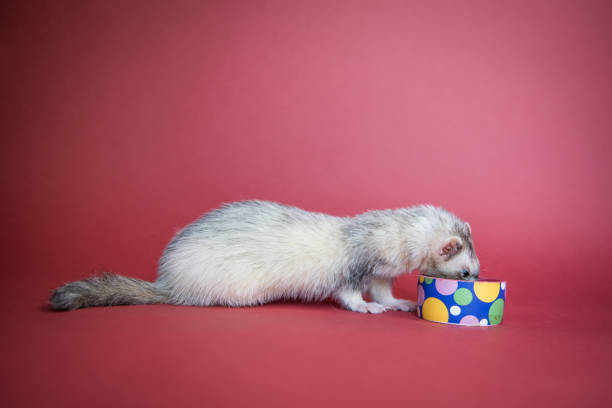
The domestic ferret (Mustela putorius furo) is a creature defined by boundless curiosity, intelligence, and an unparalleled ability to explore the world using its mouth. This oral exploration, coupled with a uniquely short and rapid digestive tract, creates a precarious medical vulnerability: the ingestion of foreign bodies leading to gastrointestinal obstruction.
Gastrointestinal (GI) blockages are arguably the most critical non-communicable medical emergency a ferret owner may face. Unlike dogs or cats, whose GI tracts can often accommodate or pass smaller foreign materials, the ferret’s anatomy—specifically the narrow pyloric sphincter and the short transit time—means that even small pieces of rubber, foam, or fabric can cause rapid and fatal compromise.
This guide provides an exhaustive, 3500-word examination of the symptoms associated with partial or complete GI obstruction in ferrets. Given the subtlety of early signs in these stoic animals, recognizing the initial red flags is not merely helpful—it is the difference between a successful surgical outcome and catastrophic fatality. Early recognition demands vigilance, understanding of ferret behavior, and a detailed knowledge of their unique physiology.
II. The Physiology of Peril: Understanding the Ferret Digestive Tract
To appreciate the severity of a blockage, one must first understand the ferrets’ digestive anatomy. Ferrets are obligate carnivores, adapted to process high-protein, high-fat, low-fiber diets quickly.
A. The Short and Rapid Transit System
The entire digestive process, from ingestion to defecation, takes only three to four hours in a healthy ferret (compared to 12–24 hours in a dog). This speed is crucial because it means that toxins, infections, or blockages have very little time to be naturally eliminated or absorbed before severe systemic damage occurs.
B. The Pyloric Sphincter: The Primary Bottleneck
The most common site for a foreign body obstruction is the pyloric sphincter, the muscular valve connecting the stomach to the small intestine (duodenum).
- Narrow Aperture: The pylorus is naturally narrow in ferrets. Items that might easily pass into the small intestine of a larger animal often become lodged here, preventing the stomach from emptying.
- Gastric Obstruction: If the blockage occurs at the pylorus, gastric fluid, food matter, and digestive enzymes back up into the stomach. This causes distension, severe irritation (gastritis), and—most critically—prevents the ferret from absorbing any nutrition or hydration.
- Intestinal Obstruction: Blockages can also occur further down the small intestine. This results in the upstream section of the bowel becoming inflamed and potentially necrotic (dying) due to vascular compromise caused by pressure and stretching. This is often seen with “linear foreign bodies” (discussed below).
Due to this limited digestive capacity, any symptom of GI distress must be treated as an emergency until proven otherwise.
III. Etiology: Why Ferrets Ingest Foreign Material
The high incidence of this issue in ferrets is rooted in a combination of juvenile behavior, environmental factors, and specific behavioral disorders.
A. The Noodling Phenomenon (Behavioral Predisposition)
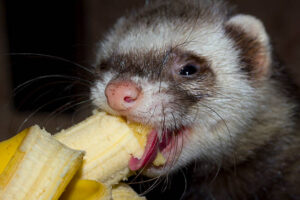
Ferrets are natural “noodlers”—they investigate their environment by pushing their noses into tight spaces and, if curiosity dictates, taking a sample bite. This behavior is most pronounced in kits (young ferrets, 6 months to 2 years), but persists throughout life, especially when bored.
B. Common Foreign Bodies
The materials most commonly implicated in life-threatening obstructions share two key properties: they are chewable/shred-able and indigestible.
- Rubbers and Foams: The highest risk items include shoe inserts, remote control buttons, earplugs, rubber toys (especially softer baby toys), cabinet bumpers, and the foam padding found in furniture. These items are often ingested because their texture mimics meat or cartilage.
- Fabrics and String (Linear Foreign Bodies): Items like threads, yarn, socks, washcloth fragments, and carpet fibers pose a unique danger. When these are swallowed, one end often lodges in the stomach or wraps around the tongue, while the rest is pulled into the intestine. As the intestine attempts to move the material along, it bunches up (a process called plication), leading to severe sawing damage, pressure necrosis, and often multiple perforations along the intestinal wall—a catastrophic scenario known as a linear foreign body obstruction.
- Plastics and Miscellaneous Items: Children’s toys, packing peanuts, erasers, and fragments of hard plastic furniture.
C. Pica and Nutritional Deficiencies
While rare, a ferret may exhibit pica (the consumption of non-food items) due to severe boredom, stress, or, less commonly, underlying nutritional deficiencies. However, in the vast majority of cases, ingestion is purely opportunistic and behavioral.
IV. The Spectrum of Manifestation: Acute vs. Chronic Symptoms
Symptoms of a blockage depend heavily on the severity (partial vs. complete) and the location of the object. A complete obstruction at the pylorus presents far more acutely and violently than a partial, low-grade obstruction deeper in the jejunum.
A. Category 1: The Acute, Life-Threatening Presentation (Complete Obstruction)
These signs demand immediate presentation to an emergency veterinarian, as the ferret’s condition can deteriorate into shock within hours.
1. Unrelenting Vomiting and Retching (Dry Heaves)
Vomiting is a critical, high-alert symptom in ferrets. Because ferrets cannot easily vomit (they lack a strong emetic reflex), true vomiting is rare and indicates severe gastric irritation or overwhelming blockage.
- Observation Detail: Often, owners report repeated, painful retching or “dry heaves” rather than voluminous projectile vomiting. The ferret may crouch low, gag, and strain, often producing only small amounts of foamy saliva or bile.
- Significance: If the vomiting is persistent and occurs soon after ingesting food or water, it strongly suggests a complete obstruction at the pylorus, preventing stomach contents from moving forward.
2. Acute, Severe Abdominal Pain (Cramping)
Pain in ferrets is often expressed through behavioral changes rather than vocalization (ferrets rarely whine or cry).
- Observation Detail: The ferret may adopt a hunched posture (a “praying” or “sardine” posture, attempting to relieve pressure). They will be reluctant to move, may hiss or chatter when handled, and often press their abdomen against the ground or cool surfaces.
- Palpation Signal: The abdomen will be rigid, distended (bloated), and exquisitely painful to the touch. Caution: Abdominal palpation should be performed gently, as excessive pressure can rupture a compromised bowel.
3. Collapse and Systemic Shock
Within hours, severe vomiting and fluid sequestration (fluid pooling in the GI tract) lead to rapid hypovolemia (shock).
- Observation Detail: The ferret becomes profoundly weak, lethargic, and non-responsive. Mucous membranes (gums) become tacky (dehydration) and may turn pale or bluish (poor circulation). The ferret may exhibit rapid, shallow breathing due to metabolic distress.
- Significance: Uncontrolled shock leads to organ failure and death. This state indicates the obstruction has caused massive fluid and electrolyte loss.
4. Acute Anorexia and Water Refusal
In a complete blockage, the ferret immediately refuses food, knowing intuitively that ingestion will worsen the painful backup of material. While a ferret refusing food for a few hours is not uncommon, a healthy ferret refusing favorite treats (like salmon oil or meat bits) for more than 4–6 hours is a critical crisis signal.
B. Category 2: Chronic or Subtle Symptoms (Partial or Linear Obstruction)
Partial obstructions, where some fluid and gas can still pass, often present a diagnostic dilemma. The initial symptoms are subtle, mimicking less severe diseases (like hairballs or transient nausea), but the condition is progressive and equally fatal if delayed.
1. Lethargy and Behavior Changes
This is often the first and most critical sign. Ferrets have two settings: on (hyperactive play) and off (deep sleep). Blockage inserts a painful “limbo” state.
- Observation Detail: The ferret is sluggish, sleeps more deeply than usual, and shows reduced interest in play activities it normally enjoys (e.g., chasing toys, exploring tunnels). While they may briefly rouse for a treat, their overall energy is substantially dampened.
- Distinction: Unlike the acute collapse of a complete blockage, this lethargy is progressive, worsening over 24–72 hours.
2. Decreased or Altered Appetite (Dysphagia)
Instead of total refusal, the ferret may exhibit selective anorexia.
- Observation Detail: The ferret may show interest in food, approach the bowl, and perhaps even lick or mouth the kibble, but will often turn away after a few bites or refuse hard kibble entirely, opting only for soft, high-value supplements (like pastes or oils).
- Significance: This reluctance suggests that the act of swallowing or the subsequent presence of food in the stomach causes immediate pain or reflux.
3. Fecal Output Alterations: The Critical Clues
Changes in stool are the most specific, though often misinterpreted, indicators of GI trouble.
- Decreased Volume (Tapering Stools): If the ferret is eating less, the volume of stool will obviously decrease. More importantly, the stool may become thin, narrow, and rope-like (tapering). This indicates the intestines are severely inflamed or that only small amounts of chyme are able to squeeze past a partial blockage.
- String of Pearls Stool (Specific to Linear Foreign Bodies): This is pathognomonic (uniquely characteristic) of a linear foreign body. As the thread or string is pulled through the intestine, the segments of bowel contract strongly around the thread, segmenting the fecal matter into small, distinct, mucus-coated blobs resembling a string of beads or pearls. Seeing this should trigger immediate emergency action.
- Mucus and Slime: The presence of large amounts of clear, yellowish, or slightly green slimy mucus in the stool or around the anus (even with little fecal matter present) indicates extreme irritation and inflammation of the intestinal lining (colitis/enteritis).
- Melena (Tarry Stools): Dark, sticky, tarry stools indicate digested blood. This is a severe sign suggesting ulceration or trauma high in the GI tract (stomach or duodenum), often caused by the foreign body rubbing against the delicate tissue.
4. Weight Loss and Muscle Wasting
In chronic partial obstructions, dehydration combined with the body’s inability to absorb nutrients leads to rapid, noticeable weight loss.
- Observation Detail: Loss of muscle mass is most evident over the spine and hindquarters. The ferret may feel “bony.” This wasting makes the prognosis worse, as the ferret is already metabolically compromised before surgery.
5. Dehydration Markers
Dehydration is rapid and severe due to vomiting, decreased water intake, and fluid sequestration in the blocked gut lumen.
- Skin Tenting Test (Turgor): Gently pinch the skin over the scruff or shoulders. In a healthy, hydrated ferret, the skin springs back instantly. If the skin remains “tented” for more than 1–2 seconds, the ferret is significantly dehydrated.
- Tacky Mucous Membranes: The gums feel sticky and dry instead of moist and slick.
V. Linear Foreign Bodies: The Unique and Deadly Presentation
Linear foreign bodies (LFB) such as thread, ribbon, fishing line, or carpet fibers deserve special focus due to their unique mechanism of damage.
A. Mechanism of Damage (Plication)
When a string-like object is swallowed, its movement (or lack thereof) causes the intestine to accordion or bunch up (plication) as peristalsis tries to move the fixed line. This plication exerts immense pressure on the mesenteric (blood supply) side of the bowel, leading to:
- Ischemia and Necrosis: The blood supply is cut off, causing sections of the intestine to die.
- Sawing and Perforation: The string literally saws through the delicate intestinal wall, causing leakage of septic contents (feces, bacteria) into the sterile abdominal cavity (peritonitis). Peritonitis is often the direct cause of death in untreated LFB cases.
B. Specific LFB Symptoms
The symptoms of LFB are often more subtle than a solid obstruction because fluid may still pass around the item for some time. However, persistent vomiting, severe, localized abdominal pain, and the presence of the “string of pearls” feces are highly indicative of this condition.
- Tongue Check: Always check under the ferret’s tongue for evidence that the string or thread is looped/anchored there. If visible, do not pull it out as this can cause the string to saw through the bowel; veterinary removal under sedation is mandatory.
VI. Differential Diagnosis: Distinguishing Blockages from Other Ferret Ailments
Given the limited range of ways ferrets express illness, many critical conditions mimic the signs of a blockage. A careful consideration of the context is essential.
| Condition | Common Overlap Symptoms | Distinguishing Factors | Urgency |
|---|---|---|---|
| Complete GI Obstruction | Acute Anorexia, Vomiting, Lethargy, Abdominal Pain | Rapid deterioration, No stool/tapering stool, Palpable mass (sometimes). | EMERGENCY (Hours) |
| Hairball (Trichobezoar) | Intermittent vomiting, Decreased appetite, Mild lethargy | Usually historical; symptoms are milder/waxing and waning. Often helped by laxatives (if caught early). | High (24-48 hours) |
| Insulinoma (Pancreatic Tumors) | Lethargy, Weakness, “Staring into space” | Symptoms associated with feeding schedule (worse before meals). Often involves seizures or hind end weakness, not severe abdominal pain. | High (Manageable) |
| Epizootic Catarrhal Enteritis (ECE, “Green Slime Disease”) | Acute, Profound Anorexia, Lethargy, Severe Dehydration | Presence of profuse, green, mucoid diarrhea. Intense systemic illness (fever/hypothermia). | EMERGENCY (Supportive Care) |
| Hepatic Lipidosis (Fatty Liver) | Severe weakness, Extreme Anorexia, Jaundice (yellowing) | Usually associated with prolonged starvation (72+ hours). Jaundice is the hallmark sign. | EMERGENCY (Hospice/Support) |
| Adrenal Disease | Mild Lethargy, Weight Loss, Alopecia (Hair Loss) | Symptoms develop slowly (months). Blockages are acute. | Low-Medium |
The key differentiator for a foreign body is the presence of vomiting/retching combined with lack of fecal production and severe, non-specific abdominal pain. If in doubt, always treat the situation as an obstruction.
VII. Advanced Home Assessment Techniques and Cautions
While veterinary imaging is required for definitive diagnosis, informed owners can perform preparatory assessments if they suspect a blockage.
A. The 24-Hour Observation Rule
If a ferret exhibits questionable lethargy or decreased appetite, a strict 24-hour observation period must begin.
- Track Everything: Document every attempt to eat, every sip of water, and every bowel movement. If the ferret refuses all high-value treats (meat, oil, pastes), the crisis level increases.
- The Zero Fecal Count: If a ferret has not produced any feces in over 12 hours (and it has eaten within the last 4 hours), an obstruction is highly probable, requiring vet intervention.
B. Cautious Abdominal Palpation
Experienced owners may attempt a gentle, structured palpation, but great care must be taken.
- Technique: Use warm hands. Gently cup the ferret’s body and use light, rotating pressure with the fingertips along the midline of the abdomen, moving from the ribs down toward the pelvis.
- What to Feel For:
- Rigidity: An unnaturally tight or hard abdomen (splinting).
- Distension: Bloating, especially in the upper abdomen (stomach).
- Pain Response: The ferret hisses, squirms, or bites when a specific area is touched.
- Palpable Mass: Sometimes, a discrete, firm, golf-ball-sized object can be felt in the upper abdomen (stomach or pylorus). Note: Do not confuse a full stomach of kibble with a foreign body.
- Red Flag: If the abdomen feels taut, hot, or causes the ferret extreme pain, stop immediately and proceed to the veterinarian.
C. The Hydration Test
As detailed above, the skin tenting test must be performed. Dehydration complicates emergency surgery significantly; an immediate trip to the vet for subcutaneous fluids is often necessary even before confirming the obstruction.
VIII. The Veterinary Diagnostic Process (What Happens Next)
Once the owner has recognized and acted upon the severe symptoms, the veterinarian will need to confirm the diagnosis and assess the extent of the damage.
A. History and Physical Examination
The owner must be prepared to detail:
- Timeline of Symptoms: Exact time of last normal stool, last meal, and onset of vomiting/lethargy.
- Environmental Access: What potential objects has the ferret been near (new toys, dismantled furniture, access to rubber soles)?
B. Imaging and Diagnostic Tools
- Plain Radiographs (X-rays): The initial tool. Ferret abdomens are small, and foreign materials (especially rubber and fabric) are often radioluscent (they don’t show up well on X-ray). However, X-rays are excellent for showing secondary signs:
- Excessive Gas: Pockets of trapped gas proximal (before) the obstruction.
- Stomach Distension: A large, fluid-filled stomach that won’t empty.
- Gravel Sign: Sometimes, gravel or rock-like material swallowed with the foreign body outlines the obstruction.
- Contrast Radiographs (Barium/Iodine): If plain X-rays are inconclusive, the ferret is given a liquid contrast solution (like Barium). X-rays are taken every 30 minutes to track the contrast. If the contrast stops abruptly or fails to move through the pylorus, it confirms obstruction. Note: Contrast studies are risky if bowel perforation is suspected, as Barium leakage causes severe peritonitis.
- Ultrasound: This is highly valuable, particularly for identifying soft, radioluscent items (like foam or rubber) or detecting the plication characteristic of linear foreign bodies. Ultrasound also allows the vet to assess blood flow (viability) to the intestinal wall.
IX. Management and Prevention: The Aftermath and Future
A. Emergency Management and Prognosis
If a blockage is confirmed, immediate surgical intervention (exploratory laparotomy and enterotomy/gastrotomy) is mandatory. Delays exceeding 24–48 hours significantly increase the risk due to systemic shock, severe dehydration, and the heightened risk of bowel necrosis and perforation.
- Critical Post-Surgical Warning: If the obstruction was a linear foreign body, the risk of abdominal sepsis (peritonitis) remains high due to potential hidden damage or breakdown of the suture line. Intensive, life-saving supportive care is required for several days post-operatively.
B. Prevention: Ferret-Proofing the Environment
The best defense is a completely safe environment. Owners must adopt a “zero tolerance” policy for specific materials:
- Rubber and Foam Elimination: Remove all access to speaker foam, shoe soles, rubber gloves, foam chair padding, and soft rubber toys.
- Fabric and String Discipline: Never allow ferrets to play unsupervised with yarn, ribbons, loose carpet, or socks. Periodically inspect bedding for holes.
- Hole Inspection: Check all furniture, couches, and chair bottoms weekly for holes where ferrets might enter and shred internal foam.
- Kitten Toys: Ferrets thrive on hard plastic, metal, or durable hard rubber toys designed for aggressive kittens (e.g., hard plastic tunnels, stainless steel balls).
X. Conclusion: Vigilance and Urgency
Foreign body ingestion in ferrets is a relentless threat, often striking young, healthy, inquisitive animals. The symptoms—from the dramatic dry heaves of a complete blockage to the subtle, progressive lethargy and “string of pearls” stool of a linear blockage—demand immediate, informed response.
The ferret’s stoicism masks the rapid onset of fatal systemic compromise. For the dedicated ferret owner, recognizing these symptoms is not merely a responsibility of care—it is the execution of a life-saving, time-critical assessment that cannot be delayed. When foreign body ingestion is suspected, minutes count, and the only acceptable course of action is immediate veterinary intervention.
#FerretEmergency #FerretHealth #FerretBlockage #VetMed #ExoticPets #FerretCare #MustelaPutoriusFuro #FerretVomiting #PetSafety #FerretTips #LinearForeignBody #SaveTheFerrets #PetBlockageSymptoms #SmallAnimalVet #FerretOwnerLife


Add comment