

Sarcocystosis is a parasitic disease affecting a wide range of animals, including birds, mammals, and humans. In poultry, particularly ducks, it is caused by protozoan parasites belonging to the genus Sarcocystis. This disease can lead to significant economic losses in duck farming due to reduced growth rates, poor feed conversion, decreased egg production, and increased mortality. Although sarcocystosis is often overlooked because of its subclinical presentation in many cases, severe infections can result in substantial morbidity and even death, especially in young or immunocompromised birds. This comprehensive guide aims to provide a detailed understanding of sarcocystosis in ducks, covering its causes, clinical signs, breed susceptibility, life stages affected, diagnostic methods, treatment options, prognosis, prevention strategies, nutritional management, and zoonotic potential. The information presented herein is essential for veterinarians, duck farmers, poultry scientists, and animal health professionals involved in waterfowl production and disease control.
Causes of Sarcocystosis in Ducks
Sarcocystosis in ducks is caused by intracellular protozoan parasites of the genus Sarcocystis, which are coccidian parasites belonging to the phylum Apicomplexa. The life cycle of Sarcocystis species is heteroxenous, meaning it requires two different host species to complete its development: an intermediate host and a definitive host. In the case of ducks, they typically serve as the intermediate host, where asexual reproduction occurs, resulting in the formation of sarcocysts in muscle tissues.
The definitive hosts for many Sarcocystis species affecting ducks are carnivorous animals such as canids (e.g., dogs, foxes) and felids (e.g., cats). These animals become infected by ingesting raw or undercooked meat containing mature sarcocysts. Once inside the definitive host, the parasites undergo sexual reproduction in the intestinal epithelium, producing oocysts that are shed in the feces. These oocysts sporulate in the environment and release sporocysts, which are highly resistant and can survive for months under favorable conditions.
Ducks become infected when they ingest feed, water, or forage contaminated with sporocysts from the feces of infected definitive hosts. After ingestion, the sporocysts release sporozoites in the duck’s intestine, which penetrate the intestinal wall and migrate via the bloodstream to various tissues, particularly striated and cardiac muscles. Here, they develop into meronts (schizonts), and subsequently into sarcocysts, which encyst within muscle fibers. Sarcocysts contain thousands of banana-shaped bradyzoites, which are infective to definitive hosts when ingested.
Several Sarcocystis species can infect ducks, including Sarcocystis fulicae, S. anseri, and S. rileyi—the latter being the most commonly reported in North America and responsible for severe disease known as “rice breast disease.” S. rileyi causes characteristic white, rice-grain-like cysts in the breast and leg muscles of ducks, making the meat unmarketable and leading to condemnation during processing.
Environmental contamination plays a crucial role in transmission. Farms located near wild carnivore habitats or where domestic dogs and cats have access to duck pens are at higher risk. Poor biosecurity, inadequate waste management, and free-ranging systems further increase the likelihood of infection.
Signs and Symptoms of Sarcocystosis in Ducks
Clinical manifestations of sarcocystosis in ducks vary widely depending on the Sarcocystis species involved, the intensity of infection, the age and immune status of the bird, and whether the infection is acute or chronic.
In mild or subclinical infections, ducks may show no obvious signs, making early detection difficult. However, in moderate to severe cases, symptoms can become apparent, especially during the acute phase of infection when merogony (asexual multiplication) occurs in various tissues.
General clinical signs include:
- Lethargy and depression: Infected ducks appear dull, inactive, and reluctant to move.
- Anorexia and weight loss: Reduced feed intake leads to poor growth and emaciation, particularly in young birds.
- Ruffled feathers: A common sign of illness in birds, indicating stress or systemic infection.
- Diarrhea: May occur during the acute phase due to intestinal involvement.
- Respiratory distress: In some cases, parasites can affect lung tissue or cause secondary bacterial infections.
- Neurological signs: Rare but possible; ducks may exhibit ataxia, head tremors, or paralysis if the central nervous system is affected.
- Reduced egg production: In laying ducks, infection can lead to decreased fertility and lower egg output.
- Sudden death: Especially in young or heavily infected birds, acute sarcocystosis can result in high mortality.
Upon post-mortem examination, the most characteristic finding is the presence of sarcocysts in muscle tissues. These appear as elongated, white, cyst-like structures embedded in the skeletal and cardiac muscles, resembling grains of rice—hence the name “rice breast disease.” The breast muscles are most commonly affected, but cysts can also be found in the thigh, heart, esophagus, and tongue.
Microscopically, sarcocysts are surrounded by a cyst wall and filled with thousands of bradyzoites. Inflammatory reactions around the cysts may be present, especially in chronic infections, leading to fibrosis and muscle degeneration. In severe infestations, large numbers of developing schizonts in blood vessels and organs can cause widespread tissue damage, hemorrhage, and organ failure.
It’s important to note that ducks can harbor sarcocysts without showing symptoms, acting as silent carriers. These birds can still transmit the infection to definitive hosts and serve as a reservoir for the parasite.
Duck Breeds at Risk (with Paragraph Explanation)
While sarcocystosis can affect all duck breeds, certain breeds and types are more susceptible due to genetic predisposition, management practices, and exposure levels. Pekin ducks (Anas platyrhynchos domesticus) are among the most commonly affected, particularly in commercial and semi-intensive production systems. This breed is widely reared for meat production and is known for its rapid growth and high feed conversion efficiency. However, these traits also make Pekin ducks more vulnerable to parasitic infections when exposed to contaminated environments. Their often confined or semi-confined housing systems, if not properly managed, can increase the risk of exposure to oocysts shed by definitive hosts such as dogs and cats.
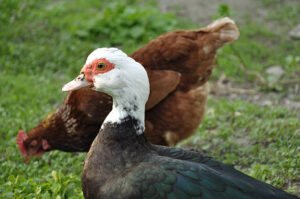
Muscovy ducks (Cairina moschata), though more resistant to some avian diseases, can also become infected with Sarcocystis species. Their tendency to free-range and forage in diverse environments increases their likelihood of ingesting contaminated materials. Muscovies are commonly reared in backyard and rural settings where contact with wild or domestic carnivores is more frequent, further elevating infection risk.
Rouen ducks, a large breed similar to wild mallards, are also prone to infection, especially when allowed to roam near wetlands or areas frequented by wild birds and predators. Their close genetic relationship to wild waterfowl makes them more susceptible to diseases naturally circulating in wild populations.
Khaki Campbell and Indian Runner ducks, primarily raised for egg production, are less commonly associated with severe sarcocystosis but can still become infected. Their active foraging behavior increases exposure, particularly in extensive farming systems. Young ducklings of all breeds are generally more susceptible due to immature immune systems, and high stocking densities can exacerbate transmission.
In general, commercial breeds raised in intensive systems are at significant risk if biosecurity measures are inadequate. Conversely, free-range and backyard ducks are exposed to a broader range of environmental contaminants, including feces from definitive hosts. Thus, breed susceptibility is less about inherent genetic vulnerability and more about management and exposure. Nevertheless, Pekin ducks remain the most frequently reported breed in clinical cases due to their widespread use in global duck production.
Life Stages Affected
Sarcocystosis can affect ducks at any life stage, but ducklings and young growing birds are most vulnerable to severe clinical disease. This heightened susceptibility is attributable to their immature immune systems and rapid physiological development. During the first few weeks of life, ducklings have not yet developed robust immune responses, making them more prone to high parasite loads and systemic complications.
Infection typically occurs when ducklings ingest sporocysts from contaminated feed, water, or soil. The acute phase of the disease, characterized by merogony (asexual replication in endothelial cells of blood vessels), can lead to widespread tissue damage. Young birds may exhibit severe depression, anorexia, stunted growth, and even death before sarcocysts are detectable in muscles.
In contrast, adult ducks often develop subclinical or chronic infections. They may harbor numerous sarcocysts in their muscles without showing overt signs of illness, serving as long-term reservoirs of the parasite. However, stress factors such as overcrowding, poor nutrition, or concurrent diseases can reactivate latent infections or increase susceptibility.
Laying hens may experience reproductive impacts, such as reduced egg production and hatchability, due to the energy drain caused by chronic parasitism. Older ducks with prolonged or repeated exposure may develop fibrotic muscle lesions, reducing meat quality and utility.
It is important to monitor all life stages, but special attention should be given to ducklings aged 2–8 weeks, as this is the critical window for infection and disease expression.
Diagnosis of Sarcocystosis in Ducks
Diagnosing sarcocystosis in live ducks can be challenging due to the often subclinical nature of the infection and the lack of pathognomonic clinical signs. A combination of clinical observation, history, post-mortem examination, and laboratory testing is typically required for an accurate diagnosis.
1. Post-Mortem Examination (Necropsy):
The most definitive diagnostic method is necropsy. The presence of white, rice-like cysts in muscle tissues—particularly the pectoral, leg, and cardiac muscles—is a strong indicator of sarcocystosis. These cysts are usually 0.5–5 mm long and can be seen with the naked eye or under a dissecting microscope.
2. Histopathology:
Tissue samples from affected muscles are fixed, sectioned, and stained (commonly with hematoxylin and eosin). Microscopic examination reveals sarcocysts within muscle fibers, often surrounded by inflammatory cells. The cyst wall structure and internal bradyzoites help in species identification.
3. Muscle Squash Preparation:
A simple and effective field method involves pressing a small piece of affected muscle between two glass slides and examining it under a compound microscope. Bradyzoites released from ruptured cysts appear as crescent-shaped, motile structures.
4. Serological Tests:
ELISA (Enzyme-Linked Immunosorbent Assay) and indirect fluorescent antibody tests (IFAT) can detect antibodies against Sarcocystis in serum. While useful for herd-level screening, they cannot distinguish between past and current infections.
5. Molecular Techniques:
PCR (Polymerase Chain Reaction) assays targeting Sarcocystis DNA from tissue samples provide high specificity and sensitivity. This method allows for species identification and is increasingly used in research and confirmatory diagnostics.
6. Fecal Examination (Limited Use):
Unlike other coccidia (e.g., Eimeria), Sarcocystis does not typically shed oocysts in the feces of intermediate hosts (ducks). Therefore, fecal flotation is not useful for diagnosing infection in ducks. Oocysts are only shed by definitive hosts (e.g., dogs, cats).
Differential Diagnosis:
Sarcocystosis must be differentiated from other conditions causing muscle lesions or systemic illness in ducks, including:
- Avian influenza
- Duck viral enteritis (duck plague)
- Nutritional myopathies (e.g., selenium/vitamin E deficiency)
- Neoplasms (e.g., lymphoid leukosis)
- Other parasitic infections (e.g., Eimeria, Histomonas)
A thorough diagnostic approach combining clinical signs, history of carnivore exposure, and laboratory confirmation is essential for accurate diagnosis.
Treatment of Sarcocystosis in Ducks
Currently, there are no approved or consistently effective treatments for sarcocystosis in ducks. Once sarcocysts are formed in the muscles, they are largely resistant to available antiprotozoal drugs. This makes therapeutic intervention largely ineffective in clinical cases.
Some studies have explored the use of drugs during the acute, pre-cyst stage (meront phase), including:
- Sulfonamides (e.g., sulfadimethoxine)
- Pyrimethamine
- Amprolium
- Clindamycin
These agents may inhibit early schizogony and reduce parasite multiplication if administered early after infection. However, their efficacy is limited, and concerns about drug residues, regulatory approval, and toxicity in ducks restrict their use.
In commercial settings, treatment is generally not recommended due to lack of approved drugs, poor cost-benefit ratio, and the risk of resistance development. Infected birds are often culled to prevent spread and reduce economic losses.
Supportive care for sick ducks may include:
- Providing clean water and easily digestible feed
- Reducing stress (e.g., overcrowding, temperature extremes)
- Administering vitamins (especially A, E, and B-complex) to support immune function
- Treating secondary bacterial infections with appropriate antibiotics under veterinary guidance
Antioxidants such as selenium and vitamin E may help mitigate muscle damage caused by oxidative stress during infection.
Ultimately, treatment is not a viable control strategy. The focus must shift to prevention and biosecurity to minimize the risk of infection.
Prognosis and Complications
The prognosis for ducks infected with Sarcocystis depends on several factors, including the parasite load, age of the bird, immune status, and management conditions.
- In acute, heavy infections, especially in ducklings, the prognosis is guarded to poor. Widespread schizogony can lead to vasculitis, hemorrhage, multi-organ failure, and sudden death. Mortality rates can be high in uncontrolled outbreaks.
- In subclinical or chronic cases, the prognosis is fair to good. Adult ducks may survive with minimal clinical signs but suffer reduced productivity and poor meat quality.
- Ducks that recover from acute infection may harbor lifelong sarcocysts, acting as reservoirs and shedding bradyzoites upon ingestion by definitive hosts.
Complications of sarcocystosis include:
- Muscle atrophy and fibrosis: Chronic inflammation around sarcocysts leads to scar tissue formation, reducing meat yield and tenderness.
- Reduced growth rate and feed efficiency: Infected birds divert energy to immune response, impairing weight gain.
- Economic losses: Carcass condemnation at slaughter due to visible cysts results in significant financial impact.
- Secondary infections: Tissue damage from Sarcocystis invasion may predispose ducks to bacterial or fungal infections.
- Reproductive decline: Laying ducks may experience decreased fertility and egg production.
- Spread to wild populations: Infected domestic ducks can transmit parasites to wild waterfowl, disrupting ecosystems.
Because of the irreversible nature of muscle cysts and lack of effective treatment, prevention is far more important than cure.
Prevention and Control Measures
Preventing sarcocystosis in ducks requires a multi-pronged approach focusing on breaking the parasite’s life cycle by targeting both intermediate and definitive hosts.
1. Biosecurity:
- Prevent access of dogs, cats, and wild carnivores to duck housing and feeding areas.
- Install fencing, covered pens, and bird netting to minimize contamination from external sources.
- Restrict movement of personnel and equipment between farms.
2. Sanitation and Hygiene:
- Regularly clean and disinfect duck pens, feeders, and waterers.
- Remove feces promptly and compost or dispose of waste safely.
- Provide clean, uncontaminated drinking water (preferably from a closed system).
3. Feed and Water Management:
- Store feed in sealed containers to prevent contamination by animal feces.
- Avoid using feed that has been exposed to wild birds or predators.
- Use automatic waterers to reduce fecal-oral transmission.
4. Avoid Raw Meat Feeding:
- Never feed ducks raw meat or offal from animals that may have consumed infected birds, as this can transmit sarcocysts.
5. Rodent and Pest Control:
- Rodents can carry sporocysts on their fur or in their digestive tracts, acting as mechanical vectors.
6. Pasture and Range Management:
- Rotate pastures and avoid grazing ducks in areas frequented by predators.
- Allow fallow periods for land to reduce environmental contamination.
7. Surveillance and Monitoring:
- Conduct regular post-mortem examinations on culled or dead birds.
- Use serological or molecular tools to monitor flock health status.
8. Education and Awareness:
- Train farm workers about the risks of sarcocystosis and the importance of hygiene.
- Educate dog and cat owners about the risk of spreading sporocysts through feces.
Implementing these preventive measures significantly reduces the risk of infection and helps maintain flock health and productivity.
Diet and Nutrition in Relation to Sarcocystosis
While diet does not directly prevent Sarcocystis infection, optimal nutrition plays a critical role in supporting immune function and enhancing resilience against parasitic diseases.
Key Nutritional Considerations:
- Protein: Adequate dietary protein is essential for tissue repair and immune response. Deficiencies can impair antibody production and increase susceptibility.
- Vitamins:
- Vitamin A: Supports epithelial integrity, preventing parasite entry.
- Vitamin E and Selenium: Act as antioxidants, protecting cells from oxidative damage during infection. They also enhance immune cell function.
- Vitamin B-complex: Supports energy metabolism and nervous system function, especially important in stressed birds.
- Minerals:
- Selenium deficiency is linked to white muscle disease, which may mimic or exacerbate sarcocystosis-induced myopathy.
- Zinc and Copper: Involved in immune regulation and enzyme function.
- Probiotics and Prebiotics:
- Help maintain a healthy gut microbiome, reducing intestinal inflammation and improving nutrient absorption.
- May indirectly reduce pathogen load and support mucosal immunity.
Feeding Practices:
- Provide balanced, species-specific diets formulated for ducks at different life stages.
- Avoid feed contamination by storing it in predator-proof containers.
- Ensure constant access to clean water, as dehydration weakens immunity.
While no specific diet can eliminate Sarcocystis, a well-nourished duck is better equipped to withstand infection and recover from illness. Nutritional support should be part of an integrated disease management strategy.
Zoonotic Risk of Sarcocystosis
The zoonotic potential of Sarcocystis species infecting ducks is currently considered low, but not entirely absent.
Most Sarcocystis species are host-specific, meaning those infecting ducks (e.g., S. rileyi) do not readily infect humans. However, some species such as S. hominis and S. suihominis use humans as definitive hosts, acquiring infection by consuming raw beef or pork containing sarcocysts.
There have been rare, unconfirmed reports of human intestinal sarcocystosis after consumption of undercooked meat from infected birds or reptiles. However, no definitive cases of human infection from duck Sarcocystis have been scientifically confirmed.
Still, caution is advised:
- Never consume raw or undercooked duck meat, especially from free-range or wild ducks.
- Proper cooking (internal temperature of at least 70°C/158°F) kills bradyzoites.
- Good hygiene during meat handling prevents cross-contamination.
Immunocompromised individuals should be particularly cautious. While the risk is minimal, public health authorities recommend avoiding raw poultry products to prevent not only sarcocystosis but also salmonellosis, campylobacteriosis, and other foodborne diseases.
Veterinarians and farm workers should use protective gear when handling infected tissues to minimize any theoretical risk.
Conclusion
Sarcocystosis in ducks is an important parasitic disease with significant implications for poultry health, productivity, and economics. Caused by Sarcocystis species, it spreads through a complex life cycle involving ducks as intermediate hosts and carnivores as definitive hosts. While often subclinical, severe infections can lead to high morbidity and mortality, especially in young birds.
Key signs include lethargy, weight loss, and characteristic “rice breast” lesions in muscles. Diagnosis relies on post-mortem findings and laboratory tests, as clinical signs are non-specific. Unfortunately, no effective treatments exist, making prevention the cornerstone of control.
Critical preventive measures include strict biosecurity, sanitation, and limiting exposure to definitive hosts. Proper nutrition enhances immune defense, reducing disease impact. Although zoonotic transmission from ducks is unlikely, safe food handling practices are essential.
With increasing interest in sustainable and free-range duck farming, awareness of sarcocystosis must grow among producers and veterinarians. By implementing science-based management practices, the risks of this disease can be minimized, ensuring healthy flocks and safe poultry products.
#SarcocystosisInDucks, #DuckDiseases, #RiceBreastDisease, #DuckHealth, #PoultryParasites, #DuckFarmingTips, #AvianHealth, #DuckCare, #BackyardDucks, #PoultryFarmers, #DuckMeatSafety, #SarcocystisInfection, #WaterfowlHealth, #DuckProduction, #FarmBiosecurity, #DuckNutrition, #ZoonoticDiseases, #VeterinaryScience, #DuckDiagnosis, #DuckTreatment, #PoultryManagement, #DuckParasites, #DuckImmunity, #DuckFarmers, #AnimalHealth, #DuckCysts, #DuckMuscleLesions, #DuckFlockHealth, #PreventDuckDisease, #DuckVaccination, #DuckHygiene, #FreeRangeDucks, #DuckEggProduction, #DuckWellness, #DuckScience, #DuckResearch, #DuckPathology, #DuckPCR, #Sarcocystisrileyi, #DuckFoodSafety, #EcoFriendlyFarming






Add comment