
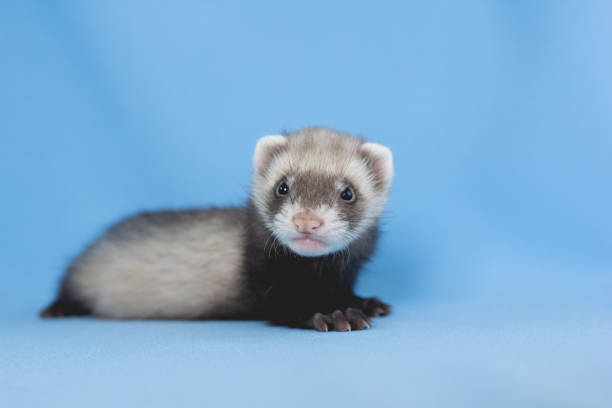
Sarcoptic mange, colloquially known as scabies, is a highly contagious, pruritic skin disease caused by the microscopic mite Sarcoptes scabiei. Though mange is more frequently discussed in canine, feline, and wildlife contexts, ferrets (Mustela putorius furo) are notably susceptible. In the ferret community, an outbreak can spread rapidly through breeding colonies, rescue facilities, and even household pet groups, leading to severe welfare concerns, costly veterinary interventions, and potential zoonotic transmission to humans.
The disease’s hidden nature—early lesions are subtle and often mistaken for allergies or minor dermatitis—makes early detection a challenge. Moreover, the mite’s burrowing habit renders topical treatments ineffective unless the therapy reaches the sub‑epidermal layer. Consequently, a comprehensive understanding of the parasite’s biology, clinical presentation, diagnostic nuances, and evidence‑based treatment is indispensable for ferret owners, breeders, and veterinary professionals.
2. Etiology & Life Cycle of Sarcoptes scabiei
2.1 Species‑Specific Varieties
Saroptes scabiei is a species‑specific ectoparasite; distinct “varieties” (or “strains”) preferentially infest different hosts (e.g., S. scabiei var. canis in dogs, var. hominis in humans). The ferret‑specific variety—sometimes termed S. scabiei var. furo—has adapted to the ferret’s thin epidermis and high body temperature (≈ 38.5 °C). Nevertheless, cross‑species infestations occur, especially where ferrets share environments with dogs, cats, or wildlife (e.g., foxes, raccoons).
2.2 Transmission Routes
| Route | Description | Likelihood in Ferrets |
|---|---|---|
| Direct contact | Bite, grooming, or skin‑to‑skin interaction with an infested animal | High – primary route |
| Indirect (fomites) | Contaminated bedding, cages, grooming tools, or clothing | Moderate – mites survive up to 48 h in the environment |
| Vertical transmission | From dam to kits via nursing or close nest contact | Low‑to‑moderate – documented in severe infestations |
2.3 Environmental Survivability
- Temperature: 20‑30 °C supports survival for 24‑48 h; higher temperatures (> 35 °C) rapidly desiccate mites.
- Humidity: 70‑80 % relative humidity extends viability.
- Substrate: Soft, porous bedding (e.g., fleece blankets) harbors mites longer than hard surfaces.
Practical implication: Prompt cleaning with hot water (≥ 60 °C) or steam, followed by a 10‑minute exposure to a 2 % chlorhexidine solution, dramatically reduces environmental burden.
3. Epidemiology in Ferret Populations
3.1 Geographic Distribution
Mange in ferrets has been reported worldwide, with higher incidence in:
- North America: Especially in ferret rescue shelters where mixed‑species intake occurs.
- Europe (UK, Germany, France): Breeding farms and hobbyist colonies.
Seasonality is minimal because indoor housing eliminates the temperature swings that influence mite life cycles in wild mammals.
3.2 Risk Factors
| Factor | How It Increases Risk |
|---|---|
| Age – young kits (< 6 months) | Immature immune system, higher grooming contact with dam |
| Housing density – crowded cages | Increased direct contact, difficulty in cleaning |
| Compromised immunity – concurrent viral (e.g., ferret enteric coronavirus) or bacterial infections | Reduced ability to contain mite proliferation |
| Recent introduction of new animals | Potential carrier without visible lesions |
| Improper quarantine | Allows asymptomatic carriers to mingle |
| Stress – transport, handling, or environmental changes | Alters cortisol levels, impairing skin barrier function |
Understanding these risk vectors aids in designing targeted control programs.
4. Clinical Presentation
4.1 Early Skin Changes
- Fine papular eruptions on the face, ears, and dorsal neck (often first‑noticed as “tiny bumps”).
- Mild erythema with subtle scaling.
- Localized itching—ferrets may scratch with their hind paws, rub against cage bars, or exhibit “tail‑chasing” behavior.
4.2 Progressive Lesions and Alopecia Patterns
| Body Region | Typical Lesion | Notes |
|---|---|---|
| Head & Neck | Crusty, hyperkeratotic patches; often “cobblestone” appearance | Frequently first site; may mimic dermatitis |
| Dorsum & Tail | Broad, circular alopecia with dry, thickened skin | Central area may be markedly hair‑less, margins show “scalloped” edge |
| Ventral Surface | Less commonly involved but can show fine scaling and erythema | May be obscured by secretions |
| Pinnae & Ear Canal | Crusts and pruritus; mite burrows may be visible in the external canal | Potential for secondary otitis |
Advanced mange can lead to cutaneous ulceration, secondary bacterial pyoderma, and hyperpigmentation after healing.
4.3 Systemic Signs
- Pruritus: Constant, intense; often results in self‑trauma, excoriations, and secondary infection.
- Weight loss & cachexia: Chronic inflammation and secondary infection increase metabolic demands.
- Lethargy: Due to discomfort, anemia from chronic infection, or systemic spread.
- Fever & lymphadenopathy: May appear in severe cases with bacterial superinfection.
4.4 Differential Diagnoses
| Condition | Key Distinguishing Features |
|---|---|
| Allergic dermatitis | Seasonal pattern, resolves with allergen removal; no mite burrows. |
| Ringworm (dermatophytosis) | Circular, hair‑loss plaques with central clearing; KOH prep positive for hyphae. |
| Sebaceous adenitis | Thickened sebaceous glands, “greasy” coat; histopathology required. |
| Flea allergy dermatitis | Presence of fleas/flea dirt; lesions usually perianal, inguinal. |
| Nutritional deficiency (e.g., Vitamin A) | Generalized skin dullness, not pruritic; diet analysis reveals deficits. |
A systematic approach that incorporates history, physical exam, and targeted diagnostics is essential to differentiate mange from these mimickers.
5. Diagnostic Approach
5.1 History Taking
- Onset & progression of skin changes.
- Contact history (new animals, shelter intake, wildlife exposure).
- Recent treatments (topical acaricides, steroids).
- Environment (bedding type, cleaning regimen).
- Human health (family members with pruritic rash).
5.2 Physical Examination Checklist
- Full‑body inspection under adequate lighting; use a magnifying lens (×10–20).
- Palpate for “grittiness”—a tactile clue of burrowing tunnels.
- Examine ears, tail, and interdigital spaces where mange often concentrates.
- Assess secondary infection (purulent discharge, odor).
- Record body condition score (BCS) to gauge systemic impact.
5.3 Laboratory Tests
5.3.1 Skin Scrapings (Direct Microscopy)
- Technique: Place a scalpel blade on the lesion, apply a drop of mineral oil, and scrape firmly for 5–10 seconds.
- Microscopy: Search for adult mites, eggs, and fecal pellets at 10–40× magnification.
- Sensitivity: 50–70 % on a single attempt; repeat scrapes from multiple sites increase detection.
5.3.2 Acetate Tape Impression & Skin Biopsy
- Tape impression: Press clear adhesive tape on a lesion, lift, and examine under a microscope. Useful when scraping fails.
- Punch biopsy (4 mm): Histopathology reveals mite tunnels (burrows) in the stratum corneum, eosinophilic infiltrates, and hyperkeratosis.
5.3.3 Serology & PCR
- Serology (ELISA for Sarcoptes antibodies) is rarely used in practice because antibodies persist after clearance.
- PCR on skin scrapings can confirm species/varietal identity but is not routinely available; useful in research or complex zoonotic investigations.
5.4 Interpreting Results & Ruling Out Mimics
- Positive mite identification = definitive diagnosis.
- Negative results but high clinical suspicion → repeat sampling, consider skin biopsy, and start empiric therapy while monitoring response.
6. Treatment Protocols
6.1 Primary Acaricidal Therapy
6.1.1 Topical Options
| Product | Dose & Frequency | Advantages | Caveats |
|---|---|---|---|
| Selamectin (Revolution®) | 0.2 mg/kg applied topically once, repeat in 2 weeks, then monthly for 2 months | Broad‑spectrum, safe in pregnant jills | Requires precise dosing; may be expensive |
| Moxidectin (Cydectin®) | 0.2 mg/kg spot‑on; repeat in 2 weeks, then monthly for 2 months | Long‑acting, high efficacy | Not labeled for ferrets in some regions; off‑label use |
| Lime Sulfur Dip | 2 % solution, soak 10 min, repeat weekly for 4 weeks | Low cost, kills mites in all life stages | Strong odor, can irritate if over‑exposed; not for neonates |
Key point: Topical acaricides must penetrate the stratum corneum; ensure the skin is clean and free of scabs before application.
6.1.2 Systemic Options
| Drug | Dose | Duration | Monitoring |
|---|---|---|---|
| Ivermectin | 0.2–0.4 mg/kg PO or IM once weekly for 4–6 weeks | Effective against all mite stages | Watch for neurotoxicity in P-glycoprotein deficient ferrets (rare) |
| Doramectin | 0.2 mg/kg SC once every 2 weeks for 3 doses | Longer half‑life, good for heavy infestations | Same safety considerations as ivermectin |
| Milbemycin oxime | 0.5 mg/kg PO once weekly for 3–4 weeks | Also controls nematodes | Generally well tolerated |
Safety tip: Never combine ivermectin with macrocyclic lactones without veterinary direction to avoid additive toxicity.
6.2 Managing Secondary Bacterial Infection
- Culture & Sensitivity (if purulent discharge present).
- Empirical antibiotics:
- Amoxicillin‑clavulanate 20 mg/kg PO q12h for 7‑10 days.
- Enrofloxacin 5 mg/kg PO q24h for Gram‑negative coverage (if indicated).
- Topical antiseptics: 0.05 % chlorhexidine solution applied twice daily.
6.3 Anti‑inflammatory & Antipruritic Adjuncts
| Agent | Dose | Indication |
|---|---|---|
| Prednisone (short‑course) | 0.5 mg/kg PO q24h for 5 days, taper if needed | Severe inflammation, to break itch‑scratch cycle |
| Cetirizine | 0.5 mg/kg PO q24h | Histamine‑mediated pruritus |
| Omega‑3 fatty acids (fish‑oil capsules) | 100 mg/kg PO q24h | Improves skin barrier, reduces inflammation |
6.4 Supportive Care
- Hydration: Offer fresh water, consider sub‑cutaneous Ringer’s lactate if dehydrated.
- Nutrition: High‑quality, protein‑rich diet (see Section 9).
- Wound care: Clean exudate, apply silver‑sulfadiazine cream for deeper ulcers.
6.5 Special Considerations
| Population | Adjustments |
|---|---|
| Pregnant or lactating jills | Prefer selamectin (category B) or topical lime sulfur; avoid systemic ivermectin unless benefits outweigh risks. |
| Neonatal kits (< 4 weeks) | Use lime sulfur dips only; avoid topical acaricides that may cause skin irritation. |
| Geriatric ferrets (> 5 years) | Reduce dosage of systemic drugs by 25 % if hepatic/renal compromise is suspected; monitor blood chemistry. |
7. Prognosis & Potential Complications
7.1 Expected Outcomes with Timely Therapy
- Recovery rate: > 90 % of ferrets achieve full remission when therapy starts within 2 weeks of clinical onset.
- Time to cure: 6–8 weeks for lesions to resolve completely; itching often subsides within the first 2 weeks.
7.2 Chronic Mange, Hyperkeratosis, and Scarring
- Prolonged infestations (> 4 weeks) lead to epidermal thickening; even after mite eradication, a hyperkeratotic “crust” may persist for 2–3 months.
- Scarring alopecia can be permanent if deep dermal damage occurs.
7.3 Immunosuppression & Opportunistic Infections
- Chronic mange suppresses local immunity, predisposing to Staphylococcus aureus pyoderma, Pseudomonas infections, and yeast overgrowth (Malassezia spp.).
7.4 Impact on Reproductive Performance and Lifespan
- Decreased breeding success: Infested jills may experience reduced conception rates and smaller litter sizes.
- Reduced lifespan: Severe systemic involvement (e.g., sepsis) can be fatal, especially in older or immunocompromised ferrets.
8. Prevention Strategies
8.1 Quarantine and Health‑Screening
- Isolate new arrivals for at least 30 days; perform weekly skin checks and a single skin scraping before integration.
8.2 Environmental Decontamination
| Step | Method | Frequency |
|---|---|---|
| Bedding replacement | Hot‑wash (> 60 °C) or discard disposable bedding | Weekly |
| Cage disinfection | 2 % chlorhexidine soak 10 min, then rinse | After each cleaning cycle |
| Tool sterilization | Autoclave grooming brushes or soak in 70 % isopropanol | After each use |
| Air filtration | HEPA filter in breeding rooms | Continuous |
8.3 Regular Ectoparasite Prophylaxis
- Monthly spot‑on selamectin or moxidectin for all ferrets in a multi‑animal household.
- Routine inspection: Quick visual skin survey at each veterinary wellness exam.
8.4 Vaccination
- No commercially available vaccine for sarcoptic mange in ferrets. Experimental recombinant vaccines are under investigation but not yet field‑ready.
8.5 Owner Education & Early‑Detection Programs
- Distribute visual guides highlighting early mange lesions.
- Encourage owners to report any pruritic signs immediately to their veterinarian.
9. Diet, Nutrition, and Immune Support
9.1 Baseline Nutrient Requirements
| Nutrient | Recommended Daily Intake (approx.) |
|---|---|
| Protein | 30–35 % of metabolizable energy (ME) – high‑quality animal sources (e.g., chicken, turkey, fish) |
| Fat | 15–20 % ME – essential for skin health |
| Carbohydrate | ≤ 5 % ME – ferrets are obligate carnivores |
| Fiber | Minimal (≤ 2 %) – excess can ferment and irritate gut |
| Vitamins | A, D3, E, B‑complex (especially B12) – crucial for epidermal turnover |
| Minerals | Calcium:Phosphorus ≈ 1:1, Zinc, Selenium – support immunity and skin integrity |
9.2 Foods That Bolster Skin Integrity
- Fish oil (EPA/DHA) – anti‑inflammatory, enhances barrier function.
- Egg yolk – natural source of biotin and vitamin E.
- Organ meats (liver, kidney) – rich in B‑vitamins and trace minerals.
- Lean muscle meat – primary protein source; avoid processed “dog food” formulas that contain fillers.
9.3 Supplements During and After Mange Treatment
| Supplement | Dose | Duration | Rationale |
|---|---|---|---|
| Omega‑3 fatty acids (fish‑oil capsules) | 100 mg/kg PO q24h | 8 weeks | Reduces inflammation, aids coat recovery |
| L‑Lysine | 10 mg/kg PO q12h | 4 weeks | Supports immune response against viral co‑infections |
| Probiotic blend (Lactobacillus spp.) | 1 × 10⁹ CFU/day | 6 weeks | Maintains gut health, reduces stress‑related dermatitis |
| Vitamin E (α‑tocopherol) | 10 IU/kg PO q24h | 4 weeks | Antioxidant, promotes skin healing |
9.4 Feeding Practices That Reduce Stress
- Small, frequent meals (2–3 times daily) to mimic natural hunting behavior.
- Separate feeding stations to prevent competition and skin trauma.
- Avoid sudden diet changes; transition gradually over 7 days.
10. Zoonotic Risk & Public Health Considerations
10.1 Human Scabies Caused by Sarcoptes scabiei var. furo
Although the majority of human scabies cases arise from S. scabiei var. hominis, cross‑species transmission from ferrets has been documented, especially in owners with prolonged close contact or compromised immunity.
10.2 Transmission Dynamics
- Direct skin‑to‑skin contact (handling, cuddling) is the primary route.
- Fomites (bedding, grooming tools) can harbor mites for up to 48 h.
- Occupational exposure (veterinarians, shelter workers) carries a higher risk.
10.3 Clinical Presentation in Humans
- Papular rash with intense nocturnal itching, often on the wrists, interdigital spaces, and trunk.
- Burrows visible as thin, serpiginous tracks under a dermatoscope.
- Secondary bacterial infection may develop from scratching.
10.4 Protective Measures
| Action | Implementation |
|---|---|
| Personal protective equipment (PPE) | Gloves and disposable gowns when handling infested ferrets; wash hands thoroughly afterward. |
| Hygiene | Launder clothing and bedding at ≥ 60 °C; use disposable wipes for cage cleaning. |
| Isolation | Keep the infected ferret in a separate room; limit human‑ferret contact until treatment completion. |
| Medical evaluation | Seek dermatologist consultation if any pruritic rash appears; inform clinician about ferret exposure. |
10.5 Reporting Obligations & Occupational Health
- In many jurisdictions, scabies is a notifiable disease when occupationally acquired. Veterinary clinics should maintain a log of staff exposures and submit reports to local public‑health authorities as required.
- Vaccination against unrelated diseases (e.g., influenza) is encouraged to reduce overall immune burden, though no vaccine exists for scabies itself.
11. Owner‑Centric Checklist & Quick Reference
| Item | What to Do | Frequency |
|---|---|---|
| Visual skin inspection | Look for papules, crusts, alopecia | Weekly |
| Weight & BCS check | Record any loss | Monthly |
| Environmental clean‑up | Change bedding, disinfect cages | Weekly |
| Acaricide administration | Follow prescribed protocol (e.g., selamectin) | As per schedule |
| Monitor for side effects | Lethargy, loss of appetite, GI upset | Daily during treatment |
| Human health watch | Check family members for itching rash | Ongoing |
| Veterinary follow‑up | Re‑scrape or biopsy if lesions persist | 2 weeks after starting therapy |
| Nutritional support | Add omega‑3, vitamin E supplements | Throughout treatment and recovery |
#FerretMange, #FerretScabies, #FerretHealth, #ExoticPetCare, #SarcopticMange, #PetDermatology, #FerretWellness, #FerretNutrition, #ZoonoticScabies, #FerretOwners, #VeterinaryMedicine, #FerretLife, #MangeTreatment, #FerretDiet, #PetPrevention, #FerretBreeder, #FerretRescue, #AnimalWelfare, #PetSafety, #FerretCommunity, #FerretLove, #FerretSupport, #FerretCareTips, #FerretInfo, #PetZoonoses, #FerretHealing, #FerretRecovery, #FerretLifestyle, #FerretScience, #FerretEducation



Add comment