
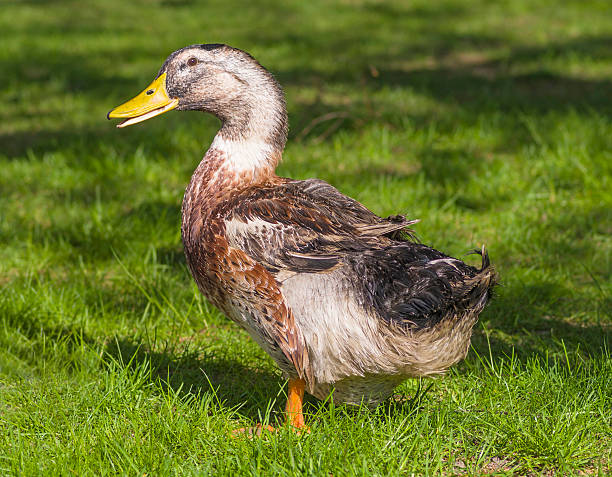
Saxon Ducks, a versatile and resilient waterfowl breed, have become a staple in both large-scale agricultural operations and backyard flocks. Originating in Germany during the 19th century, these ducks are celebrated for their dual-purpose utility, excellent for meat and egg production. As descendants of Pekin ducks, Saxon Ducks inherit a robust build and adaptability, making them ideal for diverse climates and farming systems. Their lineage is closely tied to selective breeding efforts across Europe, particularly in regions like Germany and the Netherlands, where their attributes for hardiness and productivity were refined.
Modern-day Saxon Ducks are prized for their docile temperaments, making them popular among homesteaders and commercial farmers alike. Their ability to thrive in various conditions and contribute to sustainable poultry systems has solidified their role in global agriculture. With a unique combination of fast growth rates for meat and consistent egg-laying capabilities, Saxon Ducks offer a multifaceted value to both small-scale and industrial operations. Their history is steeped in practicality, as they were originally bred to fulfill the demand for reliable, high-yield poultry in temperate regions.
This guide delves into the intricacies of Saxon Ducks, from their physical and behavioral characteristics to their reproductive cycles, nutritional needs, and housing requirements. Whether you’re a poultry enthusiast, a sustainable farmer, or a backyard keeper seeking a reliable addition to your flock, this article will equip you with the knowledge to care for and optimize the potential of Saxon Ducks. By exploring their adaptability, health considerations, and economic significance, readers will gain a holistic understanding of why these ducks remain a cornerstone of waterfowl farming.
2. Other Names & Synonyms
Saxon Ducks are also known as Sachsenenten in German, a name that reflects their historical roots in Saxony, a region in eastern Germany. They are sometimes called Saxon Pekin Ducks, a nod to their ancestry among Pekin ducks, which were first developed in China. In some regions, they are referred to as Pekingese Saxon Ducks, though this name is less commonly used.
The breed has experienced occasional misidentification with Pekin and Magpie ducks due to similarities in physical traits. To avoid confusion, breeders and poultry experts emphasize the importance of understanding regional variations and proper nomenclature. In the Netherlands, Saxon Ducks are sometimes marketed under alternate labels, while in the United States, they are occasionally grouped with Pekin ducks.
Regardless of their name, Saxon Ducks are recognized for their utility in dual-purpose poultry systems. By focusing on breed-specific terminology, enthusiasts and farmers can ensure accurate identification and appreciation of the unique qualities that define Saxon Ducks in global poultry culture.
3. Primary Breed Purpose
Saxon Ducks are versatile birds bred for both meat and egg production, making them an excellent choice for small-scale farms and homesteads. Their meat is prized for its tender, well-marbled texture, particularly in the breast region, which is highly valued in culinary dishes. The ducks reach market weight quickly, typically in 6 to 8 weeks, and can be processed while maintaining a high yield of quality meat.
In addition to their meat-producing capabilities, Saxon Ducks lay a consistent number of eggs—approximately 250 per year in optimal conditions. Their large, white or tinted eggs are well-suited for backyard flocks and commercial operations alike. The ducks are also known for their high fertility rates, which increase the efficiency of breeding programs. Their ability to thrive in diverse climates and adapt to confined or free-range environments further enhances their appeal.
For homesteaders and small-scale farmers, Saxon Ducks offer a reliable source of income and sustenance. Their dual-purpose utility ensures they contribute to both dietary needs and financial returns, making them an essential component of sustainable poultry farming.
4. Physical Characteristics
Saxon Ducks are compact to medium-sized birds with a distinctive, stocky build that reflects their dual-purpose heritage. Their bodies are broad and squarely proportioned, giving them a plump appearance that is characteristic of high-quality meat producers. The males are slightly larger and more muscular than the females, though both exhibit a balanced, well-fitted physique.
One of the most striking features of Saxon Ducks is their soft, dense plumage, which insulates them against extreme weather conditions. Their feathers are typically white, though some variants exhibit a golden or piebald coloration. The head and neck are slightly longer than other duck breeds, with a gentle arc that frames a well-defined rose-comb. Their eyes are bright and alert, often in shades of reddish-brown, and their legs are strong, with webbed feet that facilitate effortless movement in water.
The body shape of Saxon Ducks contributes to their efficiency in both foraging and flight—though their stocky build limits sustained flight, they are capable of short bursts to escape predators. Their broad wings, rounded tail feather, and straight back give them a symmetrical, aesthetically pleasing appearance. When compared to other duck breeds, such as Pekins or Magpies, Saxon Ducks display a slightly smaller and more compact frame, yet their robust constitution allows them to thrive in diverse conditions.
Their calm and approachable temperament makes them popular among backyard keepers. Whether they are swimming in a pond or foraging on a homestead, Saxon Ducks exemplify the perfect blend of functionality and charm in a poultry breed.
5. Weight & Growth Curve
Saxon Ducks exhibit a consistent growth curve, reaching market weight relatively quickly. Males typically weigh between 3 to 4 kilograms at maturity, while females weigh slightly less, ranging from 2.5 to 3.5 kilograms. Under optimal conditions, ducklings can gain 200 to 300 grams in their first four weeks of life, with males often outpacing females in weight gain. By the end of the eighth week, most ducks will have reached around 900 grams, and full market weight is usually attained by 10 to 12 weeks of age.
For egg production, females reach a mature weight of approximately 5 to 6 kilograms, which supports sustained laying cycles and fertility. The ducks’ rapid growth rate makes them ideal for meat production, especially in commercial settings where efficiency is paramount. However, purebred Saxon Ducks may grow at a slightly slower rate than hybridized breeds, emphasizing the importance of proper nutrition and housing conditions to maximize their growth potential.
Their ability to gain weight quickly and efficiently is a key factor in their popularity among poultry farmers. Whether raised for meat or eggs, Saxon Ducks demonstrate a remarkable capacity to thrive and contribute to sustainable farming systems.
6. Climatic Tolerances
Saxon Ducks are remarkably adaptable to a wide range of climates, making them a versatile choice for poultry keepers in temperate, subtropical, and even arid regions. Their dense plumage and compact body structure provide natural insulation, allowing them to withstand both cold and heat. In colder environments, such as northern Europe or North America, Saxon Ducks can survive temperatures as low as -5°C (20°F) if provided with shelter and dry bedding. Conversely, they can endure heat up to 35°C (95°F) and beyond, though they require access to fresh water and shaded areas to prevent heat stress.
In extreme climates, additional management strategies enhance their comfort and productivity. In cold regions, insulated coops with raised floors and windbreaks help maintain body heat, while in hot climates, ponds or misting systems regulate body temperature. Duck keepers in arid zones often rely on shaded enclosures and supplemental hydration to support their livestock’s well-being.
Saxon Ducks’ ability to adapt to diverse conditions is a testament to their hardiness and practicality. Whether raised in small backyard flocks or large-scale operations, their resilience ensures they contribute effectively to poultry systems across the globe.
7. Reproduction & Egg Production
Saxon Ducks are highly fertile and lay an impressive number of eggs annually, averaging 250 to 300 eggs per year under optimal conditions. Their eggs are large, averaging 60 grams each, and are typically white or slightly tinted in color. The ducks exhibit a consistent laying cycle, with the highest productivity observed during the first two years of life.
Their reproductive efficiency is supported by their high fertility rate, which typically ranges from 80 to 90 percent. This makes them ideal for both commercial egg farms and backyard breeding programs. Saxon Ducks are also known for their excellent maternal instincts, with hens readily accepting and hatching fertilized eggs. Clutch sizes range from 12 to 15 eggs, and hens often begin laying at the end of their first year of life.
Environmental factors significantly influence their egg-laying performance. Adequate nutrition, access to clean water, and a stress-free environment are essential for maintaining consistent production. In addition, natural lighting cycles play a role in regulating their laying periods, with egg production typically peaking during spring and summer months.
However, in less-than-ideal conditions—such as poor nutrition, disease, or extreme weather—egg production may decline. Selective breeding has helped improve their laying traits, but proper management remains crucial to maximizing their egg-laying potential.
8. Flying Ability
Saxon Ducks are generally flightless or only capable of short bursts of flight, typical of most domestic duck breeds. While some individuals can fly up to a few meters, their stocky build and wide wings limit sustained airborne movement. This makes them less likely to escape enclosures compared to wild ducks or certain heritage breeds.
Their flying ability is also influenced by age and fitness. Younger ducks, with lighter bodies, may attempt to take flight if startled, but they lack the endurance for prolonged periods in the air. As they mature and gain weight, their flight becomes increasingly limited.
In contrast to flight, Saxon Ducks are strong swimmers, able to glide through water with ease. Their webbed feet and streamlined body contribute to their aquatic agility, making them well-suited for environments with ponds or water sources. While they may not fly high, their instinctual behaviors—such as seeking out water and recognizing predators—ensure their survival and well-being.
9. Breed History & Origin
Saxon Ducks trace their origins to 19th-century Germany, where selective breeding programs aimed to develop a robust, productive waterfowl breed. Their ancestry is deeply rooted in the Pekin duck, a Chinese breed that was introduced to Europe in the 1860s and quickly became the foundation for new duck breeds. The Saxon Duck was selectively bred in regions such as Saxony and the Netherlands, where breeders sought to enhance traits like meat yield, egg production, and hardiness for commercial and small-scale farming.
The breed’s development was driven by the demand for a versatile duck that could thrive in European climates and contribute to sustainable poultry systems. Crossbreeding with Pekin and other local waterfowl varieties helped establish Saxon Ducks as a unique strain with improved adaptability. Over time, breeders refined their characteristics, prioritizing fast growth rates and high fertility to meet the needs of farmers.
Saxon Ducks gained popularity in the early 20th century, particularly in Germany and the Netherlands, where their efficiency made them a preferred choice for domestic agriculture. Their introduction to the United States and other parts of Europe followed in the mid-20th century, as international agricultural trade expanded. Today, Saxon Ducks remain a cornerstone of small-to-large-scale poultry farming, valued for their dual-purpose utility and resilience in diverse environments.
The history of Saxon Ducks underscores their importance in global waterfowl husbandry. Their development as a hardy, productive breed reflects the ingenuity of European duck breeders and their commitment to creating a poultry species that balances meat and egg production with environmental adaptability.
10. Life Expectancy
With proper care, Saxon Ducks typically live between 8 to 10 years, making them a long-term investment for poultry keepers. Their lifespan is influenced by several factors, including genetics, environmental conditions, diet, and disease prevalence. Ducks raised in stress-free, well-managed environments tend to thrive, while those exposed to poor nutrition, extreme weather, or illness may have a shorter lifespan.
Genetics play a significant role in longevity, with some individuals naturally more resilient than others. A balanced diet rich in protein, vitamins, and minerals supports overall health and longevity, while exposure to disease or parasites can significantly reduce lifespan. Environmental factors, such as access to clean water, predator protection, and appropriate housing, also contribute to their well-being.
Selective breeding for health and productivity has helped improve the breed’s lifespan, especially in commercial operations where health management is a priority. However, even with optimal care, few Saxon Ducks reach the upper limit of their lifespan. On rare occasions, individuals have lived for over 10 years, particularly in low-stress, backyard settings where they are not raised for meat production.
11. Common Health Issues
Saxon Ducks are generally hardy but can be prone to musculoskeletal issues due to their fast growth rates. Leg sprains, joint stress, and overuse injuries are common in young ducks raised for meat, particularly if they are overfed or lack sufficient space. Proper nutrition and movement are essential to preventing these conditions.
Obesity is another concern, especially in free-range hens or ducks fed an imbalanced diet high in carbohydrates. Excess weight can lead to mobility issues, reduced egg production, and increased susceptibility to disease. Feeding practices should include a well-balanced diet with limited access to high-fat treats.
Respiratory issues can also affect Saxon Ducks, particularly in subpopulations that are not bred for optimal health traits. Poor ventilation, damp conditions, and unsanitary housing can increase the risk of respiratory infections. Regular cleaning of coops and monitoring for signs of coughing or labored breathing are important for early intervention.
Parasites such as lice, mites, and worms can also impact the breed’s health. Regular deworming and pest control measures are necessary, especially in larger flocks. By addressing these common health concerns through proper management techniques, duck keepers can ensure their Saxon Ducks remain healthy and productive for years to come.
12. Breeding & Genetics
Breeding Saxon Ducks requires a strategic approach to maintain their genetic integrity and optimize productivity. Selective breeding for traits like meat yield, egg production, and disease resistance is essential for commercial and backyard operations. However, inbreeding can lead to a decline in genetic diversity and reduced fertility, making it important to source breeding stock from multiple, unrelated lines.
Linebred Saxon Ducks—those bred from closely related but genetically diverse ancestors—can enhance desirable traits while minimizing inbreeding risks. For example, crossing individuals from different subpopulations within the breed can improve overall vigor and productivity. On the other hand, purebreds may exhibit slightly lower fertility and growth rates compared to hybridized breeds, which are often preferred in large-scale meat production.
Breeding management plays a crucial role in ensuring healthy offspring. Hens that are in peak condition tend to produce higher-quality eggs and healthier ducklings, so providing a balanced diet and access to clean water is essential. Males should be selected for strong leg structure and robust health to avoid genetic disorders passed on to offspring. A typical ratio is one male per three to four females, which ensures adequate mating without overexerting the males.
Environmental factors also influence breeding outcomes. For natural mating, access to shallow water and nesting areas is necessary, though artificial insemination can be used to maximize fertility in commercial settings. Controlling temperature and lighting can regulate breeding cycles, especially in tropical regions where natural seasons may not align with optimal egg production.
For advanced keepers, genetic records are invaluable for tracking lineage and maintaining consistency in breeding programs. By understanding the genetic profile of breeding pairs and monitoring hatchling traits, farmers can make informed decisions to enhance the breed’s productivity and resilience.
13. Nutritional Requirements
A well-balanced diet is essential for maintaining the health and productivity of Saxon Ducks. These birds require high-quality feed that includes a mix of proteins, carbohydrates, fiber, vitamins, and minerals. Their diet should be tailored to their age, purpose (meat or egg production), and activity level.
For growing ducks, a feed formulation with at least 18–20% crude protein supports muscle development and healthy feather growth. Layer ducks benefit from a slightly lower protein content (around 16%), supplemented with additional calcium to support strong eggshells. Crude protein should include a balance of essential amino acids to promote optimal growth and fertility.
Carbohydrates provide energy and are best sourced from whole grains like corn and wheat. Fiber-rich ingredients such as fresh vegetables, grass clippings, and hay support digestive health and mimic their natural foraging habits. Ducks raised in free-range environments can supplement their diet with aquatic plants and insects, enhancing their nutritional intake.
Fresh water is non-negotiable, as ducks require constant access for drinking and digestion. In hot climates, ducks may consume more feed, so increasing protein and hydration accordingly is crucial. Conversely, during colder months, more frequent small meals can prevent energy loss and keep them warm.
Feeders should be designed to minimize waste and contamination, with raised platforms or automatic dispensers. Monitoring feed quality and adjusting formulations as ducks mature or as seasons change ensures they remain healthy and productive.
14. Housing & Environmental Design
Proper housing is critical for the welfare and productivity of Saxon Ducks. A well-designed coop should provide dry, draft-free accommodations while allowing for both land and water activities. The size of the coop depends on the number of ducks, with a general recommendation of 3 square feet per duck indoors and 50 square feet per duck outdoors.
The interior of the coop should include perching areas and litter-covered floors to support natural behaviors. Non-slip flooring is essential to prevent leg injuries, especially for ducks raised for meat. A deep-litter system using materials like straw or wood shavings helps control humidity and prevent disease. Ducks should have access to clean nesting boxes placed in quiet, secluded areas of the coop to encourage egg-laying.
Ventilation is a key consideration, as it reduces the risk of respiratory issues and keeps the coop dry. Windows, vents, or fans can enhance airflow without creating cold drafts. In colder regions, insulated coop walls and covered entrances help maintain a stable indoor temperature. In warmer climates, shaded enclosures and evaporative cooling techniques are necessary to prevent heat stress.
Security is another critical aspect of housing design. Predators such as raccoons, foxes, and birds of prey can threaten Saxon Ducks, so coops must be predator-proof. Heavy-duty wire fencing, secure locks, and underground barriers help prevent unwanted intrusions.
For free-range setups, ducks should have access to a fenced outdoor area where they can forage and exercise. Including a shallow pond or wading pool is beneficial, as ducks require water for swimming and preening. By designing a safe, comfortable, and stimulating environment, keepers can enhance their ducks’ quality of life and optimize their productivity.
Behavioral Traits & Enrichment
Saxon Ducks exhibit social behaviors that thrive in group settings, often forming hierarchies and bonding with familiar humans. Enrichment strategies such as foraging toys, floating objects in water, and rotating outdoor areas help prevent boredom. Providing scratching areas and perches encourages natural behaviors, promoting both mental and physical stimulation.
Economic Considerations
Saxon Ducks offer cost-effective options for meat and egg production. Their dual-purpose utility and low maintenance requirements reduce input costs, while their adaptability ensures profitability in diverse markets.
Environmental Impact
Their foraging habits and manure contribute to nutrient cycling in ecosystems. Proper management minimizes environmental strain, making Saxon Ducks a sustainable choice for eco-conscious farming.
Conclusion
Saxon Ducks stand out as a dynamic and practical breed for poultry keepers worldwide. Their versatility in meat and egg production, coupled with resilience and adaptability, makes them a valuable asset to both backyard and commercial operations. With proper care, they thrive in diverse environments and contribute to sustainable agriculture.
Frequently Asked Questions (FAQs)
1. Are Saxon Ducks good for beginners?
Yes. Their docile nature, ease of care, and adaptability make them ideal for novice duck keepers.
2. How long does it take for Saxon Ducks to reach market weight?
6–8 weeks for meat production.
3. Can Saxon Ducks lay eggs in cold climates?
Yes, but egg production may decline in extreme cold unless they have adequate shelter.
4. Do Saxon Ducks fly?
They are capable of short bursts of flight but are generally flightless.
5. Are Saxon Ducks noisy?
Ducks have a range of vocalizations but are not as loud as chickens.
6. How much water do Saxon Ducks need?
Access to clean, fresh water is essential for drinking and swimming.
7. What is the best feed for Saxon Ducks?
A balanced diet with 18–20% protein for growing ducks and 16% for layer ducks.
8. Can Saxon Ducks be raised in free-range systems?
Yes. They thrive in free-range environments with access to water and shelter.
9. Do Saxon Ducks get along with other poultry?
They coexist well with chickens and other ducks if introduced gradually.
10. What are common health issues in Saxon Ducks?
Leg injuries, obesity, respiratory issues, and parasites are the most frequent concerns.
#SaxonDucks #DuckBreeds #BackyardFarming #SustainableFarming #DuckKeeping #PoultryHusbandry #WaterfowlFarm #DuckNutrition #DuckBreedingTips #DuckHousing #DuckEggProduction #Homesteading #BackyardPoultry #DuckCare #DuckCommunity #DuckRearing #DuckLife #DuckFarm #DuckLovers
Add comment