
Unlocking Precision: A Comprehensive Guide to Target Training Your Dog with Clickers, Hands, and Objects
Imagine a world where your dog eagerly touches a specific spot, opens a cupboard, or gently nudges an object on command. This isn’t just a fantasy; it’s the power of target training. Far beyond basic obedience, target training is a sophisticated yet incredibly accessible method that empowers you to communicate precise instructions to your canine companion, opening doors to advanced behaviors, problem-solving, and a deeper bond.
This isn’t just about teaching a trick; it’s about building a foundation for clear communication, enhancing your dog’s cognitive abilities, and transforming everyday interactions. Whether you dream of a perfectly behaved housemate, a star in dog sports, or a capable service animal, target training is your secret weapon.
In this comprehensive guide, we’ll delve deep into the world of target training, exploring the critical roles of clickers, hands, and various objects. We’ll provide elaborate, step-by-step instructions, troubleshoot common challenges, and uncover the vast potential of this invaluable technique. Get ready to embark on a journey that will revolutionize your dog training approach!
Part 1: The Foundations of Target Training – What, Why, and How it Works
Before we dive into the practicalities, let’s establish a solid understanding of what target training is and why it’s so profoundly effective.
What is Target Training?
At its core, target training is the process of teaching your dog to touch a specific object or body part (like your hand or a stick) with a designated body part (usually their nose or paw) on cue. This seemingly simple action serves as a crucial building block for teaching more complex behaviors. Instead of luring your dog through every step of an action, target training allows your dog to actively participate by touching a designated target, which then guides them into the desired position or action.
Think of it like this: if you want your dog to go to their bed, instead of pushing them or luring them with a treat all the way, you teach them to “target” the bed. Once they touch it, they get rewarded. This empowers them to understand the goal rather than just following a fleeting lure.
Why is Target Training So Effective?
- Clarity and Precision: Targets provide an unambiguous visual cue for your dog. There’s no guesswork involved; they know exactly what they need to touch. This clarity reduces frustration for both dog and handler.
- Building Blocks for Complex Behaviors: Almost any multi-step behavior can be broken down into smaller targeting components. Want your dog to close a door? Teach them to target the door handle, then push. Want them to weave through your legs? Teach them to target your knee.
- Encourages Active Learning and Problem-Solving: Unlike purely lured behaviors, target training encourages your dog to think and offer the desired behavior. They learn to actively engage with the environment to earn rewards, fostering a smarter, more confident learner.
- Mental Stimulation: The focus and problem-solving involved in target training provide excellent mental exercise, which can be just as tiring and fulfilling as physical exercise. This is especially beneficial for high-energy or intelligent breeds.
- Enhances Focus and Attention: Dogs learn to pay close attention to the handler and the environment to identify the target, improving their overall focus during training.
- Reduces Reliance on Lures: While lures are often used initially to introduce the concept, target training quickly allows you to fade the physical lure, moving towards verbal cues and independent action.
- Strengthens the Bond: Positive reinforcement training, especially interactive methods like targeting, builds trust and rapport between you and your dog, making training a joyful shared experience.
Prerequisites for Success
While target training is adaptable for almost any dog, a few foundational elements will set you up for greater success:
- Attention: Your dog should be able to focus on you, even if briefly, in a low-distraction environment.
- Motivation: Your dog should be motivated by treats or toys. High-value rewards are crucial, especially in the initial stages.
- Basic Understanding of Positive Reinforcement: Familiarity with the general concept of rewarding desired behaviors will make the process smoother.
- Patience and Consistency: Like all training, progress isn’t always linear. Be prepared for ups and downs, and commit to consistent, short training sessions.
Part 2: Essential Tools for Target Training
Before we begin the hands-on work, let’s gather our essential tools. Each plays a specific, vital role in making target training effective and enjoyable.
The Clicker: Your Precision Communication Tool
The clicker isn’t just a noisemaker; it’s a powerful and precise communication device. Here’s why it’s indispensable for target training:
- Marker Signal: The clicker acts as an instantaneous, unambiguous “marker” that tells your dog, “YES! That specific moment, that exact behavior, is what earned you the reward!” This precision is impossible to achieve with just verbal praise or a treat alone, as there’s always a slight delay.
- Consistency: Unlike our voices, which can vary in tone and enthusiasm, a clicker consistently produces the same sound every time, making it a clear and reliable signal for your dog.
- Classical Conditioning: Before you use the clicker for training, you’ll “charge” it. This means associating the click sound with something positive (a treat). Repeat 10-20 times: click, then immediately give a treat. Your dog will quickly learn that the click predicts a reward, making it a powerful motivator. Avoid using the clicker for anything other than marking desired behavior.
High-Value Treats: Fueling Motivation
- Small and Soft: Choose treats that are pea-sized or smaller, soft enough to be swallowed quickly without much chewing. This ensures the training flow isn’t interrupted.
- High Value: What’s “high value” for one dog might be “meh” for another. Experiment to find what truly excites your dog. Options include boiled chicken, cheese, hot dogs, specific commercial training treats, or even small pieces of kibble if your dog is highly food motivated. The higher the value, the more motivated your dog will be to work for it.
- Accessibility: Keep treats in a treat pouch or a pocket where they are easily accessible so you can deliver them immediately after the click.
Leash and Collar/Harness: Safety and Gentle Guidance
- Control in New Environments: Initially, a leash can help manage your dog’s focus and prevent them from wandering off during initial training sessions, especially if you’re working in a new or mildly distracting environment.
- Gentle Guidance: While target training emphasizes voluntary action, a leash can be used for very gentle, minimal guidance if your dog is completely lost, but always aim to let the target guide them.
- Safety: Always prioritize your dog’s safety and comfort. Ensure their collar or harness fits well and doesn’t cause discomfort.
Quiet Environment: Setting the Stage for Success
- Minimize Distractions: Start training in a calm, quiet space where your dog can focus entirely on you and the task at hand. This might be a specific room in your house, during a quiet time of day.
- Gradual Increase in Distractions: As your dog understands the concept, gradually introduce minor distractions. This is part of the “proofing” process we’ll discuss later.
Part 3: Hand Targeting – The Gateway Skill
Hand targeting, often called “touch,” is the simplest form of target training and an excellent starting point. It teaches your dog to touch your open palm or fingers with their nose. This foundational skill is incredibly versatile and quickly builds confidence and understanding.
Why Start with Hand Targeting?
- Always Available: Your hand is always with you, making it a convenient target for impromptu training sessions.
- Intuitive for Dogs: Dogs naturally investigate with their noses, making nose touches an easy behavior to elicit.
- Foundation for Everything Else: Once your dog understands the concept of “touching a target = reward,” applying it to objects becomes much easier.
Step-by-Step Guide to Hand Targeting
Goal: Your dog consistently touches your open hand with their nose when you present it, and eventually when you say a cue.
Preparation:
- Have your clicker ready in one hand and high-value treats in your treat pouch or the other hand.
- Ensure your dog is hungry and motivated.
- Work in a quiet, distraction-free environment.
Step 1: Introducing the Hand Target (Lure and Capture)
- Present Your Hand: Hold your open palm flat, fingers together, about 2-3 inches in front of your dog’s nose. Don’t move it towards them; simply present it calmly.
- Wait for the Investigation: Your dog will likely sniff or nudge your hand out of curiosity.
- Click and Reward: The instant their nose makes contact (even a slight brush), CLICK, then immediately move your hand away and offer a treat from the other hand. It’s crucial that the click happens at the moment of contact, not after they’ve moved away or taken the treat.
- Repeat: Do 5-10 repetitions. Keep sessions short (1-2 minutes) and positive. If your dog isn’t interested, try a higher-value treat or a different time of day.
Troubleshooting Step 1:
- Dog doesn’t touch: Try putting a tiny smear of peanut butter or a delicious treat on your palm to encourage the initial touch. As soon as they lick it, CLICK and treat. Gradually fade the lure by making the smear smaller and eventually invisible.
- Dog tries to bite your hand: If this happens, your hand might be too close initially, or they’re over-excited. Widen your hand, present it less directly, and ensure treats are delivered after the click, not from the target hand.
Step 2: Fading the Lure (Open Hand)
Once your dog reliably touches your hand when presented, you’ll start making your hand less of a “lure” and more of a “target.”
- Vary Hand Position: Present your hand slightly differently each time – a bit higher, lower, to the side. Your dog should still seek it out and touch it.
- No More Lures (Invisible): Your hand should be completely clean. Your dog should still be touching it based on previous successful repetitions.
- Click and Reward: Continue to CLICK precisely at the moment of nose-to-hand contact, then reward.
Step 3: Adding the Verbal Cue
This is where you give the behavior a name.
- Say the Cue: Just as you present your hand, say your chosen cue, e.g., “Touch!” or “Target!”
- Present Hand, Wait for Touch: Your dog will touch your hand.
- Click and Reward: CLICK at the moment of contact, then treat.
- Repeat: Practice 5-10 times. The goal is for your dog to associate the word “touch” with the action of touching your hand.
Step 4: Testing the Cue (Proofing for Cue-Only Response)
Once your dog seems to understand the cue, occasionally “test” them.
- Say the Cue ONLY: Say “Touch!” without presenting your hand immediately.
- Wait for Expectation: Your dog might look at you, then look for your hand.
- Present Hand and Reward: As soon as they react to the cue (e.g., look for your hand, lean forward), then present your hand for them to touch. CLICK and treat. The goal is to get their brain working on what the word means before the visual cue appears.
Step 5: Generalization
Now that your dog understands hand targeting in a quiet environment, it’s time to make it applicable in the real world.
- Different Locations: Practice in various rooms of your house, then in the yard, then on a quiet walk.
- Different People: Have family members or friends try hand targeting with your dog.
- Different Heights/Distances: Present your hand higher, lower, further away, requiring your dog to stretch or take a few steps.
- Add Mild Distractions: Gradually introduce small distractions (e.g., a quiet TV, another person in the room).
Applications of Hand Targeting
Hand targeting is incredibly useful for everyday situations:
- Recall: “Charlie, touch!” (present hand) – dog comes running to you.
- Polite Greetings: Teach your dog to touch your hand instead of jumping on guests.
- Vet Visits: Guide your dog onto the examination table or into position for injections.
- Focus Tool: “Touch!” can redirect your dog’s attention away from distractions.
- Guiding Movement: “Touch!” can guide your dog around objects, through doorways, or into specific positions.
- Grooming: Guide your dog’s head for ear cleaning or brushing.
Part 4: Object Targeting – Expanding the Horizons
Once your dog is a hand-targeting pro, you’re ready to introduce object targeting. This takes the concept of touching a specific point and applies it to various items, opening up a world of possibilities for advanced training.
What is Object Targeting?
Object targeting involves teaching your dog to touch a specific non-human object (e.g., a stick, a mat, a Post-it note, a toy) with their nose or paw on command.
Selecting the Right Target Object
- Easy to Identify: Start with an object that stands out. A brightly colored stick, a contrasting Post-it note, or a distinctive toy.
- Safe and Non-Threatening: Ensure the object is safe for your dog to interact with (non-toxic, no sharp edges).
- Appropriate Size: Start with an object large enough to be easily seen and touched, but not so large it’s overwhelming.
- Consistency (Initially): Stick with one or two specific objects initially to avoid confusion.
Step-by-Step Guide to Object Targeting (Nose Touch)
We’ll use a “target stick” (a dowel rod, a wooden spoon, or a commercial target stick) as our primary example, but the principles apply to any object.
Goal: Your dog consistently touches the end of the target stick with their nose when presented, eventually on cue.
Preparation:
- Clicker, high-value treats.
- Your chosen target stick.
- Quiet environment.
- Ensure your dog is proficient in hand targeting.
Method 1: Using Hand Target as a Bridge (Recommended for Beginners)
This method leverages your dog’s existing understanding of hand targeting.
- Hand Target First: Get a few successful hand targets. “Touch!” (present hand), CLICK, treat.
- Introduce the Object Near Hand: Hold the target stick next to your open hand. Present both together. The dog will likely target your hand. CLICK, treat. Repeat a few times.
- Gradually Cover Your Hand: Slowly start to cover more of your hand with the target stick as you present it. The dog will need to touch the stick to get to where your hand used to be. The moment their nose touches the stick, CLICK, treat.
- Fade Your Hand Entirely: Soon, you’ll be able to present just the target stick. As your dog’s nose contacts the stick, CLICK, treat.
- Add the Cue: Once your dog reliably touches the stick, start adding your verbal cue, “Target!” or “Stick!” just as you present the stick.
- Practice and Generalize: Apply the same generalization principles as with hand targeting – different locations, distances, and eventually, different target objects.
Method 2: Luring with the Object (Alternative for some dogs)
This method is similar to initial hand targeting but uses the object directly.
- Present the Object: Hold the target stick a few inches from your dog’s nose.
- Wait for Investigation: Your dog might sniff it. The instant their nose touches the stick, CLICK, then immediately move the stick away and offer a treat from your other hand.
- If Dog Doesn’t Touch: You can put a tiny, irresistible smear on the end of the stick (peanut butter, cream cheese) to encourage the first touch. As soon as they lick it, CLICK, treat. Gradually reduce the smear until it’s invisible.
- Repeat and Fade: Continue repetitions, ensuring the click is precisely at contact. Once reliable, add the verbal cue as in hand targeting.
Advanced Object Targeting Applications
Once your dog masters nose targeting to a stick, the possibilities explode.
Paw Targeting
Teaching your dog to touch an object with their paw is a fantastic building block for “shake,” “wave,” ringing bells, or pushing buttons.
- Start with a flat, stable target: A small mat, a lid, or a piece of cardboard works well.
- Lure with a treat: Hold a treat just above the target. As your dog tries to get the treat, their paw might accidentally touch the target. The instant their paw touches, CLICK, treat (from your other hand, away from the target).
- Fade the lure: Once your dog is intentionally pawing, fade the treat lure.
- Add the cue: “Paw target,” “Tap,” or “Touch” (if different from nose target cue).
- Generalize: Use different objects, require more force (to ring a bell), or target specific areas.
Mat Targeting (“Go to Your Mat/Bed”)
This is an essential skill for calm behavior and managing excitement.
- Introduce the Mat: Place a mat or bed on the floor.
- Lure onto Mat: Lure your dog onto the mat with a treat. When all four paws are on the mat, CLICK, treat.
- Fade the Lure: Repeat, gradually making the lure smaller until you’re just pointing or gesturing towards the mat.
- Add the Cue: “Mat,” “Place,” or “Bed.”
- Build Duration: Once they go to the mat reliably, start asking for short durations. Say your cue, they go to the mat, CLICK (for being on the mat), then reward immediately. Gradually increase the time they must stay on the mat before the click.
- Add Distance: Once duration is solid, start asking them to go to the mat from further away.
- Proofing: Add distractions.
Holding Objects / Retrieving
Targeting can be used to teach your dog to pick up and hold items.
- Hold a Muzzle Target: Start by holding a toy/object near your dog’s mouth. The instant their lips or teeth touch it, CLICK, treat.
- Encourage Mouth Contact: Progress to them taking it into their mouth. CLICK the moment they hold it, then release the object and treat.
- Build Duration: Gradually increase the time they hold it before the click.
- Add the Cue: “Take,” “Hold,” “Fetch.”
- Combine with Retrieve: Once they hold, you can combine this with “bring it” by targeting your hand for delivery.
Proofing, Generalization, and Stimulus Control
These concepts are vital for any behavior to be truly reliable:
- Proofing: Practicing the behavior in various environments, with different distractions, and by different people. This builds reliability.
- Generalization: Ensuring your dog understands the behavior applies across different (but similar) targets or situations. For example, if “touch” means touching your hand, it should also apply when your hand is gloved or wet.
- Stimulus Control: This means your dog performs the behavior only when the cue is given, and every time the cue is given (and doesn’t perform it if the cue isn’t given). This is the ultimate goal.
Part 5: Advanced Concepts & Troubleshooting
As you progress with target training, you might encounter specific challenges or want to refine your technique.
Fading Lures vs. Fading the Clicker
- Fading the Lure: This happens relatively quickly. The physical presence of a treat or hand movement that initially guides the dog should be removed as soon as the dog understands the general idea of the behavior. The goal is for the dog to perform the behavior based on your cue, not on your hand motion. If you don’t fade the lure, you’ll always have to perform that motion.
- Fading the Clicker: This happens much later. The clicker is a powerful marker, but you don’t need to click every single time for a well-established behavior. Once a behavior is fluent (e.g., your dog always touches your hand when you say “touch”), you can start to reward on an intermittent schedule. This means you might click and treat for every 2-3 touches, then every 5-6, and so on. The unpredictable nature of intermittent reinforcement actually makes the behavior stronger and more resilient. However, always use the clicker when teaching a new behavior or when working on precision, and reintroduce it if a behavior breaks down.
Troubleshooting Common Issues
- Dog is Not Interested/Motivated:
- Higher Value Treats: Are your treats truly irresistible? Try a variety.
- Hunger Level: Is your dog too full? Try training before meal times.
- Environment: Is it too distracting? Go back to a quiet space.
- Short Sessions: Are your sessions too long? Keep them to 1-2 minutes max, ending on a success.
- Dog is Tired/Overstimulated: Choose a calmer time.
- Check for Discomfort: Is there any physical reason your dog might not want to engage? (e.g., arthritis, dental pain).
- Dog is “Mugging” for Treats (Nose-poking your hand constantly):
- Timing of Treat Delivery: Ensure the treat comes after the click, and from your other hand, not the target hand. This teaches the dog that the click predicts the treat, not constant contact with your hand.
- Reset: After each click-treat, gently move away, or have your dog take a step back before presenting the target again. This breaks the continuous “mugging” behavior.
- Only Click for the Specific Behavior: If they’re just pushing your hand, but not in the way you want (e.g., they’re using a paw instead of a nose for a nose target), don’t click. Wait for the desired action.
- Lack of Generalization (Only works in one spot, with one person):
- Systematic Proofing: Don’t expect generalization to happen automatically. You must actively train in new locations, with new people, and with mild distractions, gradually increasing difficulty.
- Small Steps: Introduce one new variable at a time (e.g., new room, then new person, then slight noise).
- Go Back to Basics: If your dog struggles with generalization, return to a super easy version of the behavior in the new context, rewarding heavily.
- Frustration (Dog or Handler):
- Keep it Positive: Training should be fun! If either of you is frustrated, stop the session.
- Lower Your Criteria: Make the task easier. Go back a step or two where your dog was consistently successful. End on a success.
- Keep Sessions Short: Avoid burnout.
- Change It Up: If one method isn’t working, try another approach (e.g., if luring isn’t working, try shaping small approximations).
- Review Your Mechanics: Is your clicker timing precise? Are your treats high-value and delivered quickly?
- Over-Reliance on Lures (Dog won’t perform without the hand motion):
- Fade the Lure Rapidly: As soon as your dog shows any understanding, start making the lure smaller and less obvious.
- Add the Cue Before the Lure: Say the verbal cue, then pause for a split second. If the dog doesn’t respond, then introduce a very small lure. Eventually, the cue alone should elicit the response.
- Reward Independent Action: Heavily reward any instance where your dog offers the behavior with minimal or no luring.
- “Ghost” Lure: Pretend to lure without actually moving your hand to see if your dog responds to the memory of the lure combined with the cue.
Part 6: Integrating Target Training into Daily Life & Advanced Applications
The true beauty of target training lies in its boundless applicability. From everyday manners to professional service tasks, targeting provides a precise language for teaching complex behaviors.
Everyday Manners and Practical Tasks
- Door Manners: Teach your dog to “target” a spot away from the door when guests arrive, or to “target” a specific side of the doorway when you’re leaving, preventing darting.
- Polite Greetings: Instead of jumping, teach your dog to “target” a guest’s outstretched hand for a gentle nose touch.
- Getting into the Car: If your dog is hesitant, target the car seat or the step into the car.
- Vet Visits: Guide your dog to step on the scale, place their chin on your hand for examination, or position themselves for injections with ease.
- Grooming: Guide your dog to stand still, lift a paw for nail trims, or place their head for ear cleaning.
- Cleaning Up: Teach your dog to “target” a piece of litter and pick it up (with caution, only for safe items).
- Opening/Closing Doors & Drawers: Target the handle, then teach a pushing or pulling motion.
Complex Behaviors and Chaining
Target training excels at breaking down complex behaviors into manageable steps, which can then be “chained” together.
- Retrieving Specific Objects:
- Step 1: Target the object with nose. (Click, treat)
- Step 2: Take the object in mouth. (Click, treat)
- Step 3: Hold the object. (Click, treat)
- Step 4: Walk towards you. (Click, treat)
- Step 5: Hand over the object (target your hand with the object). (Click, treat)
- Eventually, the entire sequence flows from the verbal cue “Fetch [object name].” The target acts as the precise trigger for each step.
- Obstacle Courses: Guide your dog through cones, over jumps, or through tunnels using a target stick.
- Sequencing Tricks: Teach your dog to perform a series of tricks in order by having them target a new position or object after each trick.
Dog Sports and Performance
Target training is a powerful tool in nearly every dog sport.
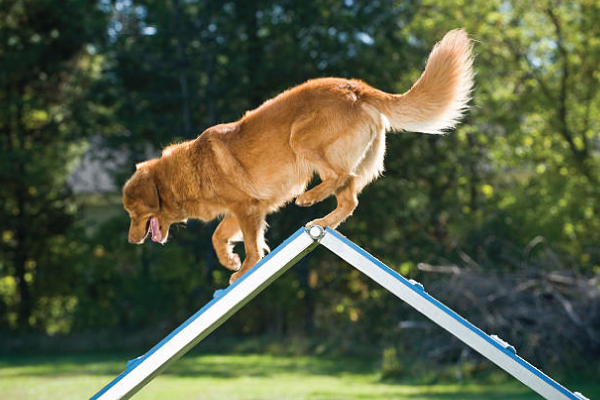
- Agility: Teach weave pole entry, precise contact zone performance, and specific obstacle approaches. A target stick can guide a dog to hit the exact spot on a teeter-totter or A-frame.
- Obedience: Enhance precision in heeling by having your dog target your leg or pocket. Improve stays and positions by having them target a specific spot on the ground.
- Rally Obedience: Guide your dog through stations with accuracy.
- Freestyle/Musical Canine Freestyle: Teach intricate dance moves, weaves, spins, and object manipulation.
- Scent Work/Detection: While not directly targeting the scent, target training can teach a dog to indicate the source of a scent by touching it or pointing their nose.
Service Dog Tasks
For service dogs, precision is paramount, and target training is indispensable.
- Opening/Closing Doors: Target the door handle, then push/pull.
- Pressing Buttons: Target an elevator button, light switch, or pedestrian signal.
- Retrieving Specific Items: Target a dropped phone, remote control, or medication bottle.
- Bracing/Balance Support: Target a specific part of the handler’s body for support.
- Medical Alert/Response: Target the handler or a specific alarm.
Therapy Dog Work
Target training helps therapy dogs perform specific, calming interactions.
- “Visit” or “Lap” Cue: Guide the dog to gently rest their head or body on a person’s lap.
- “Nudge” for Comfort: Teach a gentle nose nudge for comfort or interaction.
- “Wipe Your Paws”: Target a mat or towel before entering a clean environment.
Enrichment and Mental Stimulation
Beyond specific tasks, target training is fantastic for general enrichment.
- Puzzle Solving: Incorporate targeting into homemade or commercial dog puzzles.
- Interactive Games: “Find the target” games, where the dog has to identify a specific target among others.
- Building Confidence: Successfully learning new behaviors through targeting significantly boosts a dog’s confidence and willingness to try new things.
- Preventing Boredom: Provides an intellectual outlet that can prevent destructive behaviors stemming from boredom.
Conclusion: The Journey of Precision and Connection
Target training, utilizing the power of clickers, hands, and objects, is more than just a training method; it’s a philosophy of clear communication and mutual understanding. It moves beyond simple commands to empower your dog to actively participate in the learning process, fostering a deeper cognitive engagement and a stronger, more trusting relationship.
By breaking down complex actions into precise, achievable steps, you remove ambiguity and build confidence in your dog. From the foundational “touch” to advanced service tasks, the principles remain the same: mark the desired behavior with a click, reward generously, and build upon success.
Embrace the journey. Start with patience, consistency, and a wealth of high-value treats. You’ll not only unlock a world of possibilities for your dog’s capabilities but also discover the joy and satisfaction of a truly connected and communicative partnership. The precision you gain through target training will not only lead to a more well-behaved dog but a more engaged, confident, and happier companion ready to tackle any challenge you present. So grab your clicker, pick your first target, and start shaping a brighter, more communicative future with your best friend!
#DogTrainingTips #TargetTraining #ClickerTraining #PositiveDogTraining #DogTricks #DogSports #DogGoals #PuppyTraining #SmartPups #DogsofInstagram #CanineCompanion #TrainingJourney #DogLifeIsGood #AnimalTraining #PrecisionDogTraining YouTube: #DogTrainingTutorial #HowToTrainYourDog #TargetTrainingExplained #ClickerTrainingForDogs #DogBehaviorTips #AdvancedDogTrainingTechniques #DIYDogTraining #ServiceDogTraining #DogTricksTutorial #PositiveReinforcementTraining #PuppyTrainingGuide #DogTrainingSeries #CanineCoaching #ProfessionalDogTraining #DogLearing





Add comment