
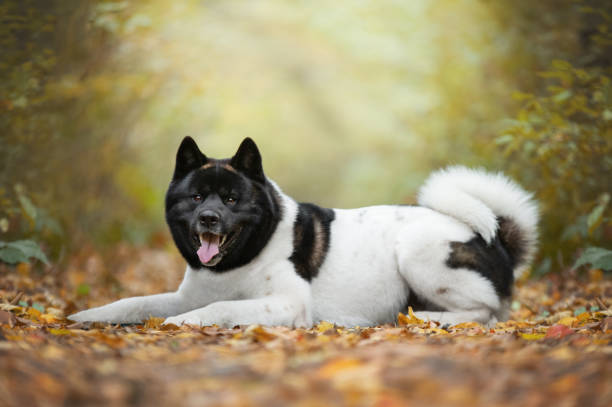
The American Akita is a breed draped in dignity, possessing a quiet power that commands reverence. Often described as a “silent Sentinel,” this magnificent dog is a study in contradiction: fiercely loyal yet profoundly independent; playful with family yet critically reserved with strangers; powerful in build yet often understated in demeanor.
To truly understand the American Akita is to move beyond the superficial appreciation of its imposing stature and plush double coat. It is to accept a partnership with a sentient, ancient guardian—a dog whose temperament is less about agreeable obedience and more about thoughtful, discerning cooperation.
This comprehensive guide is designed for prospective and current owners who seek an in-depth understanding of the American Akita’s complex psyche. We will dissect the historical, genetic, and environmental factors that shape its personality, offering practical strategies for responsible ownership, successful training, and harmonious cohabitation with this truly regal enigma.
Part I: Historical Genesis – The Making of the Modern Akita
The temperament of the American Akita cannot be separated from its origins in the rugged, mountainous regions of Japan, specifically the Akita Prefecture. Bred initially for hunting large game—including bear, boar, and deer—the Akita required a blend of incredible strength, endurance, fearless courage, and the ability to think independently when separated from its human handler.
The Ancestral Blueprint: Traits Forged in the Hunt
The demanding life of a mountain hunter instilled three key characteristics that remain dominant in the American Akita’s temperament today:
- Stoicism and Resilience: Hunting dangerous game means injury is likely. These dogs needed to continue their work despite pain, leading to a high pain tolerance and a tendency to mask discomfort. This stoicism translates behaviorally into a dog that rarely whines, complains, or seeks constant reassurance.
- Independence and Discernment: When tracking an injured bear, the Akita was expected to make tactical decisions without immediate human instruction. This is the root of the breed’s infamous independence. They are not dogs that live to please; they are dogs that comply only after they have evaluated the request and deemed it logical or necessary.
- Protective Ferocity (The Guardian Instinct): The ability to switch instantly from tracking partner to fearless defender is central to their genetic makeup. This intense protective instinct is the core trait that owners must understand and manage from day one.
Divergence: American Akita vs. Japanese Akita Inu
The modern American Akita (often just called “Akita” in North America) developed its distinct personality largely due to events following World War II.
During and immediately after the war, the breed suffered greatly. Efforts to preserve the Akita resulted in the creation of two distinct types:
- The Japanese Akita Inu: Focused on narrowing the breed back to the original Akka-Inu-based lines, resulting in the fox-like head shape, lighter build, and often fewer color variations (primarily red, white, or sesame). Temperamentally, they are usually considered slightly more reserved and less prone to the sheer physical aggression sometimes seen in the American lines, though they retain profound independence and same-sex aggression (SSA).
- The American Akita (Heavy Akita/Konno Line): These dogs were often a mix of the heavy, large-boned Dewa lines and various other dogs (including potentially German Shepherd Dogs and Mastiffs) that found their way to the US via American servicemen. This created a larger, heavier dog with a bear-like head, and a wider range of acceptable colors (pinto, black mask, etc.).
The Temperamental Impact of the Americanization:
The American Akita tends to be slightly more outgoing and approachable with its own family than the Japanese Inu, but their protective instincts are often amplified due to the emphasis placed on size and intimidation in the postwar breeding programs. Their loyalty is absolute, but their critical eye toward the world is unwavering.
Part II: The Cornerstone Traits of American Akita Temperament
If one were to distill the American Akita’s personality into its most defining components, five traits stand out, forming the foundation of their complex character.
1. Profound Loyalty and Devotion (The Family Nexus)
The Akita bond is deep, singular, and often misunderstood. They are not shower-of-affection dogs, but they are ever-present.
- Shadowing Behavior: Akitas are often found in the same room as their owners, silently observing. They may not be demanding attention, but they need to know where their people are. This constant presence is a hallmark of their guardian role.
- Selective Affection: Affection is typically given on the Akita’s terms. They may lean, nudge, or offer a rare, boisterous Akita “smile” (a brief, open-mouthed grin), but they usually reserve intense cuddling for chosen moments, often preferring a calm presence to overt physical fuss.
- The Ultimate Protector: This devotion translates directly into protection. If they perceive a threat to their family or territory, they will intervene without hesitation. This is a genetic certainty, not a trait that needs to be trained.
2. Dignified Reserve and Aloofness (The Stranger’s Test)
A well-socialized Akita should never be nervous or shy, but neither should it be gregarious. They approach new people and situations with skeptical caution.
- Observation Mode: Their first response to a stranger is meticulous observation. They assess body language, scent, and intent. They are not quick to invite interaction.
- Lack of Eagerness: Unlike Retrievers or Spaniels, the Akita has no interest in greeting every person or dog they encounter. They see no reason to waste energy on non-family members. This aloofness is often mistaken for arrogance or aggression, but it is simply self-possession.
- The Boundary Rule: If a stranger is accepted into the home (a rare honor), the Akita will typically tolerate their presence but will maintain emotional distance. They rarely allow unfamiliar people to touch them without permission or close supervision.
3. Intelligence and Independence (The Thinking Dog)
The Akita is highly intelligent, but their intelligence is channeled toward utilitarian problem-solving, not quick obedience.
- The Efficiency Expert: They learn rapidly, but they quickly discern the difference between a command that benefits them (e.g., “Sit” leads to a treat) and one that seems pointless (e.g., “Roll over” ten times in a row). If a task is repetitive and lacks reward, they will often refuse, not because they are stubborn, but because they are efficient.
- Trainability vs. Compliance: Akitas are highly trainable, but they are not highly compliant. Training must be approached as a partnership based on mutual respect, not as a master-servant dynamic. They respond poorly to heavy-handed or punitive methods, often shutting down or becoming resistant.
- The “Why”: Owners must always be prepared to implicitly answer the Akita’s silent question: “Why do I need to do this?”
4. Courage and Fearlessness (The Unflappable Nature)
Due to centuries of selective breeding for bear hunting, the Akita possesses an almost unnerving fearlessness.
- Lack of Flight Response: When confronted with a perceived threat, the Akita’s default response is often to stand its ground (the “fight” response) rather than retreat (the “flight” response). This means they are poor candidates for dog parks or uncontrolled environments where confrontations are inevitable.
- Environmental Confidence: A well-socialized adult Akita is rarely bothered by loud noises, crowds, or new environments. Their confidence is intrinsic, stemming from their massive presence and internal assurance.
5. Maturity and Calmness (The Old Soul)
While Akita puppies are energetic, the breed matures slowly and develops a marked calmness in adulthood.
- Low Energy, High Intensity: They generally have moderate exercise needs—a focused walk or play period suffices—and they are highly adaptable to quiet, indoor living. However, when threatened or engaged in a protective capacity, their intensity is immediate and overwhelming.
- Less Playful Than Other Breeds: While they enjoy wrestling or playing fetch with family, they often lack the ceaseless, giddy drive of breeds like Labradors. Their play is often brief, focused, and sometimes rough, mirroring the intensity of their ancient hunting behavior.
Part III: Critical Management Issues – The Dark Sides of Independence
The traits that make the Akita magnificent—courage, independence, and protection—are also the traits that make them challenging. Successful Akita ownership requires preemptive management of three key behavioral tendencies.
1. Same-Sex Aggression (SSA)
Same-Sex Aggression is perhaps the most defining and challenging temperament trait of the American Akita. It is a deeply engrained genetic behavior related to pack structure and territorial defense, present commonly in many spitz and northern breeds.
The Reality of SSA:
- Genetic Predisposition: SSA is not typically a result of poor training or socialization, though both can certainly exacerbate it. It is a genetic certainty that must be accepted.
- Onset and Intensity: SSA usually begins to manifest dramatically during adolescence (6 to 18 months) as hormones surge and the dog attempts to establish its role in the social structure. Confrontations are often swift, silent, and severely damaging, as the Akita fights with an intensity bred for bear combat.
- Gender Nuances: While both male and female Akitas exhibit SSA, aggression between two intact females can often be the most relentless and difficult to break up.
- Management Over Cure: Owners should assume that their Akita is likely to be aggressive toward unfamiliar dogs of the same sex, and sometimes even the opposite sex. This necessitates strict management: never off-leash in public, no dog parks, and mandatory separate housing/supervision if owning multiple Akitas of the same sex.
2. High Prey Drive and Intolerance for Small Animals
The historical requirement to track and dispatch large game has resulted in a potent prey drive that is often directed toward smaller, quickly moving creatures.
- The Danger to Small Pets: Cats, rabbits, guinea pigs, and small dogs are often viewed as prey, not companions. While early, intense socialization might allow an Akita to tolerate a specific household cat, owners must be prepared for the instinct to override training, especially during excitement or territorial expansion.
- Outdoor Risks: Akitas often cannot be trusted in unfenced areas or off-leash due to the danger presented by squirrels, deer, or stray wildlife. Their pursuit drive is instantaneous and highly dangerous.
3. Resource Guarding (Possessiveness)
Resource guarding—the protective behavior displayed over food, toys, sleeping spots, or even favorite people—is common in guardian breeds, and particularly strong in the Akita.
- Early Intervention is Crucial: Guarding behavior must be addressed through counter-conditioning immediately in puppyhood. This involves teaching the dog that human approach means gain, not loss.
- Example Technique: Constantly walk past the feeding bowl and drop high-value treats (chicken, cheese) into the bowl while the dog is eating. This teaches them to anticipate positivity when humans approach their valuable items.
- Protecting the “Resource” (The Owner): An Akita may also guard its favorite human, placing itself between the owner and strangers, guests, or even other family members. This must be corrected swiftly to ensure the dog understands that the human is the manager of all resources and social interactions.
Part IV: Temperament Through the Developmental Lens
The Akita’s personality is not static; it evolves dramatically through key developmental stages.
1. The Critical Puppy Window (8 Weeks to 4 Months)
This is the “sponge” stage, where the puppy’s brain is most open to new experiences.
- Socialization Quality over Quantity: Akita puppies do not need to meet 100 people a day, but they need 100 positive, controlled experiences (e.g., passive exposure to loud trucks, walking on different surfaces, brief, calm interactions with stable adult dogs).
- Hands-on Handling: Due to their later reserve and stoicism, owners must accustom the puppy to having its paws, ears, tail, and mouth handled frequently. This is essential for husbandry (nail clipping, vet visits) later in life.
- The Guarding Seed: Resource guarding often starts here. Play-biting (mouthiness) is also common and must be gently but firmly redirected to appropriate chew toys to establish bite inhibition.
2. Adolescence and the Testing Phase (6 Months to 18 Months)
This is the most challenging period, characterized by hormonal shifts and boundary testing.
- Emergence of SSA: Aggression, especially same-sex, becomes evident. Owners must drastically reduce interactions with unfamiliar dogs during this phase.
- Challenging Authority: The independent nature intensifies. The Akita will test boundaries and seemingly “forget” known commands if they don’t see the immediate value. Consistency is non-negotiable. If you allow a behavior once, the Akita views it as a new rule.
- The Fear Period: Around 6-9 months, many dogs experience a “secondary fear period.” New objects or sounds they previously ignored can become scary. Owners must remain calm and supportive, avoiding coddling, and gently encouraging the dog to investigate the stimulus.
3. Maturation (18 Months to 3 Years)
The Akita is a slow-maturing breed, often not reaching full mental maturity until three years of age.
- Settling Into the Role: The boisterous energy of adolescence fades, replaced by the characteristic calm, dignified reserve. The protective instincts are fully activated and solidified.
- Heightened Vigilance: The adult Akita becomes acutely aware of its territory. Owners must manage this vigilance through consistent leadership, ensuring the dog knows that the human is responsible for evaluating outside threats.
Part V: The Art of Training the Independent Mind
Training an American Akita is less about drilled commands and more about establishing a deep, respectful communication system.
1. The Philosophy of Fair, Firm, and Consistent Leadership
The Akita is highly sensitive to injustice. Punitive or harsh training methods destroy trust and lead to resistance.
- Positive Reinforcement is Mandatory: Akitas respond best when they are rewarded for good choices. Food, high-value treats, and sincere praise are the best motivators.
- The “Fairness” Rule: Consistency must be absolute. If a rule is in place (e.g., “no jumping on the couch”), it must be enforced by every family member every time. Inconsistency is viewed as incompetence by the Akita, leading them to assume control.
2. Foundational Obedience and Management Tools
- Focus on Reliability: Commands like Recall, Leave It, and a solid Stay are critical lifelines. Because Akitas have high prey drives and SSA, a reliable emergency recall is paramount.
- The Necessary Equipment:
- Secure Fencing: Akitas are excellent climbers and diggers, and their independence makes them prone to wandering. Six-foot fences are standard.
- Leash Management: Due to their size and reactivity, a strong leash, martingale collar, or front-clip harness is essential for control. Prong collars can be effective tools when used correctly by a professional to interrupt aggressive intent, but they should never be used as punishment.
- Muzzle Training: Given the high risk of SSA, every Akita owner should condition their dog to comfortably wear a basket muzzle. This is not a punishment; it is a critical safety tool that allows the dog to access public spaces safely during walks or vet visits without the risk of an impulsive bite incident.
3. The Akita in the Home: Structured Relaxation
The vast majority of an Akita’s temperament is defined by their home life.
- Mandatory Downtime: Teach the Akita to relax on command (a “place” command). This allows owners to bring guests into the home or manage high-energy household moments without the Akita feeling the need to patrol constantly.
- Crate Training: Crate training is highly recommended. It serves as a necessary safe space and ensures the Akita can be safely contained when guests are present, preventing accidental confrontations or resource guarding issues.
Part VI: Living the Akita Life – Practical Ownership and Behavioral Nuances
Owning an Akita requires constant vigilance and a deep understanding of their unique means of communication.
1. Managing Interactions with Children
The Akita is renowned for being excellent with its own children, often adopting a deeply protective, almost babysitting role. However, extreme caution is mandatory.
- Never Leave Unsupervised: This is the golden rule for all dogs, but especially guardian breeds. An Akita may tolerate its own child climbing on it, but it will not tolerate a visiting child doing the same, viewing them as an impudent stranger.
- Teaching Mutual Respect: Children must be taught to respect the Akita’s space. No pulling ears, tail, or disturbing the dog while it is sleeping or eating. An Akita’s warning signs (a hard stare, a slight lip curl) are often subtle and must be respected immediately.
2. Vocalization and the Akita “Grunt”
Akitas are generally quiet dogs. They were selectively bred in Japan to hunt silently.
- The Baritone Woof: When an Akita does bark, it is usually a deep, serious, full-volume warning, reserved for perceived intruders or imminent threats. They are not nuisance barkers.
- The Akita “Grunt” or “Rumble”: Many Akitas communicate with a low, throaty groan, rumble, or grunt when happy, excited, or seeking attention. This unique sound is often misinterpreted as a growl by unfamiliar people. Owners must learn to differentiate this happy noise from a true warning growl.
3. The Akita “Smile”
This unique facial expression is a submissive gesture and a sign of profound happiness or excitement. The Akita will pull its lips back, exposing all its teeth, sometimes accompanied by a low moan or grunt.
- Misinterpretation Risk: To strangers, this looks terrifyingly aggressive, like a serious snarl. Owners must be aware of this and sometimes preemptively explain the behavior to guests or passersby to prevent panic.
4. Grooming and Temperament Reinforcement
The Akita’s double coat requires substantial grooming, which is an excellent opportunity to reinforce positive handling and trust.
- Regular Brushing: Daily brushing during seasonal “blows” is necessary. Use high-value treats to make brushing a positive experience. This desensitizes the dog to physical restraint and handling, which is crucial later in life.
- The Standoff at the Vet: Due to their stoicism, Akitas often fail to show pain clearly, making diagnosis difficult. Combined with their inherent reserve, vet visits can be stressful and dangerous. Conditioning to veterinary procedures (muzzles, restraint, injections) in a low-stress environment is essential preparation for adult life.
Part VII: Temperament Misconceptions and Ethical Ownership
The American Akita is frequently misunderstood, leading to temperament-related difficulties when owned by unprepared people.
1. Myth: Akitas are inherently vicious or aggressive.
Reality: Akitas are intensely selective and reactive guardians. They are highly protective of their territory and family, and they will react strongly to perceived threats (human or animal). They are not prone to indiscriminate aggression, but their response to a threat is often disproportionately powerful compared to other breeds. They require an owner capable of controlling and preempting these reactions.
2. Myth: Socialization fixes all aggression problems.
Reality: Socialization teaches an Akita how to behave in the world, ensuring they are not fearful or poorly mannered. However, socialization will not remove the hard-wired same-sex aggression or the prey drive. These traits must be managed through strict obedience, containment, and avoidance, not simply “socialized away.”
3. Myth: Akitas do not need much exercise.
Reality: While Akitas are low-energy house dwellers, they require focused mental and physical exercise to maintain stability. A bored Akita is a destructive, restless, and potentially reactive Akita. Daily structured walks, focused training sessions (e.g., scent work, advanced obedience), and vigorous play are necessary to satisfy their intelligent minds.
4. Ethical Ownership and Temperament Testing
Responsible Akita ownership begins with ethical breeding. Temperament should be the top priority for any reputable breeder.
- Genetic Reliability: Breeders should prioritize stable, predictable temperaments. They should be able to provide clear history on the temperaments of the puppy’s parents and immediate lineage. Nervous, overly shy, or overtly aggressive parents should never be bred.
- The Akita Temperament Test (ATT): Though not universally mandatory, evaluations like the ATT help demonstrate the dog’s stability, confidence, ability to recover from surprise, and willingness to tolerate non-threatening strangers and environmental stimuli.
Conclusion: The Ultimate Partnership
The American Akita is one of dogdom’s most impressive, yet demanding, companions. Their personality is built upon a historical foundation of independence, courage, and discernment. They offer a level of loyalty and devotion that is singular and absolute, but they demand an owner who is equally absolute in commitment, consistency, and leadership.
Owning an Akita is not about having a friendly, agreeable dog; it is about engaging in a lifelong, sophisticated partnership with a magnificent, thinking animal whose respect must be earned daily. For the prepared and dedicated owner, the American Akita is the silent sentinel, the devoted guardian, and the greatest dog they will ever know.
#AmericanAkita, #AkitaTemperament, #AkitaLife, #GuardianBreed, #DogTemperament, #TrainingTips, #AkitaLove, #ResponsibleDogOwner, #BigDogs, #WorkingDog, #UnderstandingAkita, #DogTraining, #AkitaPuppy, #SilentSentinel






Add comment