
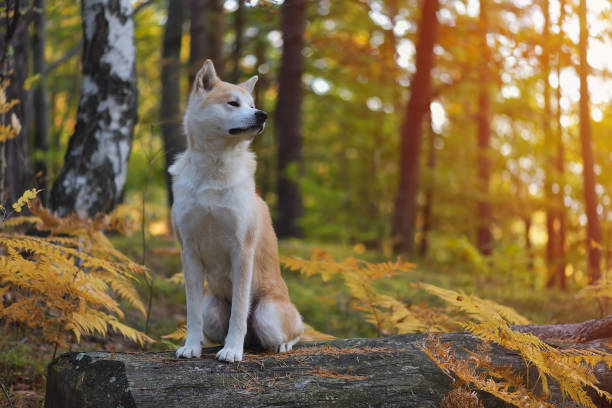
I. INTRODUCTION: THE EMPEROR OF CANINES
The Japanese Akita Inu, often simply referred to as the Akita Inu or the Japanese Akita, is one of the world’s most ancient and revered canine breeds. Originating from the mountainous, snowy regions of Akita Prefecture, this breed is intrinsically woven into the cultural fabric of Japan, designated as a national monument—a protected treasure (Tennen Kinenbutsu).
The global perception of the Akita is largely defined by the story of Hachikō, the symbol of unwavering loyalty and devotion. While this celebrated loyalty is a cornerstone of the Akita’s personality, it represents just one facet of a highly complex, sometimes contradictory, and profoundly independent temperament.
To truly understand the Akita Inu is to move beyond the image of the devoted companion and acknowledge the formidable guardian, the reserved stoic, and the meticulous hunter that resides within the sleek, powerful frame. Their temperament is not for the novice; it demands respect, consistency, and an understanding rooted in their history as big-game hunters (Matagi dogs) and guardians of the home.
This comprehensive guide delves into the intricate psychological landscape of the Japanese Akita Inu, exploring their genetic predispositions, the environmental influences that sculpt their behavior, and the critical differences that set them apart from the domesticated temperaments of most Western breeds.
II. HISTORICAL CONTEXT AND TEMPERAMENT ROOTS
The Akita’s personality is inseparable from its history. Unlike many European breeds refined for companionship or specific, highly cooperative tasks (like herding or retrieving), the Akita was molded by the harsh environment and specific, demanding roles in feudal Japan.
A. The Matagi Dog Legacy
The ancestors of the Akita were the Matagi dogs, utilized by hunters to track and corner large game, most notably the Ussuri brown bear, elk, and wild boar. This required a dog that was:
- Independent: Able to make critical decisions without direct human command, often out of sight—a stark contrast to the highly handler-focused Collie or Shepherd.
- Courageous and Tenacious: Willing to engage a bear or boar, holding it at bay until the hunter arrived. This bred intense fighting spirit and profound self-confidence.
- Stoic: Capable of enduring pain and harsh weather without showing weakness.
This historical role explains the Akita’s formidable self-assurance and the characteristic independence often interpreted by owners as “stubbornness” or “selective hearing.” The Akita is a partner, not a servant.
B. Cultural Status and Isolation
During the mid-20th century, the Akita population faced near extinction due to wartime food shortages and a cull order for non-military dogs. The preservation efforts that followed focused on retaining the original, pure Japanese type (the Akita Inu). This isolation and emphasis on breed purity maintained the indigenous, primitive traits—including strong resource guarding and dog-on-dog intolerance—which had not been softened by centuries of Western-style communal living or show-ring refinement focused purely on aesthetics.
III. THE CORE TEMPERAMENT PROFILE: THE AKITA PARADOX
The Akita Inu temperament is a study in fascinating contradiction: majestic yet playful, fiercely protective yet reserved, profoundly loyal yet intensely independent.
A. Dignity and Reserve (Aloofness)
The Akita is characterized by its quiet dignity. They are inherently reserved with strangers and are rarely “glad-handers” like Labradors or Golden Retrievers. This aloofness should not be confused with shyness or fear; rather, it is a calculated assessment. An Akita usually ignores strangers until they determine if that visitor poses a threat or warrants attention.
- Behavioral Manifestation: They often stand or sit slightly away from a crowd, observing the environment with keen, focused attention. They are masters of the “silent watch,” often using their eyes more than their voice to convey scrutiny.
B. The Deep Bond and Selective Affection
While reserved with the outside world, the Akita develops an extraordinarily deep, singular bond with its core human family. This loyalty is central to their fame.
- Affection Style: Akita affection is typically expressed in private, subtle ways. It is less demonstrative than in other breeds. Owners often report the famous “Akita Lean”—the dog standing close and leaning its full weight against the owner’s legs, a silent request for contact and reassurance. They thrive on proximity, often content simply being in the same room as their owners, acting as a quiet, ever-present shadow.
C. Independence and Intelligence
The Akita’s intelligence is undeniable, but it is the intelligence of a hunter solving a problem, not the intelligence of a student seeking instruction.
- Learning vs. Compliance: Akitas learn commands quickly, often in just one or two repetitions. However, they are highly selective about when and why they obey. They weigh the command against their current motivation and perceived necessity. If a reward is absent or the command seems arbitrary, they often choose non-compliance, displaying a profound self-will. This independence is the primary reason the Akita is often mislabeled as “difficult” or “stubborn.”
D. Stoicism and Pain Tolerance
Stemming from their history as hunting dogs that needed to fight large prey, Akita Inus possess a remarkable degree of stoicism. They are often reluctant to display pain or discomfort.
- Clinical Implications: This stoicism requires owners to be vigilant about subtle behavioral changes, as an Akita may mask illness or injury until conditions are severe. A slight limp, a change in appetite, or a minor difference in demeanor may be the only indicators of significant underlying health issues.
IV. CRITICAL TEMPERAMENT TRAITS: MANAGEMENT AND AWARENESS
Several specific traits inherent to the Akita Inu require specialized management and constant owner awareness. These traits are intrinsic genetic features, not flaws, and must be respected.
A. Same-Sex Aggression (SSA) and Dog-on-Dog Intolerance
This is arguably the most defining, and challenging, feature of the Akita Inu personality. Akita Inus, particularly males, possess a high predisposition toward same-sex aggression (SSA) and generally exhibit low tolerance for other dogs, especially those they perceive as challenging, overly boisterous, or dominant.
1. The Roots of Intolerance
In a primitive breed designed to guard resources and eliminate threats to the pack or family unit, a willingness to fight and defend territory is highly valued. The Akita standard itself permits a certain degree of “fierceness.” This is not a breed that seeks harmony in a dog park setting.
2. Manifestation and Management
- Subtle Signaling: Akita’s often transition rapidly from alert observation to defensive action. Owners must learn to read subtle signals: the hard stare, the stiffening of the body, the slow, purposeful approach.
- Same-Sex Dynamics: Two male Akitas (or two dominant females) typically cannot coexist peacefully unless they are highly trained, altered, and introduced under strict professional guidance.
- Management Strategy: The safest and most widely adopted strategy is management through avoidance. Akita owners must accept that this breed is generally not suitable for dog parks, off-leash areas with unknown dogs, or multi-dog households lacking rigorous structure. Parallel walking (walking near another dog, but not interacting) and maintaining distance are crucial tools.
B. The Intense Prey Drive
Akita Inus retain a high prey drive, a remnant of their big-game hunting heritage. Anything small, furry, fast, or squeaky can trigger a chase response.
- Small Pet Risk: This drive poses a significant risk to smaller animals, including cats, rabbits, rodents, and even small breed dogs. While an Akita raised from puppyhood with a specific cat might coexist, the introduction of a new, unfamiliar small pet is often disastrous.
- The Fence is Key: Secure fencing (minimum 6 feet) is non-negotiable. The Akita’s independence means they will investigate opportunities for escape and pursuit if allowed off-leash in an insecure area. Their speed and power make them difficult, if not impossible, to recall when focused on prey.
C. Resource Guarding (RG)
Resource guarding is the protective behavior aimed at guarding high-value items (food, toys, resting spots, and even the owner) from perceived threats or competitors. Akitas have historically been expected to guard what is theirs.
- Guard Potential: This can manifest as snarling or snapping if a person (especially a child or a visitor) attempts to take away their food bowl, favorite chew, or disturbs them while sleeping.
- Prevention and Training: This trait requires dedicated counter-conditioning and desensitization training starting in puppyhood. It must be consistently reinforced that human hands are dispensers of good things, not thieves. Structured feeding routines (hand-feeding, “leave it” games) are essential.
D. The Quiet Guardian (Barking and Vocalization)
Akitas are generally quiet dogs. They are not prone to nuisance barking or excessive vocalization. When an Akita barks, it is almost always for a specific, important reason—usually alerting the family to a genuine threat or unusual occurrence.
- Vocal Repertoire: While they are not barkers, they do have a unique vocabulary that includes groans, grumbles, chuffs, and the famous “Akita Woo”—a deep, guttural vocalization often used during greetings or play with loved ones.
E. Cleanliness and Grooming Habits
Akita Inus are remarkably clean dogs, often exhibiting cat-like fastidiousness.
- Self-Grooming: They obsessively lick and groom their own fur.
- House Training: They are generally very easy to house-train, possessing an innate desire to keep their living space clean.
- Low Odor: Despite their thick double coat, healthy Akitas possess very little typical “dog odor.”
V. THE DEVELOPMENT OF TEMPERAMENT: NATURE MEETS NURTURE
While genetics provide the blueprint for the Akita’s temperament (the “Nature”), the environment and early experiences (the “Nurture”) will determine whether those traits are manageable and balanced or reactive and problematic.
A. The Importance of Genetics and Lineage
A well-bred Akita from proven lines—where breeders prioritize stable temperament alongside physical conformation—is far more likely to develop into a predictable adult.
- Temperament Testing: Responsible Akita breeders conduct thorough temperament testing on both parent dogs and the puppies to ensure they are alert, stable, and resilient, avoiding extremes of shyness (fear aggression) or unwarranted ferocity.
B. The Critical Socialization Window (3 to 16 Weeks)
Socialization for an Akita is not about training them to be friendly with everyone; it is about teaching them neutrality and resilience in the face of novel stimuli.
1. Environmental Exposure
The puppy must be exposed to a vast array of sights, sounds, textures, and smells during this critical phase: city noises, vacuum cleaners, different flooring types, hats, glasses, and people of varying ages, sizes, and ethnicities. This exposure builds confidence and prevents the dog from reacting fearfully or aggressively to the unknown later in life.
2. Managed Interactions
Due to the high risk of dog-on-dog intolerance, socialization with other canines must be highly curated.
- Focus on Calm, Adult Dogs: Interactions should primarily be with known, stable, fully vaccinated adult dogs that are tolerant of puppy behavior.
- Quality over Quantity: A few positive, controlled encounters are vastly superior to overwhelming the puppy at a crowded dog park, which can easily induce fear or defensive reactions that set a negative precedent.
C. The Role of Obedience and Structure
Akitas require consistent, non-negotiable rules from day one. Their independence means they constantly test boundaries.
- Leadership, Not Domination: Training must be based on respect and clear communication, not punitive methods or attempts at physical domination (which are highly detrimental to this proud breed and can trigger defensive aggression).
- Consistency is Key: If a rule is enforced only sometimes (e.g., “no jumping on guests”), the Akita will assume the rule is optional and will continue testing it until they find the path of least resistance.
VI. TRAINING AND MOTIVATION: THE INDEPENDENT LEARNER
Training the Akita Inu requires a different philosophical approach than training a typical working breed.
A. The Challenges of Motivation
The Akita’s independent nature means they are generally not driven by a compulsive desire to please their handler. They are motivated by high-value rewards and an established, trusting relationship.
- Finding the Currency: Owners must discover the dog’s highest currency. For some, it’s food (special meats, cheese); for others, it’s a favorite toy or a brief, intense session of play. Low-value treats or verbal praise alone are often insufficient to overcome the Akita’s preference for independent action.
B. The Importance of Early Leash Training
Leash reactivity (aggressive or defensive lunging while on the leash) is a common issue tied to the Akita’s protective and territorial nature. They feel confined and vulnerable while restricted and may choose to preemptively display aggression toward perceived threats.
- Loose-Leash Protocol: Leash training must begin immediately and focus heavily on teaching the dog to remain calm and focused on the handler, using structured walks and desensitization techniques rather than simple force. Proper equipment, such as a strong, non-restrictive harness or head collar, is often necessary for control.
C. Advanced Training and Working Roles
Akitas can excel in disciplines that cater to their unique blend of intelligence and physical strength, such as:
- Rally Obedience: Shorter, focused bursts of activity are often preferred over lengthy, repetitive drills.
- Weight Pulling: Harnessing their immense power and drive.
- Therapy Work (Highly Selective): A few highly stable, well-socialized Akitas thrive in limited therapy roles, utilizing their calm demeanor and physical presence, but this is the exception, not the rule.
VII. THE AKITA INU IN THE FAMILY DYNAMIC
The Akita’s temperament dictates specific suitability requirements for potential owners and household compositions.
A. Suitability for First-Time Owners
The Akita Inu is generally not recommended for first-time dog owners.
- Required Skills: Ownership demands an individual who is already confident, experienced in canine behavior management, capable of providing consistent structure, and physically able to handle a large, powerful dog that may occasionally decide to pull, jump, or react defensively.
B. Akita Inu and Children
When properly raised and socialized, Akitas can be devoted family members and excellent protectors of children within their own household.
- Management is Essential: However, the Akita’s tolerance for typical child behaviors—loud noises, grabbing, sudden movements—is not limitless. Their stoicism means they may tolerate a lot before giving a single warning, which may be severe.
- Rules for Interaction: All interactions must be supervised. Children must be taught to respect the dog’s space, especially when the dog is resting or eating. The Akita should never be expected to passively endure rough play or teasing.
C. Akita Inu and Other Pets
As noted, the presence of other dogs and small animals requires careful consideration.
- Preference for Single-Dog Status: The Akita Inu thrives best as the only dog in the household, receiving all the resources and attention.
- Opposite-Sex Pairing: If a second dog is introduced, it must typically be of the opposite sex, significantly smaller, and possess a non-challenging, submissive temperament. Two Akitas (especially two males) should rarely, if ever, be housed together.
VIII. COMPARISON: JAPANESE AKITA INU VERSUS AMERICAN AKITA
A critical point in discussing the Akita temperament is the distinction between the Japanese Akita Inu (Akita) and the American Akita (Great Japanese Dog). While sharing a common ancestry, their temperaments have significantly diverged since their breeding lines split after World War II.
| Feature | Japanese Akita Inu (JA) | American Akita (AA) |
|---|---|---|
| Physical Appearance | Fox-like head, lighter build, typically red, fawn, white, or sesame, often smaller. | Bear-like head (Mimasu mask), heavier bone, larger size, broader range of colors (pinto, black mask allowed). |
| Dog-on-Dog Temperament | High SSA, very low tolerance for strange dogs. Aggression is often more direct and primitive. | Moderate to High SSA, but often slightly more tolerant of known, non-challenging dogs due to broader Western breeding focus. |
| Prey Drive | Extremely high; deeply ingrained hunting instinct. | High, but sometimes slightly mitigated by the larger size and guarding focus. |
| Owner Bond | Extremely loyal, often bonding deeply with one specific person or the nuclear family. | Very loyal, but often slightly more people-focused and slightly less reserved with close family friends. |
| Vocalization | Very quiet; reserved barking. | Can be more prone to deep, loud barking as part of their guarding routine. |
Temperament Summary: The Japanese Akita Inu retains more of the ancient, primitive sharpness, reserve, and intense same-sex intolerance. The American Akita is often described as slightly more “mellow” or less aloof, although still possessing the core guardianship instincts and requiring the same stringent management.
IX. MANAGING THE SENSITIVE GUARDIAN: HEALTH AND BEHAVIOR
The Akita Inu’s stoic nature can mask both physical and psychological distress, requiring owners to be highly attuned to subtle behavioral shifts.
A. Sensitivity to Handlers
Paradoxically, despite their independence, Akitas are highly sensitive to their owner’s emotional state. They thrive in calm, predictable environments. High stress or anxiety in the household can transfer to the dog, leading to increased reactivity or resource guarding. A calm, assertive, and consistent owner fosters a stable temperament.
B. Health-Related Behavioral Changes
Certain health conditions common in Akitas can directly impact temperament:
- Hypothyroidism: Can lead to uncharacteristic aggression, fear, or lethargy. Routine thyroid testing is crucial.
- Pain (e.g., Hip Dysplasia, Arthritis): Since Akitas mask pain well, the first sign of chronic discomfort may be increased irritability, low tolerance for handling or interaction, or a sudden, unprovoked snap when someone touches a painful area.
C. The Daily Commitment
Living successfully with the Akita Inu temperament requires a lifelong commitment to:
- Controlled Environment: Secure fencing and careful management of all public outings.
- Ongoing Training: Consistent maintenance of obedience and neutrality protocols throughout the dog’s life.
- Respect for Independence: Understanding that the Akita is a majestic, self-possessed animal whose loyalty is earned through mutual respect, not forced obedience.
X. CONCLUSION: THE REWARD OF UNWAVERING LOYALTY
The Japanese Akita Inu is a truly magnificent breed, defined by its formidable presence, quiet dignity, and unparalleled loyalty. Their temperament is a direct reflection of their heritage—reserved, dominant, and protective.
For the dedicated, knowledgeable, and respectful owner, the bond with an Akita is profound and deeply rewarding. They offer a unique partnership built on mutual trust and admiration. However, their specific personality traits—the fierce independence, the powerful prey drive, and the low tolerance for other dogs—mandate an owner who is not looking for the easiest path, but for an exceptional challenge and an extraordinary companion worthy of the title “Emperor of Canines.”
#AkitaInuGuide #DogTrainingTutorial #AkitaAggressionManagement #LivingWithAnAkita #AkitaVsAmericanAkita #GiantBreedTraining #AdvancedDogTraining #AkitaExpert #DogVlog #AkitaQandA #AkitaOfTheDay #AkitaLove #DogsofInstagram #AkitaPuppy #AkitaLife #JapaneseDog #FluffyDog #DignifiedDog #AkitaWorld #TheAkitaLean #AkitaInu #JapaneseAkita #AkitaTemperament #DogBehavior #PrimitiveBreeds #ResponsibleDogOwnership #AkitaTrainingTips #HachikoDog #AkitaFacts #DogGuardians






Add comment