
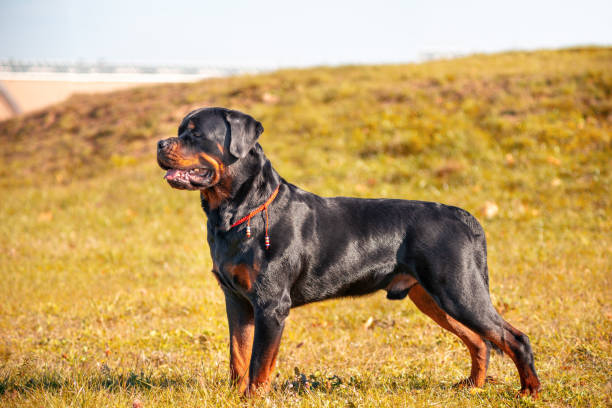
INTRODUCTION: THE ROTTWEILER–GUARDIAN, DROVER, AND COMPANION
The Rottweiler is one of the most historically significant working breeds in canine history, a magnificent dog whose reputation is often preceded by misconceptions. Originating in Germany, where they served as drover dogs (driving cattle to market) and protection animals (guarding money bags tied around their necks), the Rottweiler carries a legacy of intelligence, strength, and unwavering loyalty.
To truly understand this imposing breed, one must move beyond the superficial stereotype of the “aggressive dog” and delve into the complexities of its inherent nature. The Rottweiler’s temperament is a mosaic of deeply ingrained genetic traits, while its personality is the masterpiece crafted through dedicated socialization, consistent training, and environment.
This comprehensive guide will explore the genetic blueprint (temperament) and the environmental impact (personality) that shape the modern Rottweiler, providing a vital resource for owners, prospective owners, and breed enthusiasts.
PART I: DEFINING TEMPERAMENT AND PERSONALITY
It is crucial to distinguish between the two core elements that make up the dog’s character:
1. Temperament (The Blueprint)
Temperament is the dog’s innate, genetically determined mental and emotional stability. It refers to the dog’s characteristic emotional reactivity, sensitivity level, and overall predisposition to respond to stimuli. In the Rottweiler, desirable temperament traits include: high confidence, emotional resilience (a quick recovery from startling events), self-assurance, and moderate to low anxiety. These traits are inherited from the parents and often tested rigorously by reputable breeders.
2. Personality (The Sculpting)
Personality is the developed set of behavioral traits and characteristics that emerge through the dog’s interaction with its environment, training, socialization, and life experiences. While temperament provides the foundation (e.g., a naturally confident dog), personality determines how that confidence is expressed (e.g., a well-socialized, confident dog acts calmly, while a poorly socialized, confident dog may become overly defensive or assertive).
PART II: THE CORE TEMPERAMENT TRAITS OF THE ROTTWEILER
The standard Rottweiler temperament, as defined by breed clubs globally, is characterized by several non-negotiable traits essential for a functional, stable working dog.
1. Unflappable Confidence and Emotional Stability
The well-bred Rottweiler should possess an innate, calm self-assurance. They are not prone to panic, nervousness, or frantic behavior. This confidence often manifests as a stoic, observant posture.
- Low Anxiety Threshold: Rottweilers, ideally, have a high threshold for anxiety. They do not typically resort to fear-based behaviors or aggression when faced with new or mildly stressful situations. A nervous or highly reactive Rottweiler is considered a serious fault, as fear combined with immense power is a dangerous combination.
- Resilience and Recovery: When startled (a loud noise, an unexpected movement), a stable Rottweiler recovers quickly and assesses the situation rationally rather than immediately fleeing or escalating.
2. High Intelligence and Trainability
Rottweilers are highly intelligent and possess a strong desire to work (high drive). This intelligence means they absorb and retain information quickly, but it also necessitates consistent mental stimulation.
- The “Thinking Dog”: Unlike some breeds that rely purely on repetition, the Rottweiler is capable of independent thought. If they perceive an instruction as illogical or unnecessary, they may display stubbornness, which is often misinterpreted as low intelligence when, in fact, it is a sign of intelligent evaluation. They thrive when they understand the purpose behind the training.
- Work Ethic: Their historical role as drovers and police dogs instills a strong work ethic. They excel in activities like Schutzhund (IPO), obedience, tracking, agility, and therapy work. Boredom is the greatest enemy of the Rottweiler temperament, leading to destructive behavior and boundary testing.
3. Profound Aloofness and Reserve
A hallmark of the true Rottweiler temperament is aloofness. This is one of the most misunderstood traits, often mistaken for unfriendliness or shyness.
- Discriminating Judgment: Aloofness is the capacity for reserved observation. A Rottweiler will not typically greet every stranger with effusive enthusiasm. They remain reserved, watchful, and highly discriminatory, assessing newcomers carefully before deciding whether they pose a threat or are harmless. They are not instantly accepting; they must be won over.
- The Difference between Aloofness and Shyness: Shyness is rooted in fear and insecurity. Aloofness is rooted in confidence and strategic assessment. A shy dog will retreat or avoid the stimulus; an aloof dog will stand its ground, observe calmly, and wait for leadership from its owner.
4. Strong Protection and Guarding Instincts
The Rottweiler is first and foremost a guardian. This instinct is deeply woven into its DNA, arising from centuries of protecting livestock and handlers.
- Territoriality: They possess a natural instinct to patrol and defend their perceived territory (home, yard, car). This instinct is generally quiet and watchful; they are not typically excessive barkers but will issue a deep, serious warning when a threat is identified.
- Devotion to Family: Their guarding instinct is intrinsically linked to their devotion to the family unit (their pack). They form intensely strong bonds with their immediate family, viewing them as beneficiaries of their protection.
PART III: THE ROTTWEILER PERSONALITY IN THE HOME
While temperament dictates what the dog is capable of, personality dictates how the dog behaves daily. This personality is primarily molded by the first three years of life.
1. The Bonding Intensity: The “Velcro” Dog
For all their tough appearance, Rottweilers are deeply sensitive and require constant human inclusion. They are not dogs suited for kennel living or solitary existence.
- Need for Proximity: Rottweilers frequently express an intense desire to be physically close to their owners. They are often referred to as “Velcro dogs,” following their person from room to room, leaning on their legs, or attempting to squeeze their impressive bulk onto the sofa.
- Sensitivity to Emotion: They are acutely attuned to their owner’s mood. They can sense distress, grief, or happiness and often react with appropriate supportive behavior. This emotional intelligence is a key component of their success as therapy and service dogs.
2. Relationships with Children
A well-bred, well-socialized, and properly supervised Rottweiler can be a gentle and patient companion for children.
- Natural Nanny Tendencies (Managed): Due to their protective nature, they often take a soft, supervisory role with the children of the household. However, their sheer size and strength necessitate constant supervision. An accidental knock-over is always a risk.
- Tolerance and Play: They generally display a high tolerance for the noise and chaos of family life, often enjoying supervised physical play. Owners must teach children respect for the dog’s space, and the dog must be taught bite inhibition from puppyhood.
3. Interactions with Other Animals
Rottweilers can coexist peacefully with other pets, but this requires early and dedicated socialization and management, particularly regarding same-sex and small-animal aggression.
- Prey Drive Management: While their historical role was handling large cattle, a moderate to high prey drive for smaller, fleeing animals (like squirrels, cats, or rabbits) is common. This drive must be addressed through early, controlled exposure and training.
- Same-Sex Aggression (SSA): A notable trait in many powerful working breeds, Rottweilers often exhibit SSA, particularly between intact males or even between some females. This is rooted in dominance and territorial instincts and requires careful management, especially if introducing a new dog later in life.
PART IV: THE CRITICAL ROLE OF SOCIALIZATION AND TRAINING
No other breed demands a more extensive and rigorous socialization regimen than the Rottweiler. Given their size, strength, and innate guarding drives, failure to socialize results in a dog that is defensively reactive, unstable, and a danger to the public.
1. The Depth of Socialization
Socialization for a Rottweiler is not merely about exposing the puppy to a handful of people and places. It must be continuous, varied, and profound.
- The Critical Window (8–16 Weeks): This period is vital for shaping the adult personality. The puppy must experience different surfaces, sounds (loud motorbikes, sirens, construction), smells, and types of people (people in hats, different ethnicities, people with canes, children screaming).
- Controlled Exposure: Every experience must be positive or neutral. The goal is to condition the dog to view the world as safe and predictable, reducing the need for the dog to activate its guarding instincts prematurely. A controlled introduction to novel experience teaches the dog that new does not equal threat.
- Handling Training: The Rottweiler must be accustomed to physical examination and restraint from an early age, including ear checking, paw handling, mouth examination, and being hugged or gently rolled over. This is critical for veterinary visits and crisis management.
2. Training Philosophies and Leadership
Effective Rottweiler training hinges on consistency, fairness, and establishing clear, benevolent leadership.
- Consistency is Key: Rottweilers excel with routine. Inconsistency breeds uncertainty, and an uncertain dog will often attempt to take the leadership role—a dangerous position for a dog with such powerful guarding drives. Every family member must enforce the rules equally.
- Positive Reinforcement and Motivation: While they respond well to firm guidance, Rottweilers are sensitive and perform best when motivated by praise, play, and food rewards. Harsh, punitive, or fear-based training methods are highly detrimental, often leading to suppressed aggression or fear-biting in this breed.
- Avoid Outdated Dominance Theory: The idea that the owner must constantly “dominate” the dog to prevent aggression is counterproductive. Modern canine science emphasizes building a relationship of respect and trust. The dog should defer to the owner because the owner is a reliable provider and protector, not because the owner is scary.
3. The Challenge of Adolescent Behavior (Ages 6 Months to 3 Years)
Rottweilers mature slowly, often not reaching full mental maturity until 3 years of age. The adolescent period (6–24 months) is frequently marked by “testing” behavior.
- Boundary Pushing: As the dog gains size and confidence, it may challenge previously accepted rules (e.g., pulling on the leash, refusing a known command). This is normal but requires immediate, firm, and non-emotional reinforcement of boundaries.
- Increase in Reactivity: The guarding instinct often sharpens dramatically during adolescence. The dog may suddenly become more suspicious of strangers or noises it previously ignored. This is the time when socialization efforts must be maintained, not reduced.
PART V: THE NUANCES OF THE GUARDING INSTINCT
The Rottweiler’s guarding behavior is not mindless aggression; it is highly nuanced and governed by specific triggers and a strong sense of justice.
1. The Discriminating Guard
The Rottweiler is often described as having a strong mental compass for right and wrong established by their trusted owner. They are capable of making subtle distinctions in human behavior.
- The Difference between Suspicion and Threat: They are designed to differentiate between the postman leaving a package (suspicion) and an intruder scaling the fence (threat). A stable Rottweiler will typically alert the owner and assess the situation before escalating.
- The Owner’s Cue: In most scenarios, the Rottweiler will wait for the owner’s reaction. If the owner greets the stranger warmly, the dog will often relax, recognizing the owner has granted “permission” for the stranger to enter their space. However, if the owner shows nervousness, the dog’s protective drive will instantly increase.
2. Resource Guarding (Possessiveness)
Due to their historical role guarding cash and resources, Rottweilers can be prone to resource guarding—possessiveness over food, toys, sleeping spots, or even people.
- Management and Prevention: This behavior must be addressed proactively in puppyhood through trade games (exchanging a low-value item for a high-value item) and desensitization exercises (teaching the dog that a human approaching their bowl means something good is about to happen, not that the item will be taken).
- Guarding People: A serious manifestation of resource guarding is guarding a specific person from others (including other family members). This requires immediate, professional intervention to re-establish proper pack dynamics, ensuring the dog understands that no human is its exclusive possession.
3. The Power of the Body Language
The warning signs offered by a Rottweiler are often subtle and intense, requiring owners to be highly tuned into their dog’s communication.
- The Silent Stare: A confident, working Rottweiler will often issue a serious threat using silent body language: a hard, unwavering stare, a slight stiffness in the posture, an almost imperceptible tightening of the lips, and a low set tail. This is far more serious than frantic barking.
- The Pre-emptive Alert: A verbal warning from a Rottweiler is usually a deep, resonant bark that seems to vibrate the air. It is not typically yapping or high-pitched but a deliberate signal that a boundary has been crossed.
PART VI: VARIANCE WITHIN THE BREED (LINES AND INDIVIDUALITY)
While the breed standard defines the ideal temperament, significant variances exist based on breeding history and genetic selection.
1. Show Lines vs. Working Lines
- Show Lines (Conformation): These lines prioritize physical conformity to the written standard. While temperament is still essential, the selection criteria may favor a slightly lower drive and a slightly more “forgiving” or passive temperament suited to handling in a crowded ring environment. These dogs are often excellent family companions.
- Working Lines (German/European): These dogs are specifically bred for high performance, excelling in protection sports (Schutzhund), tracking, and police work. They possess higher physical and mental drives, requiring significantly demanding exercise and structured training throughout their lives. Their guarding instincts are typically sharper and more intense.
2. The Potential for Fear Aggression
Though inherently confident, poorly bred Rottweilers or those suffering from early trauma can develop fear aggression.
- The Danger of Low Confidence: Fear aggression occurs when a dog lacks the confidence to retreat and defends itself preemptively. Because the Rottweiler is so powerful, fear aggression is exceptionally dangerous. The confidence of the working line dog acts as a buffer against fear-based reactions; a fearful dog may resort to biting without proper warning. This underscores the critical importance of selecting a reputable breeder who temperament-tests their stock.
3. Hardness and Sensitivity
Canine trainers sometimes use terms like “hard” or “soft” to describe a dog’s sensitivity to correction or critique.
- Hard Dogs: These dogs are highly resilient and may seem to shrug off a correction or mistake. They require consistent, firm, and clear instruction, and often demand a higher-intensity working outlet.
- Soft Dogs: These dogs are highly sensitive to the owner’s tone and body language. They can shut down or become anxious if corrected harshly. They thrive on abundant praise and positive methods. Most well-rounded Rottweilers fall somewhere in the middle, possessing a sturdy spirit but also a deep sensitivity to their handler’s approval.
PART VII: MANAGEMENT AND STEWARDSHIP
Owning a Rottweiler is a profound responsibility that demands a commitment to management, training, and environmental control for the dog’s entire lifespan, typically 10 to 12 years.
1. The Necessity of Physical and Mental Exercise
Given their working heritage, inadequate exercise will inevitably lead to behavioral problems, typically manifesting as destructiveness, constant boundary testing, or anxiety.
- Physical Needs: At least 60–90 minutes of vigorous physical activity daily is required, such as long walks, controlled jogging, or structured play (fetch, flirt pole).
- Mental Needs: Mental fatigue is often more effective than physical fatigue in stabilizing the Rottweiler personality. Activities like advanced obedience, puzzle toys, scent work, and rigorous daily training sessions (even short, 10-minute bursts) are crucial for fulfilling the breed’s intellectual need to work.
2. Managing the Public Perception
Rottweiler owners must be acutely aware of public perception and manage their dog’s interactions accordingly.
- Leash Management: An adult Rottweiler should almost always be managed on a secure leash and collar or harness in public. This provides control and serves as a visual signal to the public that the dog is under responsible stewardship. Off-leash privileges should only be exercised in secure, private areas when the owner is 100% confident in the dog’s recall and temperament.
- Muzzling: While often viewed negatively, conditioning a Rottweiler to wear a properly fitted basket muzzle can be an invaluable, responsible tool for high-stress situations (vet visits, busy public transport) or during the training period for dogs with resource guarding tendencies. It is an act of responsibility, not punishment.
3. The Commitment to Lifelong Training
The belief that a dog is “trained” after completing a puppy class is a dangerous illusion, particularly with a breed as mentally active as the Rottweiler. Ongoing training ensures the dog remains mentally sharp and the owner remains the respected leader.
- Advanced Obedience: Achieving Canine Good Citizen (CGC) certification and moving into advanced obedience classes (Rally, Utility) provides structure and continuous mental engagement, fulfilling the Rottweiler’s need for purpose.
CONCLUSION: THE REWARD OF DEDICATED STEWARDSHIP
The Rottweiler is a breed of magnificent contrasts: powerful yet sensitive, aloof yet deeply devoted, intelligent yet sometimes stubbornly questioning. Their temperament is sound, stable, and confident, making them exceptional guardians and companions. However, their personality demands an owner who is equally stable, consistent, committed to lifelong training, and prepared to provide profound socialization.
A Rottweiler is not a beginner’s dog, nor is it a dog to be acquired casually. It requires knowledgeable, experienced, and dedicated stewardship. When properly nurtured and respected, the Rottweiler offers unparalleled loyalty, becoming a reliable, humorous, and unwavering member of the family—the ultimate embodiment of the noble working dog.
#RottweilerTemperament, #RottweilerPersonality, #RottweilerGuardian, #WorkingDogLife, #RottweilerLove, #DogBehavior, #BreedEducation, #ResponsibleDogOwner, #RottieLife, #CanineConfidence, #ProtectingThePack, #BigDogTraining, #RottweilerFacts, #DogPsychology, #GuardDog, #AdoptaRottweiler, #RottweilersOfInstagram, #GermanRottweiler, #TemperamentMatters






Add comment