
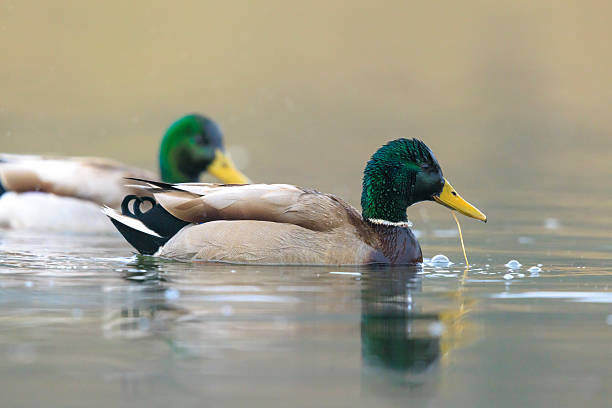
Domestic and wild ducks (family Anatidae) present a remarkable spectrum of physical forms. From the sleek, aerodynamically‑built Mallard (Anas platyrhynchos) to the stout, ornamental Muscovy (Cairina moschata), each breed’s anatomy reflects a unique combination of genetics, evolutionary history, and selective breeding. Understanding how breed‑specific traits appear on the skeleton, muscles, plumage, and internal organs is essential for:
- Selective breeding – predicting the outcome of genetic crosses.
- Veterinary care – diagnosing breed‑related health issues.
- Conservation – preserving heritage breeds and wild subspecies.
- Comparative anatomy – drawing functional parallels across avian taxa.
This guide delves into the macro‑ and micro‑anatomy of ducks, systematically dissecting each body system while highlighting the morphological nuances that differentiate breeds. Throughout, we interlace embryological development, genetic mechanisms, and ecological drivers that sculpt the final phenotype.
2. Overview of Duck Anatomy
All ducks share a basic avian plan: a lightweight, pneumatic skeleton; a four‑chambered heart; a highly efficient respiratory system; and a digestive tract adapted for omnivory. Yet, subtle modifications of this plan generate the diversity seen across breeds. The following sections outline each system’s standard architecture before moving to breed‑specific deviations.
3. Skeletal System
3.1 General Blueprint
- Cranium & Beak – Fused frontals, parietals, and a robust premaxilla that supports the keratinous bill.
- Vertebral Column – 14–16 cervical vertebrae (highly mobile neck), 7 thoracic (rib‑bearing), 5–6 lumbar, 6–7 sacral (fused to pelvis), and 10–12 caudal (tail) vertebrae.
- Pectoral Girdle – Large sternum (keel) for flight‑muscle attachment; fused coracoid and scapula.
- Wing Bones – Humerus, radius/ulna, carpometacarpus, and phalanges; pneumatic cavities reduce mass.
- Pelvis – Four fused bones (ilium, ischium, pubis, and sacrum) forming the acetabulum.
- Legs & Feet – Tibiotarsus, tarsometatarsus, and digits (usually three forward, one rearward).
3.2 Breed‑Specific Skeletal Variations
| Trait | Mallard & Wild‑type Breeds | Heavy‑set Ornamental Breeds (e.g., Pekin, Rouen) | Muscovy & Related Breeds |
|---|---|---|---|
| Keel Length | Long, slender – optimized for sustained flight. | Shorter, broader – supports powerful breast‑muscle bursts for short‑range flapping and early‑season walking. | Moderately long but robust; facilitates both strong flight and terrestrial locomotion. |
| Cervical Vertebrae Count | 14 – provides extreme neck flexibility for foraging. | 15–16 – extra vertebrae add neck length for ornamental display (e.g., “swan‑neck” Pekins). | 14 – retains wild‑type flexibility for probing muddy substrates. |
| Toe Webbing | Deep, convex webbing enabling efficient paddling. | Slightly reduced webbing in some dwarf breeds (e.g., Call Duck) – favors quicker terrestrial movements. | Broad, flat webbing with a pronounced “spoon‑shaped” tip – aids in deep‑water foraging. |
| Tarsometatarsus Robustness | Fine, elongated – reduces drag in water. | Stout, short – supports heavier body mass. | Moderately stout with a distinctive lateral ridge used in digging. |
- Pneumatization: In most breeds, the pneumatic diverticula extend into the humerus, femur, and some thoracic vertebrae. Heavy breeds often exhibit reduced pneumatization, increasing bone density to support greater mass.
4. Muscular System
4.1 Primary Flight Muscles
- Pectoralis Major – Generates the downstroke; accounts for up to 15 % of total body mass in strong flyers.
- Supracoracoideus – Powers the upstroke; attached via a tendon that loops over the shoulder joint.
4.2 Leg Musculature
- Iliofibularis, M. femorotibialis lateralis, and M. gastrocnemius coordinate walking, swimming, and take‑off.
4.3 Breed‑Specific Muscular Profiles
| Breed | Flight‑Muscle Ratio (Pectoralis/Body %) | Leg‑Muscle Development | Notable Adaptations |
|---|---|---|---|
| Mallard | 14–16 % | Moderately developed; high endurance | Strong aerobic capacity for migratory flights. |
| Pekin | 9–11 % | Hypertrophied gastrocnemius & flexor muscles | Emphasis on rapid bursts for landing and short‑range flights. |
| Muscovy | 12–13 % | Balanced leg musculature with robust tibial extensors | Dual capability: competent flyer and efficient digger. |
| Call Duck (dwarf) | 10 % | Relatively small leg muscles | Limited flight; primarily ground‑foragers. |
- Myostatin Variants: Certain ornamental breeds harbor mutations that down‑regulate myostatin, resulting in enlarged muscle fibers, especially in the pectoral region. This contributes to the “meaty” carcass prized in commercial production.
5. Integumentary System (Plumage)
5.1 Feather Types
- Contour Feathers – Provide aerodynamic shape and waterproofing.
- Down Feathers – Insulative layer beneath contour feathers.
- Semiplumes & Filoplumes – Sensory and structural support.
5.2 Pigmentation & Pattern Genetics
- Melanin (eumelanin & pheomelanin) – Produces black, brown, and reddish tones.
- Carotenoids – Yield yellows, oranges, and reds; must be ingested.
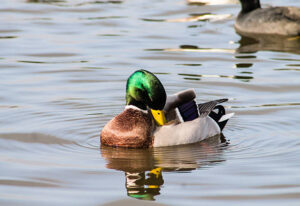
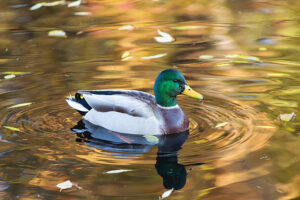
- Structural Colors – Result from feather micro‑structures causing iridescence (e.g., the Mallard’s green head).
5.3 Breed‑Specific Plumage Manifestations
| Breed | Primary Color Genes | Distinctive Pattern | Functional Consequences |
|---|---|---|---|
| Mallard | E (Extended black), L (Lepidopteral), G (Green head) | Male: iridescent green head, gray body, black tail; Female: mottled brown | Seasonal sexual signaling; cryptic female plumage for nesting concealment. |
| Pekin | S (Silver), C (Crested) | White base with black “pied” patches; occasional crest | White plumage reduces heat absorption; crest may be a breed‑defining ornamental trait. |
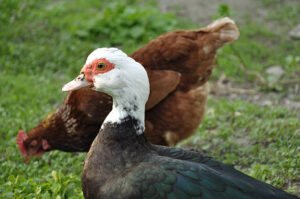
| Muscovy | R (Rust), B (Blue‑gray) | Uniform dark brown to black; occasional white facial “mask” | Dark plumage provides camouflage in forested wetlands. |
| Call Duck | P (Patterned), F (Fallow) | Small size with intricate “butterfly” pattern on head and neck | Visual complexity may aid in mate recognition among densely populated aviaries. |
- Uropygial Gland Development: Heavy breeds often exhibit an enlarged uropygial gland, producing more oil to maintain the waterproofing of a denser plumage.
- Molting Strategies: Species such as the Mallard undergo a simultaneous molt (complete feather replacement) prior to migration, whilst most ornamental breeds experience a sequential molt, allowing them to retain functional plumage for display year‑round.
6. Respiratory & Circulatory Systems
6.1 Avian Respiratory Architecture
- Air Sacs (nine total) create a unidirectional flow, providing high oxygen extraction efficiency.
- Parabronchial Lung – Thin‑walled gas exchange surfaces.
6.2 Cardiovascular Layout
- Four‑chambered heart with a proportionally large left ventricle supporting high metabolic demands.
6.3 Breed‑Specific Respiratory & Cardiovascular Traits
- Keel‑to‑Body Ratio influences thoracic volume; heavier breeds possess a relatively larger thoracic cavity to accommodate increased blood volume.
- Air‑Sac Compliance: In high‑flight breeds (e.g., Mallard), the air‑sacs are more elastically compliant, allowing rapid ventilation during sustained flight.
- Heart Mass: Muscovy ducks have a heart mass of ≈ 1.5 % of body weight, slightly higher than the 1.2 % typical of light breeds—supporting a mixed aerobic‑anaerobic lifestyle (flight + prolonged foraging).
7. Digestive & Excretory Systems
7.1 Basic Layout
- Bill → Esophagus → Crop (optional) → Proventriculus (glandular stomach) → Gizzard (muscular grinding organ) → Small Intestine → Ceca → Large Intestine → Cloaca.
7.2 Grain vs. Mollusk Specialists
- Gizzard Musculature: Ducks that consume harder foods (e.g., Muscovy feeding on snails) have a thicker gizzard wall and larger gizzard stones (gastroliths) to aid mechanical digestion.
- Cecal Size: Herbivorous breeds (e.g., certain domestic Muscovy cross‑breeds) exhibit enlarged ceca for fermentation of fibrous material.
7.3 Breed‑Specific Digestive Adaptations
| Breed | Primary Diet | Gizzard Features | Ceca Length | Notable Enzymatic Activity |
|---|---|---|---|---|
| Mallard | Omnivorous (seeds, insects, aquatic invertebrates) | Moderately muscular; frequent ingestion of grit. | Standard (~2 % of body length). | High amylase for starch digestion. |
| Pekin | Grain‑heavy (commercial feed) | Hypertrophied muscular wall; reduced reliance on grit due to softened feed. | Slightly reduced. | Elevated lipase to process high‑fat diets. |
| Muscovy | Predominantly animal protein (aquatic snails, small fish) | Thick, rugged; often contains larger gastroliths. | Longer ceca for protein fermentation. | Strong proteases (pepsin, trypsin). |
| Call Duck | Mixed seed/bean diet | Small, delicate; requires supplemental grit. | Normal. | Balanced carbohydrolase activity. |
8. Reproductive Anatomy
8.1 Male (Drake)
- Testes – Paired, located intra‑abdominally; size varies seasonally (up to 3 % of body mass during breeding).
- Cloacal Sphincter – Enables rapid “cloacal kiss” copulation.
8.2 Female (Hen)
- Ovary – Typically a single functional ovary (the left) with numerous follicles.
- Oviduct – Comprises infundibulum, magnum, isthmus, uterus (shell gland), and vagina.
8.3 Breed‑Specific Reproductive Traits
| Breed | Egg Size (mm) | Clutch Size | Incubation Period | Unique Features |
|---|---|---|---|---|
| Mallard | 58–62 | 8–12 | 26–28 days | Highly adaptable; nests in ground or tree cavities. |
| Pekin | 70–78 | 10–13 | 28 days | Thick shells; high yolk ratio for meat production. |
| Muscovy | 63–67 | 5–8 | 34–35 days | Longer incubation; males may assist in defense. |
| Call Duck | 50–55 | 6–9 | 25 days | Small eggs; rapid embryogenesis. |
- Shell Gland (Uterus) Morphology: Heavy‑layered breeds develop a more extensive calcium‑depositing epithelium, enabling production of large, thick‑shelled eggs.
- Hormonal Profiles: Breed‑specific differences in estrogen and progesterone cycles affect broodiness; Muscovy drakes often exhibit reduced broodiness compared with other ducks.
9. Nervous System & Sensory Organs
9.1 General Layout
- Brain – Enlarged cerebellum for flight coordination; well‑developed optic lobes for visual processing.
- Cranial Nerves – Seven pairs critical for feeding (V), vision (II), and auditory functions (VIII).
9.2 Visual System
- Tetrachromatic Vision – Four cone types (UV, blue, green, red) enable detection of subtle color cues.
- Binocular Overlap – Frontally placed eyes provide modest depth perception, particularly in diving species.
9.3 Auditory & Tactile Adaptations
- Ear Tubes – Covered by scaled skin; heavy breeds may have slightly longer ear canals, aiding low‑frequency detection in dense vegetation.
- Bill Sensory Pits – Rich in mechanoreceptors; Muscovy ducks display an expanded network for detecting prey under mud.
9.4 Breed‑Specific Neurological Peculiarities
- Muscovy – Larger trigeminal nucleus (V) correlating with enhanced tactile discrimination in the bill.
- Pekin – Slightly reduced cerebellar foliation due to limited long‑distance flight, but increased vestibular nuclei size for balance during rapid terrestrial locomotion.
- Mallard – Prominent optic tectum supporting migratory navigation using celestial cues.
10. Breed‑Specific Traits in Detail
Below, each hallmark trait is dissected to reveal how genetics, development, and selective pressure sculpt the final anatomy.
10.1 Beak Morphology
| Breed | Shape & Size | Functional Role | Genetic Loci |
|---|---|---|---|
| Mallard | Medium, slightly up‑curved; lamellae (comb‑like ridges) for filtering plankton. | Generalist foraging in water and on land. | BMP4, SHH (beak elongation); SOX2 (lamella formation). |
| Pekin | Broad and flat; reduced lamellae. | Grazing on soft feed; less reliance on filtration. | FGF8 down‑regulation reduces lamellar density. |
| Muscovy | Heavy, robust, pronounced “tooth‑like” ridges. | Probing mud for snails and small vertebrates. | Dlx5/6 over‑expression yields stronger mandibular ossification. |
| Call Duck | Small, delicate, high‑arched. | Seed selection and delicate foraging in shallow water. | HoxD13 mutation leading to reduced beak length. |
- Keratin Composition: Muscovy bills have a higher cysteine‑rich keratin, granting extra rigidity for digging.
10.2 Foot Structure
- Webbing Depth – Directly linked to swimming efficiency; deeper webs improve thrust.
- Syndactyly – In some heritage breeds (e.g., Cayuga), the third digit is partially fused, giving a “spoon‑shaped” foot that excels in paddling while providing more surface area for resting on soft mud.
- Scale Texture – Muscovy ducks display a thicker, more keratinized scale covering the tarsus, protecting against abrasive substrates.
10.3 Body Size & Mass
- Growth Hormone (GH) Axis – Variation in GH‑receptor expression explains the massive size of commercial Pekins (up to 5 kg).
- Myostatin (MSTN) Mutations – Identified in certain ornamental breeds (e.g., Indian Runner), causing hypertrophic muscle growth without proportional increase in fat.
10.4 Plumage Pattern Genetics
- Dominant Alleles:
- E – Extends black pigmentation.
- I – Iridescent green head.
- C – Crest formation (linked to HOXC cluster).
- Recessive Alleles:
- p – Powdery white (frequent in “white” Pekins).
- r – “Rush” pattern, a mottled black/white speckle seen in Rouen.
Cross‑breeding experiments demonstrate epistatic interactions; for instance, the E allele is epistatic to C, meaning a duck with both will display black plumage regardless of crest presence.
10.5 Metabolic Adaptations
- Basal Metabolic Rate (BMR) – Light, migratory breeds have a BMR up to 20 % higher than heavy ornamental breeds.
- Thermoregulation – Heavy breeds possess a more robust subcutaneous fat layer and larger pterylae (feather tracts) offering better insulation.
11. Genetic Foundations of Breed‑Specific Traits
11.1 Major Genes & Their Pathways
| Trait | Gene(s) | Pathway | Phenotypic Outcome |
|---|---|---|---|
| Size | GH1, IGF1, MSTN | Growth hormone/IGF axis, myostatin inhibition | Large body mass in Pekins & Rouens. |
| Feather Color | MC1R, TYR, SLC45A2 | Melanogenesis | Black, brown, and diluted colors. |
| Crest | HOXC8, BMP2 | Morphogen gradients | Elevated feather row on the head. |
| Leg Length | FGF20, TBX5 | Limb bud outgrowth | Longer tibiotarsus in Runner ducks. |
| Webbing | SHH, FGF8 | Limb autopod development | Expanded interdigital membranes. |
| Beak Shape | BMP4, Dlx5/6 | Craniofacial patterning | Robust vs. slender bills. |
11.2 Epigenetic Influences
- DNA Methylation of the CYP2J19 promoter modulates red carotenoid deposition, influencing the intensity of male breeding plumage.
- Histone Acetylation in the GH promoter region responds to nutritional status, explaining seasonal growth spurts in wild‑type ducks.
11.3 Selective Breeding & Inbreeding Coefficients
Heritage breeds often show inbreeding coefficients (F) of 0.15–0.25, leading to fixation of desired traits but also increased susceptibility to hereditary disorders (e.g., spondylolisthesis in heavily selected Pekins). Modern breeding programs employ genomic selection using SNP panels covering the aforementioned genes to balance trait improvement with genetic diversity.
12. Evolutionary Perspectives
12.1 Phylogenetic Roots
- The ancestral Anas lineage diverged ~ 15 Ma, giving rise to a spectrum of waterfowl with varying degrees of flight capability and foraging specialization.
- Muscovy (Cairina) represents an early off‑shoot that retained a more terrestrial habit, reflected in its robust skeletal and muscular traits.
12.2 Adaptive Radiation
Selective pressures such as habitat type, predation, and food availability drove divergence:
- Open‑water migrants (Mallard) evolved streamlined bodies, elongated wings, and efficient oxygen extraction.
- Marsh‑dwelling ornamental breeds (Call Duck) benefited from reduced size and enhanced vocalization for dense vegetation communication.
12.3 Domestication Bottlenecks
Archeological evidence dates duck domestication to ~ 4 ka in China. The founder effect narrowed genetic variation, especially in traits tied to meat yield (e.g., pectoral hypertrophy). Recent introgression of wild alleles is employed to re‑introduce vigor and disease resistance.
13. Practical Implications for Breeders
| Goal | Anatomical Focus | Recommended Selection Strategies |
|---|---|---|
| Quick Weight Gain | Enlarged pectoralis, reduced myostatin | Use MSTN‑null lines; monitor GH‑IGF markers. |
| Enhanced Egg Production | Larger uterus, efficient calcium metabolism | Select for CALB1 up‑regulation; provide calcium‑rich diet. |
| Superior Flight Ability | Long keel, high BMR, robust air‑sacs | Retain wild‑type alleles of BMP4, SHH; avoid excessive inbreeding. |
| Aesthetic Plumage | Color genes (MC1R, SLC45A2), crest loci | Cross breeds with complementary alleles; use marker‑assisted selection. |
| Disease Resistance | Strong immune organ (bursa of Fabricius) | Incorporate wild‑type MHC diversity; use genomic prediction for resistance loci. |
Health Monitoring:
- Skeletal Stress – Heavy breeds prone to tibial fractures; require substrate that reduces impact.
- Metabolic Disorders – Overexpression of GH can cause fatty liver disease; regular blood panel monitoring advisable.
Welfare Considerations:
- Provide water bodies for natural paddling, especially for breeds with deep webbing.
- Ensure dietary diversity to meet breed‑specific digestive needs (e.g., grit for Call Ducks, protein‑rich feed for Muscovies).
14. Conservation & Heritage Breed Preservation
- Genetic Reservoirs – Establish cryopreserved germplasm banks for rare alleles (e.g., unique crest genes in Swedish Blue).
- In‑situ Programs – Integrate heritage ducks into wetland restoration projects, allowing natural selection to reinforce beneficial traits.
- Community‑Based Breeding – Support smallholder farms maintaining traditional lines; facilitate knowledge exchange on breed‑specific husbandry.
The International Union for Conservation of Nature (IUCN) now lists several domestic duck breeds as “Vulnerable”, emphasizing the need for targeted conservation actions.
15. Conclusion
The anatomy of a duck is a living manuscript of evolutionary history, genetic regulation, and human influence. By dissecting each body system—skeletal, muscular, integumentary, respiratory, digestive, reproductive, and nervous—we uncover how breed‑specific traits arise and manifest physically.
- Morphological differences (e.g., keel length, beak curvature, webbing depth) stem from variations in a handful of key developmental genes and their regulatory networks.
- Physiological adaptations (BMR, feather insulation, gizzard robustness) reflect the ecological niches each breed occupies, whether that be long‑distance migration, ornamental display, or terrestrial foraging.
- Selective breeding amplifies desirable traits but carries the risk of reduced genetic diversity and associated health issues.
A holistic grasp of duck anatomy—rooted in genetics, development, and ecology—empowers breeders, veterinarians, and conservationists to make informed decisions that balance productivity, aesthetics, and animal welfare. As we move forward, integrating genomic technologies with traditional phenotypic assessments will refine our ability to preserve the rich tapestry of duck diversity for generations to come.
#DuckAnatomy, #BreedSpecificTraits, #WaterfowlScience, #MallardMorphology, #PekinDuck, #MuscovyDuck, #CallDuck, #DuckBreeding, #AvianPhysiology, #FeatherColorGenetics, #DuckConservation, #HeritageBreeds, #BirdAnatomy, #OrnamentalDucks, #DuckResearch, #PoultryScience, #AnimalWelfare, #GeneticsInBreeding, #AvianEvolution, #DuckHealth, #WetlandBiodiversity, #EggProduction, #MeatProduction, #BirdLovers, #NatureEducation
Add comment