
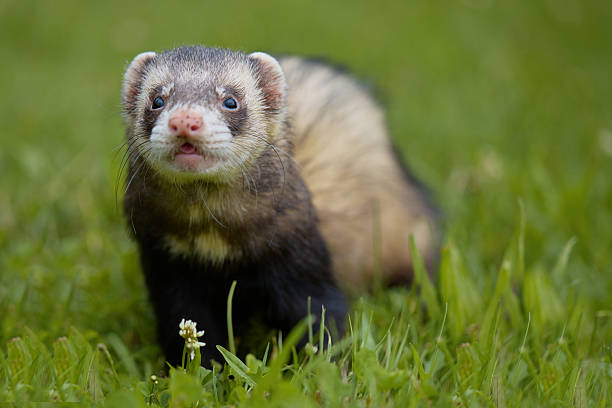
The domesticated ferret (Mustela putorius furo), a creature beloved today for its playful curiosity and endearing “weasel war dance,” holds a unique position in the history of human-animal relationships. Unlike dogs (domesticated from wolves) or cats (from African wildcats), the ferret’s journey into the human household was not primarily driven by mutual companionship, but by pure utility—a sharp, efficient tool for pest control and securing food. The history of ferret domestication is a narrative shrouded in conflicting timelines and geographical debates, stretching back at least 2,500 years. It is a story that transitions the animal from a necessity in ancient pest management to a sophisticated laboratory model, and finally, to one of the fastest-growing exotic companions in the modern home.
This comprehensive guide traces the complete evolutionary and socio-historical journey of the ferret, examining its wild ancestry, the crucial role it played in classical history, its essential function in medieval economies, and the dramatic cultural shift that transformed it into the beloved house pet of the 21st century.
I. The Wild Ancestor: Mustela putorius (The European Polecat)
To understand the domesticated ferret, one must first look to its ancestor: the European Polecat (Mustela putorius). Ferrets are not a distinct species, but a subspecies of the polecat, demonstrating one of the clearest examples of successful, human-driven selective breeding within the mustelid family (which includes weasels, mink, and otters).
The Biology of the Polecat
The European Polecat is characterized by a dark, masked face, deep brown fur, and a solitary, highly territorial nature. Native across much of Western Eurasia, polecats are generalist predators, their diet consisting primarily of small rodents, amphibians, birds, and, significantly, rabbits.
Crucially, the polecat possesses several inherent traits that made it an ideal candidate for domestication:
- Adaptability: Polecats thrive in diverse habitats, often coexisting near human settlements (synanthropic tendencies), drawn by the abundance of rodents.
- Size and Handling: They are small enough to be portable but large enough to effectively tackle burrowing prey like the European rabbit (Oryctolagus cuniculus).
- The Hunting Drive: Polecats, like all mustelids, exhibit a relentless, instinctual drive to pursue prey into confined spaces, an essential behavior for clearing burrows.
Distinguishing the Furo
The domestic ferret, Mustela putorius furo, is distinguishable from its wild relative by several key characteristics that emerged through domestication (a process known as the Domestication Syndrome):
- Coloration: While wild polecats are uniformly dark, ferrets exhibit a wide range of colors, most notably the prevalence of the albino (white, pink-eyed) trait, which is rare to non-existent in the wild. This trait was likely deliberately selected for visibility during hunting.
- Size: Domestic ferrets tend to be slightly smaller and exhibit less sexual dimorphism than polecats.
- Temperament: Ferrets display reduced neophobia (fear of new things) and a far greater tolerance for human handling. They are also highly playful well into adulthood (neoteny), a trait characteristic of domesticated species.
II. The Timeline Debate: Pinpointing Domestication
Establishing the precise origin of ferret domestication is challenging, primarily because ancient texts often confused them with other mustelids or mongooses, and skeletal remains are difficult to distinguish from the wild polecat. Two main theories exist regarding the timing:
Theory A: Early Origin (3,000 BCE)
Some zoologists, primarily citing the potential confusion in early Egyptian or Mesopotamian records regarding specialized vermin control animals, suggest a much earlier origin. However, concrete archaeological evidence linking ferrets definitively to these eras is lacking. Most evidence pointing toward early ‘weasel-like’ pets today is attributed to the mongoose—an unrelated species favored in North Africa for snake and rodent control.
Theory B: The Classical Origin (500 BCE) – The Dominant Hypothesis
The overwhelming historical consensus places the effective, widespread domestication of the ferret in the Mediterranean basin around the 1st millennium BCE, specifically linked to the proliferation of the European rabbit.
The European rabbit, capable of devastating agricultural land with its burrowing habits and rapid reproduction, became a severe pest after being introduced to various Mediterranean islands and the Iberian Peninsula. A swift, burrow-clearing predator was desperately needed. The polecat, already a rabbit predator, was the perfect candidate.
III. The Classical Era: The Ferret as a Biological Weapon
The ferret’s true historical debut is found within the records of the Roman and Greek Empires. For the Romans, the ferret was not a pet; it was essential agricultural and military technology.
Roman Hispania and the Rabbit Plague
The most conclusive evidence for early use centers on the Roman province of Hispania (modern Spain) and the Balearic Islands.
Strabo (circa 64 BCE – 24 CE): The Greek geographer Strabo records the destructive swarms of rabbits (cuniculi) in the Balearic Islands, which necessitated the deployment of a specialized animal to control them. He describes a technique where the animals were sent into the rabbit warrens, causing the rabbits to bolt out into nets or traps waiting at the tunnel entrances.
Pliny the Elder (circa 23 CE – 79 CE): In his monumental work, Natural History, Pliny refers to these creatures, often called Viverrae (a term that sometimes confuses ferrets with civets or mongooses, but in context, implies the rabbit hunter). He confirms the Roman reliance on these animals, sometimes referred to as ‘little beasts’ or ‘wretched dogs’ used to control the rabbit population that threatened crops and infrastructure.
The Romans effectively established the practice of ferreting: the coordinated use of nets, lines, and domesticated mustelids to manage rabbit populations, a practice that would remain largely unchanged for nearly 2,000 years.
The Spread Through Empire
As the Roman Empire expanded, so did the use of the ferret, moving north into Gaul and eventually into Britain. While Britain already had a native polecat population, the introduction of the domesticated ferret facilitated more reliable, controlled pest management for both the Roman forces and the indigenous peoples they governed. The ferret, unlike a dog, could be easily carried, required minimal feeding while deployed, and possessed the size and instinct to enter complex burrow systems.
IV. The Medieval Period: Economic Utility and Status Symbol
Following the collapse of the Western Roman Empire, the ferret did not disappear; in fact, its utility became even more crucial in the agrarian economies of the Middle Ages.
The Staple of the Medieval Diet
In Medieval Europe, particularly in Britain and France, the rabbit became a key source of protein for the working class and a popular sport for the nobility. The rabbit was easy to raise in controlled preserves (warrens) and multiplied quickly.
Ferreting became a skilled trade. Professional “ferreters” traveled the land, hired by landowners and monastery estates to manage the populations. The animals were highly valued assets. Surviving manorial records and inventories often listed ferrets alongside farming equipment and hunting dogs, demonstrating their indispensable economic status.
Status and Symbolism
While primarily practical, the ferret crossed into the realm of aristocratic entertainment and status:
- Falconry Synergy: Ferrets were often used alongside falcons or hawks. The ferret would flush the rabbit, and the bird of prey would catch it mid-flight, showcasing a synchronized hunting display.
- Art and Literature: Ferrets appear in medieval illuminated manuscripts, often depicted in scenes of country life or hunting. Their albino coloration often made them visually distinct and somewhat exotic animals for the time. Queen Elizabeth I of England, for instance, was known to have ferrets, symbolizing the ancient tradition of noble hunting.
The Role in Pest Control (Beyond the Rabbit)
While most often associated with rabbits, ferrets were also employed within castles and fortified towns to control rats and mice in storerooms and granaries. This role was particularly important in safeguarding valuable grain supplies during times of siege or famine.
V. The Early Modern Era: Exploration, Science, and Regulation (16th to 19th Centuries)
As Europe entered the age of exploration, the ferret traveled globally, serving as a biological control agent for newly colonized lands.
Ferrets in the New World
When Europeans settled North America, Australia, and New Zealand, they brought with them the European rabbit (often intentionally, for food) and, subsequently, the need for the ferret.
- New Zealand and Australia: Ferrets were introduced on a massive scale (tens of thousands) in the late 19th and early 20th centuries to combat catastrophic rabbit plagues that were devastating the native environments. This introduction later proved ecologically problematic, as some ferrets escaped and cross-bred with introduced polecats, becoming wild predators themselves.
- North America: Ferrets were brought to the American colonies primarily for rat control in port cities and on ships. They were considered working animals and were common fixtures in agricultural communities.
Scientific Documentation
The 18th century brought formalized taxonomy. Carl Linnaeus, in his 1758 work Systema Naturae, formally categorized the domesticated ferret, classifying it as Mustela putorius furo, recognizing its distinct, domesticated relationship to the wild polecat.
The Erosion of Traditional Ferreting
The 19th century witnessed the rise of industrialization and new agricultural techniques. The invention of specialized wire traps, gins, and early poisons offered new, often cheaper, means of rodent and rabbit control. Traditional ferreting began a slow decline as a primary agricultural method, though it remained a deeply entrenched country sport.
VI. The 20th Century Transformation: Lab Coat to Living Room
The 20th century represents the most dramatic shift in the ferret’s history—a period where its role transitioned from utilitarian hunter to scientific necessity, and finally, to niche pet.
The Ferret in Scientific Research
Beginning in the 1920s, the ferret found a crucial, though unlikely, new role: the biomedical research model. Ferrets possess a respiratory anatomy and physiology remarkably similar to humans, making them nearly unique among non-primate models for studying respiratory diseases.
- Influenza Research: Ferrets became the primary non-human model for studying human influenza strains, including the devastating 1918 Spanish Flu. Their susceptibility and similar symptomology earned them the nickname “the flu ferret.”
- Virology and Toxicology: They remain essential models for cystic fibrosis, various other respiratory viruses, and hormone studies. This scientific utility ensured high-volume, standardized breeding and increased human familiarity with the species.
The Post-War Pet Boom
The most significant change occurred after World War II. As society became more urbanized and specialized, fewer people needed a ferret for rabbiting. Simultaneously, the demand for exotic and unusual pets soared, fueled by increased disposable income and sophisticated veterinary care.
The ferret transitioned from being a tool housed in a barn to becoming a “pocket pet” housed indoors. This shift required significant behavioral acclimatization:
- Scent Control: Owners demanded reduced odor. Breeders responded by selecting for less potent scent glands and, later, normalized surgical descenting (though this impacts only the anal glands, not the general musky odor).
- Breeding Culture: Specialized breeding farms (often starting as laboratory suppliers) began focusing on temperament, longevity, and coat color diversity for the pet market.
The American Pet Ferret
While common in Europe for centuries, the pet ferret exploded in popularity in the United States starting in the 1970s and 1980s. Organizations like the American Ferret Association (AFA) and the American Ferret Veterinary Association (AFV) were formed, standardizing care, promoting the species, and fighting classification battles.
Key to their popularity were traits that domestic breeders had magnified:
- Neoteny (Infantile Behavior): Ferrets retain their playful, sleeping, and curious nature well into late age, making them perpetually entertaining companions.
- Sleek Movement and Small Size: Their ability to maneuver in confined spaces made them ideal for apartment living.
- Trainability: Ferrets are highly trainable for litter box use and basic commands, endearing them to pet owners seeking an interactive companion.
VII. The 21st Century: Legal Battles and Modern Companionship
Today, the ferret is one of the most common pet mammals in North America and Western Europe, arguably second only to dogs and cats in the “companion mammal” category, alongside hamsters and guinea pigs. However, their status as a domesticated animal is still legally complex.
The Legal Status Debate
The ferret’s historical utility as a predator has created ongoing legislative challenges. Many jurisdictions, fearing that escaped ferrets could establish feral populations and threaten native wildlife (as they did in New Zealand), classify them as “exotic,” “wild,” or “dangerous” animals.
Key Legal Battles:
- California: For decades, the ferret has been banned in California, classified as a non-native, potentially destructive species by the Department of Fish and Wildlife. Though continuous legislative efforts have been made, the ban largely holds, forcing ferret owners to keep their pets illegally or move.
- New York City: While ferrets are generally allowed in New York State, they were banned in NYC for many years under Mayor Rudolph Giuliani, a restriction that was only partially relaxed under subsequent administrations.
These legislative hurdles underscore the relatively recent nature of their transition to full companionship. While domestic for thousands of years, the ferret’s closeness to its wild ancestor still provokes regulatory caution.
The Economics of the Modern Ferret
The pet ferret market is now highly industrialized. Major breeders, like Marshall Farms in the U.S., supply millions of ferrets globally, ensuring genetic consistency and health screening. The rise of specialized veterinary medicine (ferret medicine relies heavily on understanding endocrine diseases like adrenal disease and insulinoma) further confirms their establishment as a mainstream pet species requiring specialized husbandry.
Cultural Integration
Ferrets have cemented their place in popular culture, often appearing in minor roles in television, film, and literature (e.g., the beloved character “Bandit” in the film The BFG or the inclusion of ferrets in the His Dark Materials series). This visibility further aids their identity as modern companions rather than mere tools.
VIII. The Biology of Domestication: What Makes a Ferret Furo?
The successful transition of the ferret is a testament to the power of human selection, accelerating genetic shifts in a relatively short period.
Physical and Physiological Changes
Beyond color and size variation, domestication has subtly altered the ferret’s physiology:
- Reproductive Cycles: Domestic ferrets often have slightly altered and more flexible breeding seasons compared to the highly seasonal wild polecat.
- Dietary Tolerance: While still obligate carnivores, domestic ferrets show a higher tolerance for commercially prepared diets, a requirement for mass distribution.
Behavioral Neoteny
The most crucial transformation is behavioral neoteny—the retention of juvenile traits into adulthood. Wild mustelids are extremely solitary and aggressively territorial as adults. Domestic ferrets, however, exhibit:
- Social Tolerance: They are highly social, easily living in groups (“business” of ferrets), and seek out human interaction.
- Extended Play: The characteristic “ferret war dance” (a mixture of clumsy backward hops and hissing) is a juvenile behavior in most mustelids, retained as a permanent fixture of adult ferret play.
This combination of biological modifications has created an animal perfectly optimized not for hunting, but for symbiotic companionship in the human environment.
Conclusion: A Journey of Utility and Love
The history of ferret domestication is a compelling narrative of adaptation, utility, and ultimately, affection. The ferret began its journey thousands of years ago in the hot, rabbit-plagued fields of Roman Hispania, selected ruthlessly for its aggressive hunting instinct and ability to clear burrows. It was a vital economic tool throughout the Middle Ages, securing protein for vast populations.
The 20th century marked the species’ greatest leap—from the lab bench, where it saved human lives by modeling the flu, into the living room, where it became a cherished, playful companion. Despite its humble origins as a hired assassin, the ferret has successfully navigated political scrutiny, biological challenges, and cultural shifts to solidify its place as one of the world’s most unique and beloved exotic pets. The little hunter, Mustela putorius furo, has finally found its rest, trading the dusty warrens of the ancient world for the cozy confines of the modern home.
#FerretHistory, #FerretDomestication, #MustelaPutoriusFuro, #PetHistory, #ExoticPets, #FerretsOfInstagram, #AncientRome, #Ferreting, #PocketPets, #WeaselWarDance, #MustelidLove, #AnimalStories, #FromWorkToWarp, #PolecatAncestry




Add comment