
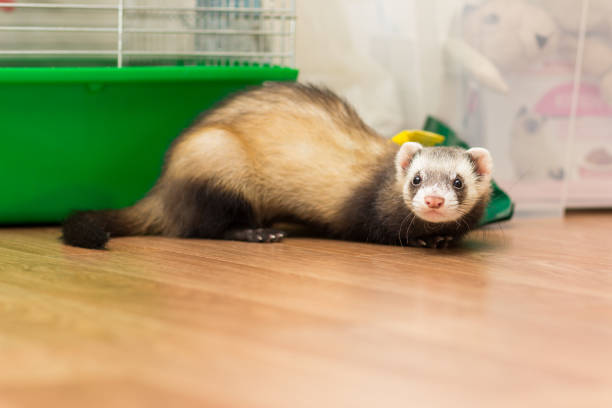
I. Introduction: The Urgency of Recognizing Dehydration in Mustela putorius furo
Ferrets (Mustela putorius furo) are energetic, highly active obligate carnivores with unique physiological demands that render them exceptionally vulnerable to dehydration. Unlike larger domestics animals, a ferret’s small body mass and rapid metabolism mean they have a high rate of water turnover, translating minor fluid imbalances into critical emergencies with alarming speed.
Dehydration—the excessive loss of body water and salts—is not merely an inconvenience in ferrets; it is a life-threatening condition that compromises every major organ system, leading swiftly to hypovolemic shock, organ failure (especially the kidneys), and circulatory collapse. A ferret can transition from mildly unwell to critically dehydrated in a matter of hours, making prompt recognition of the subtlest signs paramount for survival.
This comprehensive guide is designed to provide ferret owners, enthusiasts, and veterinary support staff with the detailed knowledge required to identify, assess, and respond to the warning signs of fluid depletion, focusing specifically on the critical indicators that demand immediate, often life-saving, intervention.
II. Ferret Physiology and Unique Vulnerability to Fluid Imbalance
Understanding why ferrets dehydrate so quickly begins with their innate biology:
1. High Metabolic Rate and Small Surface Area
Ferrets possess a very high basal metabolic rate necessary to sustain their active lifestyle and maintain body temperature. This rapid energy expenditure produces metabolic waste that requires continuous fluid filtration and elimination. Coupled with their small size, their surface-to-volume ratio facilitates rapid heat and fluid loss, especially in warm or high-stress environments.
2. Obligate Carnivory and Kidney Function
Ferrets thrive on a high-protein, high-fat diet. The byproducts of protein metabolism (nitrogenous waste) necessitate efficient kidney function and a constant influx of water for adequate filtration and excretion. When water intake drops, or fluid loss increases, the kidneys struggle to eliminate waste, leading to the buildup of toxins (azotemia) which further exacerbates systemic illness and dehydration.
3. Limited Compensatory Reserves
Unlike animals with slower metabolisms (like some reptiles or large mammals), ferrets have minimal physiological reserves. They cannot safely rely on stored fluids or slow down their metabolic processes significantly to cope with a fluid deficit. A 5% loss of total body water is concerning; a 10–12% loss is critical and rapidly fatal without intensive care.
III. The Spectrum of Dehydration Severity
Dehydration is measured clinically by estimating the percentage of total body weight lost due to fluid deficit. Identifying where the ferret falls on this scale determines the urgency and method of treatment.
| Severity Level | Estimated Fluid Loss | Clinical Presentation (General) | Required Action |
|---|---|---|---|
| Mild (Subclinical) | 4% – 6% | Subtle lethargy, dry litter box, slight increase in thirst (often missed by owners). | Increase oral hydration, monitor closely. |
| Moderate (Clinical) | 7% – 10% | Visible skin tent, sticky gums, sunken eyes, noticeable lethargy, reduced urine output. | Immediate veterinary examination, often requires subcutaneous (SQ) fluid therapy. |
| Severe/Critical | 10% – 15%+ | Signs of shock (pale membranes, cold extremities), profound weakness, non-responsive, prolonged skin tent, signs of organ failure. Life-threatening. | Emergency hospitalization, intravenous (IV) fluids, intensive critical care. |
IV. The Ten Critical Physical Signs of Severe Dehydration (Detailed Assessment)
The identification of severe dehydration relies on a meticulous physical examination. These ten signs represent the most reliable and critical indicators observed in a severely compromised ferret.
1. Persistent Loss of Skin Turgor (The “Skin Tent” Test)
Skin turgor is the most common diagnostic tool for assessing dehydration. It measures the elasticity of the skin, which is directly related to the fluid content of the interstitial spaces (the spaces between cells).
The Mechanism:
When fluid volume decreases, hydrostatic pressure in the interstitium drops. When the skin is pinched, the tissue loses its mechanical ability to snap back rapidly into place.
Proper Technique for Ferrets:
- Locate the Scruff/Shoulder Region: Due to their loose skin, the most reliable area is over the shoulder blades or the lumbar area (mid-back). Avoid pinching the lateral flanks, where fat deposits or excess skin can give a false sense of turgor.
- Gently Elevate: Using the thumb and forefinger, gently lift the skin into a small “tent.”
- Release and Time: Release the skin and observe the time it takes for the fold to flatten completely.
Critical Interpretation:
- Normal: The skin snaps back instantly (less than 1 second).
- Moderate Dehydration (7-10%): The tent remains visible for 2–4 seconds before slowly receding.
- Severe/Critical Dehydration (>10%): The skin tent remains upright, often for 5 seconds or longer, or slowly sinks back with a noticeable delayed, doughy texture. This indicates a severe deficit in extracellular fluid volume.
- Caveat: Older, emaciated, or ferrets with chronic illness may naturally have poor skin elasticity that can confuse interpretation. Use in correlation with other signs.
2. Dry, Tacky, or Pale Mucous Membranes (MM)
The quality and color of the mucous membranes (gums) offer direct insight into systemic hydration and circulatory status.
The Mechanism:
As the body attempts to conserve vital blood volume during dehydration, it restricts blood flow (vasoconstriction) to peripheral capillaries, including those lining the gums. Lack of adequate interstitial fluid also makes the mouth sticky.
Assessment:
Gently lift the ferret’s lip to examine the gums:
- Hydrated: Gums are slick, pink, and glossy (moist).
- Dehydrated: Gums appear tacky, sticky, or frankly dry to the touch, often resembling contact paper rather than wet tissue.
Critical Interpretation (Color):
- Pale Pink/White Membranes: Indicates hypovolemia (low circulating blood volume) and poor peripheral perfusion, signaling impending or existing hypovolemic shock—a life-threatening crisis.
- Dark Red/Brick Red Membranes: Can indicate severe shock, sepsis, or heatstroke, which heavily compounds the dehydration crisis.
3. Prolonged Capillary Refill Time (CRT)
CRT is a crucial measure of cardiovascular function and peripheral perfusion. It directly assesses the body’s ability to push blood quickly back into the capillary beds after pressure is applied.
The Mechanism:
In severe dehydration, decreased blood volume and compensatory vasoconstriction cause a drastic reduction in blood pressure and flow velocity.
Assessment:
- Press a finger firmly onto the ferret’s gum for a few seconds until the area blanches white.
- Release and time how long it takes for the pink color to return.
Critical Interpretation:
- Normal: Less than 2 seconds.
- Critical Dehydration/Shock: CRT is prolonged (2.5 to 4+ seconds). A CRT that takes over 4 seconds is an immediate sign of circulatory failure and demands emergency IV fluid intervention.
4. Enophthalmos (Sunken Eyes)
Enophthalmos, or the recession of the eyeball deep into the socket, is an objective sign of severe fluid deficit.
The Mechanism:
The eyes are cushioned by orbital fat and the fluid content of the surrounding tissues (periorbital fluid). When systemic fluid levels drop critically, the fat and tissue water are resorbed, causing the eyeball to sink noticeably.
Assessment:
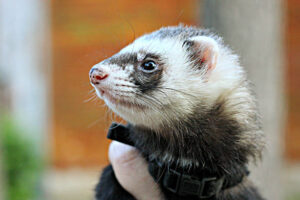
Observe the face in profile. In a hydrated ferret, the eyes appear bright, convex, and slightly prominent. In a severely dehydrated ferret, the eyes look dull, recessed, and often droopy.
5. Profound Lethargy and Weakness
While lethargy is a non-specific sign of illness, in the context of dehydration, it becomes an indicator of metabolic and circulatory collapse.
The Mechanism:
Severe fluid loss impedes the transport of oxygen and nutrients to muscle and brain tissues. Electrolyte imbalances (particularly sodium and potassium) disrupt neural and muscular signaling, leading to extreme whole-body weakness (adynamia).
Critical Presentation:
The ferret may be non-responsive to environmental stimuli, unable to stand or walk, or exhibit profound muscle tremors. They may fail the “righting reflex” (the ability to quickly flip themselves over when placed on their side).
6. Tachycardia followed by Bradycardia (Heart Rate Collapse)
Monitoring the heart rate can track the progression of shock related to dehydration.
The Mechanism and Progression:
- Initial Stage (Compensatory Shock): The heart beats faster (tachycardia) and more forcefully to pump the remaining, reduced blood volume faster, attempting to maintain vital organ perfusion.
- Critical Stage (Decompensatory Shock): As dehydration worsens and blood pressure plummets, the heart muscle fatigues, and the body’s ability to compensate fails. The heart rate slows dangerously (bradycardia), signaling imminent cardiac arrest.
Assessment:
A ferret’s normal heart rate is typically 200–400 beats per minute. A slow, weak heart rate in an acutely sick ferret is a very grave prognostic indicator.
7. Altered Mentation and Temperature Instability
Severe dehydration critically affects the central nervous system (CNS) and the body’s ability to thermoregulate.
Altered Mentation:
- Severe electrolyte imbalances (especially hypernatremia or hyponatremia) can cause CNS dysfunction, leading to confusion, disorientation, seizures, or coma.
Temperature Instability:
- Dehydration often accompanies illness (e.g., fever from infection or gastroenteritis). Alternatively, severe shock can cause body temperatures to crash drastically (hypothermia, below 98°F/36.7°C), as the lack of circulatory volume prevents heat distribution. Both high and low extreme temperatures complicate the dehydration crisis.
8. Oliguria or Anuria (Lack of Urine Production)
The most definitive proof of severe systemic fluid compromise is the absence of urine production.
The Mechanism:
The kidneys are the body’s last line of fluid defense. When blood volume drops severely, the kidneys shut down (prerenal azotemia) to conserve the meager remaining fluid for the brain and heart.
Assessment:
- Owners should observe the litter pan. A lack of urine for 12 hours or more in a sick ferret is highly alarming.
- In the critical stage, the bladder may be empty upon palpation (feeling the abdomen). Anuria signals acute kidney injury (AKI) directly caused by inadequate perfusion.
9. Abnormal Gum Texture or Color (Peripheral Cyanosis)
Beyond dryness, circulatory collapse may show in the color of the mucous membranes.
Peripheral Cyanosis:
When oxygen transport is compromised due to poor circulation, the gums and tongue may take on a grayish or bluish tinge (cyanosis). This signals severe hypoxia (low tissue oxygen levels) related to failure of circulation and respiratory efficiency, often seen in end-stage shock.
10. Cold Extremities (Paws and Tail)
Cold extremities are a classic sign of the body sacrificing peripheral circulation to maintain core blood pressure.
The Mechanism:
The body shunts blood flow away from the limbs and skin surface to prioritize core organs (brain, heart, lungs). This compensatory vasoconstriction results in paws, ears, and the tip of the tail feeling notably cool or cold to the touch, even in a warm room. This is a clear indicator of peripheral circulatory failure and shock.
V. Underlying Causes: Why Ferrets Dehydrate So Rapidly
Dehydration is typically a secondary consequence stemming from illnesses that either increase fluid loss or inhibit intake.
A. Increased Fluid Loss (The “Out-Flow” Problem)
- Vomiting and Diarrhea (Gastroenteritis): Viruses (like Epizootic Catarrhal Enteritis or “Green Slime Disease”), bacterial infections, or inflammatory bowel disease cause rapid loss of water and critical electrolytes.
- Heatstroke/Hyperthermia: Excessive panting (a ferret’s limited cooling mechanism) and sweating (through paw pads) rapidly deplete fluids.
- Diabetes Insipidus/Mellitus: Increased urination (polyuria) due to inability to concentrate urine (insipidus) or osmotic diuresis (mellitus) rapidly leads to dehydration.
- Renal Disease: Chronic kidney failure results in polyuria because the kidneys lose the ability to reabsorb water, forcing the ferret to pass large volumes of dilute urine, leading to chronic dehydration.
B. Decreased Fluid Intake (The “In-Flow” Problem)
- Anorexia/Nausea: Any illness causing a ferret to stop eating inevitably causes them to stop drinking, as much of their daily hydration comes from water sources and food moisture.
- Oral Pain: Dental disease, injuries to the mouth, or oral tumors (like mast cell tumors or malignancies) make drinking excruciatingly painful.
- Inaccessibility: Changes in water sources, unfamiliar equipment (e.g., switching from a bowl to a bottle), or difficulty reaching the water source due to mobility issues.
- Post-Surgical Pain: Pain and disorientation following a procedure can cause temporary cessation of drinking.
VI. Emergency First Aid and Stabilization (Owner Intervention)
If a ferret exhibits moderate to severe signs of dehydration (skin tent >4 seconds, tacky gums, lethargy), immediate veterinary consultation is mandatory. However, while transport is underway, owners can attempt cautious first-aid measures.
A. Assessing Environmental Factors
If heatstroke is suspected, immediately move the ferret to a cool, dark room. Gently apply lukewarm water to their paw pads and abdomen to promote evaporative cooling, but avoid ice-cold water, which can cause dangerous peripheral vasoconstriction.
B. Cautious Oral Rehydration (Only if Conscious)
Oral rehydration is only safe if the ferret is fully conscious, able to swallow, and not actively vomiting. Fluids provided must contain electrolytes and simple sugars, not just plain water.
- Acceptable Solutions: Unflavored Pedialyte, veterinary oral electrolyte solutions (ORS), or deeply diluted chicken/beef broth (low sodium).
- Method: Use a clean, needle-less syringe (1-3cc size). Offer the solution slowly, drop by drop, into the side of the mouth (buccal pouch) to prevent aspiration (inhaling fluid into the lungs).
- Volume: A severely dehydrated ferret may only tolerate 1–2 cc every 15 minutes. Stop immediately if the ferret coughs, struggles, or appears nauseous.
C. Providing Accessible Water
Ensure fresh water is immediately available in a shallow, stable bowl. If the ferret is too weak to lift its head, position the bowl so they can lap easily.
Crucial Warning: Never delay veterinary transport for oral rehydration attempts. Severe dehydration requires parenteral (non-oral) fluids administered intravenously or subcutaneously.
VII. Veterinary Diagnosis and Advanced Treatment
Upon arrival at the clinic, the veterinarian will move swiftly to confirm the severity of dehydration, rule out underlying causes, and initiate aggressive fluid resuscitation.
A. Confirmatory Diagnostics
- Blood Work (PCV/TP): A packed cell volume (PCV) measures the percentage of red blood cells. In dehydration, the plasma volume shrinks, artificially elevating the PCV (hemoconcentration). Total protein (TP) is also often elevated.
- Chemistry Panel (BUN/Creatinine): Elevated Blood Urea Nitrogen (BUN) and Creatinine confirm azotemia. If the kidneys are structurally healthy, this level should improve rapidly with fluid therapy (prerenal azotemia). If it fails to improve, primary kidney damage is suspected (renal azotemia).
- Urine Specific Gravity (USG): If the ferret is producing any urine, USG measures its concentration. A severely dehydrated ferret should have highly concentrated urine (>1.035). A low USG (isosthenuria) in a dehydrated ferret is a serious sign of renal failure.
B. Aggressive Fluid Resuscitation
1. Intravenous (IV) Fluid Therapy (Critical Care)
For ferrets in shock or those exceeding 10% dehydration, IV fluids are mandatory. A catheter is placed (often in the cephalic or lateral saphenous vein) to deliver large volumes of isotonic fluids (e.g., Lactated Ringer’s Solution or 0.9% Saline) directly into the bloodstream. IV access allows for rapid volume expansion, crucial for reversing shock and restoring perfusion to vital organs.
2. Subcutaneous (SQ) Fluid Therapy (Moderate Care)
SQ fluids are administered under the skin, usually over the scruff or flank. This method is effective for moderate dehydration (7-10%) and for fluid maintenance in ferrets who are stable but refusing to drink. The fluid is slowly absorbed into the circulation over several hours.
3. Addressing Electrolyte Imbalances
Severe dehydration often involves dangerous shifts in potassium, sodium, and chloride levels. These require precise supplemental administration into the IV fluids, guided by blood panel results, to prevent cardiac or neurological complications.
VIII. Prevention and Long-Term Management
The best defense against critical dehydration is meticulous management of hydration and prompt attention to illness.
1. Optimize Water Access
- Multiple Sources: Offer both heavy ceramic/stainless steel bowls (less likely to tip) and sipper bottles. Many ferrets prefer bowls, as lapping allows for greater intake per sitting.
- Freshness: Clean and refresh water sources daily. Ferrets may avoid stagnant or contaminated water.
- Placement: Place water stations near rest areas and feeding stations, ensuring they are easily reached by old or sick ferrets (no climbing necessary).
2. High-Moisture Diet Integration
Since ferrets consume water largely through their food, incorporating moisture is key:
- Soup Diets: If a ferret is lethargic or anorexic, blend their highly digestible kibble with warm water and/or a/d prescription recovery diet to create a slurry or “soup.” This ensures both nutrition and hydration.
- Hydrated Kibble: Simply soak the daily kibble portion in water for 10-15 minutes before serving.
3. Environmental Monitoring
- Keep ambient temperatures below 80°F (26.7°C). Ferrets cannot tolerate heat and are prone to heatstroke, a major cause of acute dehydration.
- Use humidifiers if the home environment is excessively dry, especially in winter when forced-air heating can increase insensible fluid loss.
4. Vigilant Illness Monitoring
Establish a baseline for your ferret’s behavior, water intake, and litter box output. Any notable decrease in drinking, paired with lethargy or changes in gum moisture, warrants immediate escalation to veterinary care. Do not wait 24 hours to see if a ferret “bounces back” from severe diarrhea or vomiting.
IX. Conclusion: The Critical Nature of Speed
Dehydration in ferrets is a medical emergency where minutes truly matter. The narrow margin for error afforded by their small body size and rapid metabolism means that owners must be hyper-aware of the critical physical indicators—the prolonged skin tent, the tacky gums, the sunken eyes, and prolonged CRT. Recognizing these signs and immediately accessing aggressive fluid resuscitation (IV therapy) is the difference between a potentially reversible illness and systemic organ failure leading to death. Ferret owners must treat any sign of moderate to severe dehydration as a red-alert crisis.
#FerretDehydration #FerretEmergency #FerretCare #MustelaPutoriusFuro #FerretHealth #PetEmergency #VeterinaryCriticalCare #FerretOwnerTips #FerretSafety #CritterCare #KnowTheSigns #FerretFirstAid #FerretsOfInstagram #ExoticPetCare #LifeSavingTips

Add comment