
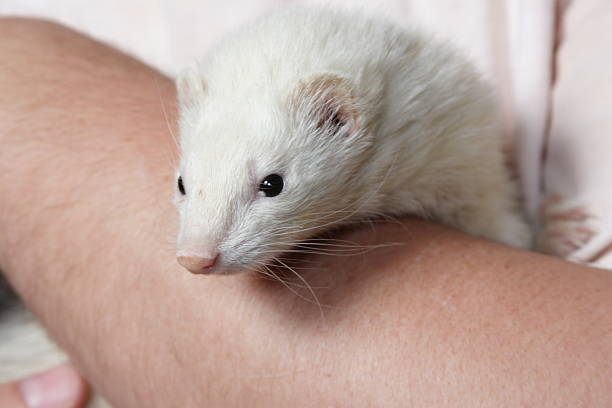
The domestic ferret (Mustela putorius furo), a beloved companion animal known for its playful energy and curious nature, harbors a unique and potentially fatal vulnerability tied directly to its reproductive physiology. Unlike many other mammals, the intact female ferret, known as a “jill,” is an induced ovulator. This biological mechanism, while efficient in the wild, creates a critical health crisis in a spayed pet environment. If a jill enters estrus (heat) and is not mated, her body is subjected to a prolonged, toxic bath of high estrogen, leading directly to a life-threatening condition: Estrogen-Induced Aplastic Anemia.
This guide serves as an exhaustive reference, detailing the physiology, pathology, clinical manifestations, diagnosis, emergency management, and, most importantly, the necessary preventative measures required to protect the health and life of the intact female ferret.
I. The Normal Reproductive Physiology of the Jill
Understanding the danger requires first understanding the norm. Ferrets are seasonal breeders, typically entering estrus between March and August in the Northern Hemisphere, triggered by increasing daylight hours (photoperiod).
A. Anatomical and Seasonal Overview
The jill’s reproductive system is characterized by a high degree of seasonality.
- Puberty: Jills usually reach sexual maturity around 6–9 months of age.
- Vulvar Swelling: The most recognizable sign of estrus is marked swelling and redness of the vulva. This physical change is directly indicative of high circulating estrogen levels.
- Induced Ovulation: This is the critical factor. Jills are not spontaneous ovulators (like humans or dogs). Ovulation is only triggered by the mechanical stimulation received during copulation. Lacking this stimulus, the jill remains perpetually in estrus.
B. The Hormonal Cascade of Estrus
The reproductive cycle is controlled by the hypothalamic-pituitary-gonadal (HPG) axis.
- Hypothalamus: Releases Gonadotropin-Releasing Hormone (GnRH).
- Pituitary Gland: Stimulated by GnRH, it releases Follicle-Stimulating Hormone (FSH) and Luteinizing Hormone (LH).
- Ovaries: FSH stimulates ovarian follicles to mature. As follicles mature, they produce and release vast quantities of estrogen (estradiol).
- The Toxic Feedback Loop: In a normal cycle (with successful mating), the act of copulation causes an LH surge, leading to ovulation. Estrogen levels then drop, and the cycle resolves. In an unmated jill, no LH surge occurs. The follicles remain active, continually pumping out high levels of estrogen, which keeps the pituitary gland inhibited (preventing the resolution of the cycle) and directly targets the bone marrow.
II. The Pathophysiology of Prolonged Estrus and Estrogen Toxicity
When estrus extends beyond 30–40 days, the jill is officially considered to be in Prolonged Estrus, placing her at severe risk. Estrogen, while vital for reproduction, becomes a toxin in sustained, high concentrations. The target of this toxicity is the bone marrow.
A. The Mechanism of Estrogen Toxicity
The bone marrow is the hematopoietic factory of the body—the site where all blood cells (red blood cells, white blood cells, and platelets) are produced from pluripotent stem cells. High circulating estrogen has a direct, suppressive effect on these hematopoietic stem cells. The specific mechanisms involve:
- Direct Cytotoxicity: Estrogen metabolites are directly toxic to the rapidly dividing precursor cells in the bone marrow.
- Inhibition of Growth Factors: Estrogen interferes with the production and function of essential growth factors necessary for blood cell development (e.g., Erythropoietin, Thrombopoietin).
- Marrow Hypoplasia: Over time, the suppression leads to hypoplasia (wasting) of the bone marrow, meaning the tissue becomes increasingly fatty and empty, unable to produce viable circulating blood components.
B. Defining Aplastic Anemia
Aplastic Anemia (AA) in ferrets is not merely a lack of red blood cells (anemia). It is a pancytopenia—a deficiency of all three major blood cell lines—due to bone marrow failure.
- Anemia (Red Blood Cells – RBCs): Leads to oxygen deprivation, lethargy, and pallor.
- Neutropenia/Leukopenia (White Blood Cells – WBCs): Leads to severe immunosuppression and inability to fight infection.
- Thrombocytopenia (Platelets): Leads to clotting deficiencies, spontaneous bleeding, and petechiae (pinpoint hemorrhages).
The triad of anemia, immunosuppression, and bleeding diathesis makes Aplastic Anemia an extremely high-mortality condition. The longer the jill remains in estrus, the higher the concentration of estrogen, and the more profound the bone marrow suppression becomes.
III. Clinical Signs: Recognizing the Stages of Crisis
The progression from normal estrus to fatal aplastic anemia is insidious, making early detection by the owner crucial.
A. Early Stage (4–6 Weeks in Estrus)
The jill may appear outwardly healthy, despite the ongoing internal damage.
- Persistent Vulvar Swelling: The most definitive sign. The vulva remains red and enlarged.
- Mild Lethargy: Slight decrease in activity level; often missed as owners assume the jill is merely “resting.”
- Subtle Pallor: Gums (mucous membranes) may begin to look slightly paler than normal pink.
B. Intermediate Stage (6–10 Weeks in Estrus)
Bone marrow suppression is now measurable and the jill is symptomatic.
- Moderate to Severe Lethargy: Significant decrease in play and activity; increased sleeping.
- Profound Pallor: Gums are white or very pale pink; capillary refill time is prolonged.
- Weight Loss and Muscle Wasting: Due to chronic illness and lack of appetite (anorexia).
- Weakness: Inability to climb or maintain normal posture.
C. Advanced/Critical Stage (10+ Weeks in Estrus or Rapid Deterioration)
The pancytopenia is severe, and the jill is critically ill, often presenting as a veterinary emergency.
- Hemorrhage: This is the most alarming sign linked to thrombocytopenia. Manifestations include:
- Petechiae and Ecchymoses: Pinpoint bleeding or large bruises visible on the skin, gums, or abdomen.
- Melena: Dark, tarry stool due to internal gastrointestinal bleeding.
- Epistaxis: Nosebleeds.
- Hematuria: Blood in the urine.
- Fever or Hypothermia: Due to overwhelming systemic infection (sepsis) secondary to neutropenia, or collapse due to severe anemia.
- Dyspnea (Difficulty Breathing): Due to lack of oxygen-carrying capacity.
- Mucosal Ulceration: Ulcers in the mouth or GI tract, common with severe neutropenia/immunosuppression.
IV. Diagnosis and Laboratory Findings
Diagnosis relies heavily on clinical history (intact jill, prolonged swelling) confirmed by definitive laboratory tests.
A. Complete Blood Count (CBC)
The CBC is the single most critical diagnostic tool for Aplastic Anemia. Expected findings are a reflection of the bone marrow failure:
- Severe Anemia: Critically low Packed Cell Volume (PCV) or Hematocrit. PCVs below 20% are common, and levels below 15% are imminently fatal. The anemia is typically non-regenerative, meaning the body is not producing new red blood cells to compensate (confirmed by low reticulocyte count).
- Thrombocytopenia: Platelet counts are severely depressed, explaining the hemorrhagic signs.
- Leukopenia/Neutropenia: Extremely low total white blood cell count, often predisposing the ferret to secondary infections that prove fatal.
B. Serum Chemistry
Serum biochemical analysis is generally used to rule out concurrent disease and assess organ function related to collapse. Liver and kidney values may be elevated due to decreased perfusion (blood flow) or secondary infection. Estrogen levels may be measured, but clinical signs and CBC results are often sufficient for diagnosis.
C. Bone Marrow Biopsy/Aspirate (Definitive Diagnosis)
While generally reserved for cases where the cause of pancytopenia is ambiguous, a bone marrow sample provides the definitive evidence. In Aplastic Anemia, the biopsy reveals severe hypoplasia or aplasia (absence of blood-forming elements), replaced by fatty tissue (adipose cells).
V. Emergency Management and Treatment Protocols
Treatment for estrogen-induced aplastic anemia is complex, aggressive, and carries a guarded to poor prognosis, especially in advanced stages. The treatment protocol involves immediate stabilization followed by definitive action to remove the estrogen source.
A. Stabilization and Supportive Care
Patients presenting with critical anemia (PCV < 15%) or active hemorrhage require immediate life support.
- Fluid Therapy: Intravenous (IV) or intraosseous (IO) fluids to maintain hydration and circulation.
- Blood Transfusions: The most crucial immediate intervention. Ferrets do not have widely recognized major blood groups, meaning cross-matching is often forgone in emergency situations, though subsequent transfusions carry higher risk. Transfusions replace critically needed RBCs and platelets.
- Antibiotics: Due to severe neutropenia, the jill is highly susceptible to sepsis. Broad-spectrum, bactericidal antibiotics are initiated immediately (prophylactically) while awaiting culture results.
- Oxygen Supplementation: Necessary for severe anemia to maximize the limited oxygen-carrying capacity.
B. Definitive Treatment: Removing the Estrogen Source
Supportive care buys time, but the only cure is eliminating the high estrogen levels. This can be achieved pharmacologically or surgically.
1. Hormonal Induction of Ovulation (Temporary Measure)
If the jill is diagnosed early and is not severely anemic, attempts can be made to induce ovulation to break the cycle.
- Human Chorionic Gonadotropin (hCG): This drug mimics the action of LH, triggering ovulation. A successful treatment causes the estrogen level to plummet and the jill transitions to pseudopregnancy (lasting about 40 days), allowing the bone marrow time to recover.
- GnRH Agonists (e.g., Deslorelin/Suprelorin F): While primarily used as a preventative measure for chemical sterilization, a bolus injection can sometimes be used acutely to stimulate the pituitary, inducing ovulation, although this is less reliable than hCG in the acute phase.
Note: Hormonal induction is only a delay tactic. The jill will return to estrus, and the risk will recur. Definitive sterilization is mandatory.
2. Surgical Intervention: Ovariohysterectomy (OHE)
Surgical spaying is the definitive cure, removing the ovaries and uterus and instantly eliminating the source of estrogen production.
- The Surgical Paradox: Performing surgery on a patient with severe anemia and thrombocytopenia is incredibly high-risk due to anesthesia complications, hemorrhage, and poor healing.
- Decision-Making: The veterinarian must weigh the risk of immediate surgical mortality against the certainty of death if the estrogen source is not removed. In critically ill patients, a transfusion is often performed immediately prior to surgery to stabilize the jill sufficiently for the procedure.
C. Post-Treatment Monitoring
Following successful stabilization and removal of the estrogen source, blood work must be monitored weekly. Bone marrow recovery is a slow process, often requiring 4–12 weeks before the PCV, WBCs, and platelets return to normal ranges. During this time, the jill remains vulnerable to infection and bleeding and requires scrupulous care.
VI. Prevention: The Cornerstone of Responsible Ferret Ownership
Given the high cost, complexity, and poor prognosis associated with treating severe Aplastic Anemia, prevention is the absolute mandate for all owners of female ferrets.
A. Surgical Sterilization (Ovariohysterectomy – OHE)
Traditional spaying provides permanent prevention. However, the standard OHE performed early in life (prior to or around 6 months) has been linked to an increased risk of adrenal gland disease (AGD) later in life.
- The Adrenal-Hormone Link: Early spaying removes the negative feedback loop from the gonads, leading to the overproduction of GnRH from the hypothalamus. This chronic stimulation is believed to trigger the adrenal glands to produce excessive sex hormones, leading to AGD, which is another common and serious ferret illness.
B. Chemical Sterilization (GnRH Agonist Implants)
Due to the increased prevalence of AGD following early surgical sterilization, the gold standard for reproductive management in ferrets has shifted dramatically toward the use of GnRH agonist implants, primarily Deslorelin (Suprelorin F).
- Mechanism: The implant, typically placed subcutaneously, continuously releases a synthetic GnRH agonist. Initially, this causes a short surge (flare), but the sustained release desensitizes the pituitary receptors. This chemical down-regulation halts the production of LH and FSH, effectively causing a state of reversible chemical castration or sterilization.
- Advantages:
- Prevents Estrus: Effectively eliminates the risk of Aplastic Anemia.
- Reduces AGD Risk: By chemically managing the HPG axis, it provides a more physiologic form of sterilization, dramatically reducing, though not eliminating, the risk of Adrenal Gland Disease.
- Duration: Implants last 1 to 4 years, depending on the dosage and individual ferret metabolism. They must be re-implanted promptly when the vulva begins to swell again (indicating the implant is failing).
C. Breeding Out of Estrus (“Running Her Out”)
Historically, owners sometimes attempted to mate the jill with a vasectomized male ferret (a “hoblet” or “teaser hob”).
- Purpose: The mechanical stimulation from the hoblet induces ovulation, leading to a temporary pseudopregnancy (lasting 40–42 days), thus resolving the estrus cycle and dropping the dangerous estrogen levels.
- Caveats: This method requires careful maintenance of a vasectomized male, is labor-intensive, and only provides temporary relief. The jill will return to estrus once pseudopregnancy ends, necessitating immediate re-mating or chemical/surgical sterilization. This is largely considered an outdated or acute management strategy, replaced by the superior long-term reliability of Deslorelin implants.
D. Owner Vigilance
Owners of intact jills must monitor the vulva daily during the breeding season. Any sign of swelling persisting beyond two weeks warrants immediate veterinary consultation to initiate preventative steps (e.g., implant placement or hCG injection) before bone marrow suppression begins.
VII. Prognosis, Recovery, and Long-Term Implications
The prognosis for a jill suffering from Estrogen-Induced Aplastic Anemia is guarded to poor, heavily dependent on two factors: the duration of estrus and the severity of the pancytopenia at presentation.
A. Factors Affecting Survival
- Severity of Anemia: Jills presenting with a PCV below 15% have a significantly poorer prognosis, despite transfusions.
- Presence of Sepsis: If the jill has developed systemic infection due to neutropenia, the mortality rate is extremely high.
- Treatment Speed: Rapid diagnosis and definitive treatment (OHE) greatly improve the chances of survival.
B. Recovery Time
Even if the jill survives the acute crisis and surgery, the bone marrow takes significant time to recover.
- Platelets and WBCs: Often rebound within 2–4 weeks as these cell lines have a shorter lifespan.
- RBCs: Full recovery of the red blood cell mass may take 6–12 weeks. The jill must be kept strictly confined and stress-free during this lengthy convalescence.
C. Potential Long-Term Complications
Successful treatment resolves the anemia, but the prior hormonal imbalances may have lasting effects:
- Persistent Sterility: Severe suppression can permanently damage the hematopoietic stem cell line, although this is rare.
- Increased Risk of Adrenal Disease: If not already sterilized by implant, the jill must be immediately put on a GnRH agonist regimen following recovery to mitigate the long-term risk of developing Adrenal Gland Disease, ensuring reproductive hormones remain suppressed in a controlled manner.
Conclusion
The risk of Estrogen-Induced Aplastic Anemia is arguably the single greatest immediate threat to the life of an intact female ferret. It is a predictable, dose-dependent hormonal toxicity that progresses silently until the jill is in a critical, life-threatening crisis.
Responsible ferret guardianship demands a proactive approach to reproductive management. For any female ferret whose reproductive status is non-spayed, immediate consultation with an exotic animal veterinarian regarding chemical sterilization via a Deslorelin implant is not merely advisable—it is a mandatory and life-saving preventative measure. The health and vigor of these unique and wonderful companions depend entirely on preventing the accumulation of this potent, self-produced toxin.
#FerretHealth #AplasticAnemia #FerretEstrusDanger #EstrogenToxicity #ExoticPetVet #VetMedLife #FerretCare #JillInHeat #FerretEmergency #BoneMarrowFailure #PetEducation #DeslorelinImplant #SuprelorinF #PreventativeCare #MustelaPutoriusFuro #FerretLove





Add comment