
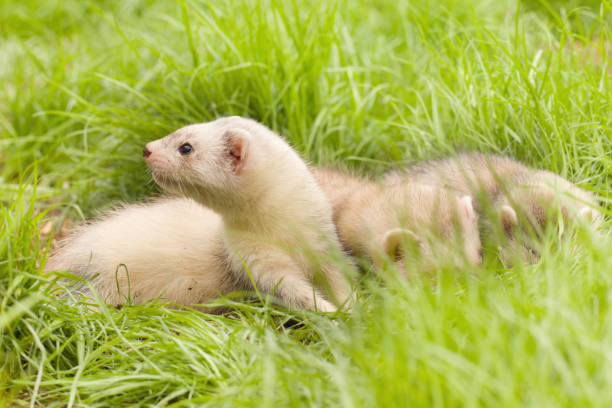
The domestic ferret, a creature cherished for its playful demeanor, slim body, and inquisitive nose, is one of the most successful domesticated carnivores in human history. Yet, its wild ancestor—the European Polecat—remains largely misunderstood, often confused with its captive cousin. The relationship between the two is one of progenitor and descendant, a biological link forged through centuries of selective breeding.
This guide provides an exhaustive exploration of the differences between the European Polecat (Mustela putorius) and the Domestic Ferret (Mustela putorius furo). We delve into their taxonomy, morphology, behavior, ecology, and the complex ethical implications that arise when these two forms overlap, particularly concerning hybridization (polecat-ferret crosses, often called “polecat hobs” or “polecat jills”). Understanding these distinctions is crucial for biologists, conservationists, veterinarians, and anyone considering the keeping of domestic ferrets.
I. Foundational Taxonomy and the History of Divergence
To delineate the differences, we must first establish the scientific relationship. Both the ferret and the European Polecat belong to the genus Mustela, a group encompassing weasels, stoats, and minks.
A. The Naming Convention
The European Polecat is classified as Mustela putorius. The Latin name putorius translates roughly to “foul-smelling one,” a direct reference to the powerful anal musk glands they use for defense and territorial marking.
The Domestic Ferret is classified as Mustela putorius furo, meaning it is considered a subspecies of the European Polecat. This trinomial nomenclature acknowledges that while the ferret is genetically distinct due to domestication, it has not diverged enough to warrant a separate species designation (unlike, for instance, the dog, Canis familiaris, which is often considered a subspecies of the gray wolf, Canis lupus). This shared species name underscores the capacity for both animals to interbreed successfully and produce fertile offspring.
B. The Timeline of Domestication
The precise chronology of ferret domestication (known as ferreting) is a subject of ongoing debate, but the consensus places the initial event approximately 2,500 to 3,000 years ago, significantly predating the domestication of the cat.
- Theories of Origin: While the European Polecat is the established ancestor, there is historical evidence suggesting a potential link to the slightly different Steppe Polecat (Mustela eversmanii), though genetic analysis strongly favors the European lineage.
- The Purpose: Domestication appears to have originated in the Mediterranean basin (likely Egypt or parts of North Africa, driven by Roman influence) primarily for pest control and hunting. Ferrets were employed to flush rabbits out of burrows (a practice known as ferreting, or historically, “warren hunting”). This required animals that were smaller, easier to handle, less aggressive, and crucially, had a paler coat (often albino) to differentiate them easily from the prey or wild mustelids in dark tunnels.
- The Result: Selective breeding for docility, smaller brain size (relative to body mass), varied coat color, reduced aggression, and specific reactions to human handling led to the modern ferret. This sustained selection pressure drove the furo subspecies into its distinct domestic niche.
II. The Wild Ancestor: The European Polecat (Mustela putorius)
The wild European Polecat serves as the biological and behavioral benchmark against which the ferret is measured.
A. Morphology and Coat (The Wild Type)
The European Polecat exhibits a highly specialized structure geared toward survival in temperate forests and grasslands.
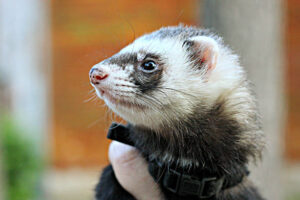
- Coat Coloration (Masking and Glistening): The defining characteristic is the striking counter-shading and masking. The body fur is dark, glossy, and usually black or dark brown, contrasting sharply with a pale, yellowish undercoat that shows through the guard hairs. This creates a “glistening” or “frosted” effect. The defining feature is the facial mask: dark bands across the eyes, offset by white or creamy patches on the muzzle, forehead, and ear tips. This mask is essential for camouflage and intimidation.
- Size and Build: Polecats are generally larger, heavier, and significantly more heavily muscled than most domestic ferrets, especially the males (hobs). They possess a broader skull, shorter neck, and a more robust jaw structure necessary for subduing struggling prey like large rodents and rabbits.
- Weight: Males typically range from 1,000 to 1,700 grams; females (jills) are smaller, 650 to 900 grams.
- Sensory Acuity: Wild polecats possess extremely sharp senses, necessary for nocturnal hunting. Their eyesight, while not exceptional, is adapted for low light, and their sense of smell is highly developed.
B. Ecology, Diet, and Habitat
Polecats are obligate carnivores and highly adaptable predators occupying a crucial position in their ecosystem.
- Dietary Specificity: The wild polecat’s diet is diverse but focused on live prey. It primarily consists of small mammals (voles, mice, rats), amphibians (frogs and toads, which they seem largely resistant to the toxins of), birds, and reptiles. Unlike the opportunistic scavenging frequently seen in domestic animals, polecats are active hunters with specialized killing behaviors, often employing the “neck-bite” characteristic of mustelids.
- Habitat and Range: They are native to nearly all of continental Europe, excluding the far north, but their populations have faced decline due to habitat loss and historical persecution. They prefer lowland areas, particularly riparian habitats (near water), woodlands, and marshlands, utilizing abandoned burrows, rock piles, and woodpiles for shelter.
- Activity Patterns: European Polecats are predominantly nocturnal or crepuscular (active at dawn and dusk). This rhythmic activity pattern is hardwired and crucial for avoiding diurnal predators and successfully utilizing the night cover for hunting.
C. Temperament and Behavior (Wild Instinct)
The temperament of the polecat is entirely shaped by the necessity of survival in a hostile environment.
- Solitary Nature: Polecats are highly solitary animals, coming together only briefly for mating. They maintain extensive, scent-marked territories and are highly intolerant of intruders, displaying intense inter- and intra-sexual aggression.
- Defensive Behavior: When threatened, the polecat relies on the foul-smelling musk from its anal glands—a potent, acrid secretion that is far stronger and more liberally used than in a domestic ferret. They will also hiss, spit, and bite viciously if cornered.
- Untameable Nature: Crucially, even if hand-reared from a young kit, a pure European Polecat retains strong, instinctive wild behaviors, making it fundamentally unsuitable for domestic handling. They are highly volatile, prone to biting, and resistant to confinement.
III. The Domesticated Descendant: The Ferret (Mustela putorius furo)
The modern domestic ferret is a creature fundamentally altered by millennia of interaction with humans, resulting in profound physiological and psychological changes.
A. Physical Characteristics (Domestic Variations)
Selective breeding has yielded a much wider array of phenotypes (observable characteristics) in ferrets than in their wild counterparts.
- Coat Color and Patterns: Domestication relaxed the pressure for uniform camouflage, leading to exotic coat patterns impossible in the wild.
- Albino: True ferrets are often albino (white fur, pink/red eyes), a trait highly valued historically for easy identification in dark burrows.
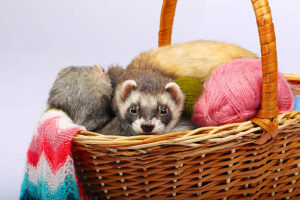
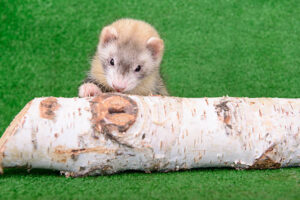
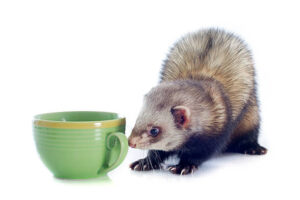
- Sable/Fitch: The most common pattern mimics the wild polecat but is generally paler, with less defined masks and often brown, rather than black, guard hairs.
- Panda, Mitt, Blaze: These genetically distinct patterns, featuring white heads, white feet (“mitts”), or stripes (“blazes”), are purely products of human selection.
- Size and Skeletal Structure: Domestic ferrets are typically smaller and less muscular than wild polecats. Their skulls are narrower, and their teeth are slightly smaller relative to their body size. While large captive males can occasionally rival the weight of small wild polecats, the overall build is slighter and more agile for human handling and tight burrow work.
B. Behavioral and Temperamental Changes
The most significant divergence lies in the realm of psychology and behavior.
- Docility and Socialization: Domestic ferrets exhibit low innate aggression toward humans. They are easily handled, tolerate confinement, and even seek out human interaction. They are also non-solitary; while they don’t form strict packs, they thrive in groups (business or herd) and show limited territorial aggression toward cagemates.
- The “Weasel War Dance”: Ferrets display specific, playful behaviors, such as the “ferret dance” or “weasel war dance”—a characteristic bobbing, hopping, open-mouthed behavior that signals play rather than aggression. This high degree of playful behavior, common throughout their lifespan, is a classic sign of reduced predatory pressure and increased social reliance.
- Sleep Cycles (Induced Lethargy): While wild polecats are strictly nocturnal, captive ferrets have adapted their circadian rhythm to match human schedules. They are capable of sleeping for up to 75% of the day, often in extended periods, a behavior that allows them to conserve energy in captivity and synchronize with their owners. Wild polecats, by contrast, utilize their active hours far more intensely.
C. Health and Physiological Differences
Domestication has introduced specific vulnerabilities and altered the physiology of the ferret.
- Lifespan: In the wild, polecats rarely live past 3 to 5 years due to predation, disease, and harsh environmental conditions. Domestic ferrets, with veterinary care and a controlled environment, routinely live 6 to 10 years, and sometimes longer.
- Disease Susceptibility: Ferrets are highly susceptible to certain human diseases, notably the human influenza virus (the common cold), which is rare in wild polecats. Conversely, they have been selectively bred to resist some common wildlife parasites that their wild cousins frequently carry.
- Dietary Change: While still obligate carnivores, the domestic ferret’s diet is typically processed kibble or raw ground meat. This differs significantly from the whole, fresh, diverse prey hunted by the polecat.
IV. Direct Comparative Analysis: Key Differences
The following table and subsequent sections summarize the critical areas of distinct divergence.
| Feature | European Polecat (M. p. putorius) | Domestic Ferret (M. p. furo) |
|---|---|---|
| Temperament | Highly aggressive, solitary, untameable. | Docile, highly social with conspecifics, playful. |
| Activity Pattern | Strictly nocturnal/crepuscular. | Flexible; adapted to human schedule/diurnal cycles. |
| Weight (Male Hob) | 1,000 – 1,700g, heavy musculature. | 800 – 1,300g, lighter build. |
| Coat/Markings | Defined dark ‘mask,’ glossy black guard hairs, pale undercoat (Wild Type). | Diverse colors (Albino, Panda, Sable); indistinct mask common. |
| Use of Musk Glands | Frequent, potent, territorial marking and defense. | Infrequent, less potent (though still noticeable), often surgically removed (descenting). |
| Lifespan (Wild/Captive) | 3-5 years (wild). | 6-10+ years (captive). |
| Reproduction | Strictly seasonal breeding (Spring/Summer). | Seasonally flexible breeding in captivity. |
A. Morphological and Musculoskeletal Differences
While seemingly similar, subtle skeletal and muscular differences tell the story of their lifestyles.
- Skull Structure and Dentition: The wild polecat has a broader cranium and a wider zygomatic arch (cheekbone), accommodating stronger jaw muscles necessary for dispatching heavier prey like rabbits. Their teeth, particularly the canines and carnassials, are generally larger and stronger than those of a comparable domestic ferret, reflecting higher mechanical stresses from wild prey.
- Fat Reserves: Wild polecats undergo massive seasonal weight fluctuations, building substantial fat reserves in autumn (sometimes doubling their weight) to survive the scarcity of winter. Domestic ferrets in a stable climate and diet maintain far more consistent body weight throughout the year.
B. The Scent Factor (Musk)
All mustelids possess anal scent glands, but the difference in their use and potency is striking.
- Potency: The musk produced by a pure European Polecat is notorious—far more pungent, acrid, and long-lasting than the musk of even an intact (undescented) domestic ferret. This difference is likely an evolutionary reduction in the domestic form, as highly aggressive territorial marking was undesirable in a working or companion animal.
- Frequency of Use: A wild polecat will musk frequently to mark territory and immediately when stressed or threatened. A domestic ferret uses its musk glands primarily under extreme duress, though they will still “poof” when frightened or during aggressive interactions.
C. Genetic Drift and Reproductive Control
The reproductive strategies also show divergence linked to captive management.
- Seasonality: The wild polecat is a strict seasonal breeder, tied to the photoperiod (daylight hours). Females (jills) come into heat when the days lengthen, typically spring into summer. Domestic ferrets, especially those housed indoors under artificial light, often have a significantly extended or even continuous breeding season, a trait encouraged by historical breeders to maximize litters.
- Induced Ovulation and Aplastic Anemia: Both polecats and ferrets are induced ovulators, meaning the act of mating (or rough stimulation) is required to release eggs. However, the domestic ferret is highly prone to aplastic anemia if a female (jill) remains in estrus (heat) without mating, a potentially fatal condition caused by chronically elevated estrogen levels. While wild polecat jills are not immune, the certainty of seasonal mating in the wild ensures that this fatal outcome is much rarer. This heightened vulnerability in the ferret is likely an unintended consequence of relaxed selection pressure on reproductive timing in captivity.
V. The Complexities of Hybridization: Polecat-Ferrets
In regions where the European Polecat is native (primarily Europe and the UK), a significant conservation challenge arises: the hybridization of escaped or released domestic ferrets with wild polecats. The resulting animals, known as polecat-ferrets or ferret-polecat crosses, present a spectrum of characteristics that blur the lines between wild and domestic.
A. Incidence and Identification
Hybridization is increasing, particularly in the UK, where the polecat population is recovering but is genetically integrated with domestic escapees.
- Visual Identification (The Hybrid Spectrum): A hybrid animal often displays mixed characteristics, most notably in coat pattern.
- The Mask: The mask may be present but irregular, smudgy, or incomplete (the “smudgy mask”).
- Coat Color: The coat often appears darker than a true domestic ferret (Sable/Fitch) but less glossy and less strikingly contrasted than a pure polecat. The overall appearance is often described as “dirty” or “muddled.”
- Eye Color: While pure polecats have dark eyes, hybrids may display brown or even slightly reddish eyes, particularly if the domestic ancestor carried the albino gene.
- Behavioral Indicators: Behavior is often the most critical identifier. A hybrid, even across several generations of backcrossing, tends to be more aggressive, less tolerant of handling, and exhibit stronger wild instincts (e.g., intense prey drive, nocturnal activity, and resistance to training) than a pure domestic ferret.
B. Ecological and Genetic Impact
The flow of domestic ferret genes into the wild polecat pool poses a serious challenge to conservation efforts.
- Genetic Integrity: Hybridization dilutes the pure genetic stock of the native polecat population. This genetic pollution can potentially weaken the species’ fitness by introducing traits that are maladaptive in the wild, such as reduced seasonal fat cycles, altered reproductive timing, or increased susceptibility to native wildlife diseases.
- Ecological Disruption: Hybrids that are released or escape are often larger and slightly bolder than pure polecats, potentially leading to alterations in local predator dynamics or prey consumption rates. They also contribute to the confusion surrounding ethical trapping and wildlife management.
VI. Legal and Ethical Considerations: Ownership and Conservation
The distinction between M. p. putorius and M. p. furo carries significant legal and ethical weight, particularly regarding ownership and conservation.
A. Legal Status of Ownership
In most countries, the domestic ferret (M. p. furo) is categorized as a common domestic pet, similar to a cat or dog, requiring standard licensing (where applicable).
The wild European Polecat (M. p. putorius), however, is universally protected as a native wild animal. It is illegal to capture, own, or breed pure wild polecats without specific wildlife permits, usually reserved for accredited zoos or conservation programs. This legal separation means that the identification of hybrids can become critical if an animal is found in the wild or needs rehoming. Any animal deemed to possess a strong incidence of wild polecat genes may fall under wildlife protection laws.
B. Ethical Considerations in Ferret Keeping
The domestic ferret retains its essential biological wiring as a mustelid, necessitating specific care requirements that stem from its wild ancestry.
- Enrichment Needs: Regardless of domestication, ferrets have a high prey drive and an innate need to tunnel and explore. Confinement in barren cages leads to stress and abnormal behaviors. Ethical ownership demands specialized environment enrichment, including tunnels, digging boxes, and high-protein, meat-based diets that reflect their carnivorous nature.
- The Ethics of Descenting: Historically, many ferrets were “descented” (surgical removal of the anal scent glands). This procedure is now largely considered unnecessary and unethical by modern veterinary standards, as the domestic ferret’s musk is mild (compared to the polecat) and proper hygiene controls most odor issues. It is a defining feature that separates the domestic ferret from its ancestor that the removal was even considered feasible for pet ownership.
C. Conservation of the European Polecat
The purest populations of European Polecats are vital for maintaining the species’ long-term viability. Conservation efforts are highly focused on:
- Reducing Hybridization: Programs aim to educate the public on the necessity of spaying/neutering all domestic ferrets and preventing their escape or deliberate release near known polecat habitats.
- Habitat Restoration: Ensuring sufficient contiguous wildlands where pure polecats can thrive without competing with the less genetically fit, human-dependent hybrids.
VII. Conclusion: Two Sides of the Same Coin
The European Polecat and the Domestic Ferret represent a powerful case study in the transformative power of artificial selection. Genetically, they are essentially the same species, but millennia of human intervention have sculpted two functionally distinct animals.
The European Polecat remains a fierce, solitary, nocturnal hunter, perfectly adapted to the challenges of the wild. Its morphology is robust, its scent potent, and its behavior untamed. It is a crucial component of European ecology.
The Domestic Ferret, conversely, is a highly mutable, docile, communicative companion, whose physical form, coat coloration, and behavioral rhythm are dictated by human preference. Its extended lifespan and capacity for companionship are markers of its success in domestication.
While the lines blur in the context of hybridization, recognizing the pure origins and the fundamental differences in psychology, physiological need, and ecological role is essential—not only for responsible pet ownership but also for the critical conservation of the wild polecat and the genetic integrity of its endangered populations. The ferret is a cherished pet; the polecat is a protected sovereign of the night.
#PolecatVsFerret #MustelidFacts #ZoologyGuide #AnimalDomestication #WildlifeConservation #MustelaPutorius #PetFerrets #FerretBehavior #HybridAnimals #EcologyEducation #CarnivoreResearch #AnimalTaxonomy #ComparativeBiology

Add comment