
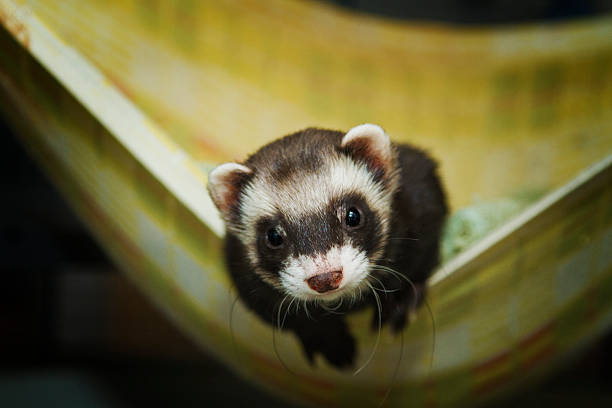
The Ballet of the Beast and the Silence That Follows
The domestic ferret (Mustela putorius furo), a charismatic and often misunderstood member of the Mustelidae family, possesses a repertoire of behaviors as unique and captivating as its playful spirit. Among these displays, none is more iconic, baffling, and instantly recognizable to owners than the Weasel War Dance (WWD), often simply called the Ferret War Dance.
This frantic, seemingly chaotic eruption of energy—a blend of wild, disorientated scurrying, head-shaking, and comical body slamming—is the animal’s purest expression of joy, excitement, and successful play. However, the War Dance is only the first half of a fascinating behavioral cycle. The second half is the sudden, total, and profound collapse into deep sleep, the very “dozing” that often follows the frenzy.
Often misunderstood by new owners as a seizure, disorientation, or sudden illness, the War Dance is, in fact, an essential component of the ferret’s psychological and physiological well-being. This comprehensive guide will dissect the Ferret War Dance, analyzing its origins, neurobiological drivers, physical mechanics, and—crucially—decode the rapid, near-catatonic state of rest that immediately follows the mania. By understanding both the ignition and the crash, we gain profound insight into the unique energy economy and emotional landscape of this beloved companion animal.
I. The Mustelid Context: Ancestry and the Essence of Play
To truly appreciate the War Dance, we must first place the ferret within its evolutionary context. Ferrets are domesticated descendants of the European polecat, sharing behavioral traits with their wild cousins, including weasels, mink, and badgers. Mustelids are naturally solitary or semi-social predators, characterized by high metabolism, slender bodies optimized for navigating burrows, and intelligence geared toward opportunistic hunting.
The Role of Play in Mustelids
In many predatory species, play is a vital function for developing survival skills, coordination, and social bonding. For the ferret, play retains this primal purpose, but in a domestic setting, it has morphed into a sophisticated form of emotional release and communication. The War Dance is the domesticated ferret’s grand celebration of the “successful hunt,” even if the prey is merely a sock, a dropped pen, or an unexpected patch of carpet.
The high-energy, unpredictable nature of the dance mirrors the chaotic environment of a subterranean tunnel skirmish or the final chase of prey, allowing the ferret to activate its full predatory arsenal in a safe, celebratory, and non-lethal manner.
II. Anatomy of the Eruption: The Mechanics of the War Dance
The War Dance is not a singular movement but a rapidly executed sequence of distinctive physical actions, usually lasting anywhere from 10 seconds to a minute and rarely extending beyond two minutes. This display can be broken down into three primary physical phases, often occurring simultaneously:
A. Phase 1: The Frantic Scoop and Scoot (The Low Crawl)
The dance often begins with the ferret dropping its body low to the ground, almost snake-like, arching its back slightly and moving in a series of exaggerated, side-to-side scoots. This motion, known affectionately as “the slinky” or “the crazy scoot,” is incredibly fast. The ferret appears simultaneously unable to control its direction yet expertly avoiding collision, often moving backward as quickly as forward.
B. Phase 2: The Head and Neck Display (The Jerking)
Perhaps the most comical element is the violent, rapid, and uncontrolled shaking of the head. The head shakes quickly from side-to-side, occasionally snapping fully backward. This movement likely serves two purposes: physiologically, it may help release localized muscle tension and endorphins; behaviorally, it is an obvious, unmistakable signal to a playmate that “This is play, not aggression.” The shaking ensures any lightweight item (like a captured toy or loose piece of food) is tossed, adding to the chaotic environment.
C. Phase 3: The Vertical Bounce (The Popcorn Effect)
Interspersed with the low scoots are vertical, clumsy leaps. Unlike the graceful jumps of a cat, the ferret’s bounds are stiff-legged, often resulting in amusingly mistimed landings or head-first collisions with furniture, walls, or the nearest human ankle. The absolute lack of coordination in the WWD is key to its definition; if the moves were graceful and precise, it would suggest hunting focused on prey, not exuberant play focused on joy.
The Auditory Component: Dooking and Hissing
The WWD is typically accompanied by dooking—a soft, repetitive clicking or chuckling noise produced by the ferrets when they are happy, excited, or inviting play. Dooking confirms the benevolent intent of the War Dance. If the behavior is accompanied by hissing, screeching, or teeth chattering, it is likely a sign of fear, territorial defense, or genuine aggression, and should not be mistaken for the celebratory WWD.
III. The Neurobiology and Physiological Drivers
Why does the ferret engage in such a spectacular expenditure of energy? The War Dance is a profound window into the ferret’s neurochemical processes, acting as both a response to stimulus and a mechanism for internal regulation.
The Adrenaline Surge and Endorphin Release
The primary driver of the WWD is a rapid surge of adrenaline and norepinephrine, triggered by sudden excitement—whether finding a hidden toy, discovering a new scent, or the sheer joy of being released from a cage. This acute physiological response prepares the body for intense physical exertion.
However, unlike a true fight-or-flight response, the War Dance quickly introduces a feedback loop involving endorphins. The intense, repetitive, physical motions release these natural opioids, which serve two critical functions:
- Reinforcement: Associating the physical act of the War Dance with feelings of euphoria and pleasure (the “ferret high”).
- Pain Management: Preparing the muscles for intense strain, allowing the ferret to bump and crash without pain dampening the excitement.
The Comparison to Human “Zoomies”
Veterinarians and animal behaviorists often compare the WWD to the “zoomies” (Frenetic Random Activity Periods, or FRAPs) seen in dogs and cats. While similar in their sudden onset and manic energy, the ferret’s WWD is arguably more structured and purpose-driven, acting as a full-body reset button that requires a complete energy crash afterward. The ferret must fully exhaust the excess adrenaline before it can settle.
Sensory Overload and Stress Relief
For a creature with a naturally high resting metabolism and an instinctual drive to explore and hunt, periods of confinement or boredom can lead to accumulated nervous energy. The WWD acts as a primary mechanism for stress relief. By momentarily overloading the sensory system—inputting massive amounts of proprioceptive, visual, and auditory data—the ferret effectively clears its behavioral buffer, allowing for intense focus during the dance and total relaxation afterward.
IV. Decoding the Context: When and Why the Ferret Dances
The War Dance is not random; it is a highly contextual behavior. Recognizing the trigger helps owners understand the ferret’s emotional state.
A. The Joy of Discovery (The “Successful Hunt” Simulation)
The most common trigger is the discovery of something novel or the “killing” of a preferred toy. Ferrets often War Dance when they find a new hiding spot, successfully pull a blanket off a bed, or secure a stolen object (keys, remote, etc.). They dance in triumph, celebrating their success.
B. The Invitation to Play (Social Signaling)
When one ferret War Dances near another, it is usually a clear invitation to join in the fray. The unpredictable movements and lack of precision in the dance serve as honest signals; the ferret is vulnerable and clearly not in a serious attacking mode, making it safe for the recipient to engage. If a human has been passive, a ferret may War Dance around their feet—a highly effective, non-verbal demand for interaction.
C. Environmental Transition (The ‘Tunnel Exit’ Burst)
Ferrets frequently War Dance immediately upon waking up and being released from their cage or sleep sack. After hours of deep sleep and limited movement, the sudden release and exposure to ambient light and sound trigger the adrenaline response, leading to a burst of activity designed to “shake off” the sleep and prepare the body for exploration.
D. The Post-Meal Jubilation (Energy Conversion)
While less common, some ferrets exhibit a short WWD immediately following a particularly satisfying meal. This is likely related to successfully converting caloric energy into usable kinetic energy, and a temporary spike in comfort and security.
V. The Transition Stage: From Mania to Near-Catatonia
The most remarkable feature of the War Dance is the speed with which it terminates and the totality of the subsequent collapse. A ferret may be bouncing off the walls one second and completely motionless the next. This rapid transition is crucial to understanding the ferret’s unique energy management system.
The Energy Debt
The WWD consumes a massive amount of caloric energy in a very short timeframe. Due to their rapid metabolism, ferrets have little energy reserve compared to other animals. The sudden, intense expenditure creates a significant energy debt. The body’s immediate, life-preserving response is to shut down all non-essential activity to restore vital resources, primarily glucose and oxygen saturation.
The transition often appears instantaneous. The ferret might be running at full tilt, hit a wall, pause for half a second, and then simply drop, often mid-scoot, often still clutching the object of its excitement.
VI. Decoding the Dozing: The Physiology of the Ferret Crash
The intense sleep following the War Dance is what many owners refer to as “dozing,” though the term is somewhat misleading. This is not casual napping; it is a deep, restorative sleep state critical for metabolic recovery.
The Phenomenon of Ferret Dead Sleep Syndrome (FDSS)
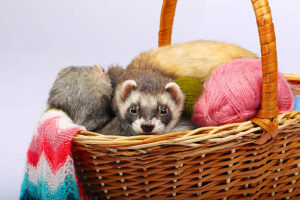
One of the greatest fears of new ferret owners is encountering their pet in the state known colloquially as Ferret Dead Sleep Syndrome (FDSS). Following the WWD, the ferret may enter a sleep so profound that it appears lifeless.
Characteristics of FDSS:
- Limpness: The body is completely limp and unresponsive. The ferret can be picked up, folded, or even gently carried without rousing.
- Unresponsive Stimuli: Poking, loud noises, or gentle shaking may fail to elicit a response.
- Low Vitals (Apparent): Breathing becomes extremely shallow and slow, sometimes nearly imperceptible. The heart rate slows dramatically.
- Duration: While the WWD is short, the resulting rest can be prolonged, often lasting several hours if the environment is quiet.
This state is a testament to the intensity of the WWD. The rapid energy depletion mandates a total system recovery mode. This deep sleep allows the ferret to rapidly stabilize blood glucose levels, replenish ATP (adenosine triphosphate) stores in the muscles, and initiate cellular repair processes. It is the body’s essential response to having operated at maximum overdrive.
The Circadian Rhythm and The Sleeping Ferret
Ferrets are crepuscular, meaning they are most active at dawn and dusk. However, domestic ferrets are also polyphasic sleepers, meaning they sleep in multiple long bursts throughout the day (up to 75-80% of a 24-hour cycle). The WWD often serves to define the boundaries between these sleep periods—a burst of intense activity signals the end of a sleep phase and the beginning of a play/explore phase, which is then concluded by a total crash leading back into a sleep phase.
VII. When the Dozing Signals Trouble: Distinguishing Fatigue from Illness
While FDSS is a normal, healthy outcome of a successful War Dance, it is crucial for owners to distinguish between a healthy “crash” and genuine signs of medical distress, especially since the behaviors can superficially resemble one another.
A. The Risk Factor: Insulinoma
The biggest medical concern that must be ruled out when observing unusual lethargy, especially after exercise, is Insulinoma. This is a common tumor of the pancreas in ferrets that causes the overproduction of insulin.
Hypoglycemia vs. Healthy Collapse:
| Feature | Healthy FDSS (Post-WWD) | Hypoglycemia (Insulinoma) |
|---|---|---|
| Preceding Activity | Intense, manic activity (WWD, zoomies) | Often preceded by normal or slightly reduced activity |
| Onset | Immediate, abrupt collapse | Slow, gradual lethargy, stumbling, glazed eyes |
| Response to Stimuli | Deeply asleep, but eventually rousing, perhaps groggy | Difficulty rousing; may seize or stare blankly |
| Recovery | Wakes up energetic and hungry | Recovery is slow unless dextrose/sugar is administered |
Crucial Test: If a ferret’s collapse seems unusual or they are difficult to rouse, rubbing a tiny amount of high-sugar syrup (such as Karo or honey, applied to the gums) should result in rapid improvement within minutes if hypoglycemia is the cause. A healthy ferret in FDSS will not necessarily respond immediately to sugar because their issue is systemic energy debt, not critically low blood sugar.
B. Dehydration and Heatstroke
Another danger, particularly if the WWD occurs in a warm or arid environment, is collapse due to dehydration or heatstroke. Unlike WWD collapse, which is restorative, heatstroke collapse is medically emergent and involves labored breathing, hot paws, and potential vomiting or diarrhea. A ferret will not War Dance if it is already overheating; a collapse in this circumstance is a life-threatening failure of the heat regulation system, not a healthy physiological crash.
VIII. Management and Environmental Implications
Understanding the War Dance and the subsequent dozing allows owners to create an optimal, safe, and fulfilling environment for their ferret.
A. Creating the Perfect War Dance Arena
Owners should encourage the WWD, as it is a sign of psychological well-being and physical health. The environment must be safe:
- Clear Hazards: Ensure the dance area is free of sharp corners, items that can fall, or small gaps the ferret might dive into while disoriented.
- Optimal Flooring: Carpets provide traction and prevent injury during the sudden directional changes and vertical leaps typical of the WWD.
- Encouragement through Novelty: Introduce novel scents (like a new box or a crumpled paper bag) or rotation of toys to trigger the celebratory response.
B. Preparing for the Crash
Since the extreme exhaustion is guaranteed, owners should facilitate a smooth transition to rest:
- Accessible Bedding: Ensure soft, dark, and quiet bedding is immediately accessible near the periphery of the play area. After the War Dance, the ferret will often crawl into the nearest comfortable enclosure for the crash.
- Post-WWD Hydration: While the ferret may be too tired to drink immediately, having fresh water available upon waking is essential for metabolic recovery.
C. The Importance of Sleep Integrity
In multi-ferret households, the collapse of one ferret may be an invitation for play from another. While gentle nudging is normal, owners must ensure that the resting ferret is not constantly harassed, which prevents the essential restorative functions of the deep sleep phase. If necessary, a separate, quiet sleep area should be provided after an intense WWD session.
IX. Conclusion: The Ferret’s Energetic Paradox
The Ferret War Dance, followed immediately by its dramatic “dozing,” is a perfectly balanced behavioral paradox. It is a moment of maximal, uncontrolled chaos followed by a period of total, near-lifeless stillness.
This cycle is the ferret’s way of maintaining psychological equilibrium in a world that often restricts its natural predatory instincts. The WWD allows the ferret to discharge accumulated energy, celebrate its victories—no matter how small—and signal its joy to the world. The ensuing, profound dozing is not a weakness but a highly efficient, necessary metabolic response, confirming the incredible intensity of the effort expended.
By decoding this unique behavioral sequence, owners move beyond simple amusement to a deeper appreciation of the ferret’s sophisticated yet wildly spirited nature. The War Dance is the ferret asserting its essential self, and the dozing that follows is the essential mechanism that allows the ferret to recharge and prepare for the next blissful eruption of weasel madness.
#FerretWarDance, #WeaselWarDance, #FerretBehavior, #MustelidMadness, #FerretDooking, #ExoticPets, #FerretZoomies, #FerretCare, #FDSS, #FerretsOfInstagram, #PetEducation, #Mustelids, #SlinkyFerret

Add comment