
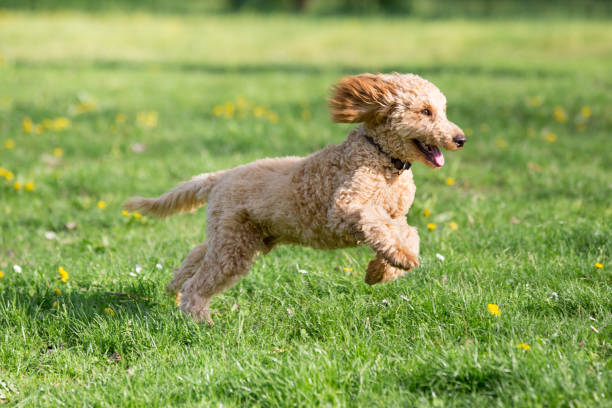
This guide delves into the profound influence of context on dog communication, particularly within the framework of obedience training. It posits that understanding and leveraging context is not merely an optional addition but a fundamental necessity for effective, ethical, and lasting training outcomes. By appreciating the myriad factors that shape a dog’s perception and response, trainers and owners can foster clearer communication, build stronger bonds, and achieve truly reliable behavior.
Table of Contents:
- Introduction: Beyond Words and Whistles
- The Unseen Language of Dogs
- The Centrality of Context: A Foundational Principle
- Defining Context in the Canine World: A Multi-Layered Lens
- Environmental Context: The Sensory Landscape
- Location and Familiarity
- Sounds and Auditory Distractions
- Scent and Olfactory Information
- Visual Stimuli and Movement
- Weather, Time of Day, and Lighting
- Social Context: The Dynamics of Interaction
- Presence of Other Dogs
- Presence of Other Humans (Familiar vs. Strangers)
- Group Dynamics and Pack Hierarchy
- Absence of Social Stimuli
- Internal Context: The Dog’s Inner World
- Physiological State (Health, Hunger, Thirst, Fatigue, Pain)
- Emotional State (Fear, Anxiety, Excitement, Frustration, Joy)
- Motivational State (Drive for Food, Play, Affiliation)
- Developmental Stage (Puppyhood, Adolescence, Seniority)
- Historical Context: The Shadow of Past Experiences
- Prior Learning and Reinforcement History
- Traumatic Experiences and Negative Associations
- Consistency (or Inconsistency) in Training
- Human-Related Context: The Handler’s Influence
- Trainer’s Body Language and Posture
- Trainer’s Tone of Voice and Verbal Cues
- Trainer’s Emotional State and Stress Levels
- Trainer’s Consistency and Predictability
- Environmental Context: The Sensory Landscape
- The Dog’s Perspective: How Context Shapes Interpretation and Response
- Deconstructing Canine Communication Signals Contextually
- Body Language: A Symphony of Nuance (Tail, Ears, Eyes, Posture, Mouth)
- Vocalizations: Beyond the Bark (Growls, Whimpers, Howls)
- Scent and Chemical Signals: The Invisible Language
- The Challenge of Generalization and Discrimination
- Concept of “Proofing” in Different Contexts
- Why Dogs Struggle to Generalize
- Sensory Overload and Cognitive Capacity
- Deconstructing Canine Communication Signals Contextually
- The Trainer’s Role: Interpreting and Delivering Commands Contextually
- Interpreting Canine Behavior with Contextual Awareness
- Avoiding Anthropomorphism and Misinterpretation
- Reading the “Whole Picture” of Dog Behavior
- Recognizing Stress Signals and Calming Cues Across Contexts
- Delivering Commands with Context in Mind
- Strategic Timing and Environmental Considerations
- Clarity of Cues Amidst Distractions
- Adapting Reinforcement Strategies
- The Trainer as a Consistent Contextual Cue
- Interpreting Canine Behavior with Contextual Awareness
- Practical Applications in Dog Obedience Training: Leveraging Context for Success
- Initial Learning and Foundation Building
- Starting in Low-Distraction Environments
- Systematic Introduction of Contextual Variables
- The “Three Ds” of Training: Distance, Duration, Distraction
- Addressing Common Training Challenges Through Contextual Lenses
- Recall Issues: Understanding Contextual Lures and Distractions
- Leash Reactivity: Identifying Triggers and Desensitization Contexts
- Resource Guarding: Managing Resources and Contexts of Value
- Separation Anxiety: Contexts of Departure and Return
- Fear and Phobias: Contexts of Exposure and Counter-Conditioning
- Building a Stronger Human-Canine Relationship
- Empathy and Perspective-Taking
- Predictability and Trust
- Mutual Respect and Clear Boundaries
- Initial Learning and Foundation Building
- Advanced Concepts and Nuances: The Depth of Contextual Understanding
- The Dangers of Ignoring Context: Misdiagnosis, Failed Training, Behavioral Escalation
- The “Learned Irrelevance” Phenomenon: When Context Becomes Too Predictable
- Context-Specific vs. Generalized Behaviors: The Goal of Reliable Cues
- The Context of Consistency: Why Varied Contexts Demand Consistent Application
- Conclusion: The Art and Science of Contextual Dog Training
- A Holistic Approach to Dog Training
- Empowering Dogs and Handlers
- The Journey of Continuous Learning
1. Introduction: Beyond Words and Whistles
The relationship between humans and dogs is one of the most enduring and unique interspecies bonds on Earth. For millennia, we have coexisted, collaborated, and communicated, often transcending the boundaries of spoken language. In the realm of dog obedience training, this communication becomes paramount. We issue commands – “Sit,” “Stay,” “Come” – and expect specific responses. Yet, anyone who has ever trained a dog knows that the journey from a verbal cue to a reliable behavior is rarely straightforward. A dog that perfectly executes a “Sit” in the quiet living room might seem to forget the command entirely at the bustling dog park. Why the discrepancy? The answer lies in a single, often underestimated, yet profoundly influential factor: context.
Context, in its simplest form, refers to the circumstances or settings that surround an event, statement, or idea, and in so doing, give it full meaning. For dogs, a species that primarily processes the world through sensory input and associative learning, context is not merely a backdrop; it is the very fabric that weaves together their understanding of signals, behaviors, and expectations. Ignoring context in dog communication and obedience training is akin to reading a single word from a sentence and claiming to understand its full meaning – a recipe for misunderstanding, frustration, and ultimately, ineffective training.
This comprehensive guide will delve deep into the multifaceted nature of context, exploring its various components from environmental cues to the dog’s internal state and the handler’s influence. We will examine how a dog interprets the world through these contextual lenses, how trainers can harness this understanding to deliver clearer commands, and how a contextual approach can resolve common behavioral challenges. By the end, it will become unmistakably clear that true mastery in dog obedience training is not just about teaching commands, but about teaching them within and across the rich tapestry of life’s diverse contexts. It’s about empowering dogs to understand what is expected of them, where it’s expected, and why it matters, fostering a relationship built on empathy, clarity, and reliable communication.
2. Defining Context in the Canine World: A Multi-Layered Lens
To truly appreciate the importance of context, we must first dissect it into its constituent parts, understanding how each layer contributes to a dog’s perception of the world and, consequently, their response to training cues. Context is not a monolithic entity but a dynamic interplay of various elements that constantly shift and influence the dog’s experience.
Environmental Context: The Sensory Landscape
The physical environment is perhaps the most obvious layer of context, yet its complexity is often underestimated. Dogs are sensory masters, processing information through a finely tuned array of senses far superior to our own.
- Location and Familiarity: A command given in a familiar, low-distraction environment (like home) is processed differently than one given in an unfamiliar, high-stimulus outdoor setting. Each new location presents a unique set of sights, sounds, and smells to investigate, potentially overriding previously learned associations.
- Sounds and Auditory Distractions: The gentle hum of a refrigerator is a stark contrast to the blare of a car horn, children’s laughter, or the distant barking of other dogs. These auditory stimuli can be highly distracting, triggering fear, excitement, or predatory instincts, all of which compete with the handler’s verbal cues.
- Scent and Olfactory Information: A dog’s primary sense is smell. The ground is a rich tapestry of olfactory information – the lingering scent of another dog, the faint aroma of food, the chemical signals of wildlife. These scents are incredibly powerful distractions, capable of hijacking a dog’s attention and redirecting their focus instantly.
- Visual Stimuli and Movement: A squirrel darting across the yard, a bicycle passing by, or another dog playing are all potent visual cues that can demand a dog’s attention. Even subtle shifts in light or shadow can influence a dog’s perception and readiness to focus.
- Weather, Time of Day, and Lighting: A sunny, calm morning differs vastly from a windy, rainy evening. Extreme temperatures can affect a dog’s comfort and motivation. Dim lighting can reduce visual cues, increasing reliance on other senses and potentially heightening anxiety in some dogs.
Social Context: The Dynamics of Interaction
Dogs are social animals, and the presence or absence of other living beings profoundly impacts their behavior and communication.
- Presence of Other Dogs: The presence of a familiar playmate, an unknown dog with tense body language, or a pack of dogs can elicit a wide range of responses – from playful engagement to fearful avoidance, aggression, or intense distraction. These interactions directly influence how a dog attends to its handler.
- Presence of Other Humans (Familiar vs. Strangers): A dog’s comfort level and focus can vary greatly depending on who else is around. Familiar family members might be ignored, while an approaching stranger could trigger curiosity, fear, or territorial instincts. Children’s unpredictable movements and sounds offer a unique social challenge.
- Group Dynamics and Pack Hierarchy (Perceived): While strict “pack hierarchy” in domestic dogs is often oversimplified, the perceived social standing or dynamic with other dogs or even humans can influence a dog’s confidence, assertiveness, or submissiveness, altering their responsiveness to commands.
- Absence of Social Stimuli: For some dogs, the lack of social interaction can be a context that triggers anxiety (e.g., separation anxiety), while for others, it might be the ideal context for focused learning.
Internal Context: The Dog’s Inner World
Beneath the surface, a dog’s internal state is a powerful, often hidden, contextual layer that dictates their ability and willingness to learn and perform.
- Physiological State (Health, Hunger, Thirst, Fatigue, Pain): A dog that is unwell, hungry, thirsty, overly tired, or in pain will not be able to focus or respond effectively, regardless of how well-trained they are. Addressing these basic needs is foundational to effective training.
- Emotional State (Fear, Anxiety, Excitement, Frustration, Joy): A highly anxious dog might “shut down” and be unable to process information. An overly excited dog might be too stimulated to respond to cues. A frustrated dog might offer unwanted behaviors. Recognizing and managing these emotions is crucial.
- Motivational State (Drive for Food, Play, Affiliation): A dog’s current motivation level directly impacts the effectiveness of reinforcement. If a dog isn’t motivated by the offered reward in a given context (e.g., too excited to eat treats), training will suffer.
- Developmental Stage (Puppyhood, Adolescence, Seniority): A puppy’s short attention span, an adolescent’s rebellious streak, or a senior dog’s declining senses all constitute internal contextual factors that require adjustments in training approach and expectations.
Historical Context: The Shadow of Past Experiences
Every dog carries a history, a mental database of past experiences that colors their perception of current events and influences their behavior.
- Prior Learning and Reinforcement History: If a dog has consistently been reinforced for a behavior in a specific context, they are more likely to perform it there. Conversely, if a behavior was never rewarded or even punished in a certain context, the dog will be less likely to offer it.
- Traumatic Experiences and Negative Associations: A dog rescued from an abusive situation might have negative associations with certain objects, sounds, or types of people, making training in those contexts extremely challenging without careful desensitization. A past scary experience with a particular type of dog or person can create context-specific fear responses.
- Consistency (or Inconsistency) in Training: If a “Sit” command is sometimes reinforced and sometimes ignored, or if different family members use different cues, the dog learns that the command’s meaning is inconsistent, dependent on the individual or situation. This inconsistency is a highly detrimental contextual factor.
Human-Related Context: The Handler’s Influence
The trainer or owner is an integral part of the dog’s context. Our actions, emotions, and communication style are constantly being read and interpreted by our canine companions.
- Trainer’s Body Language and Posture: Dogs are masters of non-verbal cues. Our posture, hand gestures, eye contact, and even subtle muscle tension are all interpreted by the dog as part of the command’s context. A slouched posture might convey disinterest, while a tense stance could signal anxiety.
- Trainer’s Tone of Voice and Verbal Cues: The pitch, volume, rhythm, and clarity of our voice are crucial. A sharp, angry tone can induce fear, while a soft, encouraging tone can build confidence. Inconsistent verbal cues (e.g., “Sit,” “SIT,” “Fido, sit down!”) are confusing.
- Trainer’s Emotional State and Stress Levels: Dogs are highly attuned to human emotions. A stressed, frustrated, or angry handler inadvertently communicates that emotional state to the dog, which can trigger anxiety or avoidance behaviors in the dog, making training less effective. Calm, confident handlers create a more conducive learning environment.
- Trainer’s Consistency and Predictability: A handler who is consistent in their commands, rewards, and expectations provides a predictable and safe context for the dog, fostering trust and faster learning. Inconsistency, conversely, creates confusion and can lead to frustration for both parties.
By understanding these multifaceted layers of context, we begin to see that a dog’s response to a command is never an isolated event. It is always a product of these interwoven contextual elements, each influencing the dog’s perception, emotional state, and ability to comply.
3. The Dog’s Perspective: How Context Shapes Interpretation and Response
Dogs don’t live in a vacuum; they interact with their environment and social partners through a complex web of signals, filtered through their unique cognitive and sensory abilities. How context influences their interpretation is crucial for trainers to grasp.
Deconstructing Canine Communication Signals Contextually
Dog communication is a symphony of body language, vocalizations, and scent, each note of which changes meaning based on the surrounding context.
- Body Language: A Symphony of Nuance:
- Tail Wags: The classic example. A wagging tail is often seen as universal happiness. However, context reveals its true meaning. A broad, loose wag combined with a relaxed body, soft eyes, and play bows usually signifies joy. But a stiff, high tail, wagging rapidly in short arcs, accompanied by a tense body, fixed stare, and perhaps a low growl, is a clear sign of agitation or potential aggression, not happiness. The speed, height, and arc of the wag, crucially interpreted with the rest of the body, provide the meaning.
- Ear Position: Ears forward indicate alertness or interest. Ears pinned back against the head can signify fear or submission. Ears slightly back and relaxed usually mean comfort. Again, the full context of the dog’s face and body is key.
- Eye Contact: Soft, blinking eyes are relaxed. A direct, hard stare can be a challenge or threat. “Whale eye” (seeing the whites of the eyes) often indicates stress or discomfort.
- Overall Posture: A low, slinking posture with averted gaze suggests fear or appeasement. A stiff, erect posture with hackles raised indicates arousal or threat. A relaxed, loose posture signals comfort.
- Mouth and Lips: A relaxed, open mouth with a slightly lolling tongue is content. A tightly closed mouth or lip lick often indicates stress. A curled lip with exposed teeth is a clear threat, but a “submissive grin” can look similar but is paired with appeasing body language.
- Vocalizations: Beyond the Bark:
- Barks: Barks vary immensely in pitch, duration, and repetition. A sharp, excited bark during play differs from a deep, insistent bark at a perceived intruder or a series of rapid, high-pitched barks when left alone. The reason for the bark, dictated by the context, changes its message.
- Growls: A growl is almost universally a warning, but its context is critical. A play-growl (often accompanied by playful body language and pauses) is distinct from a fear-aggressive growl (low, rumbling, paired with tense body and perhaps a snarl) or a resource-guarding growl (near a valuable item).
- Whimpers and Howls: These often signal distress, pain, or loneliness, particularly in the context of separation or perceived abandonment.
- Scent and Chemical Signals: The Invisible Language: Dogs communicate constantly through scent markers (urine, feces), glandular secretions, and even breath. These signals, detected by other dogs, provide information about the sender’s sex, reproductive status, health, and emotional state. The context of where and when these markers are left (e.g., marking territory aggressively vs. a casual sniff) gives them meaning.
The Challenge of Generalization and Discrimination
One of the most significant challenges in dog training, directly linked to context, is the concept of generalization. Dogs are very good at forming associations between a cue, a behavior, and a consequence in a specific context. What they often struggle with, initially, is understanding that a command like “Sit” means “Sit” everywhere, regardless of distractions, location, or who gives the command.
- Concept of “Proofing” in Different Contexts: This is why “proofing” is so vital. Proofing involves systematically practicing commands in increasingly challenging and varied contexts. We start in a quiet room, then move to the backyard, then a park on a leash, then a busy street, then off-leash in a park. Each new context requires the dog to generalize the command’s meaning while discriminating between relevant (the command) and irrelevant (the distractions) stimuli.
- Why Dogs Struggle to Generalize: Dogs don’t naturally abstract concepts like humans do. For a dog, “Sit” might initially be associated with “Owner, in the kitchen, holding a treat, saying ‘Sit’ while I’m standing still.” Change any of those variables, and it becomes a different equation for the dog. They need explicit training to understand that the “Sit” command is the constant, and the environment is variable.
Sensory Overload and Cognitive Capacity
In high-distraction contexts, dogs can experience sensory overload. Their senses are bombarded with sights, sounds, and smells, making it incredibly difficult to focus on a single handler or command. When a dog is overstimulated, their cognitive capacity for learning and responding to cues diminishes rapidly. This often manifests as “ignoring” commands, but it’s more accurately a temporary inability to process information, driven by the overwhelming contextual stimuli. Recognizing when a dog is reaching their cognitive limit due to context is a hallmark of an empathetic and effective trainer.
4. The Trainer’s Role: Interpreting and Delivering Commands Contextually
Just as dogs interpret the world through context, trainers must learn to interpret their dogs’ behaviors and deliver their cues with a deep awareness of the surrounding circumstances. This two-way contextual understanding is the bedrock of successful training.
Interpreting Canine Behavior with Contextual Awareness
A common pitfall for dog owners is to interpret their dog’s behavior in isolation or through an anthropomorphic lens. A contextual approach demands looking at the whole picture.
- Avoiding Anthropomorphism and Misinterpretation: Assuming a dog is “stubborn,” “dominant,” or “spiteful” often stems from misinterpreting a dog’s behavior without considering the context. A dog refusing to “Come” at the park isn’t necessarily being stubborn; they might be overwhelmed, highly aroused by a smell, or genuinely confused by the changed context. A dog growling at a friendly approaching dog isn’t inherently aggressive; they might be fearful, in pain, or simply communicating their need for space in that specific social context.
- Reading the “Whole Picture” of Dog Behavior: Instead of focusing on a single action (e.g., a bark), a contextual trainer observes: When did the bark occur? Where (location)? Who was present? What were the preceding events? What other body language accompanied the bark? What was the dog’s emotional state? This holistic view provides accurate insight into the dog’s internal state and the meaning of its communication.
- Recognizing Stress Signals and Calming Cues Across Contexts: Dogs constantly provide subtle signals about their comfort levels. Lip licking, yawning (when not tired), head turns, body shakes, sniffing the ground, averted gaze, and a stiff body are all potential stress signals. The same signal can have different meanings based on context (e.g., a yawn due to tiredness vs. a yawn due to stress). A contextual trainer observes these cues, understanding that a dog showing stress signals in a particular environment is unlikely to be in an optimal learning state. It’s a signal to adjust the context, not push the dog.
Delivering Commands with Context in Mind
The trainer is a living, breathing part of the dog’s context. Our actions and communication directly influence the dog’s understanding and response.
- Strategic Timing and Environmental Considerations: A trainer mindful of context knows when and where to initiate a training session. Trying to teach a new, complex command in a chaotic environment is setting the dog up for failure. Conversely, practicing a known command in a distracting environment is a deliberate and appropriate step in the proofing process. The trainer chooses the context carefully to match the dog’s current learning stage.
- Clarity of Cues Amidst Distractions: In distracting environments, a trainer might need to make their verbal cues clearer, their hand signals more pronounced, or their body language more emphatic to cut through the noise. They might need to physically position themselves closer to the dog or use a higher-value reward to maintain focus. The delivery of the command adapts to the environmental context.
- Adapting Reinforcement Strategies: The value of a reward is highly contextual. A piece of kibble might be a fantastic reward in a quiet living room but completely ignored at a dog park where the dog is more interested in chasing squirrels. A contextual trainer understands that reinforcement needs to be adjusted based on the current context and the level of distraction. High-value treats or engaging play might be necessary in challenging environments.
- The Trainer as a Consistent Contextual Cue: Ultimately, the trainer themselves should strive to be a consistent and predictable part of the dog’s context. This means using consistent cues, consistent expectations, and a consistent emotional demeanor. When the trainer is a reliable constant, the dog learns to filter out irrelevant environmental noise and focus on the handler’s signals, even in chaotic contexts. This consistency builds trust and makes the handler a safe and effective anchor in any situation.
By consciously interpreting their dog’s contextual communication and strategically delivering their own commands, trainers move beyond rote memorization and towards a dynamic, empathetic, and highly effective training methodology.
5. Practical Applications in Dog Obedience Training: Leveraging Context for Success
Understanding context is not just theoretical; it profoundly impacts every aspect of practical dog obedience training, from initial learning to addressing complex behavioral issues.
Initial Learning and Foundation Building
The very first steps in teaching a new command are heavily reliant on contextual control.
- Starting in Low-Distraction Environments: When introducing a new command (e.g., “Sit”), the ideal context is a quiet, familiar, and predictable environment, like inside the home. This minimizes competing stimuli, allowing the dog to focus solely on the handler’s cue, the desired behavior, and the reward. This builds a strong initial association.
- Systematic Introduction of Contextual Variables: Once the dog reliably performs the command in the low-distraction environment, the process of generalization begins. This involves gradually introducing new contextual elements:
- New Locations: Practice “Sit” in different rooms, then the backyard, then a quiet street, then a park.
- Increased Distractions: Start with subtle distractions (a person walking by), then moderate (a distant dog), then high (a ball toss, another dog playing nearby).
- Increased Duration: Ask for a “Stay” for longer periods in different contexts.
- Increased Distance: Practice “Come” from greater distances in various settings.
- Different Handlers: Have family members practice the command.
- Varying Stimuli: Practice during different times of day, in different weather, and around different objects.
- The “Three Ds” of Training: Distance, Duration, Distraction: These are classic training variables that are, at their core, contextual. When training a new behavior, we start with minimal distance, short duration, and low distraction. As the dog masters the behavior, we systematically increase one “D” at a time, keeping the other two constant, before combining them. This structured approach helps the dog generalize the command across contexts without becoming overwhelmed.
Addressing Common Training Challenges Through Contextual Lenses
Many common behavioral problems that lead owners to seek professional help are deeply rooted in contextual misunderstandings or triggers.
- Recall Issues: Understanding Contextual Lures and Distractions: A dog with perfect recall in the living room but none at the park is a classic example of context dependency. The park’s context (exciting smells, other dogs, wide-open spaces) provides higher-value reinforcement than the owner’s command. To fix this, training involves:
- Practicing recall in progressively more distracting environments.
- Using higher-value rewards in outdoor contexts.
- Playing recall games that make the owner the most exciting part of the environment.
- Using a long line to manage the context and prevent self-rewarding chasing behaviors.
- Leash Reactivity: Identifying Triggers and Desensitization Contexts: A dog that barks and lunges at other dogs only when on leash is reactive to the context of the leash and the proximity to other dogs. Training involves:
- Identifying Triggers: What specific contexts (type of dog, distance, time of day) trigger the reactivity?
- Management: Avoiding or managing trigger contexts to prevent rehearsal of the unwanted behavior.
- Desensitization & Counter-Conditioning: Gradually exposing the dog to the trigger in a controlled context (e.g., at a far distance where the dog remains calm) and pairing it with positive reinforcement, changing the dog’s emotional association with the trigger in that context.
- Resource Guarding: Managing Resources and Contexts of Value: A dog that growls when someone approaches their food bowl or a favorite toy is guarding that resource in a specific context. Training requires:
- Contextual Control: Removing high-value items when others are present.
- Trade-Up: Teaching the dog that human approach in the context of a guarded item means something even better is coming (e.g., trading a toy for a high-value treat).
- Prevention: Not putting the dog in a context where they feel the need to guard.
- Separation Anxiety: Contexts of Departure and Return: Dogs with separation anxiety often display distress specifically in the context of the owner preparing to leave (keys jingling, shoes on) and when left alone. Training involves:
- Desensitization to Departure Cues: Practicing “fake departures” where the owner goes through the motions but doesn’t leave, changing the context of these cues.
- Gradual Absences: Starting with very short absences (seconds) and gradually increasing duration, ensuring the dog remains calm in the context of being alone.
- Enrichment: Providing engaging, safe activities for the dog in the context of being alone.
- Fear and Phobias: Contexts of Exposure and Counter-Conditioning: A dog afraid of thunderstorms or vacuums is reacting to specific contextual stimuli. Training involves:
- Graduated Exposure: Slowly introducing the feared stimulus (e.g., faint vacuum sound) in a controlled, safe context, pairing it with positive experiences.
- Creating Safe Zones: Designating a specific, safe context (e.g., a crate with calming music) where the dog can retreat during stressful events.
Building a Stronger Human-Canine Relationship
Beyond specific commands, a contextual approach fundamentally strengthens the bond between dog and handler.
- Empathy and Perspective-Taking: Understanding that a dog’s behavior is often a response to context fosters empathy. Instead of labeling a dog as “bad,” we ask, “What in this context is causing this behavior?” This shift in perspective leads to more compassionate and effective solutions.
- Predictability and Trust: When a handler is consistent in their commands and realistic in their expectations across different contexts, the dog learns that their human is predictable and trustworthy. This predictability reduces anxiety and builds confidence in the dog.
- Mutual Respect and Clear Boundaries: A contextual approach helps establish clear boundaries by defining what behaviors are acceptable in which contexts. This creates a mutually respectful relationship where the dog understands expectations, and the human understands the dog’s needs and limitations within varying situations.
6. Advanced Concepts and Nuances: The Depth of Contextual Understanding
Exploring context in dog training reveals several deeper insights and potential pitfalls that trainers should be aware of.
The Dangers of Ignoring Context: Misdiagnosis, Failed Training, Behavioral Escalation
Ignoring context is not merely inefficient; it can be actively detrimental.
- Misdiagnosis of Behavior: Without considering context, a fearful dog might be mislabeled as aggressive, an overstimulated dog as disobedient, or an anxious dog as merely destructive. This leads to inappropriate training methods that exacerbate the underlying issue.
- Failed Training Outcomes: Commands that only work in one specific environment are not reliable. If a dog fails repeatedly because the context is too challenging, both dog and handler can become frustrated, leading to a breakdown in communication and a loss of confidence.
- Behavioral Escalation: Punishing a dog for a context-driven behavior (e.g., scolding a fearful dog for growling at a stranger) can suppress the warning signals without addressing the underlying emotion. This can lead to a dog that bites without warning because its earlier attempts to communicate discomfort in that context were punished. Ignoring stress signals in a high-pressure context can push a dog past its threshold.
The “Learned Irrelevance” Phenomenon: When Context Becomes Too Predictable
While consistency is key, there’s a lesser-known flip side: learned irrelevance. If a particular contextual cue is always present but never predicts anything meaningful, a dog can learn to ignore it. For example, if a “sit” command is always followed by a treat, but the sound of the treat bag crinkling always precedes the “sit” command, the dog might start responding primarily to the crinkle and less to “sit” itself, or even learn the crinkle is simply background noise. In some cases, if a specific environmental cue (like a fence or a certain person) is always present during a training session but doesn’t directly relate to the command or reward, the dog might initially factor it into the context, but over time, if it’s truly irrelevant, they’ll learn to filter it out. This highlights the delicate balance between consistent cues and varied contextual elements during generalization.
Context-Specific vs. Generalized Behaviors: The Goal of Reliable Cues
The ultimate goal in obedience training is reliable behavior – a command that elicits the desired response regardless of the context. This means moving beyond context-specific behaviors (e.g., “Sit” only works in the kitchen) to generalized behaviors (e.g., “Sit” works everywhere). This is achieved through systematic proofing, where the dog learns that the command itself is the primary discriminative stimulus, and environmental/social factors are secondary, albeit influential, variables. It’s about teaching the dog to filter out irrelevant contextual noise and focus on the handler’s cue.
The Context of Consistency: Why Varied Contexts Demand Consistent Application
Paradoxically, training across varied contexts demands even greater consistency from the handler. If the handler uses different verbal cues, hand signals, or reward strategies in different environments, the dog is learning multiple, conflicting versions of the same command. The dog needs a consistent message from the human, even as the environment changes, to understand that the command’s meaning remains constant. This reinforces the handler as the ultimate contextual anchor for the dog.
7. Conclusion: The Art and Science of Contextual Dog Training
The journey into understanding the importance of context in dog communication and obedience training reveals a profound truth: effective training is far more than simply teaching a dog to perform tricks. It is a sophisticated dance of observation, interpretation, and adaptation, where the trainer must constantly attune themselves to the multifaceted world of their canine companion.
By embracing a contextual approach, we move beyond simplistic notions of “good” or “bad” behavior and delve into the rich tapestry of sensory input, emotional states, past experiences, and environmental influences that shape every interaction. We learn to see the world through our dog’s eyes, to hear through their ears, and to smell through their nose, gaining invaluable insight into why they behave the way they do.
This comprehensive understanding empowers trainers and owners to:
- Communicate with Clarity: By recognizing how context influences a dog’s interpretation of cues, we can deliver commands more effectively, ensuring the message is received and understood, regardless of distractions.
- Train with Empathy: Acknowledging the dog’s internal and external contextual experiences fosters a deep sense of empathy, leading to training methods that are humane, positive, and less likely to cause stress or fear.
- Solve Behavioral Challenges: Many problematic behaviors are context-dependent. By identifying and strategically modifying these contexts, we can address the root cause of issues like reactivity, anxiety, or aggression, rather than merely suppressing symptoms.
- Build a Deeper Bond: When a dog feels understood, respected, and safe within various contexts, the trust between human and canine flourishes. This creates a relationship built on mutual understanding, cooperation, and joy.
- Achieve Reliable Behavior: Through systematic generalization and proofing across diverse contexts, we can help our dogs become reliably obedient companions, capable of confidently navigating the complexities of the human world.
In essence, the importance of context in dog communication and obedience training cannot be overstated. It is the very foundation upon which successful training rests, the lens through which all interactions are filtered, and the key to unlocking the full potential of the human-canine partnership. It transforms training from a series of commands into a continuous, enriching dialogue, celebrating the unique way our dogs perceive and interact with their world. The art and science of contextual dog training invite us all to be lifelong students of our incredible canine companions, always observing, always learning, and always striving for clearer, more compassionate communication.
#DogTrainingTips, #CanineBehavior, #DogCommunication, #ObedienceTraining, #ContextMatters, #DogPsychology, #PositiveReinforcement, #TrainYourDog, #DogLife, #PetParent, #HappyDog, #UnderstandingDogs, #DogTrainer, #BehavioralScience, #PuppyTraining, #ResponsiblePetOwnership, #ForceFreeTraining, #LeashReactivity, #RecallTraining, #DogGoals, #PetEducation, #SmartDog, #CanineCognition, #DogLover, #DogWellness







Add comment