
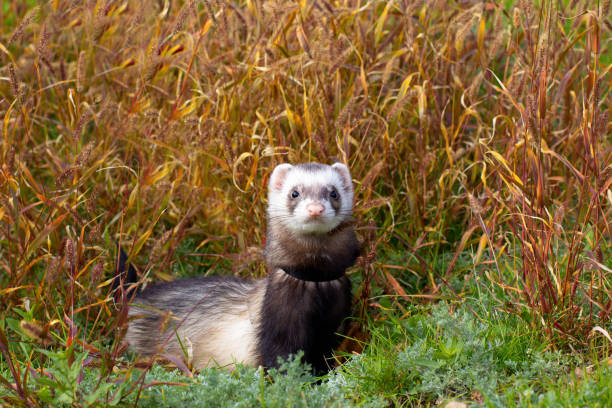
The idea of a multi-pet household conjures images of harmonious cohabitation, a vibrant ecosystem of furry, feathered, and scaled friends living together in peaceful coexistence. While this idyllic vision is often achievable with compatible species, introducing a ferret into a home that already houses “unusual” or non-traditional pets presents a unique set of challenges and responsibilities. Ferrets, with their energetic personalities, insatiable curiosity, and inherent predatory instincts, are fascinating companions. However, these very traits that make them so endearing can also pose significant risks to smaller, more fragile, or defensive species.
This extensive guide aims to provide a comprehensive and elaborate roadmap for individuals considering or currently managing a multi-pet household involving ferrets and unusual species. We will delve deep into understanding ferret behavior, assessing the risks associated with various non-traditional pets, implementing robust safety protocols, and outlining ethical considerations to ensure the well-being and safety of all animals involved. Our goal is not just to offer advice but to foster a deeper understanding of interspecies dynamics, promoting responsible pet ownership in complex environments.
Understanding the Ferret: More Than Just a Cute Face
Before attempting any form of integration, it is paramount to truly understand the ferret (Mustela putorius furo). These intelligent, playful mustelids are far more complex than their often-misunderstood reputation suggests.
1. Predatory Nature and Instincts: Ferrets are obligate carnivores, meaning their diet consists entirely of meat. Historically, they were domesticated for hunting rabbits and rodents, a clear indicator of their strong predatory drive. Even well-fed, domesticated ferrets retain these deeply ingrained instincts. They possess a keen sense of smell, excellent hearing, and surprising speed and agility. Their slender bodies allow them to navigate tight spaces, and their powerful jaws and sharp teeth are designed for taking down small prey. This inherent drive is not a flaw in their character; it is simply who they are. Any small, fast-moving, or vulnerable creature can trigger this instinct, often without malicious intent from the ferret’s perspective – it’s just following its nature.
2. Physical Capabilities: Ferrets are masters of escape. They can squeeze through unbelievably small gaps (any opening their head can fit through, the rest of their body can follow), climb, and dig. They are incredibly strong for their size and possess remarkable stamina. These physical attributes are crucial to consider when designing secure enclosures for other pets.
3. Social Needs and Intelligence: Ferrets are highly intelligent and social animals. They thrive on interaction, whether with other ferrets, humans, or even compatible pets. Their intelligence means they can learn routines, tricks, and even how to manipulate their environment (e.g., opening latches). This intelligence, combined with their curiosity, demands constant mental and physical enrichment. A bored ferret is often a mischievous ferret, pushing boundaries and seeking out stimulation – which could include investigating other pets.
4. Play Behavior: Ferrets play rough. Their play often involves mock fighting, nipping, and chasing. While this is normal for ferrets, it can be terrifying or even dangerous for a smaller, more fragile animal that doesn’t understand these cues. They may also “cache” items they find interesting, which could include toys or even small, inactive animals.
5. Sensory Perception: Ferrets have relatively poor eyesight, especially at a distance, but compensate with excellent hearing and an exceptional sense of smell. This means they often react more to movement and scent than to visual cues, making silent, sudden movements from other pets potentially triggering.
Understanding these fundamental aspects of ferret biology and behavior is the cornerstone of responsible integration. It highlights that the onus of safety lies entirely with the human caregiver.
Defining “Unusual Species” in a Multi-Pet Context
For the purpose of this guide, “unusual species” refers to pets that are not traditionally considered companions for ferrets, or those that present unique challenges due to their size, fragility, defense mechanisms, or natural history. This typically excludes larger, more robust domestic animals like dogs (though even this requires careful temperament matching) and cats (again, with caveats). Our focus here is on species that are commonly prey animals, easily injured, or possess their own significant defense mechanisms that could harm a ferret.
Categories of “unusual species” we will address include:
- Reptiles: Snakes, lizards (geckos, chameleons, bearded dragons), turtles, tortoises.
- Birds: Parrots, cockatiels, finches, canaries, chickens, ducks.
- Small Mammals (Non-Traditional): Rabbits, guinea pigs, rats, mice, hamsters, gerbils, chinchillas, hedgehogs, sugar gliders.
- Amphibians: Frogs, salamanders, newts.
- Fish: Freshwater and saltwater aquarium inhabitants.
- Invertebrates: Large insects, arachnids (tarantulas, scorpions), crustaceans.
Each of these categories presents distinct risks and requires tailored strategies for coexistence.
Core Principles for Integration: A Foundation of Safety
Regardless of the specific “unusual” species involved, several core principles must underpin any attempt at integration in a multi-pet ferret household. These are non-negotiable and prioritize the safety and well-being of all animals.
1. Safety First, Always: This is the golden rule. No interaction should ever occur without 100% certainty that all animals are safe from harm. This means preventing direct contact where significant risk exists.
2. Gradual Introduction and Acclimation: Rushing introductions is a recipe for disaster. Animals need time to acclimate to each other’s scents, sounds, and presence before any visual or (highly supervised) physical contact is considered.
3. Separate and Secure Living Spaces: This is perhaps the most critical principle. Ferrets and unusual species must have entirely separate and escape-proof living quarters. Their enclosures should be impenetrable to ferrets and vice-versa. This means enclosures that are sturdy, have secure locks, and are made of materials that cannot be chewed through or climbed over.
4. Constant, Unwavering Supervision: Any time a ferret is out of its cage and another “unusual” pet is in the same general area (even if caged), intensive supervision is required. Direct, unsupervised physical interaction between ferrets and most unusual species should ideally never occur.
5. Understanding Body Language: Learn to read the subtle cues of stress, fear, aggression, or predatory interest in all your pets. This allows for immediate intervention if tension arises.
6. Risk Assessment and Mitigation: Constantly evaluate potential risks. What if a cage latch fails? What if a ferret gets through a tiny unnoticed gap? What if a bird escapes its cage? Proactive planning to mitigate these “what if” scenarios is essential.
7. Prioritizing Animal Welfare: If, despite all efforts, integration proves too stressful or dangerous for any pet, be prepared to make difficult decisions, even if it means maintaining completely separate living areas or, in extreme cases, rehoming one of the animals for their own safety and well-being.
Pre-Integration Assessment: Laying the Groundwork
Before even contemplating bringing a ferret or an “unusual” species into an existing household, a thorough assessment is crucial.
1. Temperament of Existing Pets:
- Ferrets: Do your ferrets have a high prey drive? Are they generally calm or overly excitable? Have they shown aggression towards other animals? A ferret that exhibits extreme predatory behavior or unmanageable aggression is not a suitable candidate for a multi-species household with vulnerable pets.
- Unusual Species: How do your other pets react to new stimuli? Are they easily stressed? Do they exhibit fear or aggression? A highly reactive parrot or a chronically stressed chameleon will not benefit from the presence of a curious ferret.
2. Space Requirements and Layout: Do you have enough space to provide completely separate and secure living areas for all animals? This includes not just cage space but also separate play areas, feeding zones, and quiet zones. Overcrowding increases stress and the likelihood of accidental encounters. Vertical space (shelves, high enclosures) can be invaluable.
3. Financial Commitment: More pets mean more expenses: vet care, specialized food, larger or multiple enclosures, enrichment items, and potential emergencies. Ensure you are financially prepared for the demands of a complex multi-pet household.
4. Time Commitment: Integrating and managing a multi-pet household is time-intensive. Daily cleaning, feeding, individual attention, and rigorous supervision require a significant investment of your time.
5. Legal and Local Ordinances: Check your local laws regarding exotic pets. Some species may be prohibited, or there may be specific enclosure requirements.
6. Veterinary Consultations: Before any integration, schedule a vet check for all animals. Ensure they are healthy, parasite-free, and up-to-date on vaccinations. Discuss your integration plans with your vet for professional advice.
Specific Species Considerations & Integration Strategies
This section will delve into the particular challenges and strategies for various categories of “unusual species.”
I. Reptiles
Reptiles are often quiet and seemingly self-contained, but they pose significant risks. Many are small enough to be viewed as prey, others can inflict bites, and some are incredibly fragile.
A. Snakes:
- Risks: Small snakes are immediate prey items. Larger constrictors could potentially harm a ferret if an interaction occurred (though ferrets are agile). Venomous snakes are an absolute no-go for any interaction. Even non-venomous snakes can inflict painful bites.
- Strategy:
- Impenetrable Enclosures: This is paramount. Glass aquariums with heavy, locking mesh lids are a good start. Ensure no gaps for ferrets to squeeze through. Consider a dedicated “reptile room” that ferrets are never allowed to enter.
- Elevated Placement: Place snake enclosures on high, sturdy shelves or stands that ferrets cannot access.
- No Contact, Ever: There should be zero direct contact, supervised or otherwise, between a ferret and a snake. The risks are too high for both animals (ferret bites, snake constriction/bites).
- Scent Management: Regularly clean the reptile’s enclosure and the surrounding area to minimize prey scents that might attract ferrets.
B. Lizards (Geckos, Chameleons, Bearded Dragons, Anoles):
- Risks: Most lizards are small, fragile, and easily stressed. Tail dropping (autotomy) is a common defense mechanism but can be debilitating. Bites from larger lizards (e.g., adult bearded dragons) can be painful.
- Strategy:
- Extremely Secure Terrariums: Glass terrariums with locking, heavy-gauge mesh tops are essential. Ensure all wire ports are ferret-proofed.
- Elevated and Isolated: Place terrariums in areas ferrets cannot reach. A dedicated room, or a very high shelf, is ideal.
- Minimize Stress: Ferrets’ constant sniffing and pacing around a terrarium can be highly stressful for a lizard, potentially leading to health problems. Consider opaque barriers on the sides of the terrarium facing ferret-accessible areas.
- Avoid Handling Overlap: Never handle a lizard with ferret scent on your hands or clothing. Wash hands thoroughly between handling different species.
C. Turtles & Tortoises:
- Risks: Though protected by their shells, turtles and tortoises can still be injured if a ferret attempts to flip them or gnaw at exposed limbs/head. They can also deliver surprisingly strong bites.
- Strategy:
- Robust Aquaterrariums/Pens: Ensure enclosures are strong, deep, and have secure lids that ferrets cannot dislodge or climb into.
- No Ground Access: Outdoor tortoise pens must be ferret-proofed with secure fencing extending underground to prevent digging. Indoor enclosures should be elevated or in a ferret-free zone.
- Hygiene: Thoroughly clean all enclosures and wash hands to prevent cross-contamination of salmonella (common in reptiles) to ferrets.
II. Birds
Birds are particularly vulnerable due to their delicate bone structure, flight responses, and inherent prey status.
A. Parrots, Cockatiels, Lovebirds (Hookbills):
- Risks: While their beaks can deliver a painful nip, their primary vulnerability is their fragility and the high prey drive ferrets exhibit towards them. A single ferret bite can be fatal. Escaped birds are easy targets.
- Strategy:
- Heavy-Gauge Cages with Small Bar Spacing: Ferrets can reach through surprisingly small gaps. Choose cages with bar spacing too narrow for a ferret’s head to fit through, and made of sturdy metal.
- Secure Locks: Invest in high-quality, ferret-proof locks for all cage doors. Consider padlocks if necessary.
- Elevated Placement: Place bird cages well out of reach of ferrets, preferably in a dedicated bird room or on high, sturdy stands.
- No Free-Roam Overlap: Ferrets should never be allowed to free-roam in the same room as an uncaged bird, even if supervised. The risk of an accidental escape or a ferret’s sudden lunge is too high.
- Scent Management & Visual Barriers: Birds are often stressed by the constant presence of a predator. Consider placing visual barriers on the sides of the cage facing ferret activity. Clean regularly to reduce predator scent.
B. Finches, Canaries, Budgies (Softbills):
- Risks: Even more fragile than hookbills, these small birds are almost guaranteed prey items.
- Strategy: Implement all strategies for hookbills, but with an even greater emphasis on complete separation and security. A dedicated, ferret-proof bird aviary or room is highly recommended. These birds are extremely susceptible to stress from predator presence.
C. Chickens & Ducks (Backyard Fowl):
- Risks: Ferrets were historically used for hunting fowl. These birds are prime ferret prey, regardless of size.
- Strategy:
- Fortress-like Coops/Runs: Any outdoor enclosure for chickens or ducks MUST be completely ferret-proof. This means digging prevention (hardware cloth buried deep), secure wire mesh (not chicken wire, which ferrets can chew through or squeeze), and robust locks that ferrets cannot manipulate.
- Double Layer of Security: Consider an outer perimeter fence in addition to the coop itself.
- No Shared Space, Ever: Ferrets should never be allowed free-roam access to areas where fowl are present, even if you are watching. This is a battle you will lose.
III. Small Mammals (Non-Traditional)
This category presents some of the most challenging integration scenarios due to the direct behavioral overlap and size disparities.
A. Rabbits:
- Risks: Rabbits, while larger than many prey animals, can sustain serious internal injuries from a ferret’s bite, even if not immediately fatal. They are also prone to stress-induced health issues. A rabbit’s powerful kick can injure a ferret, but the ferret usually comes out on top.
- Strategy:
- Large, Sturdy Cages: Cages should be heavy-duty, with bars that a ferret cannot fit through or chew. Multiple secure latches are crucial.
- Elevated and Secure: Place rabbit cages on sturdy stands or in a dedicated room where ferrets are not permitted.
- Gradual Scent Introduction: Allow ferrets to smell items from the rabbit’s cage and vice-versa.
- Highly Supervised No-Contact Proximity: If you absolutely must have them interact (not recommended), it should be through a secure barrier (e.g., glass, double-layered, reinforced mesh) during strict supervision.
- No Direct Interaction: Despite their size, a ferret’s predatory drive is often too strong. Do not allow direct physical contact, as a ferret’s attack can be swift and devastating.
- Separate Free-Roam Times: Ferrets and rabbits should have completely separate free-roam times and areas.
B. Guinea Pigs, Rats, Mice, Hamsters, Gerbils:
- Risks: These are classic ferret prey. They are small, fragile, and defenseless against a ferret’s predatory instincts. Any direct interaction is almost certainly fatal for the prey animal.
- Strategy:
- Fortress Enclosures: Critter Nation/Ferret Nation style cages (for rats) or robust glass aquariums with heavy, locking mesh tops (for smaller rodents) are essential. Ensure no gaps for escape or ferret access.
- Elevated, Dedicated Room: Place these enclosures in a room where ferrets are never allowed to free-roam, or on very high, secure shelving that ferrets cannot climb to.
- Opaque Barriers: Consider opaque material on the sides of the enclosures to reduce stress for the rodents/guinea pigs from seeing a predator.
- Absolute No Contact: There can be absolutely no direct physical contact. Even a brief moment of unsupervised access can lead to tragedy. This is one of the highest-risk integrations.
C. Chinchillas:
- Risks: Chinchillas are incredibly fragile, prone to stress, and have a unique defense mechanism called “fur slip” where patches of fur detach when grabbed, leaving them vulnerable. They are also highly sensitive to environmental stressors.
- Strategy:
- Secure Multi-Level Cages: Use a multi-level wire cage designed for chinchillas, ensuring all openings are ferret-proofed.
- Dedicated, Ferret-Free Zone: Place the chinchilla cage in a room that is entirely off-limits to ferrets, or high up on a sturdy surface that ferrets cannot reach.
- Minimize Scent/Sight: Chinchillas are very sensitive. The mere scent or sight of a ferret can cause chronic stress, leading to health issues. Opaque barriers and thorough scent cleaning are critical.
- No Direct Contact, Ever: As with rodents, direct contact is almost certainly fatal for the chinchilla.
D. Hedgehogs:
- Risks: While their quills offer some protection, a ferret’s determined bite can still cause injury. More importantly, hedgehogs can become stressed, and ferrets might try to “play” with them, which is terrifying for a hedgehog.
- Strategy:
- Smooth-Sided Enclosures with Secure Lids: Plastic storage containers (modified for ventilation) or glass aquariums with secure, locking mesh lids are best. Hedgehogs are escape artists themselves.
- Elevated and Isolated: Place enclosures out of ferret reach or in a separate, ferret-free room.
- Supervision: Never allow any direct contact. Supervise ferrets if they are in the same room as a caged hedgehog, but prioritize the hedgehog’s stress levels.
E. Sugar Gliders:
- Risks: These small, quick marsupials are highly vulnerable to ferret predation.
- Strategy:
- Secure, Tall Aviary-Style Cages: Cages must have very small bar spacing and robust locks.
- Dedicated, Ferret-Free Area: Sugar gliders should be housed in a separate room inaccessible to ferrets at all times. Their nocturnal nature means ferrets could easily surprise them if they were to get out.
- No Contact: Zero direct contact.
IV. Amphibians
A. Frogs, Salamanders, Newts:
- Risks: Extremely fragile, highly susceptible to stress, skin toxins (in some species) that could harm a ferret, and easily viewed as prey. They are also sensitive to changes in environment and handling.
- Strategy:
- Sealed Terrariums/Aquariums: Ensure lids are completely secure and offer no access points for ferrets.
- Dedicated, Climate-Controlled Space: Amphibians require specific temperature and humidity. Their enclosures should be in a separate room where these conditions can be maintained without disturbance from ferrets.
- Absolute No Contact: These species are incompatible with ferrets in terms of direct interaction. Even sniffing by a ferret could cause extreme stress or physical harm to the amphibian.
V. Fish
A. Aquariums:
- Risks: While fish themselves are largely protected by water, ferrets are notorious for playing in water, potentially knocking over tanks, chewing cords, or causing filter failures. Larger, aggressive fish could harm a ferret if it gained access.
- Strategy:
- Sturdy Stands: Aquariums must be on stands that cannot be climbed or knocked over by a ferret.
- Secure Lids: Ensure aquarium lids are heavy and fit tightly to prevent ferrets from accessing the water.
- Cord Management: All electrical cords for filters, heaters, and lights must be housed in chew-proof conduits or otherwise made inaccessible to curious ferrets.
- Water Spills: Be aware that ferrets may try to “dig” in the water or try to access filters, potentially causing leaks or spills.
VI. Invertebrates
A. Large Insects (Roaches, Beetles) & Arachnids (Tarantulas, Scorpions):
- Risks: Many invertebrates are venomous (scorpions, some spiders) or can inflict painful bites. Others are fragile prey. There’s also the risk of escape.
- Strategy:
- Escape-Proof Vivariums: These creatures require extremely secure enclosures with tightly fitting, locking lids. Any ventilation holes must be tiny enough to prevent escape and ferret access.
- Dedicated, Isolated Location: Place invertebrate enclosures in a room inaccessible to ferrets or in a very high, secure location.
- No Contact: There should be no contact between ferrets and potentially venomous or fragile invertebrates.
Creating a Safe Multi-Pet Environment
Beyond individual species strategies, the overall home environment plays a critical role.
1. Secure Ferret Enclosure: Your ferret’s cage must be a fortress. It should be large, multi-level, and made of sturdy metal (e.g., Ferret Nation, Critter Nation). All doors must have robust, ferret-proof locks. If a ferret can escape its cage, all other pets are immediately at risk.
2. Separate Play Areas: Designate specific areas for ferrets to roam freely, and other areas for your “unusual” pets (if they free-roam). These areas should be physically separated by closed doors, baby gates (with ferret-proof mesh added), or secure playpens.
3. Ferret-Proofing the Home: Thoroughly ferret-proof any room your ferrets have access to. This means:
- Blocking all small gaps and holes (under doors, behind appliances, in walls).
- Securing cabinets and drawers.
- Removing or storing away anything fragile, valuable, or dangerous (small objects that can be swallowed, toxic plants, chemicals).
- Securing electrical cords.
- Ensuring no access to enclosures of other pets.
4. Environmental Enrichment for All: All pets need appropriate enrichment to prevent boredom and stress. For ferrets, this means tunnels, toys, dig boxes, and regular playtime. For other species, it means species-specific toys, varied diets, hiding spots, and appropriate temperature/humidity. A well-enriched pet is generally less stressed and less likely to seek out “trouble.”
5. Strict Hygiene Protocols: Maintain excellent hygiene to prevent the spread of diseases, parasites, and odors.
- Clean all enclosures regularly.
- Wash hands thoroughly between handling different types of animals.
- Use separate cleaning tools for different species, if possible.
- Address any signs of illness immediately with a vet.
The Integration Process: A Step-by-Step Approach (Mostly No-Contact)
For most ferrets and unusual species, “integration” does not mean direct physical contact. It means creating an environment where they can live safely and relatively stress-free in the same household.
Phase 1: Scent Acclimation (Weeks 1-2)
- Swap Bedding: Carefully swap small, clean pieces of bedding or toys between the ferret’s enclosure and the other pet’s enclosure. Do not place items directly in the other pet’s enclosure to avoid startling them; place them nearby or draped over. Observe reactions.
- Scent Familiarization: Allow ferrets to sniff the outside of the other pet’s secure enclosure while on a leash or held, never unattended. Keep these interactions brief and positive.
- Human as Scent Bridge: You, the owner, will be the primary scent bridge. Handle each pet, then wash hands, and handle the next. This helps them associate each other’s scents with pleasant human interaction.
Phase 2: Visual Acclimation (Weeks 3-4, if deemed safe)
- Controlled Sight: If the “unusual” pet is in a highly secure, ferret-proof enclosure (e.g., a glass terrarium with strong lid), you might allow the ferret to see the other pet from a safe distance, while the ferret is on a leash or in your arms.
- Short Durations: Keep these visual encounters very brief, positive, and always supervised.
- Observe Reactions: Look for signs of stress (pacing, hiding, aggression) in the “unusual” pet, or intense predatory focus (staring, pawing at cage) from the ferret. If stress is observed, revert to scent-only.
Phase 3: Supervised Proximity (Rarely Recommended for “Unusual Species”)
- This phase is generally NOT recommended for ferrets and small, fragile, or highly defensive “unusual” species due to the inherent risks.
- If, and only if, all previous steps have shown neutral or positive reactions, and if the “unusual” pet is very robust (e.g., a large rabbit with extremely calm temperament), and with extreme caution, you might consider controlled proximity through a secure barrier (e.g., a double layer of strong mesh, thick glass).
- Never direct physical contact. The risk vs. reward for direct contact with ferrets and most “unusual” species is overwhelmingly skewed towards risk.
Managing Stress and Recognizing Red Flags:
- Stress in Ferrets: Hissing, spitting, flattening, aggression towards you, excessive grooming, changes in appetite or litter box habits.
- Stress in Prey Animals: Hiding, frantic pacing, loss of appetite, changes in vocalization, excessive grooming, aggression, lethargy.
- Predatory Behavior in Ferrets: Staring intently, “weasel war dance” towards the other animal, pawing at the cage, relentless sniffing, trying to get into the cage.
- Immediate Action: If you observe any of these red flags, immediately separate the animals and reassess your strategy. It might mean that cohabitation is simply not safe or healthy, regardless of your desires.
Ongoing Management and Troubleshooting
Integration is not a one-time event; it’s an ongoing process of management and observation.
1. Constant Vigilance: Never become complacent. A pet that seemed calm one day might react differently the next. 2. Re-evaluate Dynamics: As animals age, their temperament can change. Routinely assess the safety and comfort levels of all your pets. 3. Dealing with Conflict: If any aggression or predatory behavior occurs, immediately separate and re-evaluate. Do not punish the ferret for its instincts, but manage the environment to prevent harm. 4. Health Monitoring: Pay close attention to the health of all your pets. Stress from perceived threats can manifest as physical illness. 5. Enrichment for All: Ensure all pets receive adequate mental and physical stimulation to prevent boredom, which can lead to behavioral issues. 6. Emergency Plan: Have a plan for what to do if an animal escapes its enclosure or if an accidental interaction occurs. Know your emergency vet’s number.
Ethical Considerations and When Not to Integrate
The ultimate responsibility lies with the pet owner to ensure the welfare of all animals.
1. Prioritizing Animal Welfare: Your desire for a multi-species household should never come at the expense of any animal’s safety, comfort, or mental well-being. 2. Knowing Your Limits: If you cannot provide completely separate, secure, and stress-free environments for all your pets, or if you cannot commit the necessary time for supervision, then a multi-species household with ferrets and unusual pets is not ethical. 3. Dedicated Separate Living: For many “unusual” species, the only truly safe and ethical approach is for them to live in entirely separate areas of the home, preferably rooms that ferrets are never allowed to enter. This minimizes stress for the prey animal and eliminates the risk of accidental encounters. 4. Rehoming as a Last Resort: If, despite your best efforts, one or more animals are chronically stressed, aggressive, or repeatedly at risk, then rehoming one of the animals to a safer, more suitable environment may be the most responsible and humane decision. This is a difficult choice but sometimes necessary for their long-term welfare. 5. Prevention is Key: It is far easier and more ethical to prevent dangerous situations from occurring than to try to manage them after the fact.
Conclusion
Integrating ferrets with unusual species in a multi-pet household is a complex endeavor that demands an extraordinary level of commitment, vigilance, and understanding from the owner. While the vision of diverse species coexisting peacefully is alluring, the reality often requires stringent safety protocols, complete separation, and a deep respect for each animal’s natural instincts and vulnerabilities.
This guide has emphasized the ferret’s inherent predatory nature and the specific risks it poses to various “unusual” pets, from the fragility of small birds and rodents to the defensive capabilities of reptiles and invertebrates. The overwhelming message is one of prevention, uncompromising security, and ethical decision-making. For the vast majority of unusual species, “integration” means safe cohabitation within the same home, but without direct physical interaction.
With meticulous planning, rigorous safety measures, and an unwavering commitment to the welfare of every creature under your care, a multi-pet household with ferrets and unusual species can indeed be a rewarding experience. However, always remember that the joy of a diverse animal family can only truly flourish when founded on the bedrock of safety, respect, and informed responsibility. Your pets rely on you to make choices that ensure their comfortable and secure existence, even if it means acknowledging limitations and prioritizing separation over risky interactions.
#MultiPetHousehold #FerretsAndFriends #UnusualPets #PetIntegration #FerretsOfInstagram #ExoticPets #PetSafetyFirst #FerretLife #ReptileLove #BirdMom #SmallMammals #AmphibianAdventures #FishTankGoals #InvertebrateKeepers #PetCareGuide #AnimalWelfare #ResponsiblePetOwner #PetHarmony #FerretsAndExotics #PreyDrive #MustelidLove #PetEducation #SafePetHome #Ferrets #PetChallenges #AnimalLover #FuzzyFriends #ScalyFriends #FeatheredFriends #PetCommunity #HomeZoo #ExoticAnimalCare #PetParent #FerretsRule #PetTipsAndTricks #AnimalSafety #FerretsDaily #PetLovers #InterspeciesFriendship #AnimalBehavior


Add comment