
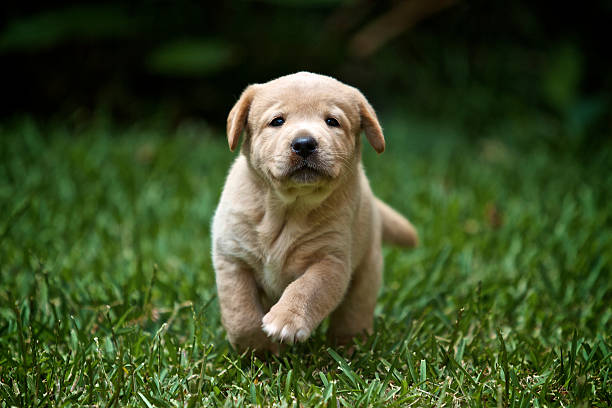
The domestic dog (Canis familiaris) possesses a communication system of profound complexity, relying on an intricate interplay of vocalizations, scent signals, and, most crucially, body language. Among these non-verbal cues, the movement and positioning of the ears stand out as one of the most reliable, yet frequently misunderstood, indicators of a dog’s internal emotional state and behavioral intentions.
Far from being mere auditory receptors, the canine ears function as highly sophisticated behavioral antennae, capable of minuscule, rapid adjustments that convey instantaneous shifts in attention, arousal, and emotional valence—from serene relaxation to acute fear, and from momentary interest to predatory focus.
This comprehensive guide delves into the anatomy, physiology, and behavioral ecology of canine ear movement, offering a detailed framework for interpreting the nuances associated with the three pillars of canine vigilance: alertness, fear, and focus.
I. The Canine Acoustic Antenna: Anatomy and Function
To truly appreciate the language of dog ears, one must first understand the biological machinery driving their movement.
The Auricular Cartilage and the Pinna
The visible external ear structure, known as the pinna (or auricle), is supported by complex cartilaginous structure, the auricular cartilage. Unlike the relatively fixed pinna of humans, the dog’s pinna is highly mobile due to an extensive network of specialized muscles.
The Musculature: A Symphony of Motion
The average dog possesses at least 18 distinct muscles dedicated solely to controlling the movement and orientation of the pinna. These muscles are generally categorized into three groups:
- Rostral (Forward) Muscles: Primarily responsible for pulling the ears forward, signaling interest or alertness.
- Caudal (Backward) Muscles: Essential for flattening the ears against the head, a common signal of submission, fear, or appeasement.
- Ventral (Down/Rotate) Muscles: Involved in the subtle swiveling and pinpointing of sound sources.
This abundance of musculature grants the dog directional hearing capabilities far superior to humans, allowing a dog to scan a 180-degree field of sound and pinpoint a source with remarkable accuracy. Behaviorally, this means ear movement serves two critical, interconnected roles:
- Sensory Input: Optimizing auditory reception.
- Social Signaling: Communicating internal state to conspecifics and humans.
The speed and independence of ear movement are key. A dog can move its left and right ears completely independently, often resulting in asymmetrical positioning that provides crucial context about conflicting emotional states or the shifting priorities of the environment.
The Evolutionary Imperative of Ear Signaling
In the evolutionary context of the wolf and early domestic dogs, clear, rapid, and unambiguous signaling was vital for pack cohesion, hunting coordination, and conflict avoidance. Erect or semi-erect ears (common in basal breeds) serve as excellent visual beacons, allowing signals of intent—like the momentary hardening of the ears before a chase—to be visible even at a distance. Even in breeds where domestication has resulted in floppy ears, the muscle attachments and movement at the base of the skull remain functionally intact, demonstrating the fundamental importance of this signaling system.
II. The Core States of Canine Ear Movement
Before dissecting the specific states of alertness, fear, and focus, it is necessary to establish the baseline: The Neutral Position.
The Neutral (Relaxed) Position
A truly neutral or relaxed ear position is breed-dependent but generally involves the ears resting laterally or slightly downward without tension.
- Erect-Eared Breeds (e.g., German Shepherd, Husky): Ears are carried upright but may “loll” slightly to the side or drop back moderately without being pinned. The musculature is relaxed.
- Floppy-Eared Breeds (e.g., Lab, Beagle): The base of the ear (where the pinna meets the skull) is relaxed and not actively contracted. The ears hang naturally.
A dog may be resting, content, or simply processing ambient stimuli when the ears are in the neutral state. Any deviation from this relaxed state indicates a change in arousal or emotional status.
III. State 1: Alertness and Interest (Auditory Vigilance)
Alertness is the canine state of heightened sensory awareness, typically triggered by an unfamiliar or novel stimulus (sight, sound, or scent). The ears are the primary indicator that the dog’s cognitive processes have shifted from passive surveying to active surveillance.
The Mechanism: Pricking and Forward Orientation
The hallmark of alertness is the forward orientation or “pricking” of the ears.
- Action: Contraction of the rostral auricular muscles pulls the pinnae forward, often slightly inward, creating an auditory “funnel” directly aimed at the perceived source of the stimulus.
- Appearance: Ears stand straight up (in upright breeds) or the entire ear structure is lifted away from the head (in drop-eared breeds). The skin over the forehead may wrinkle slightly as the muscles contract.
Nuances of Alertness
1. Investigative Alertness (Curiosity)
When a dog is merely curious, the forward orientation is often accompanied by a slight head tilt and relaxed facial muscles, though the eyes are usually wide and focused. This state indicates the dog is gathering data and assessing whether the stimulus is benign, novel, or potentially threatening.
2. Generalized Vigilance
If the dog is in an unfamiliar or potentially insecure environment, the ears may remain partially pricked and rapidly swivel back and forth, independent of each other. This signifies generalized vigilance—the dog is scanning the environment omnidirectionally, prioritizing sensory input over immediate signaling. This rapid, independent movement is the clearest indication that the ears are acting primarily as acoustic receptors.
3. Transition to Focus
Alertness becomes focus when the stimulus is identified as relevant (e.g., a known threat, a toy, or prey). The ears move from rapid swiveling to a fixed, rigid forward point directly toward the object. In this transition, alertness shifts from a data-gathering process to an intentional, goal-oriented state.
Reading Asymmetry in Alertness
Asymmetry in the alert state is perhaps the most informative cue.
- One Forward, One Neutral/Back: This often suggests conflict or uncertainty. The dog is interested (forward ear) but perhaps wary of the context, the approach, or the handler’s reaction (slightly back ear). It can also indicate a dog prioritizing two stimuli at once (e.g., listening to the handler with one ear while tracking a movement far away with the other).
IV. State 2: Fear and Anxiety (Appeasement and Submission)
Fear triggers a fundamentally defensive response, and the ear position is often the earliest and clearest indicator that a dog perceives a threat, physical or social.
The Mechanism: Pinning and Flattening
The universal signal for fear, anxiety, submission, or appeasement is the flattening or pinning back of the ears against the head.
- Action: Contraction of the caudal auricular muscles pulls the pinnae backward and downward, minimizing the profile of the head. In severe fear (e.g., acute distress or pain), the ears are not just flat but actively pressed so far back that the skin is taught, potentially pulling the brow back as well.
- Appearance: In erect-eared dogs, the ears lay flat along the neck. In drop-eared dogs, the ears may be pulled forward or inward, causing the fur on the cheeks to bunch up subtly.
The Spectrum of Fear
Fear-related ear positions exist on a continuous spectrum, requiring interpretation alongside other body language signals (lip licking, whale eyes, low posture).
1. Soft Appeasement/Submission
In a low-level social context (e.g., greeting a high-status human or dog), the ears may be held slightly back and low. This is often accompanied by a lowered (but not fully tucked) tail, a soft posture, and rapid, low-amplitude tail wags. This posture communicates, “I mean no harm, please accept my presence.”
2. Active Anxiety/Stress
When a dog is anxious—anticipating a negative event or struggling with a novel situation—the ears are held consistently pulled back. Often, the dog will frequently lick its lips or yawn. The ears remain fixed in this position, indicating a sustained state of low-level emotional distress. This is common in veterinary offices or during intense training sessions.
3. Acute Fear/Terrified Submission
In situations of intense, immediate threat (e.g., loud noise, confrontation, pain), the ears are fully pinned back, pressed flat against the skull. This is accompanied by classic signs of extreme fear: a fully tucked tail, crouching posture, rapid panting without heat, and avoidance of eye contact (e.g., turning the head away while watching the threat with the whites of the eyes exposed—the “whale eye”).
The Fear-Aggression Ambivalence
A crucial nuance is the distinction between fearful submission and fearful aggression.
- Fearful Submission: Ears are flat, body is contracted, movement is evasive or freezing. The intent is to diffuse the situation.
- Fearful Aggression (Defensive Threat): Ears are also pressed flat, but this posture is coupled with rigidity in the body, a wrinkled muzzle, teeth display (lip lift), and a low growl or snarl. In this dangerous state, the flattened ears communicate deep fear, but the facial and body rigidity signal that the dog is willing to escalate if the threat persists. The ear flattening here is not appeasement, but a defense mechanism to make the dog look smaller while preparing to strike.
V. State 3: Focus and Concentration (Task Execution)
Focus represents a state of intense, sustained attention directed towards a specific, usually high-value, goal. This state is most commonly observed during hunting, play, or advanced working tasks (e.g., herding, detection).
The Mechanism: Rigidity and Intent
While alertness involves rapid swiveling to gather data, focus involves fixed rigidity and pinpoint precision.
- Action: The ears are locked forward, often more intensely than in general alertness, indicating that the dog is ignoring all peripheral stimuli in favor of the target.
- Appearance: The dog’s entire posture—head, neck, and ears—forms a rigid line directed at the object of interest. There is often a noticeable reduction in all other micro-movements (tail wags, facial twitches).
Nuances of Focus
1. Predatory Focus (The Freeze)
In the classic “prey drive” sequence (orient, eye, stalk, chase, grab), the ears become severely fixed during the “eye” and “stalk” phases. This stillness maximizes both acoustic input and muscle efficiency for the impending explosive movement. The ears here are not merely detecting sound; they are coordinating the dog’s kinetic movements relative to a moving target. In herding breeds, this intense focus is often referred to as the “strong eye.”
2. Task Focus (Working Dogs)
For dogs engaged in complex tasks—detection work, agility, or obedience routines—the ears often engage in subtle, rapid micro-adjustments. While the primary position remains forward, the ears will subtly swivel to track the handler’s voice or external markers (e.g., the sound of a hidden scent source). This shows the dog is prioritizing the sensory inputs necessary to complete the task over expressing emotional state.
3. Play Focus
During play, especially high-arousal games like tug or fetch, the ears are typically held forward but may relax slightly compared to predatory focus. They are engaged but often less rigid, reflecting the joy and non-serious nature of the interaction. However, if the play escalates into high-arousal resource guarding of the toy, the ears can flatten slightly (fear of losing the resource) or become rigidly forward (intense focus on retaining the resource).
VI. The Complexity of Ambivalence and Conflict
Rarely is a dog experiencing only one emotion. The most intricate lessons in canine behavior come from interpreting ambivalent or conflicted ear movements.
Asymmetrical Ear Positioning
The most common sign of conflict is asymmetrical ear positioning, where each ear expresses a different emotional valence.
- Example 1: Interested but Hesitant: One ear is pricked forward (interest in approaching human/stimulus), while the other is slightly pulled back (hesitation, worry, or social insecurity). The dog is trying to decide whether to approach or retreat.
- Example 2: Arousal and Conflict: One ear is rigidly forward (high arousal, potentially aggressive intent) and the other is slightly pulled back and down (internal conflict, perhaps a learned inhibition against aggression). This often precedes a defensive snap or lunge and is a critical warning sign that the dog is operating at its emotional threshold.
Rapid Flickering
Rapid flickering or twitching of the ears, without a clear directional setting, suggests internal physiological arousal or stress. The underlying musculature is tense, but the dog cannot settle on a definitive orientation. This is often seen in dogs anticipating an unpleasant event (e.g., a car ride) or those suffering from chronic anxiety.
VII. The Impact of Morphology: Reading Different Ear Types
Interpreting ear language is complicated by the vast morphological diversity introduced by selective breeding. What is obvious on a German Shepherd might be nearly invisible on a Basset Hound.
1. Erect and Semi-Erect Ears (Shepherds, Terriers, Dingoes)
These ears are the easiest to read, as the movements are highly visible and precisely articulate the dog’s internal state. Changes in angle (forward, back, or lateral) clearly map onto alertness, fear, and focus. The speed of the movement is also easy to track.
2. Drop or Floppy Ears (Retrievers, Spaniels, Hounds)
In drop-eared dogs, the pinna hangs down, obscuring the precise angle. However, the movement and tension are still clearly visible at the base of the ear and along the forehead.
- Alertness/Focus: The strong contraction of the rostral muscles lifts the base of the ear away from the cheek and often pulls the skin of the forehead and brow upward, creating momentary wrinkles above the eyes. The ear is held tense against the head, even if it doesn’t stand up.
- Fear/Appeasement: The base of the ear is pulled tightly back against the neck. This movement is often accompanied by a visible backward pull of the entire cheek and eye area, making the face look slightly narrower or more ‘squinty.’
Crucial Caveat for Floppy Ears: Because their ears function less effectively as visual signals in the distance, drop-eared dogs often rely more heavily on facial expressions (e.g., exaggerated lip licks, intense eye contact) or posture to communicate.
3. Rose Ears (Greyhounds, Whippets)
These ears fold backward (like a rose petal).
- Alertness/Focus: The ear folds away from the head and points upward and forward, much like an erect ear.
- Fear/Relaxation: The ears flatten down along the neck crease, making them almost disappear from the profile. This extreme flattening is often a key sign of severe stress or fear in these breeds.
VIII. Integrating Ear Language with the Body Language Lexicon
While ear movement is highly informative, it must never be read in isolation. Canine ethology requires perceptual coupling—interpreting the ears alongside the eyes, mouth, tail, and overall posture.
| Ear Position | Accompanying Signals | Interpreted State |
|---|---|---|
| Pricked, Rigidly Forward | High, stiff posture; fixed stare; closed mouth; rigid/low tail. | Intense Focus/Intent (Prey drive, potential aggression) |
| Forward, Gently Swiveling | Loose body; head tilt; soft eyes; slight tail wag. | Interest/Curiosity (Safe, investigative) |
| Fully Pinned Back, Flat | Whale eye; tucked tail; low, crouching posture; lip licking. | Acute Fear/Submissive Distress (Need for space/safety) |
| Pulled Back, but Tense | Muzzle wrinkled; low growl; stiff legs; hackles raised. | Fearful Aggression/Defense (Threatened, preparing to defend) |
| One Forward, One Back | Eyes darting; frequent shifts in weight; hesitant movement. | Conflict/Ambivalence (Uncertainty, distress) |
Common Misinterpretations
- Relaxed Floppy Ears Mistaken for Fear: A relaxed drop ear hangs loosely. A fearful drop ear is actively pulled back at the base, causing tension in the facial skin. The difference is muscular tension, not merely position.
- Focus Mistaken for Alertness: Alertness is responsive and swiveling; focus is rigid and intentional. Mistaking intense focus for playful alertness can lead to dangerous situations, especially if the dog is showing predatory behavior toward a child or small animal.
IX. Conclusion: The Power of Observation
The canine auditory system and its associated behavioral antennae—the ears—provide an unparalleled window into the dog’s internal processing. By moving beyond the simplistic dichotomy of “forward means happy” and “back means sad,” and delving into the nuances of tension, rigidity, speed, and asymmetry, owners and professionals can unlock a richer understanding of canine communication.
A dog’s ears are continuously relaying information about their environment and their emotional reaction to it. Mastering the interpretation of these subtle movements is not just a skill—it is an essential practice in responsible dog ownership, deepening the bond and ensuring safer, more effective interactions across all contexts of canine life. The elaborate dance of the pinna is a testament to the evolutionary success of the dog as a social species, using every muscle at its disposal to maximize survival and social harmony.
#DogBehavior #CanineCommunication #DogTrainingTips #ReadingDogs #DogEars #BodyLanguageMatters #CanineEthology #DogBodyTalk #AlertDog #FearfulDog #DogFocus #DogSignals #PetSafety #UnderstandingDogs #DogPsychology







Add comment