
Sustainable farming is no longer a niche ideal; it is a necessity for feeding a growing global population while preserving natural resources, biodiversity, and climate stability. Among the many tools available to the modern farmer, waterfowl—particularly ducks—have emerged as a versatile, low‑input component that bridges livestock, crop, and ecosystem management.
Unlike chickens, which excel at laying eggs and providing meat but are primarily confined to dry ground, ducks thrive in wet environments, forage on a broad spectrum of plant and animal material, and produce a nutrient‑rich manure that rapidly improves soil fertility. Their unique behavior—dabbling, diving, and constant movement—makes them ideal partners in integrated crop‑livestock systems such as rice‑duck rotations, aquaculture‑duck ponds, and pasture‑based free‑range enterprises.
This guide explores the biological, ecological, and economic dimensions of duck‑based farming, focusing on the breeds that best align with sustainability goals. It is written for farmers, extension agents, researchers, and anyone interested in diversifying agricultural production while reducing chemical inputs, enhancing biodiversity, and improving farm resilience.
2. Why Ducks Matter in Sustainable Farming
| Sustainability Dimension | Duck Contribution |
|---|---|
| Nutrient Cycling | Duck manure contains high levels of nitrogen, phosphorus, potassium, and micronutrients. When applied correctly, it reduces the need for synthetic fertilizers and improves soil organic matter. |
| Biological Pest Control | Ducks actively forage for insects (e.g., slugs, beetles, mosquito larvae) and weed seedlings, lowering pest pressure without pesticides. |
| Water Management | Their natural preference for water bodies helps maintain pond health, control algae, and improve water quality through bioturbation. |
| Diversity & Resilience | Adding a waterfowl species diversifies farm enterprise, spreads market risk, and creates ecological redundancy that buffers against climate extremes. |
| Low Carbon Footprint | Ducks convert a wide range of forages—including agricultural residues—into high‑quality protein, often with lower feed conversion ratios (FCR) than conventional poultry. |
| Cultural & Social Value | Ducks have a long heritage in many agrarian societies, fostering community identity and enabling agritourism opportunities. |
3. Overview of Duck Breeds Suited for Sustainable Systems
Not all duck breeds are created equal. Some excel at egg production, others at meat, while a few are prized for foraging vigor and adaptability to wet habitats. Below is a concise but detailed catalogue of the most widely used breeds and the attributes that make them valuable in ecological farming.
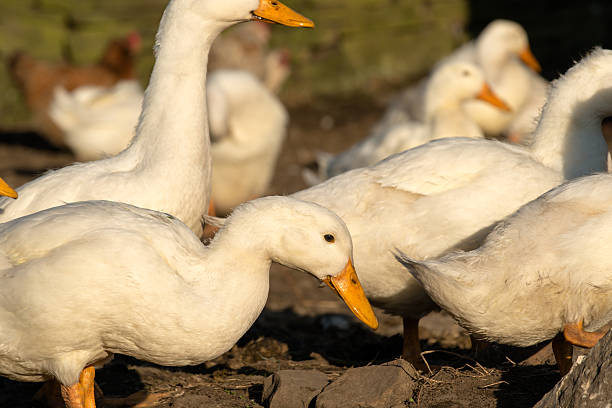
3.1 Pekin (Aylesbury)
- Type: Heavy, broad‑breasted meat duck.
- Key Traits: Fast growth (8–10 weeks to market weight), high carcass yield, tolerant of confined housing.
- Sustainability Angle: When raised on pasture with supplemental grain, Pekins efficiently convert grass and weed material into protein, allowing farmers to recycle yard waste. Their large size also means fewer birds are needed to meet meat market demand, reducing overall land use.
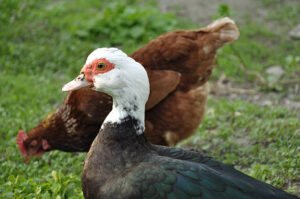
3.2 Muscovy (Cairina moschata)
- Type: Large, game‑type duck with a distinctive, musky odor.
- Key Traits: Excellent foragers, low propensity for feather pecking, superior resistance to heat stress.
- Sustainability Angle: Muscovies excel at controlling insect populations (especially larvae) in rice paddies and aquaculture ponds. Their ability to thrive on high‑protein insects reduces supplemental feed costs.
3.3 Khaki Campbell
- Type: Light, prolific egg‑laying breed.
- Key Traits: Up to 300 eggs per year, calm temperament, efficient feed conversion for egg production.
- Sustainability Angle: High egg output on low‑intensity feeding regimes makes this breed ideal for homestead egg supply while simultaneously providing manure for fertilization.
3.4 Indian Runner
- Type: Upright‑standing, active forager.
- Key Traits: Good egg layer (200‑250 eggs/yr), excellent paddling ability, strong instinct to roam.
- Sustainability Angle: Their roaming habit and preference for shallow water make Indian Runners perfect for integrated rice‑duck systems, where they eat weed seedlings and pest insects, thus reducing herbicide and insecticide applications.
3.5 Aylesbury (Traditional English)
- Type: Large, white, premium meat duck.
- Key Traits: Tender meat, high consumer preference in gourmet markets.
- Sustainability Angle: Although more feed‑intensive than Muscovy, their high market price can offset feed costs, especially when raised on pasture and fed on agricultural residues.
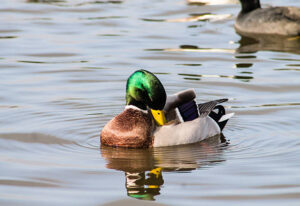
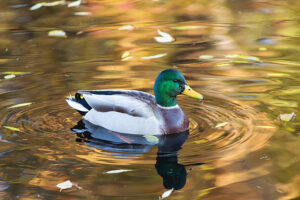
3.6 Mallard‑Derived Breeds (e.g., Rouen, Swedish Blue)
- Type: Dual‑purpose, hardy, semi‑wild ancestry.
- Key Traits: Good cold tolerance, strong flight instinct, moderate egg and meat production.
- Sustainability Angle: Their robustness makes them suitable for extensive free‑range or agroforestry settings where predators and weather variability are factors.
3.7 Specialty & Heritage Breeds (Silkie, Call, Crested)
- Type: Small, ornamental, or niche‑market breeds.
- Key Traits: Unique feathering, high novelty value, often very docile.
- Sustainability Angle: Though not primary meat or egg producers, these breeds can be leveraged for agritourism, educational programs, and diversified income streams.
4. Traits of Ducks That Align With Sustainability Goals
| Trait | Ecological Benefit | Management Implication |
|---|---|---|
| Broad‑spectrum foraging | Consumes insects, larvae, weed seedlings, and aquatic vegetation | Requires access to water bodies, paddocks, or rice fields |
| Water affinity | Promotes pond aeration, algae control, and nutrient redistribution | Provide shallow, clean water sources; manage water depth seasonally |
| Rapid litter breakdown | Manure decomposes quickly, releasing nutrients for crops | Apply fresh manure to fields or incorporate into compost |
| High heat tolerance | Maintains productivity in warm climates | Favor Muscovy or Indian Runner in subtropical zones |
| Low feed conversion ratio (FCR) for protein (≈2.5 : 1) | Reduces feed input per kilogram of meat/egg | Use pasture, crop residues, and household waste as part of diet |
| Hardiness to disease (e.g., resistance to avian influenza in certain breeds) | Minimizes need for antibiotics | Implement biosecurity and selective breeding programs |
| Reproductive versatility (egg‑layer or brood‑rearing) | Flexibility in production cycles | Choose breed based on market demand (egg vs. meat) |
5. Integrating Ducks Into Diversified Farm Enterprises
5.1 Rice‑Duck Farming (Rice–Duck Co‑culture)
The ancient Asian practice of raising ducks in flooded rice paddies has resurged as a climate‑smart technique. Ducks graze on weed seedlings, consume rice pests such as planthoppers and leafhoppers, and their movement aerates the soil, reducing methane emissions. A typical protocol:
- Seasonal Timing: Introduce 2–3 ducklings per 0.1 ha of rice after seedlings reach the 4‑leaf stage.
- Breed Choice: Indian Runner or Muscovy (good swimmers, strong foragers).
- Water Management: Maintain water depth at 5–7 cm to allow dabbling, prevent drowning.
- Manure Utilization: After harvest, incorporate duck droppings into the soil, providing ~150 kg N ha⁻¹.
Yield studies show a 5‑10 % increase in rice grain weight and a 30‑40 % reduction in pesticide use when ducks are employed.
5.2 Aquaculture‑Duck Integration
In pond‑based tilapia or carp systems, ducks can be floated in cages or allowed to roam along pond margins. Their activities:
- Algae Control: Grazing reduces phytoplankton blooms, improving water clarity.
- Insect Predation: Ducks eat mosquito larvae, reducing disease vectors.
- Nutrient Redistribution: Duck droppings supply nitrogen that benefits fish growth, creating a closed‑loop system.
A balanced ratio is 1 duck per 500 m² of water surface, with regular monitoring to prevent over‑loading of nutrients.
5.3 Pasture & Free‑Range Systems
On mixed‑species pastures, ducks complement cattle, sheep, or poultry by:
- Weed Suppression: Pecking tender seedlings before they compete with grasses.
- Fly Control: Consuming fly larvae in manure piles.
- Soil Aeration: Walking and scratching break soil crusts, facilitating water infiltration.
Rotational paddocking of 2–4 weeks per strip (≈0.5 ha each) prevents over‑grazing and maintains pasture productivity.
5.4 Agroforestry & Silvopasture
In orchards or agroforestry plots, ducks can be introduced under canopy cover:
- Pest Management: Eating fruit‑infesting insects (e.g., codling moth larvae).
- Fruit Drop Cleanup: Consuming fallen fruit reduces rot and pest habitat.
- Shade Tolerance: Breeds such as Mallard‑derived ducks thrive under partial shade, reducing heat stress.
6. Ducks as Catalysts for Nutrient Cycling
6.1 Direct Manure Application
Fresh duck manure is a “green” fertilizer with a C:N ratio around 12:1, ideal for rapid mineralization. Application rates:
- For Grain Crops: 10–15 t ha⁻¹ fresh manure (≈2 t N ha⁻¹).
- For Vegetable Gardens: 5 t ha⁻¹ applied in early spring, incorporated before planting.
Because ducks excrete both urine and feces together, the nutrient profile is more balanced than that of chickens, which produce nitrogen‑rich but phosphorus‑poor waste.
6.2 Composting Duck Manure
Composting improves pathogen kill‑off and creates a stable humus amendment:
- Layering: Alternate 5 cm of fresh manure with 5 cm of carbon‑rich straw or leaves.
- Turning: Every 5–7 days to maintain aerobic conditions (temperature 55–65 °C).
- Maturation: 8–12 weeks before use.
The resulting compost can increase soil organic carbon by 0.5–1 % within a single season.
7. Biological Pest Management With Ducks
7.1 Insect Suppression
- Slugs & Snails: Ducks’ dabbling habit removes these mollusks, which are notorious for damaging leafy greens.
- Caterpillars & Beetles: Muscovy and Indian Runner ducks readily consume foliage‑eating larvae, limiting crop loss.
- Mosquitoes: Duck foraging in standing water reduces larval populations by up to 80 % in experimental ponds.
7.2 Weed Management
- Seedling Grazing: Duck pecking removes early weed seedlings before they establish deep root systems.
- Leaf Litter Consumption: By consuming fallen leaves, ducks reduce the seed bank in the soil.
Effective weed control typically requires a duck density of 5–8 birds per 0.1 ha for a 2‑week grazing window.
8. Disease Management & Biosecurity in Duck‑Integrated Systems
While ducks are hardy, integrated systems demand thoughtful disease control:
- Vaccination: Common vaccines include Newcastle disease, avian influenza (H5/H7), and duck virus enteritis.
- Parasite Control: Regular monitoring for Ascaridia and Raillietina worms; use of diatomaceous earth or herbal dewormers.
- Water Hygiene: Rotate pond water every 2‑3 weeks, employ biofilters (e.g., aquatic plants like Eichhornia crassipes) to reduce pathogen load.
- Biosecurity Gates: Separate duck housing from other livestock, enforce foot‑dip stations, and limit visitor access during high‑risk periods.
A systematic health plan reduces mortality to <2 % in well‑managed operations.
9. Economic Considerations
9.1 Market Opportunities
| Product | Typical Yield | Market Price (USD) – 2024 | Notes |
|---|---|---|---|
| Duck Meat (Pekin) | 2.5–3 kg bird⁻¹ | $7–$10 kg⁻¹ (fresh) | Premium in Asian and gourmet markets |
| Duck Eggs (Khaki Campbell) | 250 eggs bird⁻¹ | $0.20–$0.30 egg⁻¹ (local) | High protein, niche for artisan bakers |
| Feathers & Down | 200–300 g bird⁻¹ | $3–$5 kg⁻¹ | Use in bedding, insulation |
| Live Ducks for Stocking | 1 bird | $12–$20 bird⁻¹ | For other farms, hobbyists |
| Agritourism (duck watching, egg‑collecting) | N/A | Variable | Adds experience‑based revenue |
9.2 Cost‑Benefit Analysis
- Feed Costs: Using pasture and crop residues can cut commercial feed expenses by 30‑50 %.
- Labor: Ducks are semi‑self‑sufficient; labor for daily checks (water, shelter) is ≈0.5 h bird⁻¹ week⁻¹.
- Capital: Minimal housing investment—simple fenced paddocks or raised pens (< $150 per 100 birds).
- Return on Investment (ROI): For a mixed‑purpose flock of 200 birds (50 Pekin, 100 Khaki Campbell, 50 Muscovy), gross revenue after the first year can exceed $8,000, delivering an ROI of 120–150 % when integrated with crop production.
10. Breeding & Selection for Sustainability
10.1 Selecting for Desired Traits
| Goal | Breed/Line | Selection Criteria |
|---|---|---|
| High Foraging Ability | Muscovy, Indian Runner | Body size, leg strength, water tolerance |
| Egg Production | Khaki Campbell | Early maturity, clutch size, shell quality |
| Cold Hardiness | Mallard‑derived (Rouen) | Feather density, metabolic rate |
| Meat Yield | Pekin, Aylesbury | Growth rate, breast meat % |
| Disease Resistance | Local heritage lines | Immunoglobulin levels, historic morbidity data |
10.2 Community‑Based Breeding Programs
Participatory breeding with smallholder groups enhances genetic adaptation to local conditions. Key steps:
- Baseline Survey: Document existing flock performance.
- Trait Prioritization: Farmers vote on priorities (e.g., pest control vs. egg yield).
- Selection Cycle: Identify top 10 % of birds each generation for breeding.
- Record‑Keeping: Use simple logbooks or mobile apps to track pedigree and performance.
Such programs have increased flock productivity by 22 % in eastern Indonesia and bolstered genetic diversity.
11. Management Practices for Sustainable Duck Farming
11.1 Housing
- Structure: Simple wooden or bamboo frames, slatted floors to allow droppings to fall through, thatched or metal roofs for rain protection.
- Space Requirements: Minimum 0.5 m² bird⁻¹ for indoor night shelter; outdoor paddock area of 2–3 m² bird⁻¹ for daytime foraging.
- Ventilation: Essential to prevent ammonia buildup; incorporate adjustable vents.
11.2 Water Provision
- Depth: 5–10 cm for dabbling breeds; 15–30 cm for diving breeds (Muscovy).
- Quality: Clean, chlorination‑free water; rotate or filter weekly.
- Safety: Slip‑resistant flooring around water edges to prevent injuries.
11.3 Feeding Strategies
| Feed Source | Contribution | Sustainability Rating |
|---|---|---|
| Pasture grasses | 30‑40 % of intake | High (self‑renewing) |
| Crop residues (e.g., wheat straw) | 20‑30 % | Moderate (requires processing) |
| Insects & larvae (natural) | 10‑15 % | High (biological control) |
| Commercial concentrate | ≤ 20 % | Low (external input) |
Use a “feed‑on‑demand” system: provide a small amount of concentrate in the morning, allowing ducks to fill the rest of their diet by foraging.
11.4 Health Monitoring
- Weekly Checks: Observe behavior, plumage condition, droppings.
- Monthly Weigh‑Ins: Record body weight to track growth; deviations > 10 % indicate health issues.
- Vaccination Schedule: Align with local veterinary guidelines; maintain records for traceability.
11.5 Rotational Grazing & Pasture Management
- Cycle Length: 2–4 weeks per paddock, depending on forage density.
- Rest Period: Minimum 2 weeks after duck removal to allow regrowth.
- Integration with Other Livestock: Alternate ducks with cattle or sheep to diversify grazing pressure and break parasite cycles.
12. Global Case Studies
12.1 Vietnam – Rice‑Duck Co‑culture in the Mekong Delta
- Breed Used: Indian Runner and Muscovy hybrids.
- Outcomes: 12 % higher rice yields, 40 % reduction in pesticide costs, increased household protein intake.
- Key Practice: Ducks released at 15 days old; paddies flooded to 8 cm depth; supplemental rice bran feed given weekly.
12.2 Netherlands – Integrated Aquaculture‑Duck Systems
- Breed Used: Pekin and Khaki Campbell in floating pens.
- Outcomes: Tilapia growth rates increased by 15 % due to enhanced water quality; duck meat marketed as “grass‑fed duck.”
- Key Practice: Water exchange every 10 days; duck manure collected via netting and composted for adjacent vegetable farms.
12.3 Kenya – Agroforestry‑Duck Model in the Rift Valley
- Breed Used: Local Mallard‑type hybrids.
- Outcomes: Significant reduction in fruit‑worm damage in mango orchards; increased soil organic matter in understory.
- Key Practice: Ducks rotated through orchard blocks every 3 weeks; night shelters built from locally sourced timber.
12.4 United States – Free‑Range Pasture Duck Farm (Oregon)
- Breed Used: Aylesbury & Khaki Campbell.
- Outcomes: Marketable duck meat sold to high‑end restaurants; duck eggs supplied to local bakeries; carbon footprint calculated at 0.8 t CO₂e ton⁻¹ of meat (versus 2.5 t CO₂e for conventional poultry).
- Key Practice: Pasture rotation with legumes; use of solar‑powered water pumps; on‑site composting for organic vegetable beds.
13. Challenges and Mitigation Strategies
| Challenge | Root Cause | Mitigation |
|---|---|---|
| Predation (foxes, raccoons) | Open paddocks | Secure fencing, guard animals (dogs, llamas), night shelters |
| Water-borne disease (e.g., avian influenza) | Shared ponds | Separate water sources, regular testing, biosecurity protocols |
| Over‑grazing & soil compaction | High duck density | Adjust stocking rates, implement rotational grazing |
| Market volatility for duck meat | Limited consumer awareness | Develop niche branding (e.g., “grass‑fed,” “heritage”), agritourism, direct‑to‑consumer sales |
| Feed cost spikes | Dependence on commercial feed | Increase on‑farm feed production (insect farms, forage crops) |
| Legal restrictions on water use | Regional water rights | Use rainwater harvesting, low‑flow water systems, negotiate community water-sharing agreements |
14. Future Prospects & Research Directions
- Precision Grazing with GPS‑Enabled Tags – Real‑time tracking of duck movement to optimize foraging patterns and minimize over‑grazing.
- Insect‑Based Feed Formulations – Scaling up black soldier fly larvae production as a sustainable protein source for duck diets.
- Genomic Selection for Climate Resilience – Identifying markers linked to heat tolerance and disease resistance in heritage breeds.
- Carbon Sequestration Modeling – Quantifying the net greenhouse‑gas balance of integrated duck‑crop systems versus conventional monocultures.
- Urban Duck Farming – Designing compact, water‑efficient housing for community gardens and rooftop farms, expanding the urban food‑production frontier.
Investing in these research avenues will sharpen the role of ducks as a keystone species in climate‑smart, regenerative agriculture.
15. Conclusion
Ducks are far more than a novelty; they are a multifunctional, low‑input animal that can transform a conventional farm into a resilient, biodiverse, and economically robust enterprise. By selecting the right breeds—whether the fast‑growing Pekin for meat, the prolific Khaki Campbell for eggs, or the hardy Muscovy for pest control—and integrating them thoughtfully into rice paddies, aquaculture ponds, pastures, or agroforestry systems, farmers can:
- Cut synthetic fertilizer and pesticide use.
- Convert agricultural residues into high‑quality protein and organic manure.
- Boost soil health, water quality, and on‑farm biodiversity.
- Open new market channels and diversify income.
When managed with sound biosecurity, effective rotational grazing, and community‑based breeding, ducks become a catalyst for sustainable intensification—producing more food with fewer inputs while preserving the ecological foundations of agriculture.
Adopting duck‑centric practices is not a stand‑alone solution but a vital piece of the larger regenerative puzzle. The future of food security depends on such integrative, nature‑based strategies, and the humble duck may well be one of its most valuable allies.
#DuckFarming, #SustainableAgriculture, #IntegratedFarming, #RiceDuck, #Aquaculture, #PastureBased, #Agroforestry, #RegenerativeAg, #EcoFriendlyFarming, #LowCarbonProtein, #OrganicFarming, #HeritageBreeds, #MuscovyDuck, #PekinDuck, #KhakiCampbell, #IndianRunner, #DuckEggs, #DuckMeat, #FarmDiversification, #AgriTourism, #Biodiversity, #SoilHealth, #WaterManagement, #ClimateSmart, #Permaculture, #FarmLife, #BackyardPoultry, #UrbanFarming, #FoodSecurity, #GreenFarming, #SustainableLivestock, #FarmToTable, #LocalFood, #NatureBasedSolutions, #CircularEconomy, #Animal husbandry, #EcoAgri, #RenewableFarming, #HolisticManagement, #DuckConservation, #FarmInnovation, #SustainableFoodSystems, #ZeroPesticide, #CarbonSequestration, #ResilientFarms, #CommunityBreeding, #FutureOfFarming, #SmartFarming.
Add comment