
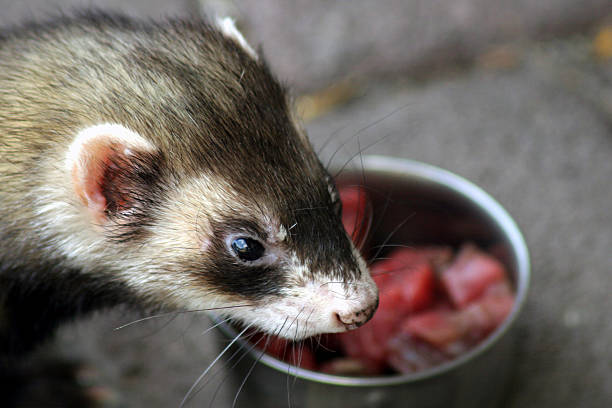
The Enigma of the Weasel’s Cousin
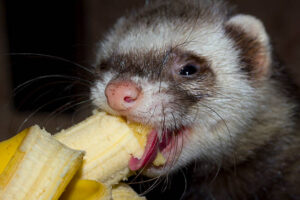
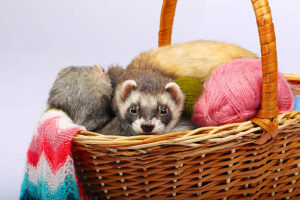
The ferret (Mustela putorius furo) is a subspecies of the European polecat, characterized by its elongated, slinky body, sharp senses, and highly tractable nature. Historically, this creature represents one of the earliest successful attempts by humans to domesticate a dedicated predator for utilitarian purposes—specifically, the management of vermin and the acquisition of food resources.
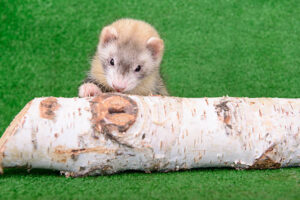
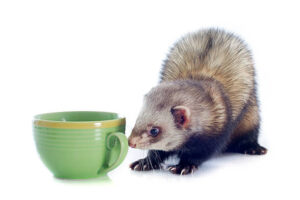
The ferret’s unique morphology—a tapered skull, a highly flexible spine, short limbs, and an innate curiosity—renders it optimally suited for navigating subterranean environments, particularly the burrows and runs created by rabbits and rodents. Unlike cats or terriers, which primarily hunt above ground or attack surface vermin, the ferret specializes in driving burrow-dwelling animals out into the open, fundamentally changing the dynamics of pest management.
This guide explores the profound historical dependence on ferrets, tracing their role from ancient Roman farms to their contemporary, often surprising, applications in modern industry and environmental management. While the ferrets’ primary historical target was the European rabbit (Oryctolagus cuniculus), its utility has evolved, making it a persistent and ecologically sound tool in the 21st century pest control arsenal.
II. Historical Context and the Origins of Ferreting
The domestication of the ferret is a topic subject to ongoing debate, but consensus places the timeframe roughly 2,500 to 3,000 years ago, likely originating in the Mediterranean basin or North Africa.
A. Theories of Domestication
- The Iberian Peninsula/North African Theory (Most Accepted): Many historians believe the ferret was domesticated in regions rich in wild polecats and rabbits, such as Spain and Morocco. As rabbits proliferated following the last Ice Age, they became a major agricultural pest, necessitating a specific control mechanism. Early records suggest the Phoenicians may have utilized ferrets, but definitive evidence emerges with the classical civilizations.
- Egyptian/Ancient World Connection (Less Accepted): Some sources erroneously link the ferret to the Egyptian mongoose or domesticated rodents used in ancient Egypt. However, the true ferret, adapted specifically to burrow flushing, was likely unknown to the Egyptians, who relied more heavily on cats for surface rodent control.
B. The Roman Empire: Establishing the Practice
The practical use of ferrets was firmly established and institutionalized by the Roman Empire. Roman writers, including Pliny the Elder (circa 77 AD), mention the use of viverrae (ferrets/polecats) for hunting rabbits.
Rabbits, once highly localized, spread rapidly across the Roman world, largely due to Roman dietary preferences and their practice of managing leporaria (rabbit warrens). As these rabbits began invading farmlands, the Romans recognized the ferret’s efficiency.
The Romans were likely responsible for introducing ferrets to significant parts of Europe, including Britain, where ferreting became an indispensable practice for sustenance and agriculture, particularly after the withdrawal of Roman legions.
C. Medieval and Early Modern Europe (5th–17th Centuries)
During the Medieval period, the importance of ferreting intensified. Rabbits were a crucial source of protein and, critically, fur for clothing and trade. However, their uncontrolled population growth could decimate crops.
Ferreting evolved from a simple hunting technique into a formalized rural craft:
- Warren Management: Large estates maintained dedicated warrens. Ferreting allowed landowners to harvest rabbits sustainably without relying on noisy or disruptive methods like hounds, which could damage the warren structure.
- Legal Status: Owning and using ferrets often required specific legal permission, especially after the Norman Conquest in England, which formalized hunting rights. Ferrets were seen as tools of the peasantry and lower gentry, providing food where grander hunting methods were restricted to the nobility.
- The Black Plague Era: Although primarily famous for its role in rabbit hunting, the ferret played a minor, localized role in controlling rats. While they are not the primary predators of large rats (that role fell to terriers), ferrets were often used to flush rats from grain stores and hayricks, forcing them into the open for easy trapping or dispatch by dogs/humans.
D. The Standardization of the Craft (18th–19th Centuries)
By the Victorian era, ferreting was highly standardized, especially in the United Kingdom, which had developed the most intensive rabbit management economy in Europe.
- Breeders rigorously selected ferrets for temperament (tractability), stamina, and color (often choosing lighter colors so the ferret was distinguishable against dark earth).
- The rise of sporting guides formalized the equipment and techniques, ensuring consistency across different regions. This period cemented the ferret’s role as the definitive biological control agent for burrowing pests.
III. The Mechanics of Traditional Ferreting: The Art of Flushing
Traditional ferreting is a complex process demanding a deep understanding of animal behavior, terrain, and weather conditions. It is fundamentally a method of ‘flushing’ or ‘driving’ rather than direct killing. The ferret enters the dark network, using its strong polecat scent and persistent movement to alarm the rabbits, forcing their innate survival mechanism to propel them out of the nearest exit hole.
A. Target Species: The European Rabbit
The European rabbit is the ideal target because of its complex, yet predictable, burrow structure (the warren).
- Behavioral Suitability: Rabbits rely entirely on the burrow for safety. When threatened internally, they bolt instantly.
- The Ferret’s Advantage: The ferret, unlike a dog or cat, can navigate every twist and turn of a warren, reaching deep nesting areas where rabbits feel secure.
B. Essential Equipment and Technique
- The Ferret (The Driver): Working ferrets are typically docile, well-fed, and trained to cooperate. They are often muzzled (historically with twine, now plastic or leather) to prevent them from killing the rabbit inside the warren and subsequently gorging themselves, which would cause them to fall asleep and remain underground—a severe loss for the owner (known as ‘coiling up’).
- The Nets (The Barrier): The most critical piece of equipment is the purse net. These cone-shaped nets are placed over every known exit hole of the warren. When the rabbit bolts, it runs straight into the cone, trapping itself without injury.
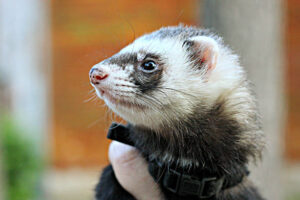
- The Locator (Modern Enhancement): In historical periods, handlers relied on the sound of digging or scratching to locate a coiled ferret. Modern ferreting relies heavily on electronic tracking collars (ferret finders). These collars emit a high-frequency signal, allowing the handler to pinpoint the exact location and depth of the ferret, enabling quick excavation if the animal gets stuck or coils up.
- The Hob/Jill/Polecat: Specific terms denote the ferret’s sex (Hob = male, Jill = female) and temperament. Highly energetic ferrets (often with stronger polecat heritage) are preferred for large, deep warrens.
C. The Process in Detail
- Survey and Setup: The handler surveys the warren, identifying the main entrance and all secondary exit holes (bolts). Nets are meticulously placed over every exit.
- The Entry: The muzzled ferret is introduced into the main entrance.
- The Drive: The ferret moves rapidly through the tunnels, pushing the prey to flee.
- The Bolt: Rabbits attempting to escape are caught immediately in the purse nets.
- Dispatch: The handler quickly removes the trapped rabbit, usually dispatching it humanely and swiftly for consumption or sale.
- Retrieval: Once the warren is cleared, the ferret is called, or its location is tracked electronically, ensuring its safe retrieval.
This methodology stands in stark contrast to hunting methods that rely on physical confrontation, demonstrating a highly efficient energy exchange—the ferret expends minimal effort to drive the prey out, saving the handler significant time and resources.
IV. The Ferret in Modern Pest Control and Niche Applications
While the need for large-scale rabbit harvesting and pest control has shifted (especially after the introduction of diseases like Myxomatosis in the mid-20th century, which decimated rabbit populations), the ferret’s role has adapted to specialized and industrial applications where its unique capabilities remain unmatched.
A. Environmental and Ecological Management
Ferrets remain a viable tool for localized environmental control, particularly on isolated lands where chemical or mechanical traps are either ineffective or environmentally undesirable.
- Island Biosecurity: On islands or nature reserves where invasive rabbit populations threaten native flora or sensitive ecosystems, ferreting offers a targeted, chemical-free method of culling.
- Feral Cat and Rat Control (Limited): Though less effective than other predators, trained ferrets can be used to flush feral cats or large rats from complex, confined spaces (like abandoned buildings or junk piles) for subsequent trapping or removal by specialized teams.
B. Industrial and Infrastructure Applications: The Non-Pest Role
Perhaps the most surprising modern role for the ferret is not hunting but infrastructure engineering—a testament to their inherent curiosity and willingness to navigate confined spaces.
- Cable and Conduit Running: In the 1970s, telephone and engineering companies discovered that a ferret could be equipped with a harness and a lightweight line, enabling it to run through ventilation shafts, complex piping, or underground conduits far more efficiently and safely than human workers.
- Case Study: Ferrets were famously employed in the installation of wiring at the CERN particle accelerator in Switzerland, and occasionally in laying fiber optic cables through narrow historic city drains.
- Airport Foreign Object Debris (FOD) Control: Ferrets have been occasionally used at airports, such as in New Zealand, to clear runways of rabbits and other pests. Large numbers of rabbits grazing near runways pose a risk to aircraft (potential for ingestion into jet engines) and compromise turf stability. Ferreting offers rapid, targeted removal in highly restricted, sensitive areas where firearms or poisons are prohibited due to safety regulations.
- Oil and Gas Pipeline Inspection: Their ability to travel long distances through narrow pipes has led to limited experimental use in threading inspection cameras or cleaning equipment through smaller, non-pressurized pipelines.
C. Urban Pest Management
In dense urban environments, rats and mice often nest in complex, inaccessible voids—under floorboards, between walls, or in cluttered basements. While poisons are common, they pose risks to pets and children.
Ferrets offer a green alternative. They are deployed into these voids not to kill, but to flush the rodents out into designated trapping zones, providing an immediate, traceable solution without relying on residual toxins. This is particularly valuable in food preparation environments where strict hygiene rules restrict the use of chemical baits.
V. Comparison with Other Biological Control Agents
The ferret’s success lies in its specialization. While many animals hunt pests, only the ferret is primarily a burrow-flusher.
| Control Agent | Primary Target | Method of Control | Advantages of Ferret Over Agent |
|---|---|---|---|
| Domestic Cat | Surface Rodents (Mice, Voles) | Stalking, killing, pouncing | Cannot enter burrows; less consistent behavior. |
| Terriers (e.g., Rat Terriers) | Surface/Sub-surface Rats | Aggressive killing, digging | Terriers primarily locate and kill at the surface or shallow level; ferrets clear deep, complex tunnel systems. |
| Mongoose/Stoat | Snakes, Surface Rodents | Direct confrontation, killing | Wild mustelids are less tractable and cannot be safely guided into specific human infrastructure. |
| Hawks/Owls | Surface Rodents, Birds | Aerial predation | No control over subterranean pests. |
The ferret’s key competitive advantage remains its perfect combination of size, shape, flexibility, and, crucially, domestication. It is an instinctual hunter that will reliably obey a handler and return to the surface, making it superior to any wild mustelid for human-managed pest control.
VI. Veterinary and Management Considerations for the Working Ferret
The welfare and training of working ferrets are crucial to their effectiveness and longevity. A healthy, well-conditioned ferret is a reliable asset; a poorly managed ferret is prone to injury and loss.
A. Training and Conditioning
- Early Habitation: Ferrets intended for work must be accustomed to handling from a young age (kits). They must tolerate being muzzled, harnessed, and handled by different people.
- Scent and Sound: Working ferrets are conditioned to the sights, sounds, and scents associated with the hunt—the smell of nets, the noise of digging, and the unique scent of the rabbit.
- The Return: The most vital aspect of training is ensuring the ferret reliably resurfaces. This is often achieved through scent reward (a favored meat or oil) given immediately upon exit, reinforcing the positive association with the handler.
B. Health and Safety Risks
Working ferrets face unique operational risks:
- Coiling and Loss: The primary risk is falling asleep underground. Historically, this meant the ferret was lost. Modern tracking minimizes this, but excavation can be stressful and dangerous for the animal.
- Physical Injury: Ferrets can encounter territorial adult rabbits, sharp stones, or burrow collapse. Injuries to the eyes, nose, and teeth are common, necessitating regular veterinary checks.
- Adrenal Disease: Ferrets are highly susceptible to adrenal gland disease (Hyperadrenocorticism), often linked to early spaying or neutering and modified light cycles. This leads to hair loss, lethargy, and behavioral changes, significantly reducing their working life.
- Parasites: Constant exposure to the soil and wild prey makes them highly vulnerable to fleas, ticks, and internal parasites (e.g., Coccidia, roundworms), requiring rigorous preventative care.
C. Breeding Stock
Working ferrets are often derived from lines that retain a stronger connection to the polecat phenotype—slightly larger, more robust, and highly motivated to hunt. They are distinct from the highly domesticated, smaller, and often brightly colored pet ferrets. Selective breeding focuses on stamina, courage, and a reliable return instinct.
VII. The Ethical and Regulatory Landscape
The use of ferrets in pest control is intensely managed by regulatory bodies, driven by modern animal welfare standards and environmental protection laws.
A. Animal Welfare in Hunting
The use of ferrets has attracted scrutiny concerning the welfare of both the ferret and the prey.
- Ferrets: Muzzling, which prevents the ferret from killing and settling, is viewed as necessary for retrieval and management. However, critics argue that aggressive muzzling may cause stress or suffocation. Modern practice emphasizes non-invasive tracking and humane handling.
- Prey: Compared to snaring, poisoning, or shooting, ferreting is often viewed as one of the most humane methods of pest control. The prey (rabbit or rat) is typically trapped instantly in the net and dispatched swiftly, minimizing prolonged suffering.
B. Legal Requirements and Licensing
In many jurisdictions, particularly the UK and EU, ferreting is heavily regulated:
- Licensing: Individuals using ferrets for game or pest control often require specific governmental licenses or must adhere to codes of practice established by agricultural bodies.
- Seasonal Restrictions: Ferreting for rabbits is often restricted to specific seasons (usually winter months, outside of the breeding season) to protect juvenile animals, ensuring the practice is sustainable and ethically managed.
- Protected Species: Ferrets must only be used against designated pests. Using ferrets to hunt protected native species (e.g., stoats, badgers) is strictly illegal and subject to severe penalties.
C. The Debate on Invasive Species Control
When ferrets are used in sensitive environments, such as islands, strict quarantine and management protocols are required. There is an inherent risk that a lost or abandoned ferret could establish a feral population, becoming an invasive predator itself. Therefore, ecological use is generally restricted to highly controlled, enclosed environments or specific, trained teams.
VIII. Conclusion: The Enduring Legacy of the Mustela putorius furo
From the dusty ruins of Roman villas to the cutting-edge construction sites of the 21st century, the ferret has sustained a millennia-long partnership with humanity. Its domestication was a foundational achievement in agricultural technology, providing a scalable, efficient solution for managing the most common burrowing agricultural pest in the Western world—the rabbit.
The ferret’s historical role as an essential tool for subsistence has transitioned into specialized modern applications, driven by the unique physical advantages of its morphology. It embodies a sustainable, biological method of pest control, standing in stark contrast to the widespread reliance on chemicals and mechanical devices.
As society increasingly seeks environmentally responsible alternatives, the ferret remains relevant. It is a living machine perfectly engineered by nature and conditioned by human foresight—a slinky, silent, persistent partner whose legacy continues to run deep beneath the surface of our modern world. The ferret is not merely a historical footnote; it is a vital, enduring example of how selective domestication can yield a specialized tool far superior to any technological substitute. Its continued use in cable running, biosecurity, and ecological warfare affirms that ancient crafts often hold optimized solutions for contemporary challenges.
#FerretingTutorial #HowToFerry #FerretsInAction #AncientHuntingTechniques #PestControlDocumentary #FerretsVSRabbits #HistoryOfDomestication #ModernFerreting #IndustrialFerrets #BiologicalSolutions #FerretsOfInstagram #PestControlGoals #WorkingAnimals #FerretingLife #HistoricalPets #SlinkyFriends #KnowYourRoots #RabbitHunters #WeaselWednesday #FerretsAreCool
Add comment