
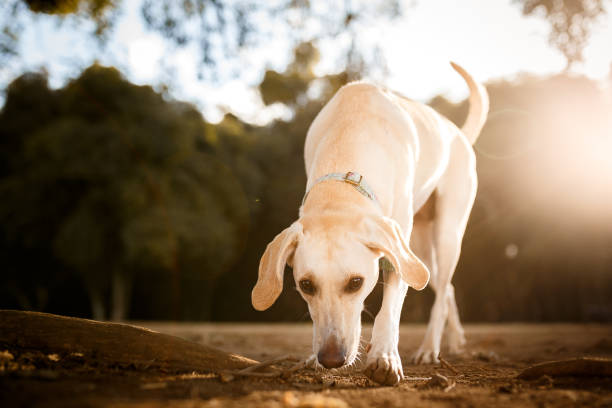
I. Introduction: The Silent Language of Dogs
Dogs, our cherished companions, communicate with a sophistication that often eludes the untrained human eye. Their primary mode of expression isn’t verbal, but rather a rich tapestry of body language, subtle cues, and nuanced postures. To truly understand our canine friends, and more importantly, to ensure their safety and well-being, it is paramount that we learn to interpret this silent language. Among the myriad signals dogs employ, one particular posture stands out as a critical, yet frequently misunderstood, warning sign: the stiff stance.
The stiff stance is far more than just “standing still.” It is a deliberate, often rigid, full-body posture that signals a dog’s internal state of tension, uncertainty, apprehension, or even threat. In the intricate dance of canine social interactions, this stance serves as an early warning, a precursor that, if ignored, can escalate into overt conflict, fear-based reactions, or even aggression. For responsible dog owners, trainers, and enthusiasts, recognizing and understanding the stiff stance is not merely a beneficial skill; it is a fundamental pillar of proactive behavior management and conflict prevention. This comprehensive guide will delve deep into the anatomy of the stiff stance, exploring its manifestations, underlying motivations, contextual relevance, and, most critically, what actions to take when you observe this pivotal signal in your dog or others. By becoming fluent in this critical aspect of canine communication, we empower ourselves to foster safer environments, strengthen our bonds with our dogs, and ultimately, prevent potential harm.
II. Defining the Stiff Stance: More Than Just “Standing Still”
To the casual observer, a dog standing still might appear calm or simply resting. However, the stiff stance is characterized by a distinct lack of fluidity and a palpable sense of tension throughout the dog’s body, differentiating it significantly from a relaxed or neutral standing posture. It’s a full-body commitment to a particular emotional state.
Detailed Description of the Physical Manifestation:
- Body Rigidity: This is the hallmark of the stiff stance. The dog’s entire body, from nose to tail, appears tense and unyielding. The muscles are contracted, giving the dog a hard, almost frozen, appearance.
- Head and Neck: The head is often held high and still, sometimes slightly forward, with the neck muscles visibly taut. There’s a deliberate lack of the easy, fluid movement one sees in a relaxed dog scanning its environment.
- Back: The back may appear flattened and rigid, or in some cases, slightly arched depending on the dog’s build and the specific emotional nuance (e.g., hunching in fear vs. standing tall in a challenge). The spine, normally supple, becomes a fixed line.
- Tail: The tail’s position and movement are crucial indicators. In a stiff stance, the tail is rarely loose and wagging. Instead, it might be:
- Held high and rigid: Often indicating a confrontational or challenging posture.
- Held low and stiff: Suggesting fear, apprehension, or a defensive posture.
- Tucked tightly between the legs: A clear sign of extreme fear or submission.
- Slightly twitching at the tip: Rarely a full, loose wag, but a small, tense movement indicating internal conflict or high arousal.
- Weight Distribution: How the dog distributes its weight offers further clues:
- Forward Lean: Can indicate a readiness to engage, challenge, or move forward defensively/offensively.
- Balanced/Even: Might reflect a dog processing information, holding its ground, or in a state of suspended animation before deciding on action.
- Slightly Back/Shifting Away: Often indicative of a dog trying to create distance, feeling fearful, or preparing to retreat.
- Muscle Tension: This is often visible as tautness under the fur, especially along the jawline, shoulders, back, and hindquarters. In short-haired breeds, you might even see muscles twitching subtly or trembling. You can often feel this tension if you were to lightly touch the dog (though this is not advised when a dog is exhibiting a stiff stance in a conflict scenario).
- Lack of Fluidity in Movement: A relaxed dog moves with grace and ease, its body undulating slightly with each step, its head swiveling, its tail perhaps gently swaying. A dog in a stiff stance, if it moves at all, does so in a slow, deliberate, often hesitant, or jerky manner. Transitions between postures are not smooth but rather rigid and abrupt. The muscles are locked, making any movement stiff and effortful, almost like a statue briefly coming to life. Movement might be restricted to just the head or eyes, while the rest of the body maintains its frozen quality.
- Often Accompanied by Other Subtle Signals: The stiff stance is rarely an isolated signal. It combines with specific expressions of the eyes, ears, and mouth to paint a complete picture of the dog’s internal state. These accompanying signals will be discussed in detail later, but it’s important to note that the ensemble of cues provides the most accurate interpretation.
Contrast with Relaxed Standing: To truly appreciate the stiff stance, consider its opposite. A relaxed dog stands with soft eyes, ears often in a neutral position or slightly back, a loose mouth that may be slightly open or closed without tension. Its body is supple, its weight evenly distributed but easily shifted, and its tail hangs naturally or wags loosely. The entire posture speaks of comfort and readiness for playful, unstressed interaction. The stiff stance, in stark contrast, is the antithesis of this comfort, conveying a clear message of unease, vigilance, or potential confrontation.
III. The Context is King: Interpreting the Stiff Stance
While the physical characteristics of a stiff stance provide critical information, understanding its meaning is impossible without considering the accompanying circumstances. No single body language signal exists in isolation; it is always part of a larger communication tapestry woven by the environment, the presence of other individuals (canine or human), and the history of recent interactions.
Imagine a dog standing stiffly:
- Scenario 1: It’s standing stiffly, staring intently at a squirrel up a tree, tail slightly raised and still. This is likely part of a predatory sequence – focus, anticipation, and readiness to chase.
- Scenario 2: It’s standing stiffly, hackles raised, staring at another dog that has just barked aggressively. This suggests a defensive or potentially offensive posture, signaling warning or readiness to engage in conflict.
- Scenario 3: It’s standing stiffly, cowering slightly, with a tucked tail, while a large, boisterous child approaches rapidly. This clearly indicates fear and a desire to avoid interaction.
- Scenario 4: It’s standing stiffly, guarding a chew toy, with a low growl when a human approaches. This signifies resource guarding, a clear “stay away” message.
In each scenario, the physical manifestation of stiffness might be similar – rigidity, tension. However, the context drastically alters the interpretation of the dog’s intent and emotional state. Therefore, when you observe a stiff stance, always ask yourself:
- What is the dog looking at or focusing on?
- Who else is present (humans, other animals)? What are they doing?
- What just happened immediately before the stiff stance was adopted?
- What is the general environment like (noisy, crowded, quiet, familiar, unfamiliar)?
- What are the other concurrent body language signals (eyes, ears, mouth, tail, piloerection)?
Ignoring context can lead to misinterpretations that range from comical to dangerous. A stiff dog is never “just standing there”; it is actively communicating its internal state in response to its environment.
IV. Underlying Motivations and Emotions Behind the Stiff Stance
The stiff stance is a versatile communicative tool, manifesting from a spectrum of underlying emotions and motivations. Recognizing these nuanced differences is key to effective intervention.
- Fear/Anxiety: This is one of the most common drivers. When a dog perceives a threat – be it a looming stranger, an aggressive dog, or an unfamiliar object – its body can freeze. This “freeze” response is a primal survival mechanism, part of the fight, flight, or freeze triad. A stiff, often low-slung body with a tucked or low tail, wide or whale eyes, and ears pinned back, strongly indicates fear. The dog is paralyzed by apprehension, unsure whether to flee, submit, or defend itself. This state is highly vulnerable and can quickly escalate if the perceived threat persists or approaches.
- Uncertainty/Apprehension: Less intense than outright fear, but still a significant motivator. The dog might not feel directly threatened but is processing an ambiguous situation. Perhaps a new object has appeared, an unfamiliar sound has occurred, or another dog’s signals are unclear. The stiff stance here reflects a dog trying to gather more information, hesitating to commit to an action. Ears may be swiveling, eyes darting, and the posture might be less acutely defensive than in fear, but still rigid. The dog is essentially saying, “I’m not sure about this, I’m observing and assessing.”
- Defensive Posturing: This is a clear warning. The dog feels threatened and is communicating “stay away” or “I am prepared to defend myself if you come closer.” The body is rigid, often with hackles raised, a hard stare, and sometimes a low growl or a tense closed mouth. The weight might be slightly back, suggesting a readiness to spring away or to lunge if necessary. This stance is designed to make the dog appear larger and more formidable, deterring the perceived threat.
- Offensive Posturing/Threat Display: While less common than defensive posturing in dogs that are not habitually aggressive, the stiff stance can also prelude an offensive move. Here, the dog is not just reacting to a threat but potentially initiating one or challenging another. The posture might be more erect, head held high, tail stiff and potentially wagging in a small, rapid movement (not a loose, happy wag). The stare is direct and unwavering, and the dog might lean forward slightly, indicating a readiness to advance. This is a very serious signal, suggesting a dog that is confident in its ability to follow through with a challenge.
- Resource Guarding: When a dog adopts a stiff stance over a valued possession (food, toy, resting spot, or even a human), it’s a clear signal of guarding. The body rigidifies, often lowering over the resource, and the eyes fix on the approaching individual. This is a deliberate warning to protect its perceived property, often accompanied by growling, lip curling, or a hard stare. The stiffness communicates “this is mine, do not approach.”
- Predatory Sequence (Focus and Stillness): While not typically a precursor to social conflict, it’s a form of stiff stance driven by instinct. When a dog spots prey (a squirrel, a thrown ball), it often freezes, adopts an intense, low, rigid posture, muscles coiled, eyes fixed. This is the “orient and stalk” phase of the predatory sequence, a moment of profound focus before the chase or pounce. It’s important to distinguish this from social conflict as the underlying motivation is different (hunting instinct vs. social tension/fear). However, the physical manifestation of stillness and tension can be superficially similar.
- Pain/Discomfort: Sometimes, a dog will adopt a stiff stance not due to social or environmental stimuli, but because of physical pain. An injury, arthritis, or an internal ailment can cause a dog to hold its body rigidly to protect a sore area or simply because movement is painful. If a stiff stance appears suddenly, without obvious external triggers, and is accompanied by other signs of discomfort (lameness, panting, lethargy), a veterinary check-up is paramount.
- Arousal/Excitement (Context-Dependent): In very specific, high-arousal contexts, such as intense play or extreme anticipation, a dog might temporarily stiffen. However, this is usually distinguishable from conflict-precursor stiffness by the presence of other playful signals (play bows, soft mouth, loose body quickly resuming) or a less fixed, more dynamic posture. If the stiffness persists or combines with hard eyes, it quickly morphs into a potential warning signal rather than pure excitement.
Understanding these motivations allows for a more nuanced and appropriate response, moving beyond a generic “he’s being stiff” to “he’s stiff because he’s afraid and trying to keep you away.”
V. The Stiff Stance as a “Precursor to Conflict”: Deconstructing the Warning Sign
The stiff stance is one of the most significant red flags in canine communication, acting as a crucial indicator that a dog is approaching its behavioral threshold and that potential conflict looms. It’s a critical point on the “escalation ladder” of canine signals.
- The Escalation Ladder: Dogs communicate in a hierarchy of signals, typically starting subtle and only escalating if earlier signals are ignored.
- Calming Signals: Lip licking, yawning, head turning, appeasement gestures.
- Increased Distance-Seeking: Moving away, turning back, hiding.
- Stiff Stance: A clear increase in tension, indicating discomfort, fear, or a warning.
- Direct Warning Signals: Growling, snarling, air snapping, showing teeth, piloerection.
- Physical Contact: Nipping, biting (inhibited or uninhibited). Ignoring a stiff stance means you’ve missed a vital opportunity to de-escalate the situation before it reaches more dangerous stages.
- The “Freeze” Response: As mentioned, the stiff stance is often a manifestation of the “freeze” response, a primal survival mechanism. When a dog feels overwhelmed or threatened, it may freeze, hoping to go unnoticed or to buy time to decide on its next move (fight or flight). This freeze state is not a sign of calm obedience; it’s a sign of profound internal conflict and stress. A dog that is frozen may appear to be “doing nothing,” but internally, it is highly aroused and on high alert. Any sudden movement or continued pressure can trigger a rapid shift to fight (aggression) or flight (panic and escape attempt).
- Ambivalence: The stiff stance often reflects a state of ambivalence. The dog is caught between two conflicting impulses: to approach/engage or to retreat/avoid; to defend itself or to submit. This internal struggle manifests as physical rigidity. The dog is trying to process information and determine the safest course of action, and the stiffness is the outward sign of this internal processing. It’s a moment of indecision, a pause before committing to a more overt behavior.
- Thresholds: Every dog has a behavioral threshold – a point beyond which it can no longer cope with a stimulus and will react defensively or aggressively. The stiff stance is a strong indicator that a dog is nearing or has reached this threshold. It’s a warning that the dog’s coping mechanisms are being stretched to their limit. Pushing a dog past this point can lead to an outburst because it has run out of non-aggressive ways to communicate its distress or boundaries. Recognizing the stiff stance means you have an opportunity to intervene and prevent the dog from being pushed over its threshold.
- Why It’s Often Overlooked: Humans often overlook the stiff stance for several reasons:
- Anthropomorphism: We project human emotions onto dogs, assuming “still” means “calm” or “attentive.”
- Lack of Education: Many owners are simply unaware of the nuances of canine body language.
- Subtlety: While profound, it can be subtle, especially in long-haired breeds or in fast-paced environments where owners might be distracted.
- Focus on Overt Signs: Owners tend to react only when overt aggression (growling, snapping) occurs, missing the crucial early warnings.
Understanding the stiff stance as a precursor unequivocally shifts our perception from a passive observation to an urgent call for awareness and intervention. It’s an opportunity to prevent escalation and maintain safety.
VI. Recognizing Accompanying Body Language Signals
The stiff stance is rarely an isolated event. It is almost always accompanied by a constellation of other subtle (and sometimes not-so-subtle) body language signals that, when read together, provide a comprehensive picture of the dog’s emotional state and intent. Learning to observe these accompanying cues is crucial for accurate interpretation.
- Eyes:
- Hard Stare/Fixed Gaze: Unblinking, direct eye contact with the perceived threat. This is a challenge or a warning, not a friendly look.
- Whale Eye: The whites of the eyes are visible, usually at the inner or outer corners. This indicates stress, fear, or discomfort, as the dog is trying to avoid direct eye contact but still needs to keep the stimulus in view.
- Dilated Pupils: Can signify arousal, fear, or excitement.
- Darting Eyes: Quickly flicking glances, often indicating anxiety or uncertainty, as the dog assesses multiple stimuli.
- Ears: The position and movement of the ears provide immediate insight into a dog’s focus and emotional state.
- Pinned Back/Flattened: A clear sign of fear, anxiety, or appeasement. The dog is trying to make itself smaller.
- Stiffly Forward: Often accompanies a hard stare, indicating alertness, focus, and potential challenge or threat.
- Swiveling/Twitching: Suggests uncertainty, as the dog tries to gather auditory information from different directions, indicating apprehension.
- Mouth: Tension around the muzzle is a key indicator.
- Closed Tight/Tense: Lips pulled back, corners of the mouth tight, indicating stress, discomfort, or preparation for a defensive display.
- Lip Licking/Tongue Flick: Often a calming signal or a sign of stress/anxiety, especially if it appears out of context (e.g., not after eating).
- Yawn (Context-Dependent): Can be a calming signal, a sign of stress, or simply tiredness. If accompanied by a stiff stance, it’s typically stress-related.
- Tension Around Muzzle: The skin around the dog’s nose and mouth may appear wrinkled or taut.
- Subtle Lip Curl/Snarl: The lips may subtly lift to expose teeth, a clear warning signal that precedes a growl or snap.
- Growl (Low, Rumbling): A very overt warning signal that often accompanies a stiff, defensive posture.
- Tail: Beyond just the position (high/low/tucked), the quality of the tail movement is vital.
- Held High and Stiff: A confident, challenging, or assertive posture, often combined with rigidity in the rest of the body.
- Tucked Tightly: Extreme fear, submission, or insecurity.
- Low and Rigid: Can indicate fear, nervousness, or defensive vigilance.
- Slight Twitch (Not Loose Wag): A very small, rapid, tense movement at the tip of the tail, signaling inner conflict, high arousal, or an impending action, rather than happiness. A wag that incorporates the entire rear end of the dog, with a swishy, loose movement, is typically happy.
- Absence of Movement/Frozen: The tail is held absolutely still, reflecting the overall body rigidity.
- Piloerection (Hackles): Raised hair along the spine, typically from the neck to the shoulders, and sometimes down to the tail. This is an involuntary reflex, primarily driven by arousal (fear, excitement, anger). It makes the dog appear larger and can be present in a stiff stance, intensifying the warning. It’s crucial to remember that piloerection alone doesn’t always mean aggression; it simply means high arousal. However, combined with a stiff stance and other tense signals, it strongly points to potential conflict.
- Vocalizations:
- Low Growl: A primal, undeniable warning, signaling the dog’s intent to defend itself or its resources.
- Whimper/Soft Bark: Can indicate distress, fear, or an attempt to communicate discomfort without resorting to aggression.
- Silence: Sometimes, the most ominous sign with a stiff stance is absolute silence, suggesting a dog that is intensely focused and ready to act.
- Movement (or Lack Thereof):
- Slow, Deliberate, Hesitant: Any movement in a stiff dog is often calculated and lacking spontaneity.
- Brief, Sudden Lunges/Snaps: If the stiff stance gives way, it might be an abrupt, contained lunge or snap, followed by a return to stiffness, rather than a full-blown attack. This is a “warning shot.”
- Freezing in Motion: A dog might be moving and then suddenly lock into a stiff posture, indicating an abrupt shift in its emotional state.
By meticulously observing this constellation of signals, owners can move beyond simply noting “stiffness” to understanding the dog’s specific emotional state (e.g., “fearfully stiff,” “assertively stiff,” “resource-guarding stiff”) and act accordingly.
VII. Practical Scenarios: When and Where You Might See It
Understanding the stiff stance is most valuable when you can apply it to real-world situations. This posture manifests across various environments and interactions, serving as a consistent warning sign.
- Dog-Dog Interactions:
- At the Dog Park: Two dogs meeting for the first time, one stiffens as the other approaches too quickly or directly. A dog might stiffen as another dog “humps” or tries to control it.
- On Leash Greetings: Two leashed dogs approach each other. One or both may stiffen, making their body rigid, especially if one is reactive, fearful, or feels trapped by the leash. This is a prime scenario for conflict if owners force the interaction.
- Resource Guarding Between Dogs: One dog stiffens over a favorite toy, chew, or even its owner’s lap when another dog comes near.
- Passing Other Dogs on Walks: A dog might become stiff and fixed on another dog, especially if it has a history of reactivity or fear.
- Dog-Human Interactions:
- With Strangers: A dog encountering an unfamiliar person who approaches too quickly, makes direct eye contact, or tries to pet them without permission may stiffen, especially if the dog is naturally reserved or fearful.
- With Children: Children’s unpredictable movements, loud noises, and tendency to invade a dog’s personal space can easily trigger a stiff stance in dogs, particularly those not well-socialized to kids or those with a low tolerance for overstimulation.
- During Grooming or Vet Visits: Procedures that involve handling sensitive areas, pain, or confinement can cause a dog to stiffen as a sign of discomfort, fear, or an impending defensive bite.
- During Training (Pressure): If a dog feels undue pressure, is confused by cues, or is being corrected harshly, it might stiffen as a sign of stress or learned helplessness.
- Resource Guarding Situations (Dog-Human):
- Food Bowls: A dog may stiffen and guard its food bowl from a human approaching too closely.
- Toys/Chews: Similar to dog-dog guarding, a dog will stiffen over a high-value toy if a human tries to take it or gets too close.
- Sleeping Areas/Crates: A dog might stiffen if disturbed while resting, indicating a desire for solitude and protection of its space.
- Novel Environments/Objects:
- New Places: Entering an unfamiliar building, a busy street, or a new home can cause a dog to become stiff and cautious as it processes the new stimuli and scent information.
- Unfamiliar Objects: A strange piece of furniture, a vacuum cleaner, a large package, or even a new item of clothing can cause a dog to stiffen and regard it with apprehension.
In all these scenarios, the stiff stance serves as a crucial signal from the dog, indicating that its comfort zone has been breached, its resources are threatened, or it feels unable to cope with the current situation. Recognizing these subtle cues in these everyday contexts allows for timely intervention and prevention of further escalation.
VIII. What to Do When You Observe a Stiff Stance
Observing a stiff stance is not a moment for panic, but a critical cue for immediate, thoughtful action. Your response can dramatically alter the outcome, preventing conflict and building trust with your dog.
Immediate Action (Safety First):
- Increase Distance: This is the most crucial first step. If your dog is stiff, or if another dog is stiff towards your dog, create space immediately.
- Leashed Dog: Calmly and smoothly move your dog away from the trigger. Walk a wide arc around the other dog/person/object, or turn and walk in the opposite direction. Avoid yanking or sudden movements, which can increase tension.
- Off-Leash Dog (if safe): Call your dog away gently. If it doesn’t respond, calmly approach and leash it. If it’s another dog, try to get the owner’s attention and recommend they create distance.
- Your Dog Towards a Resource: If your dog is stiff over a resource (food, toy), do not try to take it away. This will likely escalate the situation. Instead, physically move yourself away from the resource, breaking the tension.
- Interrupt/Redirect Calmly:
- A Sound Interruption: A quick, gentle “sssh!” or a soft clap can break the dog’s focus without startling or punishing it.
- Offer a Distraction: Toss a treat away from the trigger to redirect attention and create movement away from the source of stress. Never force food into a tense dog’s mouth.
- Avoid Punishment: Harsh verbal corrections, leash jerks, or physical force will only heighten the dog’s stress, confirm its perception of a threat, and suppress its warning signals. A suppressed growl or stiff stance means the dog learns not to communicate, leading to sudden, unprovoked bites.
- Create a Break in the Interaction: If the stiff stance is occurring during an interaction (e.g., with another dog or a person), immediately end the interaction. Give the dog space, remove it from the situation, or remove the stimulus. This allows the dog to decompress and reduces the pressure it feels.
- Assess and Observe: Once distance is created and the immediate tension is diffused, take a moment to assess the situation. What was the trigger? What other body language signals did you see? This information is vital for long-term management and training.
Long-Term Management & Training:
- Identify Triggers: Keep a journal. What specific stimuli consistently trigger a stiff stance? (e.g., certain types of dogs, men with hats, children, specific noises, people approaching the food bowl). Understanding the “what” is the first step to addressing the “why.”
- Management Strategies: This involves actively avoiding triggers or controlling exposure to them to prevent the dog from practicing the undesirable behavior and to keep it below its threshold.
- Avoidance: If your dog stiffens at dog parks, avoid them. If it reacts to strangers, walk in quieter areas or at off-peak times.
- Leashing & Crates: Use leashes to maintain control and distance. Crates can provide a safe, undisturbed den for dogs who guard resources or need breaks from household activity.
- Environmental Control: Use baby gates to separate dogs, or put away high-value items if resource guarding is an issue.
- Counter-Conditioning (Changing Emotional Response): This involves changing the dog’s negative emotional association with a trigger to a positive one.
- Example: If your dog stiffens at the sight of other dogs, expose it to other dogs at a distance where it doesn’t stiffen. As soon as the dog sees the other dog (below threshold), immediately reward it with high-value treats and praise. The goal is for the dog to associate the sight of the trigger with something wonderful, changing its emotional response from fear/tension to anticipation of rewards.
- Desensitization (Gradual Exposure): This means gradually exposing the dog to the trigger, starting at a very low intensity and slowly increasing it, always keeping the dog below its threshold. This is often done in conjunction with counter-conditioning.
- Example: If your dog stiffens when someone approaches its food bowl, start by simply walking past the bowl at a significant distance. Reward calm behavior. Gradually decrease the distance over many sessions, always pairing presence with positive reinforcement (e.g., dropping extra treats in the bowl as you pass, not taking anything away).
- Building Confidence/Trust: Many stiff stances stem from insecurity or a lack of trust. Positive reinforcement training builds confidence.
- Obedience Training: Commands like “sit,” “stay,” “come,” and “look at me” provide structure and give the dog something to focus on when feeling stressed, empowering it with alternative behaviors.
- Relationship Building: Spend quality time with your dog, engaging in activities it enjoys, and using positive reinforcement to create a strong, trusting bond.
- Teaching Alternative Behaviors: Instead of stiffening, what would you like your dog to do?
- “Look at me”: Teaches the dog to disengage from a trigger and focus on you.
- “Go to mat/place”: Provides a safe, calm go-to spot when triggered.
- “Touch”: A target behavior that can be used to redirect attention.
- Professional Help: When in doubt, or if the stiff stance is frequent, intense, or accompanied by other aggressive displays, consult a certified professional dog trainer (CPDT-KA/KPA-CTP) or a veterinary behaviorist (DACVB). These professionals can provide a comprehensive assessment, develop a personalized behavior modification plan, and guide you through the process safely and effectively. They are trained to handle complex behavioral issues and ensure both human and canine safety.
IX. Common Mistakes Owners Make
Misinterpreting or mishandling a dog’s stiff stance can exacerbate the problem, leading to increased stress, fear, and potentially more serious behavioral issues. Awareness of these common mistakes is crucial.
- Misinterpreting the Signal (e.g., “He’s just being dominant”): This is perhaps the most dangerous mistake. Owners might see a stiff dog and incorrectly assume it’s being “dominant” or “stubborn,” when in reality, it’s often expressing fear, uncertainty, or discomfort. Labeling a dog as dominant and then trying to “dominate” it through force or punishment will only escalate its fear and defensive reactions, leading to an increase in aggressive behaviors.
- Ignoring the Signal: Many owners simply miss or disregard the stiff stance. They might be distracted, unaware of body language nuances, or believe the dog will “sort it out” on its own. Ignoring this vital warning sign forces the dog to escalate its communication, often leading to growling, snapping, or biting as its only remaining option.
- Punishing the Signal: Correcting or punishing a dog for exhibiting a stiff stance, growling, or showing teeth (e.g., “no!” or a leash correction) is highly detrimental. While it might temporarily suppress the visible warning sign, it does not address the underlying fear or stress. The dog learns that communicating its discomfort is unsafe, and it may then go straight to biting without any prior warning, making it a “ticking time bomb.” You want dogs to warn you, not bite without warning.
- Forcing Interactions: If a dog is stiff around a person or another dog, forcing it to interact (“go say hello!” or “he just wants to play!”) puts immense pressure on the dog. This reinforces its negative associations, erodes its trust in the owner, and can easily push it past its threshold into a defensive reaction.
- Not Providing an Escape Route: A dog that feels trapped or cornered is much more likely to resort to aggression. In situations where a dog is stiff, failing to provide it with an opportunity to escape or create distance can escalate its fear and lead to a reactive outburst. Always ensure a dog has space and a way to retreat if it feels overwhelmed.
- Attributing Human Emotions: Projecting overly simplistic human emotions onto a complex canine signal (e.g., “he’s just being rude,” “she’s just being dramatic”). While dogs experience emotions, their expression and social rules are different from ours.
- Delaying Professional Intervention: Waiting until a stiff stance has escalated into actual bites or frequent overt aggression before seeking professional help. Early intervention when the stiff stance is first observed is much more effective and safer for everyone involved.
By avoiding these common pitfalls, owners can create a safer and more understanding environment for their dogs, effectively de-escalating potential conflicts and fostering a stronger, more trusting relationship.
X. Prevention is Key: Fostering a Confident and Calm Dog
While knowing how to react to a stiff stance is critical, the ultimate goal is to minimize its occurrence by fostering a dog that is confident, calm, and well-adjusted. Prevention involves proactive strategies woven into the fabric of daily life.
- Early, Positive Socialization: This is the cornerstone of preventing fear-based stiffness. Exposing puppies (during their critical socialization period, 3-16 weeks) to a wide variety of sights, sounds, people (of all ages, types), and other friendly, well-socialized dogs, in a positive and controlled manner, helps them develop resilience and comfort in diverse situations. Crucially, “socialization” means positive experiences, not just exposure. Avoid overwhelming or scary situations.
- Positive Reinforcement Training: Training using reward-based methods builds confidence, strengthens the human-canine bond, and teaches dogs that engaging with their owner is rewarding. It gives them a toolkit of alternative behaviors (like “look at me,” “sit,” “stay”) to employ when they feel uncomfortable, rather than resorting to stiffening or aggression. Force-based methods increase stress and anxiety.
- Meeting Physical and Mental Exercise Needs: A bored, under-exercised dog is a stressed dog. Ensuring your dog receives adequate physical activity (appropriate to its breed and age) and mental stimulation (puzzle toys, training sessions, scent work) helps them burn off excess energy and reduces overall anxiety, making them less reactive.
- Providing a Safe, Predictable Environment: Dogs thrive on routine and predictability. A consistent daily schedule, a comfortable and secure living space (a crate can be a valuable safe haven), and clear boundaries help reduce anxiety and build a sense of security.
- Building a Strong Bond Based on Trust: This is perhaps the most vital aspect. A dog that trusts its owner to understand its signals, protect it from perceived threats, and respond with kindness is less likely to feel the need to resort to defensive or aggressive displays. Spend quality time, play together, and communicate clearly and kindly. Be your dog’s advocate.
- Health and Wellness Checks: Regular veterinary check-ups are essential. Pain or underlying medical conditions can manifest as behavioral changes, including increased irritability, fear, or a tendency to stiffen. Addressing health issues can often resolve behavioral problems.
Prevention is an ongoing process, a commitment to understanding and nurturing your dog. By investing in these fundamental principles, you can significantly reduce the likelihood of your dog feeling the need to display a stiff stance as a precursor to conflict, leading to a happier, healthier, and safer life for everyone.
XI. Conclusion: Speaking the Same Language
The stiff stance in dogs is far more than a simple posture; it is a profound and critical piece of canine communication, a red flag signaling an urgent internal state of tension, fear, or readiness for conflict. This comprehensive guide has explored its intricate manifestations, diverse motivations, contextual nuances, and, most importantly, the proactive steps owners must take to prevent escalation.
By diligently observing the subtle cues of body rigidity, paying attention to the context of the interaction, and recognizing the accompanying signals from the eyes, ears, mouth, and tail, we can elevate our understanding of our dogs from basic comprehension to fluent communication. The stiff stance serves as an invaluable precursor, offering a vital window of opportunity to intervene, create distance, and de-escalate potential conflict before it manifests as overt aggression or deep-seated fear.
Empowering ourselves with this knowledge is not just about avoiding bites; it’s about nurturing a deeper, more empathetic bond with our canine companions. It’s about being their advocate, protecting them from situations that cause distress, and building a foundation of trust that allows them to thrive. By speaking their silent language, by truly seeing and responding to their nuanced signals like the stiff stance, we foster safer environments, prevent misunderstandings, and ensure our dogs live lives filled with confidence, calm, and mutual respect. This journey of understanding is continuous, but mastering the interpretation of the stiff stance is a monumental leap towards becoming truly exceptional dog guardians.
#DogBehavior #StiffStance #CanineBodyLanguage #DogTraining #DogAggression #FearfulDog #AnxiousDog #DogCommunication #WarningSigns #DogSafety #DogTips #PreventConflict #PositiveReinforcement #DogOwnerEducation #KnowYourDog #DogCare #BehaviorModification #DogStress #DogReactivity #CanineCognition #PuppySocialization #VetBehaviorist #DogTrainerTips #ReadYourDog #DogLife #UnderstandDogs #SafeDogs #HappyDogs







Add comment